-
추가:: 둥관 헝주탕 로드 8호 빌딩 2, 동관
-
전화: 전화 +86 135 4224 3751

Solving Thermal Stress via Phase Change Thermal Conduction for Industrial Frequency Converters
Phase change thermal conduction for industrial frequency converters isn’t a luxury anymore—it’s the line between steady output and costly breakdowns when heat spikes hit like a freight train in compact, high-power systems.
Hotspots creep, interfaces choke, materials crack; phase-change stacks calm chaos and keep production from melting down.
Reading Notes: Phase Change Thermal Conduction for Industrial Frequency Converters
➔ Major PCM Classes balance stability and conductivity: paraffin, salt hydrates, eutectic alloys.
➔ Thermal Interface Enhancement: phase change pads fill gaps; liquid metal interfaces cut resistance.
➔ Substrate and Encapsulation: DBC/AlN spread heat; epoxy resins & thermoplastic elastomers secure cycling.
➔ System-Level Durability: high-Tg PCB laminates, graphite sheets, copper fins & vapor chambers ensure uniform heat spread.
Fundamentals Of Phase Change Thermal Conduction
Modern power electronics are heating up—literally. Phase change thermal conduction for industrial frequency converters has become a practical fix for overheating drives, unstable inverters, and stressed IGBT modules. This cluster breaks down the materials, interfaces, substrates, and encapsulation choices that shape industrial frequency converters’ thermal management today.
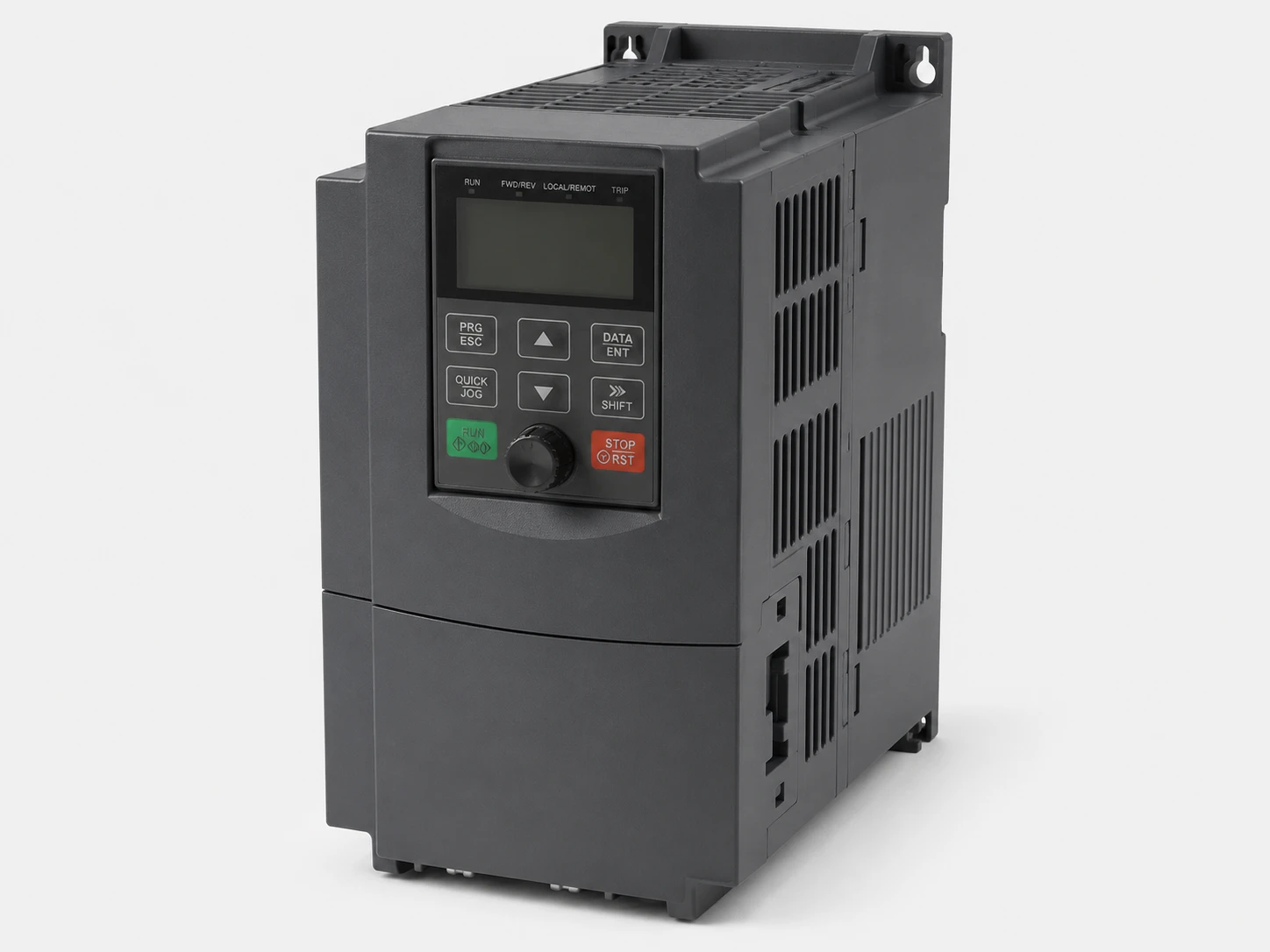
Major PCM Classes: Paraffin, Salt Hydrates & Eutectic Alloys
In phase-change thermal conduction for industrial frequency converters, selecting the right Phase Change Materials decides stability, safety, and lifespan.
- Paraffin
- Salt Hydrates
- Eutectic Alloys
- Melting point alignment
- Latent heat capacity
- Cycling durability
• Cost-to-performance balance
At the core of phase-change cooling for frequency converters lies the material behavior under repetitive heating.
Multiple realities show up on factory floors. Paraffin handles long cycling with minimal degradation. Salt Hydrates store impressive thermal energy storage capacity, yet may separate over time. Eutectic Alloys provide a precise melting point, critical in tight-control industrial inverter heat control.
For phase-change thermal conduction for industrial frequency converters, the decision flow typically moves like this:
- Define the operating temperature window
- Match PCM transition temperature
- Evaluate conductivity enhancement fillers
- Validate reliability under load cycling
Within engineering selection:
- Material Layer
- Organic
- Paraffin
- Inorganic
- Salt Hydrates
- Metallic
- Eutectic Alloys
- Organic
- Performance Metrics
- 열
- Latent heat density
- Transition sharpness
- Mechanical
- Volume stability
- 열
As noted in the 2025 IEA Energy Efficiency update:
“Industrial motor systems remain one of the largest opportunities for efficiency gains through improved thermal management and advanced materials.”
That insight directly reinforces the value of optimized PCM thermal conduction systems in drive cabinets.
How Phase Change Pads and Thermal Grease Enhance Conduction
Contact gaps ruin thermal conduction for industrial frequency converters. Air pockets behave like tiny insulators, and heat just sits there.
- Phase Change Pads soften at working temperature
- 열 그리스 spreads across micro-voids
- Each acts as a 열 인터페이스 재료
- 표면 적합성
- 감소됨 interface resistance
- 더 높음 열 전도성
• Cleaner heat transfer path
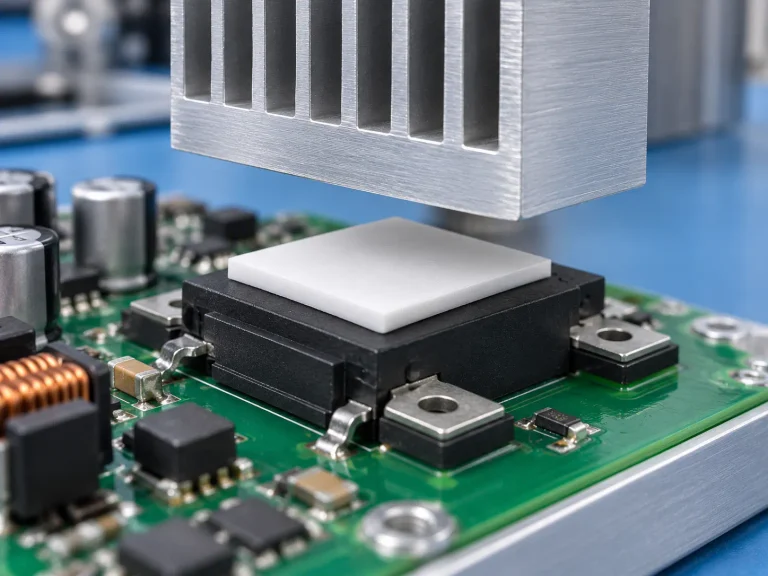
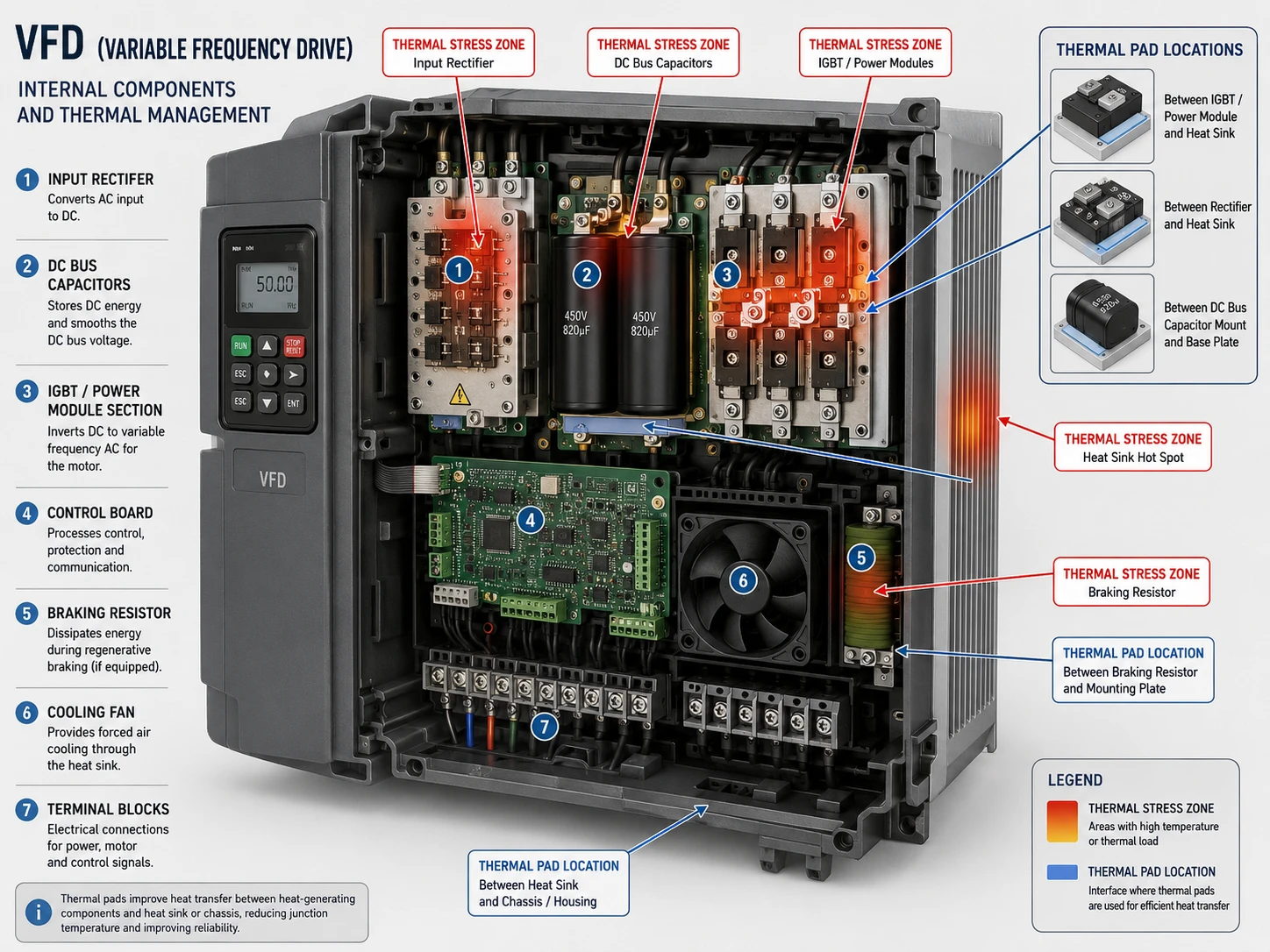
In practice, the pad warms, flows slightly, and fills uneven copper or aluminum surfaces. The 열 그리스 ensures intimate contact between IGBT modules and heat sinks, supporting stable 열 전달.
Short bursts of overload? No panic.
Sustained duty cycles? Controlled.
That’s the daily win of a solid conduction strategy.
For phase-change thermal conduction for industrial frequency converters, interface optimization often unfolds as:
- Surface cleaning
- Controlled pad placement
- Torque-calibrated fastening
- Thermal cycling validation
Nested within system architecture:
- Interface Layer
- Solid PCM pad
- Paste-based TIM
- Functional Role
- Gap filling
- Stress buffering
- Heat spreading
광택 재질 designs tailored Phase Change Pads specifically for industrial frequency converters’ thermal management, balancing softness and structural integrity so cabinets stay cool without messy pump-out issues.
Role of DBC and AlN Substrates in Thermal Pathways
그리고 thermal pathway inside power modules determines how fast heat escapes.
- DBC substrate
- AlN substrate
- Copper layers for spreading
- 전기 절연
- Mechanical support
- Fast 열 방출
• High current tolerance
In phase-change thermal conduction for industrial frequency converters, substrates sit between chips and cooling plates. Direct-bonded copper on ceramic provides low thermal resistance. Meanwhile, aluminum nitride outperforms traditional alumina in demanding drive systems.
When building a reliable industrial inverter heat control, engineers usually:
- Select ceramic type
- Optimize copper thickness
- Pair with PCM layer
- Validate under vibration and load
Structured technically:
- Substrate Type
- Ceramic substrate
- AlN substrate
- Alumina
- Copper Interface
- Direct-bonded copper
- Ceramic substrate
- Thermal Path
- Chip → Solder
- Solder → DBC
- DBC → PCM
- PCM → Heat sink
This layered logic keeps phase-change thermal conduction for industrial frequency converters consistent under high switching frequency stress. 광택 재질 supports integration between PCM sheets and DBC modules to tighten the thermal loop.
Encapsulation Strategies with Epoxy Resin and Thermoplastic Elastomers
Heat control isn’t enough; protection matters. Encapsulation stabilizes the entire assembly.
- Epoxy Resin
- Thermoplastic Elastomers
- Hybrid sealing approaches
- Structural reinforcement
- Moisture sealing
- Enhanced 열 안정성
• Stress absorption
In phase-change thermal conduction for industrial frequency converters, PCM expansion must be managed. Epoxy Resin offers rigid mechanical protection. Thermoplastic Elastomers flex with thermal cycling, improving PCM containment.
Application flow often looks like:
- PCM placement
- Substrate bonding
- Controlled resin dispensing
- Cure and inspection
Nested reliability design:
- Encapsulation Function
- Sealing
- Environmental barrier
- Structural
- Vibration resistance
- 열
- Maintains contact integrity
- Sealing
- Material Choice
- Rigid
- Epoxy Resin
- Flexible
- Thermoplastic Elastomers
- Rigid
For manufacturers upgrading to phase-change thermal conduction for industrial frequency converters, working with 광택 재질 means aligning PCM, substrate, and sealing chemistry as one integrated system—not a patchwork fix.
3 Benefits Of Phase Change Thermal Conduction
Phase change thermal conduction for industrial frequency converters is changing how heat gets handled on busy factory floors. By combining smart materials with better board design, phase change thermal conduction keeps temperature swings under control, boosts heat flow, and protects power electronics from early failure. Let’s break it down in plain terms.
Temperature Stabilization through RT Series PCMs
In industrial drives, heat spikes are part of daily life. Phase Change Materials based on Rubitherm RT series step in with steady temperature regulation during melting and solidifying cycles. That’s the core of phase-change thermal conduction for industrial frequency converters.
- Heat absorption begins once the PCM reaches its defined melting point.
- Stored latent heat holds the surface at a near-constant temperature.
- As load drops, thermal energy storage releases heat gradually.
Here’s how it plays out inside a converter cabinet:
- The power module generates heat under variable torque demand.
- RT series PCM activates at its designed transition temperature.
- Thermal management stabilizes semiconductor junctions.
This nested flow matters:
- Load fluctuation
- Rapid current rise
- Local hot spot formation
- Cooling interval
- Controlled solidification
- Rapid current rise
- PCM cycling
- Stable casing temperature
- Reduced thermal stress
The result? Industrial frequency converter cooling that feels almost self-balancing. When engineers talk about phase change cooling for converters, this is the quiet hero behind it.
Improved Heat Transfer with Liquid Metal Interfaces
Good storage is only half the story. You still need fast pathways for heat dissipation. That’s where liquid metal interfaces shine.
- Ultra-high heat conductivity
- Minimal 접촉 저항
- Lower overall 열 저항
In phase-change thermal conduction for industrial frequency converters, pairing PCM with a 열 인터페이스 재료 made from gallium alloys tightens the thermal chain:
- Die surface
- Liquid metal layer
- Substrate
- Heat sink
- Liquid metal layer
★ Better spreading
★ Faster 열 방출
★ Cooler switching cycles
The global push for higher efficiency backs this up.
The International Energy Agency noted in its 2025 industry efficiency update that improving thermal pathways in power electronics is central to reducing energy loss in motor-driven systems worldwide.
For frequency converter heat control, that’s not just theory—it’s a cost saver. Sheen Materials integrates liquid metal solutions with phase change thermal conduction systems so industrial converter thermal management becomes smoother and more predictable.
Extended Converter Durability via High Tg PCB Laminates
Long-term reliability hinges on the board itself. PCB laminates with high glass transition temperature resist softening under repeated thermal cycling.
- Elevated Tg
- Lower thermal expansion mismatch
- Reduced solder fatigue
- Lower thermal expansion mismatch
- 안정적 재료 속성
- Less delamination
- Higher system 신뢰성
- Less delamination
Think of the stack-up like this:
- The power device heats.
- PCM absorbs and buffers.
- Liquid metal spreads heat.
- High Tg laminate maintains structural integrity.
Multiple short realities on the factory floor:
Heat rises fast.
Boards flex under stress.
Low-Tg materials crack over time.
High Tg laminates keep industrial converters steady, even under constant load swings. That’s why Sheen Materials promotes phase-change thermal conduction for industrial frequency converters alongside durable PCB substrates. Put together, industrial frequency converter thermal solutions last longer, fail less, and keep production lines moving without drama.
Solid Vs. Slurry PCM For Converters
Industrial drives run hot, and nobody likes a tripped converter on a busy line. That’s where phase-change thermal conduction for industrial frequency converters steps in. Split into solid and slurry paths, this cooling logic shapes how heat moves, stores, and escapes.
Solid PCM
When applying Phase change thermal conduction for industrial frequency converters, solid materials stay simple and steady. Think Solidification 그리고 Melting cycling inside a sealed block mounted to a Heat sink.
- Thermal behavior
- Latent heat absorption during load spikes
- Gradual release as current drops
- Limited 열 전도성 unless fillers are added
- Mechanical integration
- a. Encapsulation
- i. Prevents leakage during Volume change
- ii. Protects converter boards
- b. Mounting strategy
- i. Direct bonding to IGBT baseplates
- ii. Inserted between the module and fin stack
- a. Encapsulation
- Operational profile
- Stable under dusty factory air
- No pumps, no moving parts
- Quiet, predictable buffering
In heavy-duty motor cabinets using phase change thermal conduction for industrial frequency converters, solid PCM suits sites where maintenance crews are thin.
The International Energy Agency noted in its 2025 energy efficiency update that improved thermal management in motor-driven systems can cut system losses by up to 10% in high-load industrial environments.
That kind of saving makes phase-change thermal conduction for industrial frequency converters more than lab talk—it’s practical shop-floor engineering.
Slurry PCM
Slurry systems push phase-change thermal conduction for industrial frequency converters into active territory.
- Core ingredients:
- Microencapsulation particles
- Base Heat transfer fluid
- 제어 Suspension stability
1) Flow dynamics
- Flowability depends on particle ratio.
- Higher loading raises 점성.
- Pumps handle circulation and Convection.
2) Cooling loop logic
Step 1: Slurry absorbs heat near power modules.
Step 2: Warm fluid travels to a remote exchanger.
Step 3: Heat dissipates; particles reset for the next cycle.
3) Real-world trade-offs
- Better heat spreading than static pads
- Requires Pumping power
- Monitoring prevents sedimentation
For large inverter cabinets running steel mills or HVAC plants, phase-change thermal conduction for industrial frequency converters with slurry designs supports longer duty cycles and tighter temperature control.
Solid buffers. Slurry circulates. Both refine industrial frequency converter thermal conduction through phase change cooling, just in different ways.
Industrial Frequency Converters: Phase Change Tips
Industrial drives run hot, no surprise there. Getting phase-change thermal conduction for industrial frequency converters right keeps output steady and downtime low. This guide breaks down material choices, interface stacks, and substrate tricks in a practical, shop-floor tone.
Select Paraffin or Polyethylene Glycol Based on Thermal Range
When planning phase-change thermal conduction for industrial frequency converters, start with the Thermal Range and expected load swings.
- Paraffin
- Polyethylene Glycol
- Phase Change Material
- Melting Point
- Latent Heat
- Heat Absorption
- Match operating temperature to Melting Point.
- Compare Latent Heat for surge buffering.
- Check chemical stability across duty cycles.
| 재료 | Typical Melting Point (°C) | Latent Heat (kJ/kg) | 열 전도성(W/m-K) |
|---|---|---|---|
| Paraffin | 45–65 | 150–220 | 0.2–0.3 |
| PEG | 55–75 | 140–200 | 0.25–0.35 |
| PCM Blend | 60–90 | 180–250 | 0.3–0.4 |
For mid-range drives, Paraffin offers stable cycling and clean phase shifts. High-load cabinets pushing tighter control windows often lean toward Polyethylene Glycol, since its tunable Phase Change Material profile supports sharper Heat Absorption during current spikes. That alignment strengthens phase-change thermal conduction for industrial frequency converters under real production stress.
Pair Phase Change Pads with Graphite Sheets for Low Resistance
Low interface loss is the quiet hero of Phase change thermal conduction for industrial frequency converters.
- Phase Change Pads reduce micro-gap air pockets.
- Graphite Sheets spread in-plane heat fast.
- 열 저항 drops when pressure is tuned.
→ Apply uniform Interface Pressure
→ Confirm surface flatness
→ Measure final 열 전도성
Thermal Interface Material stacks work best when layered intentionally:
- Contact Layer
- Phase Change Pads soften near activation temperature
- Fill surface voids
- Spreading Layer
- Graphite Sheets
- Boost lateral Heat Transfer
Short story? Pads cut contact loss. Graphite handles distribution. Together, they stabilize Phase change thermal conduction for industrial frequency converters without redesigning the enclosure.
Integrate Copper Fins and Vapor Chambers for Uniform Heat Spread
Hotspots kill efficiency. Balanced Heat Spread keeps converters steady.
- Copper Fins
- Vapor Chambers
- Heat Pipes
- Evaporation / Condensation
Multi-stage cooling logic:
- The baseplate absorbs heat.
- Vapor Chambers trigger internal Evaporation.
- Vapor migrates, then Condensation releases energy.
- Copper Fins boost air-side Heat Dissipation.
The International Energy Agency’s 2025 industrial efficiency outlook notes that improved thermal management in motor drive systems can cut auxiliary energy losses by up to 8%, particularly in high-duty manufacturing environments.
That stat backs what engineers already feel on-site. Uniform Thermal Uniformity 직접 개선 Phase change thermal conduction for industrial frequency converters, especially in sealed cabinets running 24/7. Sheen Materials supports integrated copper-vapor assemblies tuned for heavy-load converters.
Optimize FR-4 or Ceramic PCB Substrates for Cycling Stability
Substrate choice quietly shapes Cycling Stability.
- FR-4
- Ceramic PCB
- Substrates
- Thermal Expansion
- 열팽창 계수
- Thermal Stress
- Dielectric Constant
Nested selection path:
- Cost-sensitive builds
- Choose high-Tg FR-4
- Manage Thermal Stress with copper balancing
- High-power density
- Select Ceramic PCB
- AlN for higher conductivity
- Si₃N₄ for crack resistance
- Align the 열팽창 계수 with the power modules
- Select Ceramic PCB
FR-4 handles moderate swings, keeping budgets sane. Ceramic options excel when Thermal Expansion mismatch threatens solder joints. Stable dielectric behavior and a controlled Dielectric Constant also protect signal integrity inside fast-switching drives.
For teams pushing reliability targets, Sheen Materials supplies engineered substrate stacks that reinforce phase-change thermal conduction for industrial frequency converters while keeping long-term fatigue in check.