-
추가:: 둥관 헝주탕 로드 8호 빌딩 2, 동관
-
전화: 전화 +86 135 4224 3751

SSD
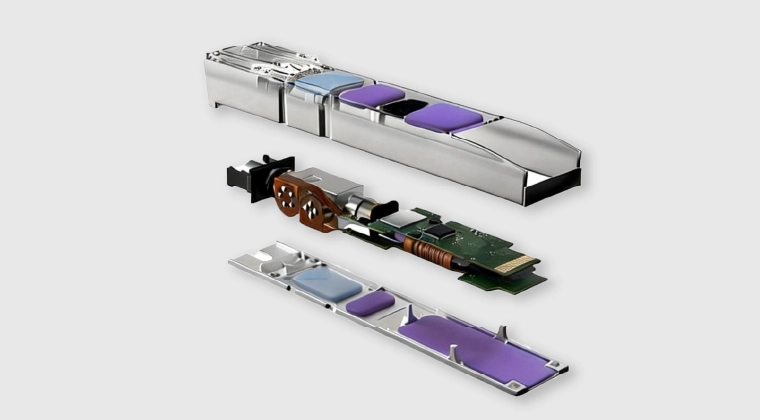
SSDs generate heat from the controller, NAND, DRAM cache, and power circuits in compact form factors. Excess heat can trigger thermal throttling, reduce sustained performance, and shorten service life.
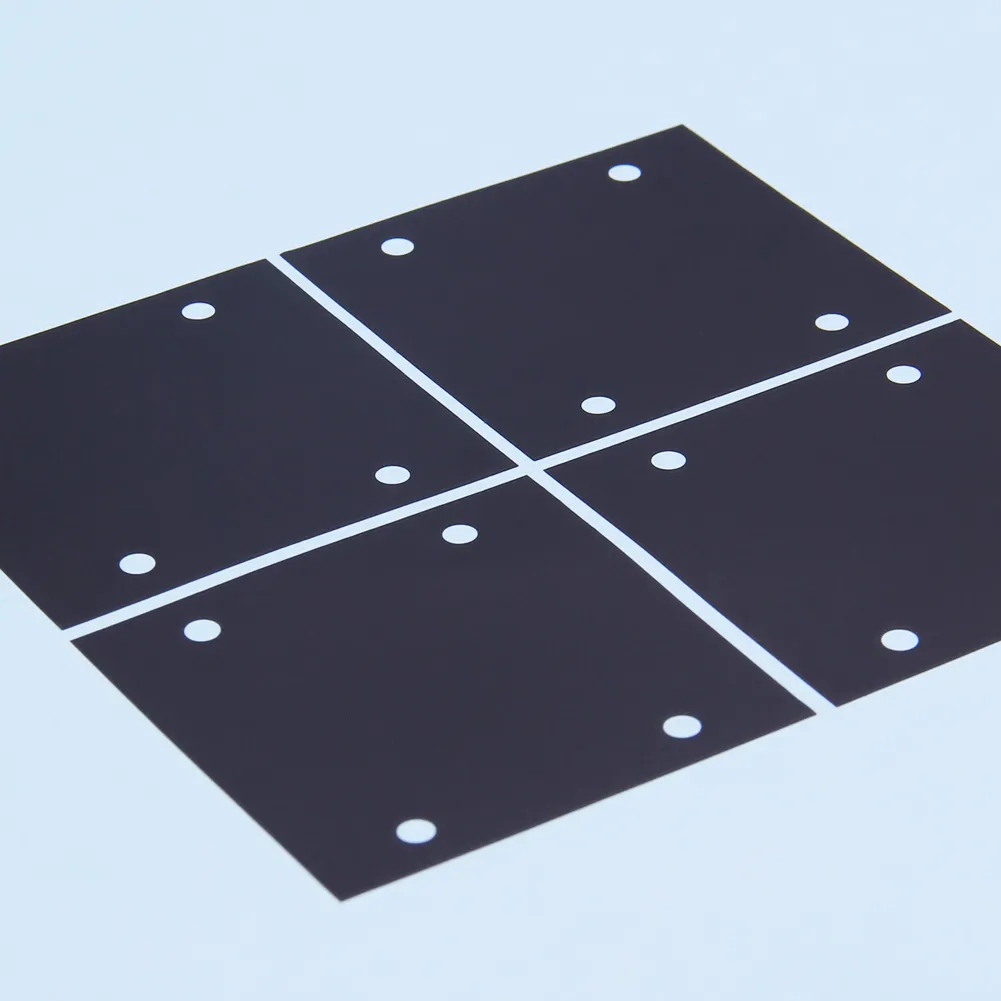
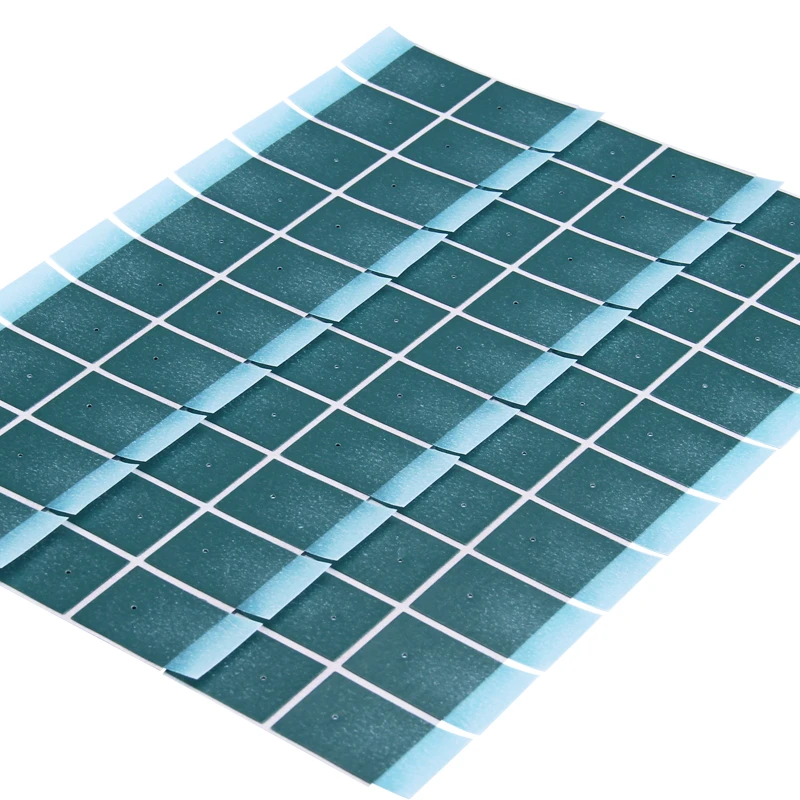
Thermal interface materials (TIMs) create low-resistance heat paths to heat spreaders or housings to: ① reduce controller temperature and prevent throttling; ② maintain stable read/write performance under continuous workloads; ③ improve long-term reliability in 24/7 operation.
개요
SSD (TIMs) Solutions
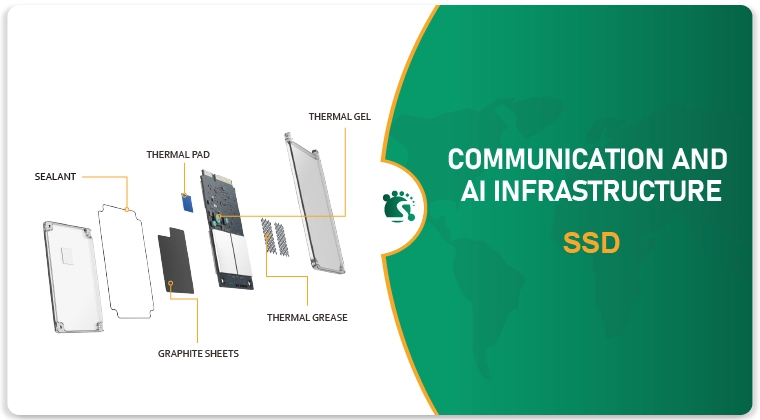
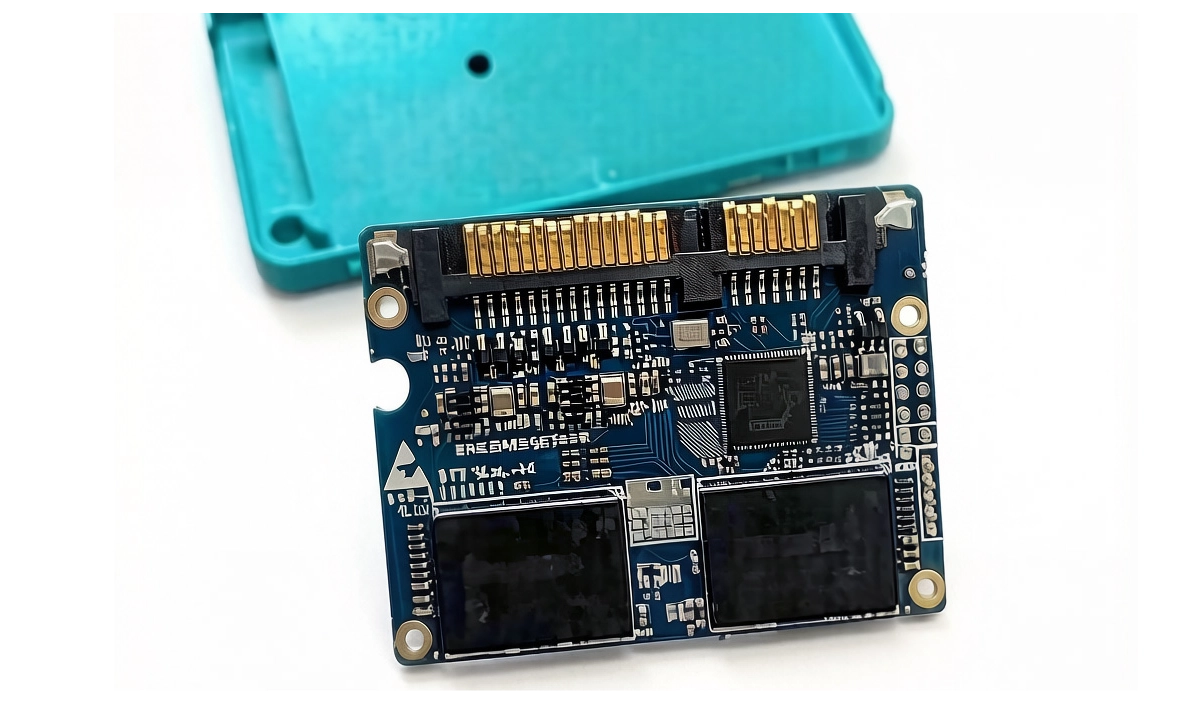
SSDs generate heat from the controller, NAND flash, DRAM cache, and power circuits—especially under sustained read/write workloads. Excess temperature rise can trigger thermal throttling, reduce throughput, and shorten service life.
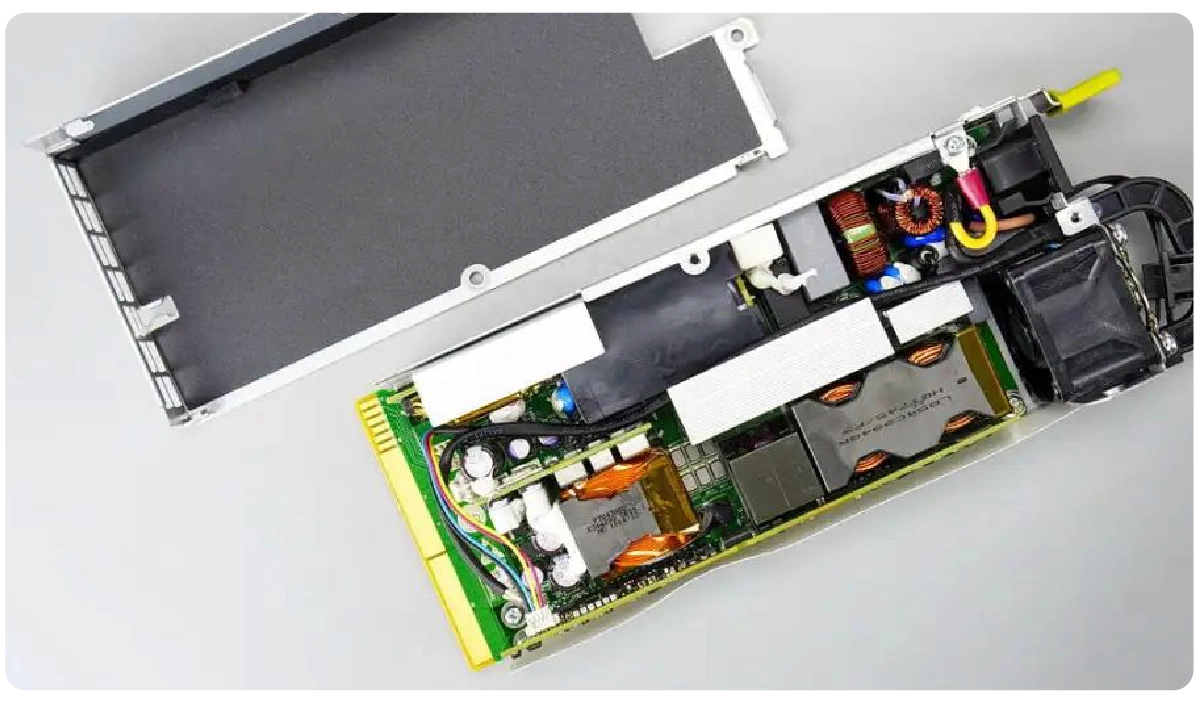
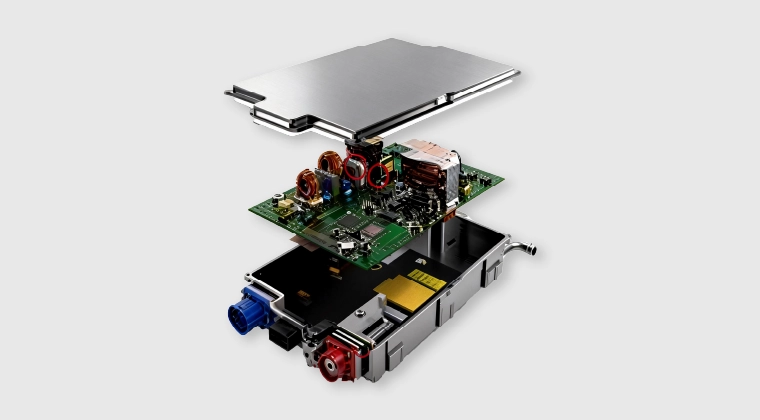
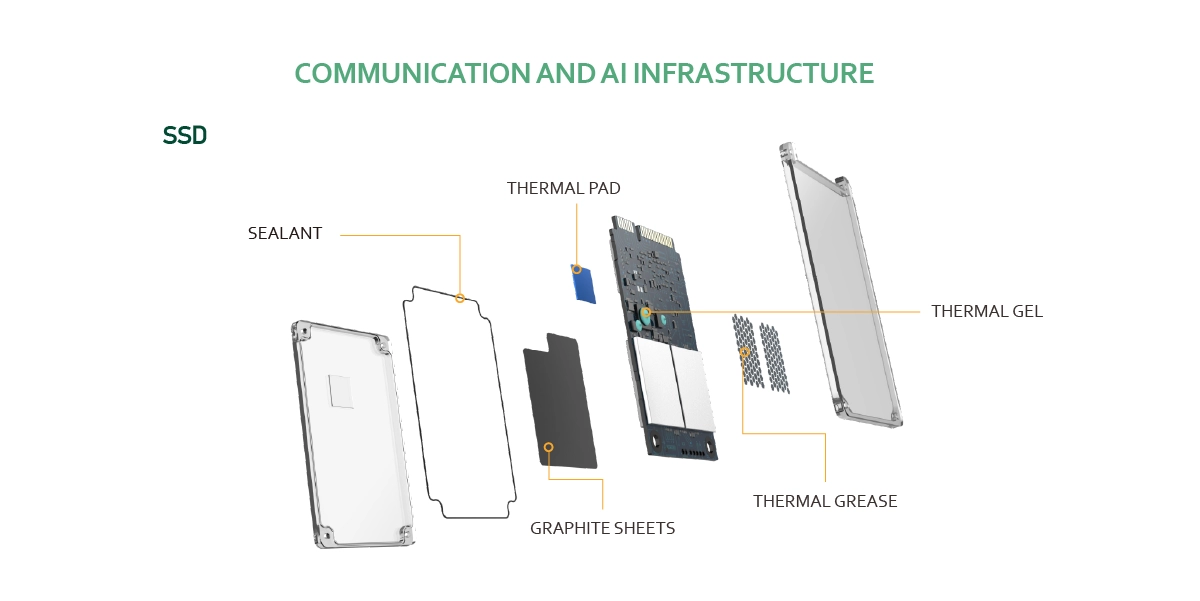
Thermal interface materials (TIMs) create low-resistance heat paths from key components to heat spreaders, heat sinks, or housings—reducing hotspots, improving sustained performance, and enhancing long-term reliability.
혜택
SSD Thermal Materials, Built for Sustained Performance
Reduce Controller Hotspots, Prevent Throttling
Efficient heat transfer from the SSD controller helps maintain stable throughput under sustained reads/writes.
Gap-Filling Contact for Slim SSD Stacks
Conformable TIMs bridge tolerance stack-ups—lower thermal resistance and consistent performance across builds.
Long-Term Reliability in 24/7 Workloads
Options designed for thermal cycling help reduce aging and support long service life in continuous operation.
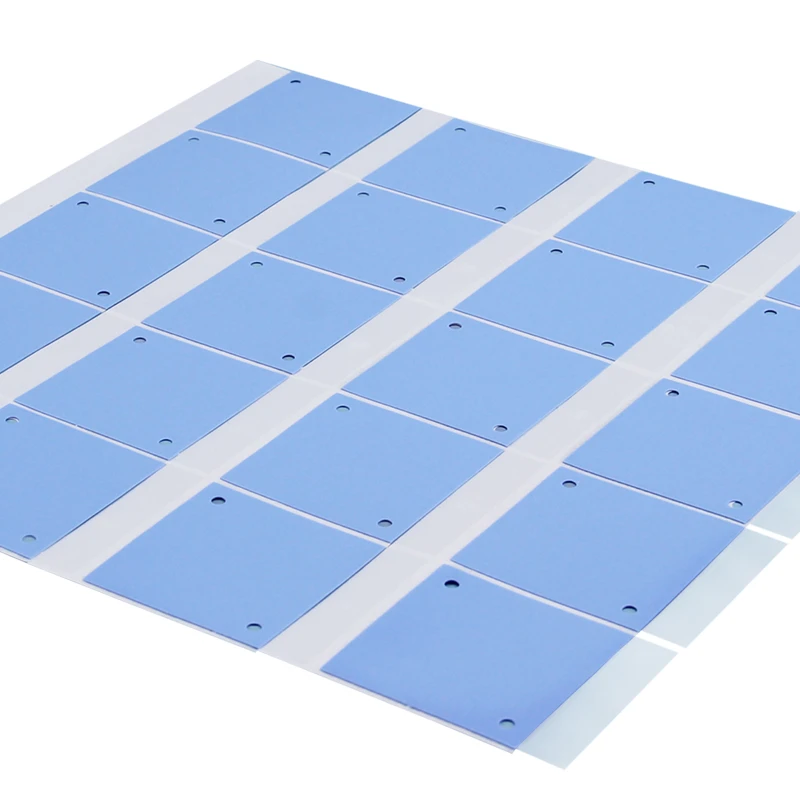
Custom Die-Cut Pads for SSD Form Factors
Custom thickness and shapes for M.2/U.2/PCIe cards—rapid sampling to speed qualification and production ramp.
관련 제품
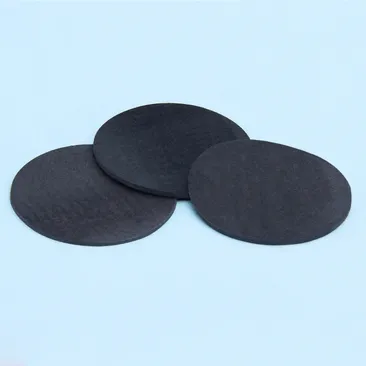
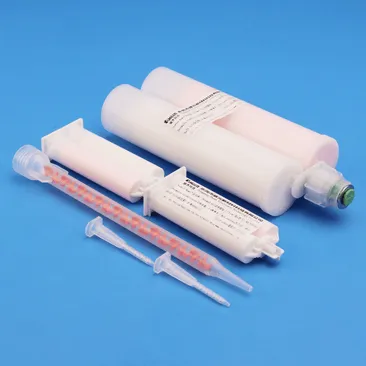
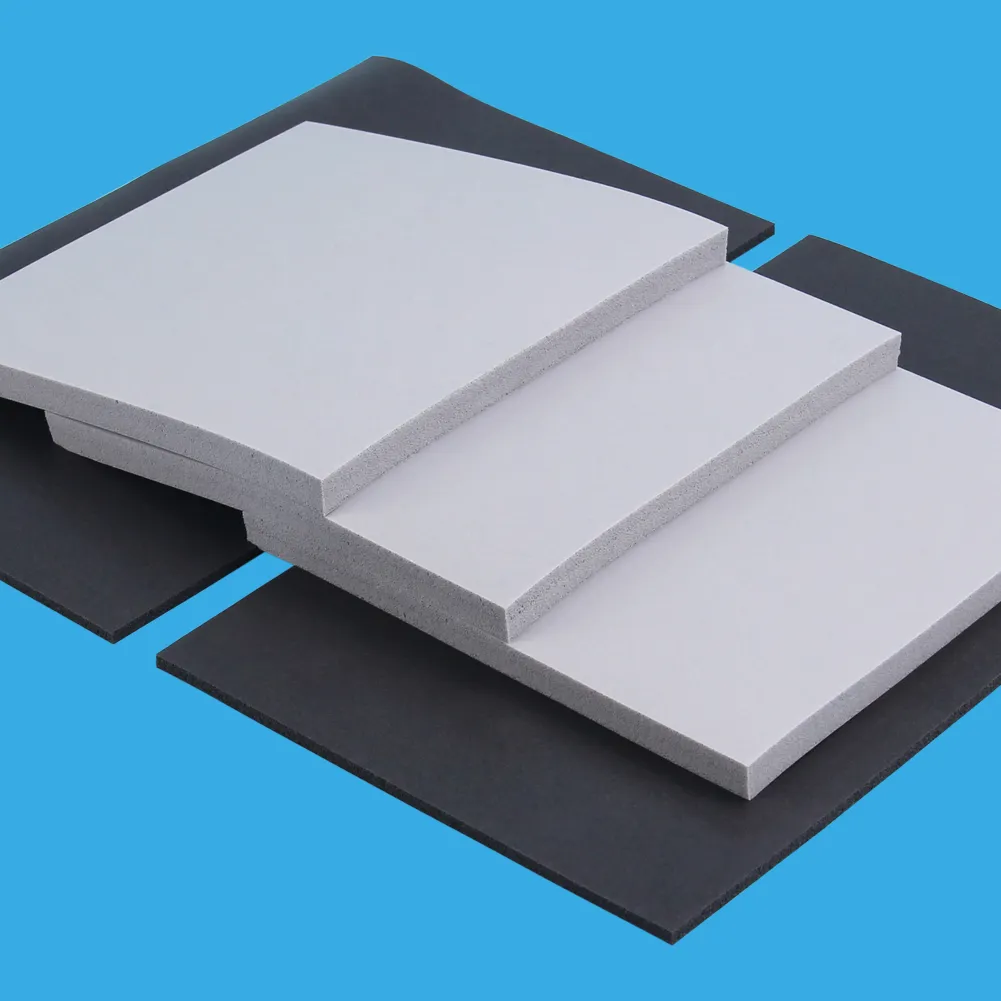
이 애플리케이션에서 일반적으로 사용되는 제품 카테고리를 살펴보세요. 이러한 카드를 자체 열 재료, TIM, 폼, 테이프 또는 납땜 관련 제품으로 대체할 수 있습니다.