-
추가:: 둥관 헝주탕 로드 8호 빌딩 2, 동관
-
전화: 전화 +86 135 4224 3751

Engineering Better Medical Equipment Using Graphene Thermal Conduction
Medical devices are overheating as designs shrink, and Graphene thermal conduction for medical equipment is quickly moving from lab talk to a practical fix buyers can’t ignore.
Recent analyses from MarketsandMarkets and IDTechEx show growing adoption of advanced thermal materials in healthcare manufacturing, with graphene-based solutions gaining procurement interest.
That shift points to a reality: better heat control means safer devices, longer lifespans, and fewer costly redesigns.
Key Insights: Graphene thermal conduction for medical equipment
➔ Traditional Limits: Aluminum and copper struggle with miniaturization, flexibility, and implantable hotspot risks.
➔ Graphene Advantages: CVD films and exfoliated graphene offer ultra-high thermal conductivity, lightweight flexibility, and biocompatibility.
➔ Integration Techniques: Liquid phase exfoliation, inkjet patterning, and laminating with boron nitride ensure uniform heat spreading in wearables and implants.
➔ Performance Validation: Rigorous testing of electrical, mechanical, and thermal stability in neuroprosthetics, cardiovascular devices, and portable imaging systems guarantees safe, reliable operation.
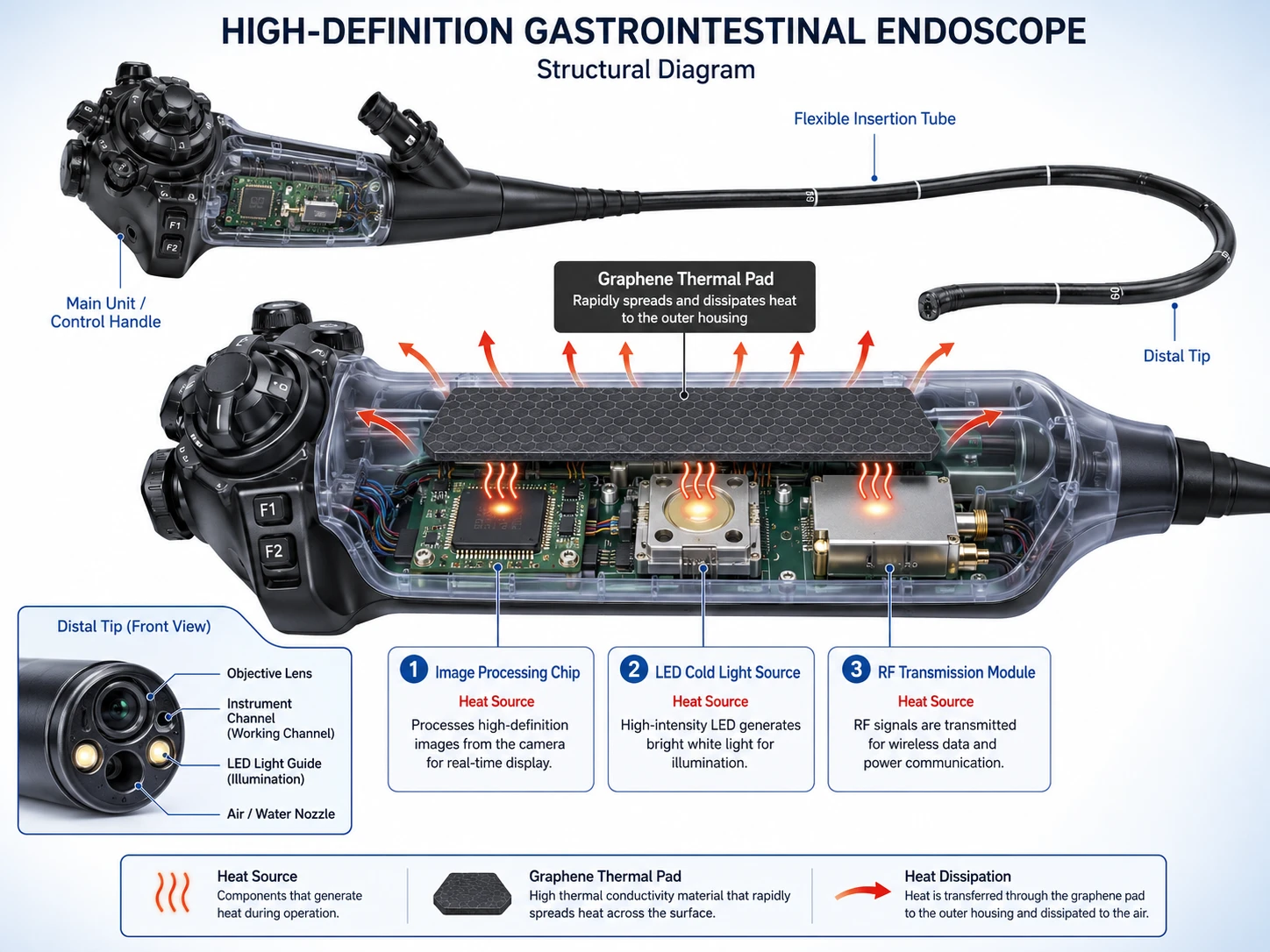
Why Are Traditional Heat Sinks Insufficient?
Medical electronics keep shrinking, yet heat keeps building. When discussing Graphene thermal conduction for medical equipment, it helps to break the phrase into practical parts: graphene, thermal conduction, medical, 및 equipment. Each word matters because heat control in healthcare devices is no small thing.
Inadequate Thermal Conductivity of Aluminum and Copper
When assessing 열 전도성 limits in traditional heat sinks, performance gaps become clear.
- Material Comparison in Heat Transfer1.1 Material properties
- Aluminum: lightweight, affordable, moderate 열 전달
- Copper: better 열 전도성, higher density
1.2 Performance Constraints

*   Rising **thermal resistance** in compact modules

*   Slower lateral heat spreading in miniaturized sensors


1.3 Impact on Medical Equipment

*   Reduced efficiency in high-power imaging probes

*   Temperature drift in portable diagnostic tools
| 재료 | 열 전도성(W/m-K) | Density (g/cm³) | Relative Heat Spreading Efficiency |
|---|---|---|---|
| Aluminum | ~237 | 2.70 | 보통 |
| Copper | ~401 | 8.96 | Good |
| 그래핀 | ~3000–5000 | ~2.2 | Exceptional |
| 흑연 | ~150–500 | 2.2 | Variable |
In Graphene thermal conduction for medical equipment, graphene shifts the ceiling entirely. Ultra-high 열 전도성 reduces 열 저항, improving stability in laser therapy systems and monitoring chips. That’s why advanced suppliers like 광택 재질 focus on graphene-based thermal films tailored for precise 열 전달 demands in healthcare hardware.
Poor Compatibility with Flexible Substrates in Wearable Devices
Rigid metals and flexible substrates don’t exactly get along.
- Bending stress leads to micro-cracks
- Repeated motion weakens device integration
- Delamination reduces long-term reliability
- Mechanical mismatch
- Metals resist bending
- Wearable devices require stretch and twist
- Biocompatibility concerns
- Sweat exposure affects medical equipment stability
- Long-term skin contact demands higher biocompatibility
★ Graphene layers adapt to curvature without sacrificing 기계적 특성.
Grand View Research noted in a 2025 wearable medical electronics update:
“Flexible thermal interface materials are becoming critical as device miniaturization accelerates and patient comfort becomes a purchasing driver.”
That shift directly boosts interest in Graphene thermal conduction for medical equipment, especially in smart patches and cardiac monitors. 광택 재질 integrates graphene films with polymers, allowing thin, breathable systems that manage thermal conduction in medical devices without stiff metal plates.
Short version? Flexibility plus efficient heat flow equals happier patients.
Heat Concentration Issues in Implantable Electronics
Inside the human body, heat concentration is serious business.
- Thermal Management Risks: 1.1 Localized hotspots
- Caused by bulk metal 열 방출 limits
- Increased tissue damage probability
1.2 Restricted airflow

*   No external cooling

*   Dependence on passive **thermal management**
2. Device Reliability Concerns: 2.1 Long-term stability
- Elevated temperature affects implantable electronics
- Signal drift in neural probes
2.2 Biocompatibility pressure

*   Chronic warmth stresses surrounding tissue
3. Why Graphene Changes the Game: 3.1 Ultra-thin heat spreaders. 3.2 Reduced thermal gradients. 3.3 Enhanced 디바이스 안정성
In Graphene thermal conduction for medical equipment, ultra-thin graphene disperses heat laterally before it accumulates. That smoother 열 방출 profile protects tissue while maintaining probe accuracy. For cardiovascular implants and bio-sensing chips, controlled 열 관리 isn’t optional—it’s survival-level important.
When advanced materials enter the scene, metal blocks start to look outdated. Graphene-based solutions, including those developed by 광택 재질, bring lightweight structure, higher 열 전도성, and safer performance to next-generation medical systems.
3 Reasons You’ll Love Graphene-Enhanced Thermal Modules
Graphene thermal conduction for medical equipment is no longer lab talk; it’s shaping real devices in hospitals and clinics. When heat builds up inside scanners or wearable monitors, performance drops fast. That’s why Graphene thermal conduction for medical equipment is becoming a go-to fix for engineers who care about safety, speed, and comfort.
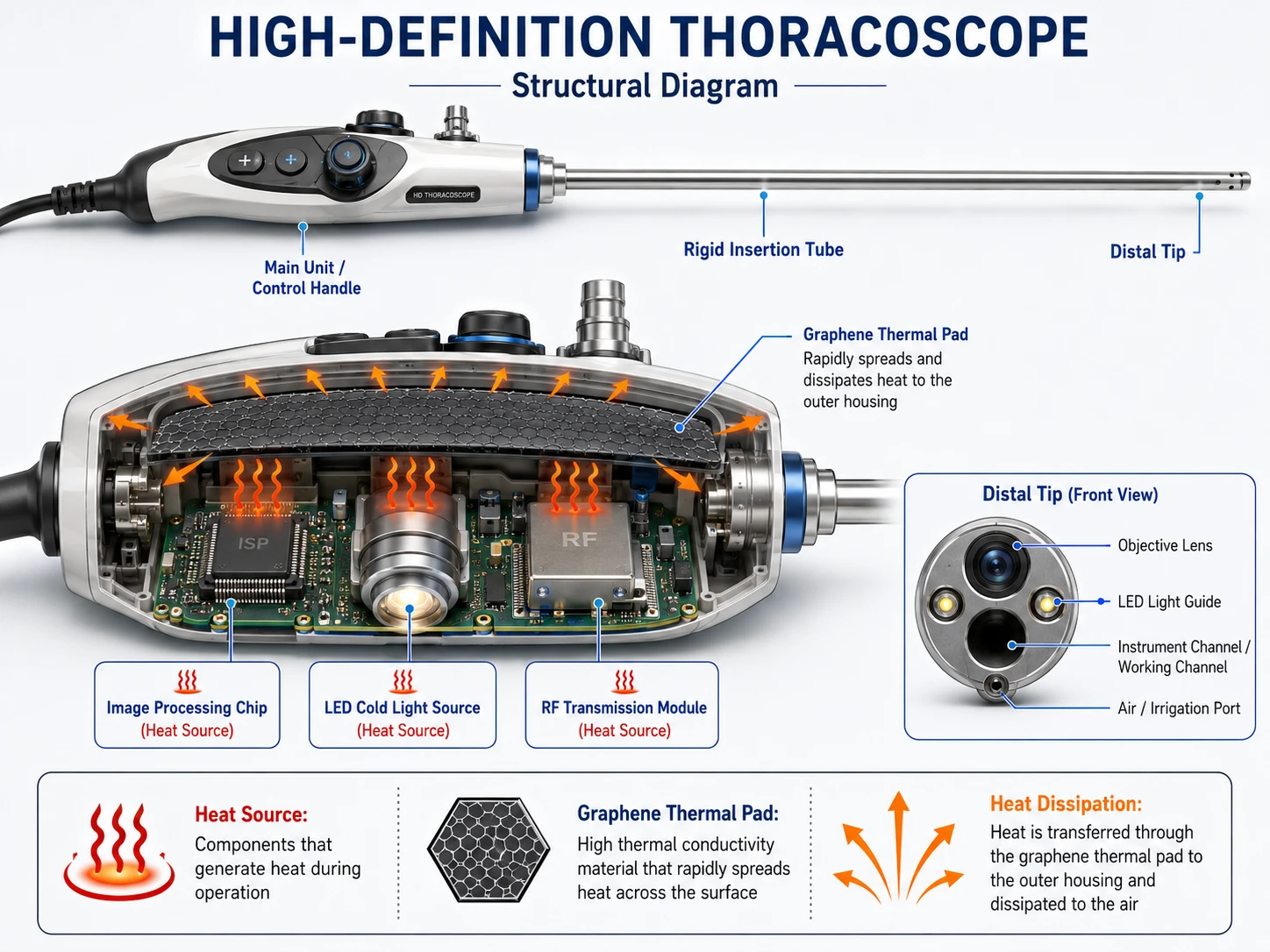
Reason 1: Superior Thermal Conductivity from CVD Graphene Films
다음과 같은 경우 열 전도성, CVD graphene stands out in materials science for moving heat with serious efficiency. In medical equipment, that translates into steadier device performance and longer operating cycles.
- Core advantage
- Graphene films form ultra-thin pathways for rapid 열 방출.
- 안정적 열 관리 reduces hotspots in imaging modules.
- Clinical impact
- Portable CT components stay cooler.
- Diagnostic probes maintain calibration accuracy.
- Engineering value
- Smaller heat sinks
- Thinner device stacks
“Advanced carbon materials are accelerating thermal solutions in next-generation healthcare hardware,” noted IDTechEx in its 2025 outlook on thermal interface materials.
For brands like 광택 재질, integrating Graphene thermal conduction for medical equipment into CVD film modules means practical gains, not hype.
Reason 2: Lightweight, Flexible Substrates with Exfoliated Graphene
Think wearables, smart patches, rehab robotics. All need lightweight materials 그리고 flexible substrates that bend without trapping heat.
- Add exfoliated graphene into polymer matrices.
- Improve 재료 속성 like tensile strength and thermal spread.
- 지원 device miniaturization in compact medical sensors.
Quick wins:
- Lower weight
- Better skin contact
- Stable graphene thermal management under motion
여기에서 Graphene thermal conduction for medical equipment meets daily comfort. The tech feels invisible, yet it quietly keeps temperatures in check.
Reason 3: Enhanced Biocompatibility for Surgical Instruments
Upgrading tools with graphene coating isn’t just about cooling.
Step 1: Apply 표면 수정 using graphene oxide.
Step 2: Enhance biocompatibility and corrosion resistance.
Step 3: Improve infection prevention in high-contact surgical instruments 그리고 medical implants.
The result? Better patient safety, longer instrument life, and smarter biomedical engineering decisions. With support from 광택 재질, graphene thermal conduction solutions align thermal control with clinical trust.
How Does Graphene Thermal Conduction For Medical Equipment Work?
Modern hospitals pack serious computing power into tight spaces. That means heat builds up fast. Graphene thermal conduction for medical equipment addresses this challenge by moving heat away from sensors, chips, and probes before performance drops. From imaging carts to implantable tools, smart heat control keeps devices accurate, safe, and long‑lasting.
From Graphene Nanoplatelets to Thermal Interface Materials
Graphene nanoplatelets sit at the heart of advanced 열 인터페이스 재료 used in medical equipment. In graphene thermal conduction for medical equipment, these plate‑like nanomaterials connect microscopic gaps between chips and heat sinks, improving 열 전도성 and steady 열 전달.
- Key material roles:
- High in‑plane heat spreading
- Low thermal resistance contact
- Mechanical compliance for delicate sensors
- Filler loading ratio
- Interface thickness
- Operating temperature range
| 재료 유형 | 열 전도성(W/m-K) | Interface Resistance (°C·cm²/W) | Typical Medical Use |
|---|---|---|---|
| Silicone TIM | 1-3 | 0.5–1.2 | Basic monitors |
| Graphite Pad | 5–15 | 0.3–0.8 | Imaging modules |
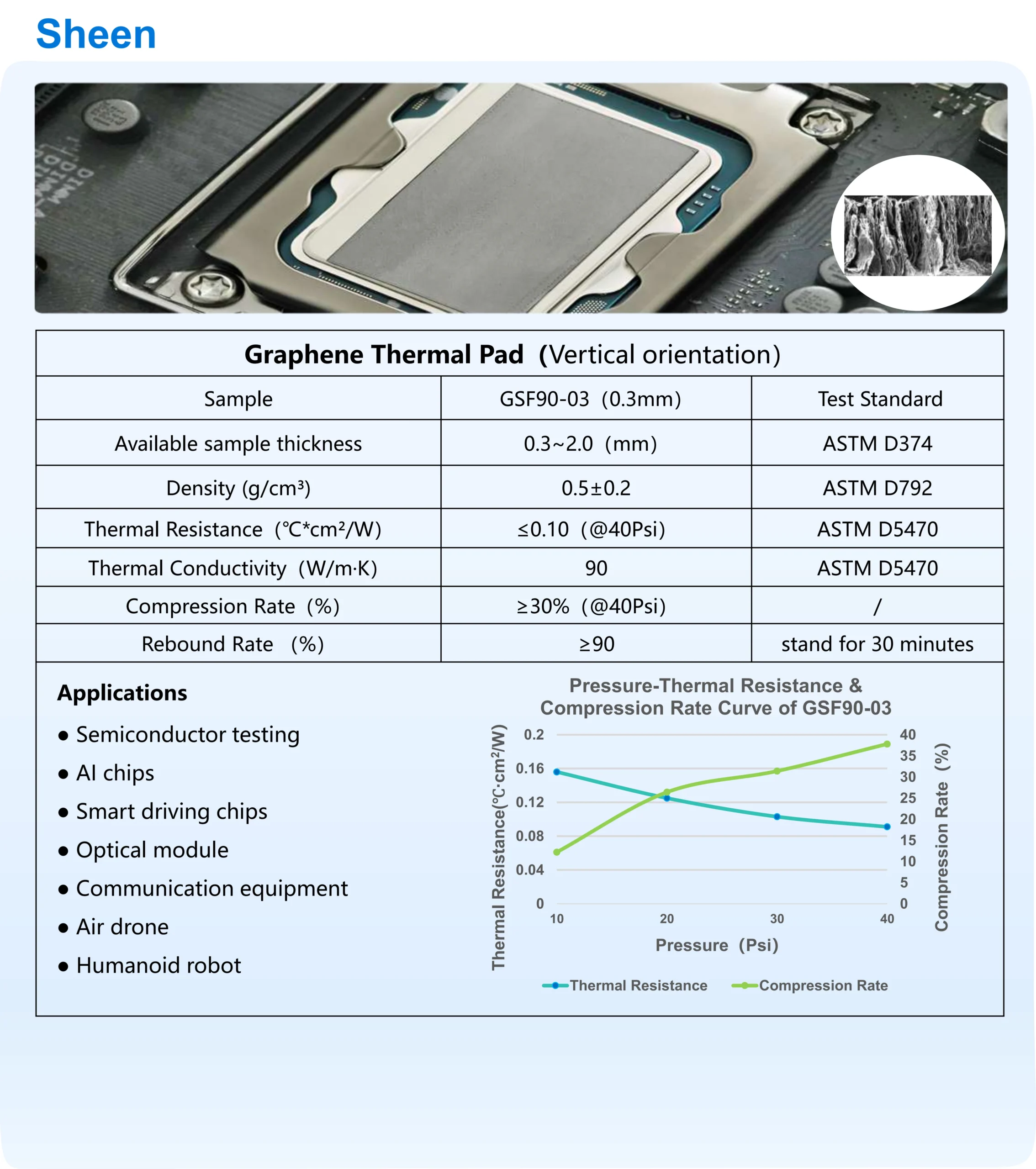
| Graphene TIM | 20–150 | 0.1–0.3 | High‑precision diagnostics |
Within graphene thermal management for healthcare devices:
- 그래핀
- Structure
- Layered carbon lattice
- High phonon mobility
- Function
- Rapid lateral heat spreading
- Reduced hotspot formation
- Structure
Brands like Sheen Materials fine‑tune dispersion so the network forms clean, continuous heat paths. That’s how graphene heat conduction in medical systems turns raw material science into stable clinical performance.
Role of Liquid Phase Exfoliation in Optimizing Heat Paths
Liquid phase exfoliation drives scalable graphene production for medical applications. By separating graphite into few‑layer flakes, this exfoliation method supports uniform dispersion in inks and composites designed for precise 열 방출.
In graphene thermal conduction for medical equipment, optimized heat paths depend on:
- Flake size distribution
- Surface functionalization
- Binder compatibility
Process flow for thermal optimization:
- Graphite selection
- Solvent dispersion
- Ultrasonic exfoliation
- Centrifugal separation
- Integration into conductive matrix
Inside a flexible diagnostic patch:
- Substrate layer
- Printed graphene network
- Continuous lateral pathways
- Printed graphene network
- Encapsulation layer
- Moisture barrier
- 전기 절연
Short and simple: better flakes, better flow. Clean dispersion means fewer thermal dead zones. Graphene thermal solutions for medical devices rely on this controlled microstructure to keep compact electronics cool without bulky metal sinks.
Integration with Phase Change Materials in Portable Imaging Systems
Phase change materials support 열 관리 by absorbing peaks of heat, while graphene accelerates that transfer. In portable imaging systems, fast heat storage and release protect detectors and processors.
In graphene thermal conduction for medical equipment:
- Graphene forms conductive bridges inside PCM.
- Heat spreads quickly before phase transition completes.
- Temperature swings narrow under repeated load cycles.
Nested integration in medical imaging carts:
- Imaging core
- Processor array
- Graphene‑enhanced PCM layer
- Sensor block
- Secondary heat spreader
- Processor array
- Outer housing
- Passive airflow channels
“Advanced thermal interface and phase change composites are projected to see strong adoption in compact medical imaging platforms through 2026, driven by miniaturization and reliability demands.” — IDTechEx thermal materials outlook, 2025
That trend aligns with graphene heat transfer for medical imaging, where stable regulation equals sharper scans and longer device life. Sheen Materials supports this integration with tailored graphene additives matched to PCM chemistry.
Achieving Thermal Stability and Corrosion Resistance in Biomedical Probes
Graphene coatings add 열 안정성 그리고 corrosion resistance to biomedical probes exposed to saline, enzymes, and repeated sterilization. In graphene thermal conduction for medical equipment, protection matters as much as heat flow.
Performance layers typically include:
- Base metal probe
- Adhesion promoter
- Graphene barrier coating
- Biocompatible top seal
- Adhesion promoter
Benefits stack up:
- Lower thermal drift
- Improved 내열성
- Enhanced 내구성
- Maintained biocompatibility
Quick facts:
- Thin coating thickness: 1–10 µm
- Stable across autoclave cycles
- Reduced oxidation rate
Graphene thermal management for healthcare tools is not just about moving heat; it’s about keeping accuracy steady over years of use. With carefully engineered coatings from Sheen Materials, graphene heat conduction in medical systems pairs reliability with long‑term protection.
Graphene Vs. Copper: Which Spreads Heat Better?
Heat control in compact healthcare electronics is no small deal. From implantable sensors to wearable monitors, Graphene thermal conduction for medical equipment is gaining attention as devices shrink and power density rises. Let’s break down how graphene and copper handle real-world thermal stress.
그래핀
When discussing Graphene thermal conduction for medical equipment, performance starts at the atomic scale and moves outward into flexible system design. This nanomaterial behaves differently from traditional materials, especially inside dense electronics and implantable medical devices.
- Ultra-high 열 전도성 supports rapid in-plane 열 방출
- Thin-film integration improves cooling in compact sensors
- Strong 유연성 suits soft, skin-mounted monitors
- Heat spreads laterally across a graphene sheet.
- Local hotspots flatten fast.
- Surface temperature stays more uniform.
That matters in thermal conduction for medical equipment, where uneven heating can irritate tissue or shorten device life.
| 재료 | 열 전도성(W/m-K) | Thickness Capability | Flexibility Level |
|---|---|---|---|
| 그래핀 | 2000–5000 | <100 nm films | Excellent |
| Copper | ~400 | >10 µm typical | 보통 |
| Aluminum | ~237 | >20 µm typical | 낮음 |
In advanced cooling stacks:
- Substrate layer
- Graphene coating
- Interface to micro-heater
- Embedded biosensor array
- Graphene coating
This hierarchy supports stable graphene heat conduction without adding bulk. For companies scaling graphene heat dissipation in medical devices, 광택 재질 aligns material tuning with device-level safety targets.
Graphene thermal conduction for medical equipment keeps showing up in R&D labs for one reason: it spreads heat fast, evenly, and in ultra-thin formats.
Copper
Copper remains a trusted thermal conductor in many medical applications. It handles steady 열 전달 well and pairs nicely with strong electrical conductivity.
✓ Reliable bulk cooling
✓ Proven manufacturing supply chains
✓ High ductility for formed parts
Still, in miniaturized implants, thickness becomes a wall. Copper plates move heat vertically better than laterally in thin formats. That limits uniform 열 방출 when circuits are tightly packed.
In layered assemblies:
- Copper base
- Die attach
- Active chip
- Encapsulation shell
- Die attach
Heat must cross interfaces repeatedly. Each boundary adds resistance. For rigid hospital equipment, that’s fine. For bendable wearables, less so.
Graphene thermal conduction for medical equipment often outperforms copper where flexibility, weight, and ultra-thin spreading dominate design goals. Copper wins in cost and familiarity. Graphene wins when engineers need lighter structures, smoother temperature profiles, and improved biocompatibility potential in next-generation medical devices.
Engineering Checklist: Graphene Integration Steps
Graphene thermal conduction for medical equipment is moving from lab talk to clinic reality. Hospitals want cooler, lighter, smarter systems. This checklist walks through material selection, fabrication, lamination, verification, and clinical validation—keeping 그래핀, thermal control, and real-world medical demands in sync. And yes, 광택 재질 plays a hands-on role in scaling these ideas safely.
Step 1 – Selecting Reduced Graphene Oxide for Cardiovascular Devices
Material Selection Framework
- Clinical Compatibility
- Biomaterials 규정 준수
- Hemocompatibility for Cardiovascular Devices
- Electrical Needs
- Target Electrical Conductivity ≥ 10³ S/m
- Thermal Goals
- 안정적 thermal conduction materials for equipment
| 속성 | rGO Range | Target for Devices | 테스트 방법 |
|---|---|---|---|
| Conductivity (S/m) | 10²–10⁴ | ≥10³ | Four-point probe |
| 열 전도성(W/m-K) | 150–500 | ≥200 | Laser flash |
| Tensile Strength (MPa) | 80–150 | ≥100 | ASTM D882 |
| Thickness (µm) | 5–50 | ≤20 | SEM |
| Biocompatibility Index | Pass/Fail | Pass | ISO 10993 |
Reduced Graphene Oxide balances conductivity and safety. For Graphene thermal conduction for medical equipment, that balance is the sweet spot. 광택 재질 supplies medically screened rGO tailored for implant-grade Medical Equipment.
Step 2 – Patterning via Inkjet Printing on Polymer Composites
Fabrication isn’t guesswork.
- Inkjet Printing supports precise Patterning
- Works well on flexible Polymer Composites
- Scales for repeatable Graphene Integration
Printing Technology Path
- Ink formulation
- Substrate prep
- Layer deposition
- Low-temp curing
Clean lines mean stable graphene heat conduction in medical devices. When done right, Graphene thermal conduction for medical equipment becomes consistent, not experimental.
Step 3 – Laminating with Boron Nitride Heat Sinks
Lamination Stack Design
- Top: Graphene Layers (conductive)
- Middle: Adhesive interface
- Base: 질화 붕소 for insulated Heat Sinks
Why it matters:
1) Fast lateral heat spread
2) Electrical isolation
3) Long-term Thermal Management
This combo keeps sensors calm under pressure. Clinics hate overheating alerts. 광택 재질 engineers composite-ready laminates tuned for graphene thermal management in compact monitors.
Step 4 – Verifying Electrical Conductivity and Mechanical Strength
Quality control is not optional.
Verification Matrix
- Material Properties
- Conductivity drift <5%
- Stable sheet resistance
- 기계적 강도
- Bend cycles >10,000
- Performance Metrics
- Heat dissipation under 5W load
Short tests. Long reliability. That’s how Graphene thermal conduction for medical equipment earns trust in wearable cardiac tools and imaging probes.
Step 5 – Field Testing in Neuroprosthetics and Oncology Equipment
Clinical validation ties everything together.
- Field Testing in Neuroprosthetics
- Thermal monitoring in Oncology Equipment
- Feedback from Biomedical Engineering teams
Real patients. Real heat loads. Real data.
When graphene thermal management holds steady through sterilization, vibration, and continuous operation, adoption grows fast. 광택 재질 supports pilot deployments, so Graphene thermal conduction for medical equipment performs exactly where it counts—inside working hospitals, not just controlled labs.