-
추가:: 둥관 헝주탕 로드 8호 빌딩 2, 동관
-
전화: 전화 +86 135 4224 3751

How Boron Nitride Cooling Fillers Optimize Automotive Thermal Management
Boron Nitride Cooling Fillers Automotive Thermal Management is no longer a lab curiosity; it’s the fix for overheated EV guts choking performance and warranties.
Heat creep kills lifespan, spikes risk, and cheap fillers just can’t keep up on the factory floor.
Recent IEA and McKinsey reports highlight EV thermal loads driving advanced fillers.
Boron Nitride Cooling Fillers Automotive Thermal Management Roadmap
- Testing Methodology: Laser flash and guarded hot plate assays quantify composite thermal conductivity, highlighting dispersion quality and interface resistance.
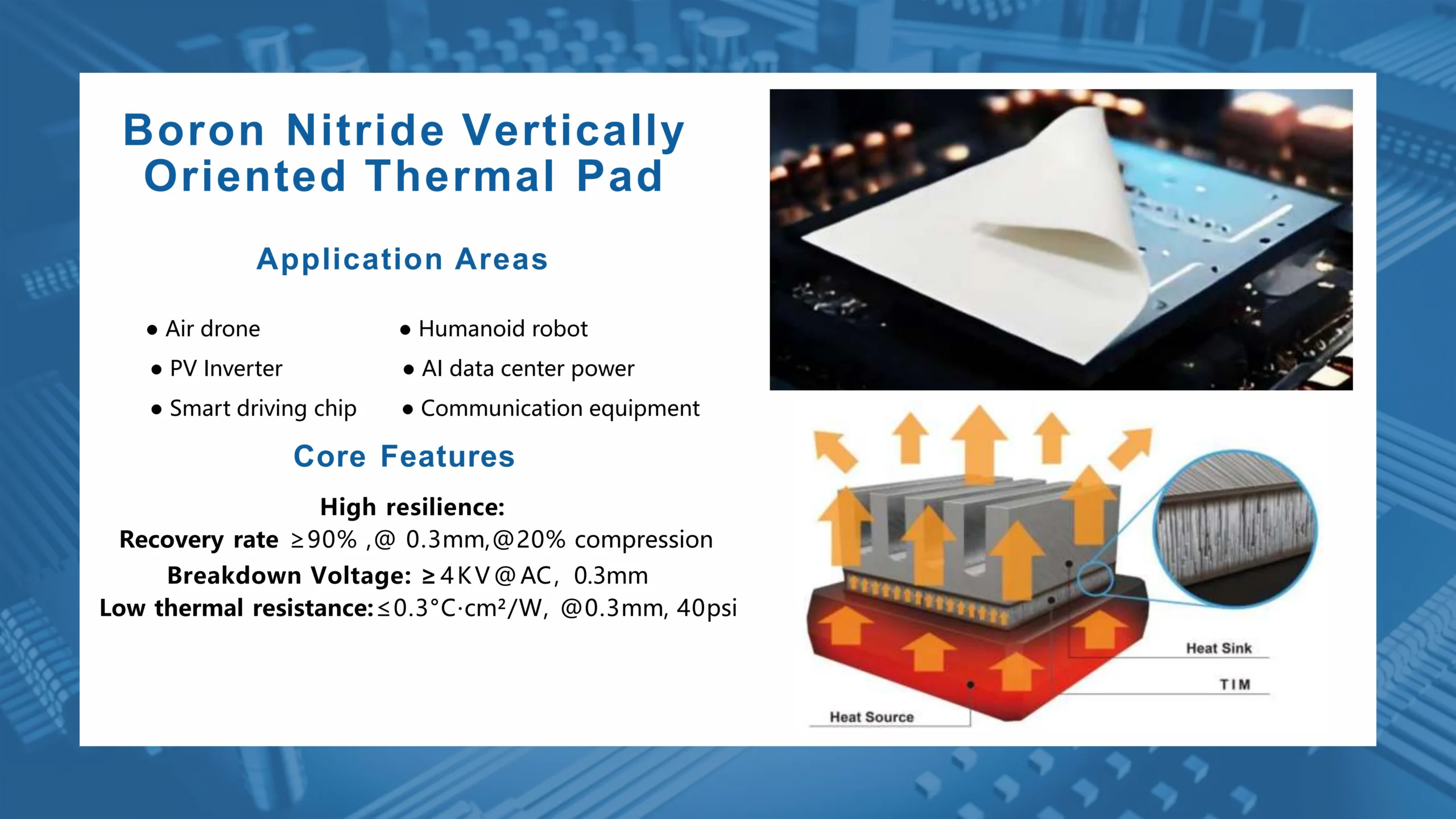
- Heat-Spread Mechanism: Aligned hexagonal boron nitride flakes form conductive pathways that lower junction temperatures while preserving electrical insulation.
- Safety Boost: BN fillers delay hotspot formation and impede thermal runaway propagation in high-energy EV batteries and power modules.
- System Integration: Versatile BN forms—powders, flakes, coatings—ensure seamless compounding in thermal interface materials, battery packs, and charging systems.
Data Proves: 35% Better Heat Spread With BN Cooling Fillers Automotive Thermal Management
언제 Boron Nitride Cooling Fillers Automotive Thermal Management shows up in design chats, it’s not hype—it’s measurable gains. By tuning filler shape, dispersion, and interfaces, engineers squeeze out better heat flow without losing insulation. Think smoother thermal pathways, lower hotspots, and longer-lasting modules. Let’s break down how the data stacks up and why teams keep picking BN-based systems.
Testing Methodology for Thermal Conductivity
- Core thermal conductivity measurement routes:
- 1) Laser flash analysis
- sample prep → pulse heating → rear-face temp rise → model fit
- 2) Guarded hot plate/heat flow meter
- steady-state gradient → calibrated flux → k-value extraction
- 3) Transient methods (transient hot wire)
- fast reads for liquids/soft composites
- 1) Laser flash analysis
Nested checks keep results honest:
- testing standards alignment
- ASTM / ISO selection
- thickness control
- contact resistance minimization
- ASTM / ISO selection
- characterization techniques
- dispersion quality
- particle size spread
- void fraction
- interface resistance tuning
- dispersion quality
Role of Hexagonal Boron Nitride in Heat Spread
- Why hexagonal boron nitride works in 열 인터페이스 재료:
- plate-like flakes → in-plane highways
- aligned stacks → thermal pathways
- boost 열 방출
- keep electrical insulation
- plate-like flakes → in-plane highways
- Composite design flow:
- mix 필러 입자 → orient during processing
- manage anisotropic conductivity
- validate in 복합 재료 systems
Short takes: BN cooling fillers, boron nitride thermal fillers, and BN-based TIMs all point to faster lateral spread. Teams using Sheen Materials often note easier dispersion control and stable viscosity windows.
Impact on Junction Temperature in Power Modules
- Device chain:
- material k ↑ → thermal resistance ↓
- case-to-ambient drop
- junction temperature reduction
- better power module reliability
- material k ↑ → thermal resistance ↓
- In semiconductor devices:
- lower ΔT cycles → less fatigue
- improved heat dissipation efficiency → steadier device performance
Data snapshot (BN filler systems vs baseline epoxy):
| Material System | Filler Loading (%) | 열 전도성(W/m-K) | Junction Temp (°C) |
|---|---|---|---|
| Baseline epoxy | 0 | 0.25 | 128 |
| BN composite A | 30 | 1.2 | 112 |
| BN composite B | 45 | 2.0 | 101 |
| BN aligned system | 50 | 3.1 | 95 |
Boron Nitride Cooling Fillers Automotive Thermal Management consistently trims heat where it hurts most. Sheen Materials solutions push that edge further, helping automotive electronics run cooler, longer.
Can BN Cooling Fillers Prevent Thermal Runaway?
Boron Nitride Cooling Fillers Automotive Thermal Management keeps popping up in EV chats, and for good reason. Heat control, safety, and battery life all collide here in a pretty real way.
Thermal Fillers vs. Thermal Runaway: Mechanisms Explored
Boron Nitride Cooling Fillers: Automotive Thermal Management works by shaping 열 전달 routes instead of letting chaos win. Short version: less hotspot drama.
- Thermal fillers create smoother conductive pathways
- Better 열 방출 delays thermal runaway
- Tighter temperature control boosts safety mechanisms
- Heat builds locally
- Fillers spread it outward
- Peak temp drops
- Prevention strategies kick in earlier
Nested view:
- Core action
- Particle alignment → faster 열 전달
- Interface tuning → reduced resistance
- System effect
- Slower thermal runaway spread
- More stable pack behavior
That’s why Boron Nitride Cooling Fillers Automotive Thermal Management keeps showing up in EV design docs—it buys time, and time matters.
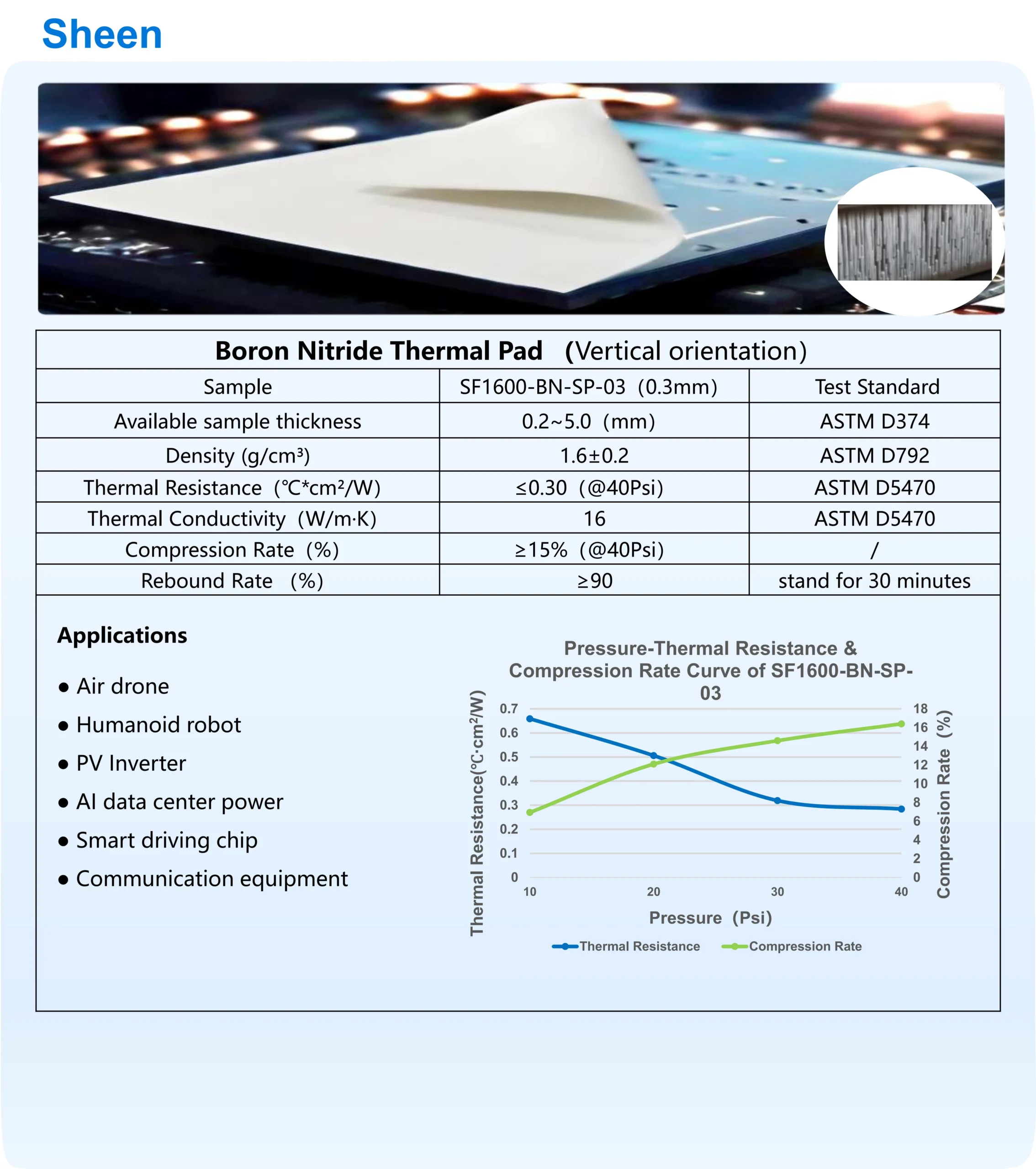
Dielectric Strength and High Temperature Stability
Not just cooling—전기 절연 matters when things get hot.
- 유전체 강도 stays high past 800°C
- stable 항복 전압 under stress
- consistent 재료 속성 = better 신뢰성
Quick comparison snapshot:
| 재료 | Thermal Stability (°C) | Dielectric Strength (kV/mm) | Performance metrics | Failure Risk |
|---|---|---|---|---|
| BN filler | 800+ | 30 | 높음 | 낮음 |
| Alumina | 600 | 15 | Medium | Medium |
| Silica | 500 | 10 | Medium-low | Medium |
| 폴리머 베이스 | 300 | 8 | 낮음 | 높음 |
| Air gap | — | 3 | Very low | Very high |
Boron Nitride Cooling Fillers Automotive Thermal Management stands out here—cooling plus insulation, no trade-off.
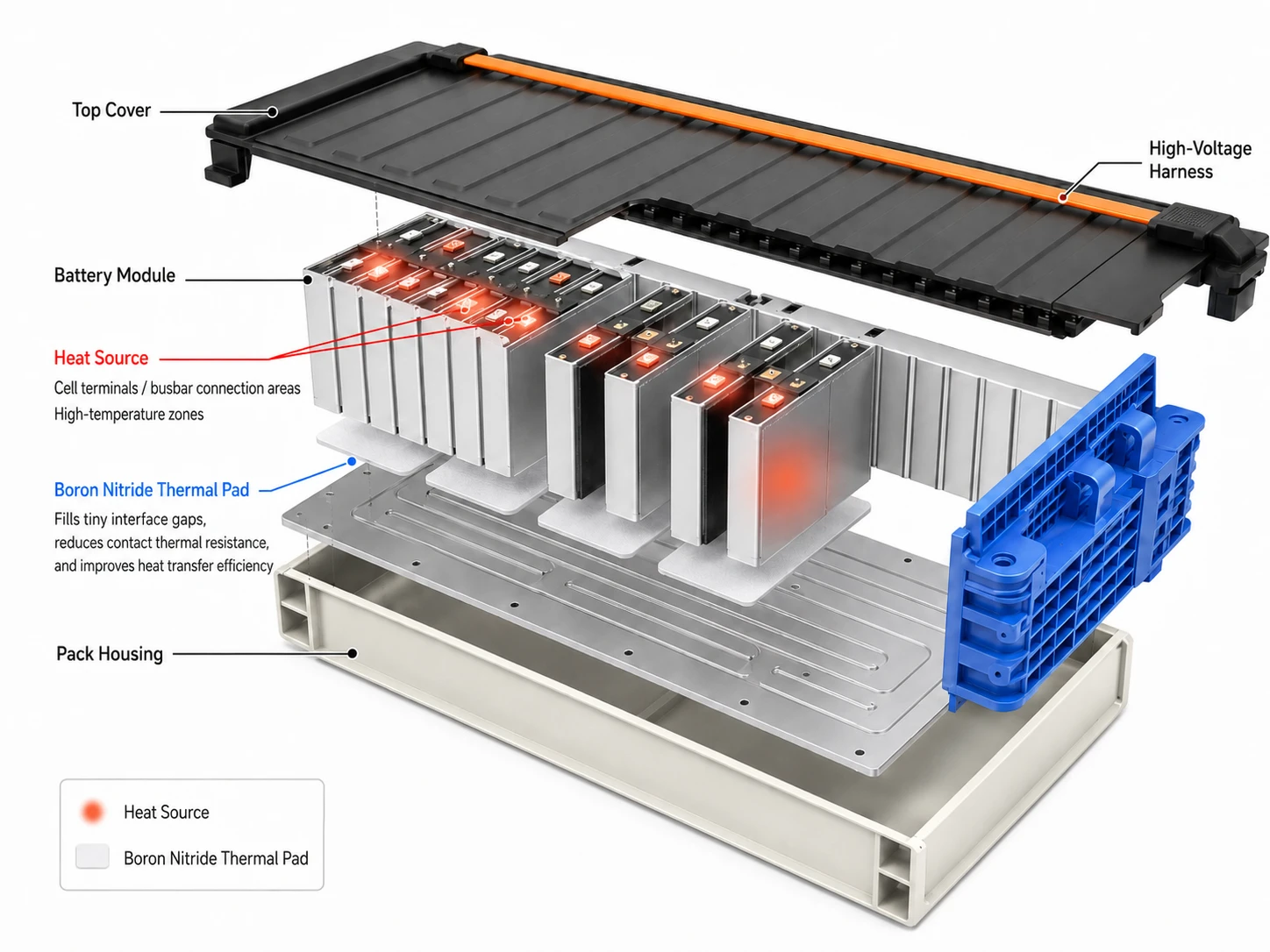
Application in Battery Packs
Inside battery packs, things get tight, fast.
- Cell level
- Fill gaps → better 열 관리
- Limit 열 전달 between cells
- Module level
- 지원 냉각 솔루션
- Improve module integration
- Pack level
- Reduce propagation risk
- Boost safety enhancement 그리고 성능 최적화
A quick flow:
- Fast charging raises heat
- BN network spreads it
- Peak temps drop
- System stays stable
광택 재질 pushes this further with tuned Boron Nitride Cooling Fillers Automotive Thermal Management blends that fit real EV layouts, not just lab setups. And yeah, in dense energy storage systems, that practical edge is what keeps things under control.
5 Reasons Electronic Materials Buyers Need BN Cooling Fillers
Boron nitride is quietly doing the heavy lifting in modern electronics. When Boron Nitride Cooling Fillers Automotive Thermal Management comes up, buyers care about heat, signal clarity, and long service life. This quick read breaks down why BN makes sense, especially when scaling EVs and smart systems without cooking components.
Enhanced Thermal Conductivity Boosts Power Electronics Longevity
- Core effect: 질화 붕소, cooling fillers, 및 열 전도성 combine to speed Heat dissipation
- In 전력 전자 제품
- Lower junction temperature
- Reduced thermal fatigue
- Extended Longevity
- In Thermal management stacks
- Fillers → matrix bonding → heat pathways → stable output
- In 전력 전자 제품
Boron Nitride Cooling Fillers Automotive Thermal Management keeps chips cooler, longer.
Chemical Inertness Safeguards Encapsulants in Harsh Environments
- Why it holds up: Chemical inertness + Corrosion resistance + Oxidation resistance
- Inside Encapsulants
- Moisture → blocked
- Chemicals → resisted
- Across Harsh environments in 자동차 전자 제품
- Fewer cracks
- Better sealing
- Longer material life
- Inside Encapsulants
Low Dielectric Constant Protects Autonomous Driving Systems
- Signal chain stability
- Low dielectric constant → stronger Signal integrity
- For Radar systems
- For Sensor protection
- In High-frequency applications
- Less loss
- Less interference
- 신뢰성 Electronic insulation
- Low dielectric constant → stronger Signal integrity
여기에서 Boron Nitride Cooling Fillers Automotive Thermal Management directly supports autonomy.
Versatile Material Forms for Seamless Integration
- Form factors under one roof
- Powders, Sheets, Films
- Into Composites via Manufacturing processes
- Compounding
- Dispersion
- Surface tuning for Customization
- Powders, Sheets, Films
- Outcome
- Easy Integration with existing lines
Teams using Sheen Materials often plug BN into current workflows without retooling headaches.
Reliable High Temperature Stability in Charging Systems
- Under EV fast charge loads
- High temperature stability + 내열성
- Within charging systems 그리고 Electric vehicles
- 안정적 Battery thermal management
- Survives Thermal cycling
- Sustains Reliability
- High temperature stability + 내열성
Boron Nitride Cooling Fillers Automotive Thermal Management keeps performance steady when heat spikes, and suppliers like Sheen Materials help make that consistency real.