-
추가:: 둥관 헝주탕 로드 8호 빌딩 2, 동관
-
전화: 전화 +86 135 4224 3751

Boron Nitride Thermal Conductive Solution for 5G Base Stations: Peak Performance
Heat is wrecking 5G uptime, and a Boron nitride thermal conductive solution for 5G base stations steps in like a fixer.
Power amps run hot, boards cram tighter, and old pads just can’t keep their cool, driving costs and headaches.
Analyses from Gartner and Yole Group highlight thermal management as a top constraint in 5G infrastructure, accelerating adoption of insulating heat-spreading materials.
Quick Insights: Boron nitride thermal conductive solution for 5G base stations
➔ Enhanced Heat Spreading: Hexagonal BN and nanosheets boost in-plane thermal conductivity, reducing hotspots in power amplifiers and RF modules.
➔ Electrical Insulation & Strength: BN fillers and coatings maintain dielectric integrity and high-voltage tolerance while dissipating heat efficiently.
➔ 장기적인 신뢰성: BN-based pads, gels and composites offer stability under thermal cycling, supporting compact, high-power 5G infrastructure.
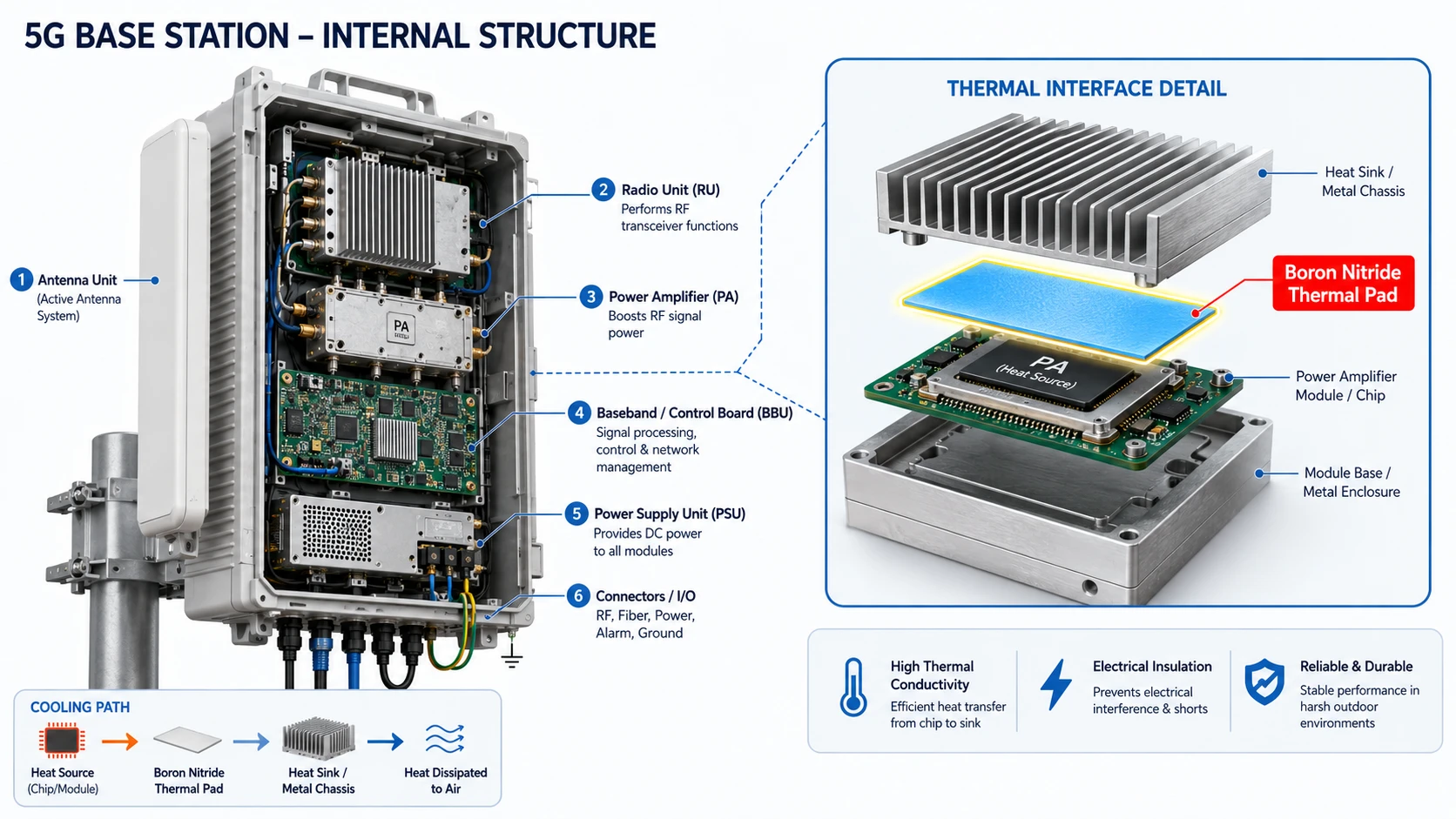
5G Base Station Overheating? Boron Nitride To The Rescue
5G gear works hard. Massive data flows push every 5G base station to its thermal limit, and overheating can quietly erode reliability. That’s where a Boron nitride thermal conductive solution for 5G base stations steps in. From power amplifier cooling to PCB heat dissipation, smarter 열 관리 keeps performance steady and downtime low.
Power Amplifier Hotspots and Hexagonal Boron Nitride
In high-density radio units, 핫스팟 form quickly around the power amplifier. A focused Boron nitride thermal conductive solution for 5G base stations tackles this through structured heat paths:
- Heat Source Control: 1.1 Identify localized 핫스팟 near the RF output stage. 1.2 Apply hexagonal boron nitride layers with high 열 전도성. 1.3 Maintain electrical insulation during peak signal load.
- Heat Spreading Layer: 2.1 Integrate BN-filled pads above amplifier packages. 2.2 Improve lateral 열 방출 across shielding covers. 2.3 Stabilize RF 성능 under sustained traffic.
- System-Level Stability: 3.1 Reduce thermal gradients inside the 5G base station cabinet. 3.2 Support long-term 열 관리 targets.
A properly engineered Boron nitride thermal conductive solution for 5G base stations keeps amplifiers cool without short-circuit risks. Sheen Materials fine-tunes BN morphology to balance insulation and heat flow.
Lowering Junction Temperature in RF Modules
When the 접합부 온도 rises in RF modules, signal drift and aging speed up. A Boron nitride thermal conductive solution for 5G base stations helps by improving 열 전달 right at the interface.
• BN-filled thermal gels cut contact resistance.
• Optimized particle loading boosts cooling efficiency.
• Stable insulation protects sensitive RF traces.
1) Apply BN gel between the chip and the heat spreader.
2) Compress to remove air gaps.
3) Validate reduced 접합부 온도 under full load.
Short result? Lower thermal resistance. Better 신뢰성. Longer module life.
광택 재질 supplies tailored BN fillers for demanding 5G base station thermal management projects.
PCB Heat Dissipation Boost with BN Nanosheets
Miniaturized electronics push PCB layers closer together, making overheating a real headache. A Boron nitride thermal conductive solution for 5G base stations strengthens in-plane heat flow through structured design:
- Material Integration: 1.1 Disperse BN nanosheets into prepreg resin. 1.2 Form continuous thermal pathways. 1.3 Enhance overall 열 전도성.
- Thermal Interface Optimization: 2.1 Pair the PCB core with BN-based 열 인터페이스 재료. 2.2 Align conductivity with baseplate direction.
- Operational Outcome: 3.1 Faster 열 방출 across multilayer boards.3.2 Stable temperatures in high-load 5G base station cycles.
이 Boron nitride thermal conductive solution for 5G base stations supports compact layouts while keeping temperatures in check. It’s a practical move for next-gen infrastructure.
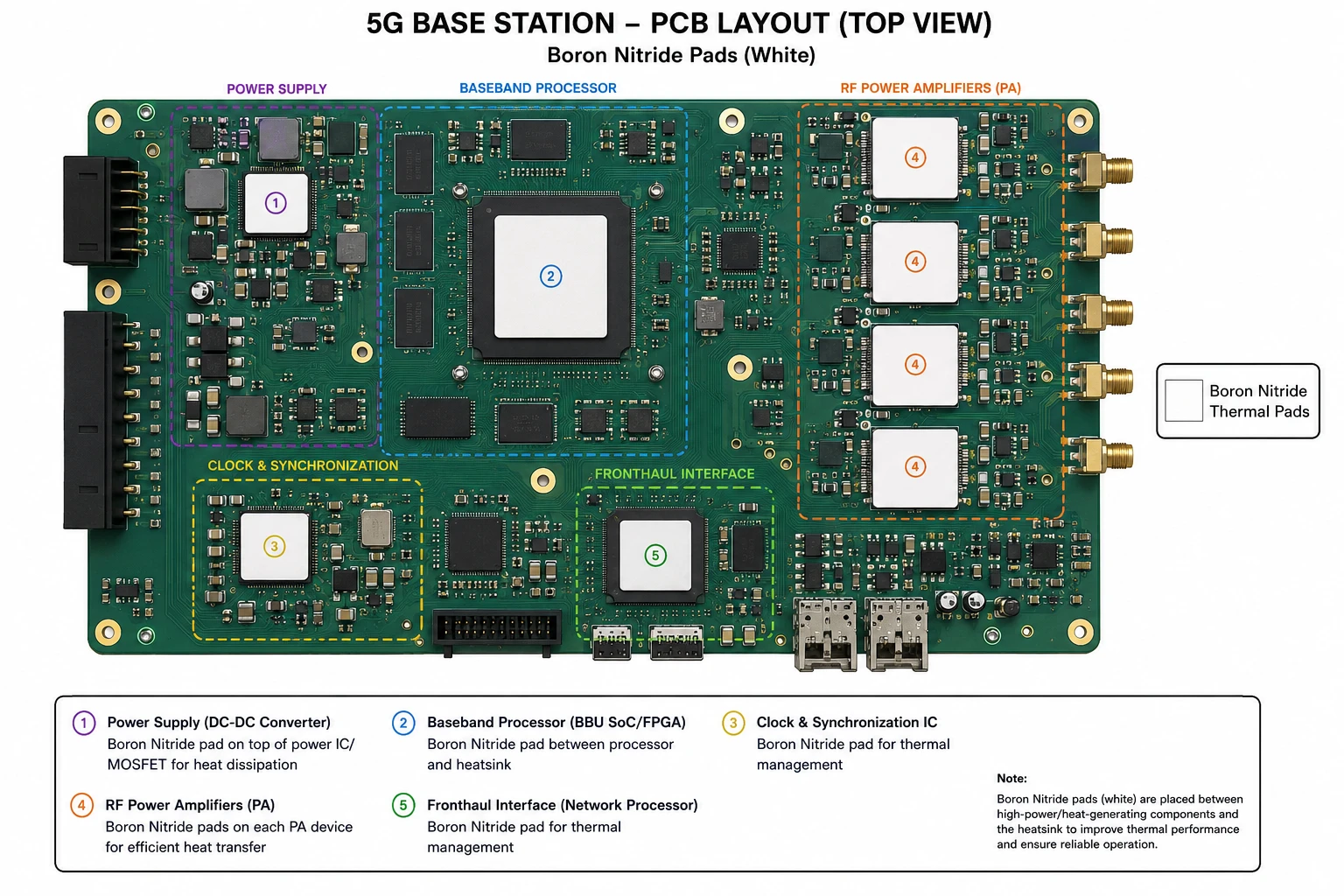
Data Proves: 45% Faster Cooling With Boron Nitride Solution
5G networks run hot. Massive data loads, dense hardware layouts, and nonstop uptime push systems to their limits. That’s why the Boron nitride thermal conductive solution for 5G base stations is gaining traction. By pairing electrical insulation with high heat flow, this boron nitride thermal management approach keeps performance steady without frying sensitive chips.
Thermal Conductivity Gains from Boron Nitride Fillers
그리고 Boron nitride thermal conductive solution for 5G base stations 개선 열 전도성 through engineered fillers embedded in 복합 재료.
- Material Layer Optimization: 1.1 Base Polymer Matrix
- Standard epoxy: limited 열 방출
- Silicone resin: moderate 열 관리
1.2 Boron Nitride Integration

*   Hexagonal **boron nitride** particles create thermal pathways

*   Reduced interface gaps enhance **performance enhancement**

2. Measured Conductivity Comparison| Material System | BN Filler (%) | 열 전도성(W/m-K) |
|---|---|---|
| Pure Epoxy | 0 | 0.25 |
| Epoxy + BN | 20 | 1.8 |
| Epoxy + BN | 35 | 3.2 |
| Silicone + BN | 40 | 4.5 |
| Hybrid Composite | 50 | 6.1 |
As filler loading rises, internal heat spreads faster. That translates to cooler RF modules and longer component life.
Electrical Insulation vs. Heat Transfer in Thermal Gels
Balancing 전기 절연 그리고 열 전달 sounds tricky, but boron nitride makes it practical.
- 높음 dielectric properties prevent short circuits
- 낮음 열 저항 speeds cooling
• Stable 열 인터페이스 재료 protect electronic components
1) In 5G base station power units, thermal gels sit between chips and heat sinks.
2) BN particles form conductive bridges for heat, not electricity.
3) The result? Efficient cooling solutions without signal interference.
In short bursts: cool chip. Stable signal. Longer uptime.
This boron nitride cooling solution keeps sensitive boards safe while moving heat where it belongs.
Dielectric Strength Improvements in Semiconductor Devices
그리고 Boron nitride thermal conductive solution for 5G base stations also boosts 유전체 강도 in high-voltage modules.
- Electrical Endurance: 1.1 Higher 항복 전압 thresholds. 1.2 Improved 재료 속성 under thermal cycling.
- Reliability in Packaging
- 강화됨 electronic packaging layers
- Reduced micro-crack formation
- Enhanced device performance
When semiconductor devices face voltage spikes and rising temperatures, stability matters. BN-enhanced systems maintain insulation integrity while dissipating heat efficiently. For dense 5G hardware, that combo isn’t just nice to have—it’s essential.
3 Key Factors In Thermal Management For 5G Equipment
5G hardware runs hot, and that’s just the reality. With rising high power density and tighter layouts in 5G base stations, smart cooling design makes or breaks uptime. A practical Boron nitride thermal conductive solution for 5G base stations helps control temperature, protect RF modules, and keep performance steady without overcomplicating system design.
High Thermal Conductivity for Power Amplifiers
In power modules, 열 전도성 is not a bonus feature; it is survival.
- Material Level: 1.1 질화붕소 fillers create direct heat pathways. 1.2 Aluminum nitride substrates spread heat evenly. 1.3 Hybrid ceramics improve 열 방출 under continuous RF output.
- Device Level: 2.1 전력 증폭기 in 5G base stations face extremely high power density. 2.2 Poor 열 관리 increases junction temperature and signal drift. 2.3 A Boron nitride thermal conductive solution for 5G base stations lowers thermal resistance between the chip and heat sink.
- System Level: 3.1 Reduced hot spots extend module lifespan. 3.2 Stable temperature protects RF calibration. 3.3 Maintenance cycles become less frequent.
A practical Boron nitride thermal-conductive solution for 5G base stations is not just about moving heat; it keeps amplification clean and stable during peak transmission.
Low Dielectric Constant in Antenna Arrays
High-frequency signals hate interference.
- 낮음 dielectric constant materials protect signal integrity.
- Stable substrates support dense antenna arrays.
- Consistent insulation improves RF performance in 5G communication.
At high frequency, heat and signal quality interact. If dielectric loss rises, temperature climbs. That’s why boron nitride works well: it balances insulation and thermal flow.
- Lower permittivity.
- Reduced parasitic coupling.
- Improved beam accuracy.
A Boron nitride thermal conductive solution for 5G base stations supports antenna efficiency while quietly managing heat in the background. It’s a smart match for advanced RF front ends, and companies like Sheen Materials optimize these formulations for real deployment needs.
Thermal Stability and Reliability under Peak Load
When traffic spikes, hardware feels it.
Step 1: During peak load, internal temperature rises quickly.
Step 2: Repeated thermal cycling stresses solder joints and substrates.
Step 3: Materials with strong 열 안정성 handle high-temperature operation without cracking.
Step 4: Long-term 신뢰성 in 5G base stations depends on controlled expansion and steady insulation.
A Boron nitride thermal conductive solution for 5G base stations supports long-term performance by combining insulation strength with controlled heat flow. That balance keeps radios online longer. Sheen Materials continues refining boron nitride-based thermal management strategies to meet real-world 5G deployment pressure.
Standard Vs. Boron Nitride-Enhanced TIM For 5G
5G hardware keeps getting hotter, and nobody likes fried electronics. Choosing the right Thermal Interface Material can make or break a thermal management solution for modern 5G base stations.
Standard TIM
Conventional Thermal Interface Material options still show up in many electronic components across 5G base stations, mainly because of cost and supply familiarity. Yet performance gaps are hard to ignore.
- 보통 열 방출
- Noticeable interface resistance
- Limited 열 전도성
From a technical view:
- Silicone grease-based conventional solutions fill surface gaps.
- Pads simplify assembly.
- Aging increases thermal resistance over time.
Now look deeper into performance layers:
- Material behavior
- Filler dispersion
- Uneven particle size reduces effective 열 방출
- Voids increase interface resistance
- Base polymer stability
- Oil bleeds under high temperature
- Pump-out under vibration
- Filler dispersion
- Application impact in 5G
- High power density amplifies thermal bottlenecks
- Outdoor cabinets face cyclic stress
In short bursts: stable at low loads. Struggles at scale. Not ideal for a thermal conductive solution for 5G under sustained traffic spikes.
Boron Nitride-Enhanced TIM
When performance is non‑negotiable, 질화 붕소 changes the game. A well-formulated boron nitride thermal conductive solution for 5G base stations boosts enhanced thermal conductivity while staying electrically insulating.
Performance comparison:
| 재료 유형 | 열 전도성(W/m-K) | 체적 저항(Ω-cm) | Typical 5G Use Case |
|---|---|---|---|
| Standard Grease | 1-3 | 10¹² | Low-power modules |
| Standard Pad | 2–5 | 10¹¹ | Mid-tier RRUs |
| BN-Enhanced TIM | 6–12 | 10¹⁴ | High power density AAUs |
Why BN works:
- Crystal structure
- Hexagonal lattice
- Fast phonon transport
- Strong heat transfer efficiency
- Hexagonal lattice
- 전기 절연
- Protects sensitive RF paths
- Stability
- 장기 열 관리 신뢰성
As noted in a 2025 Yole Group update on RF infrastructure materials:
“Thermal conductivity above 6 W/m·K is becoming a baseline requirement for next-generation active antenna systems.”
That’s exactly where a boron nitride thermal conductive solution for 5G base stations stands out. Brands like 광택 재질 focus on tuning filler alignment, particle grading, and viscosity control to create a reliable boron nitride for 5G base stations platform.
For engineers chasing lower junction temperatures, a boron nitride thermal conductive solution for 5G base stations simply delivers a smarter, longer-lasting thermal conductive solution for 5G hardware.
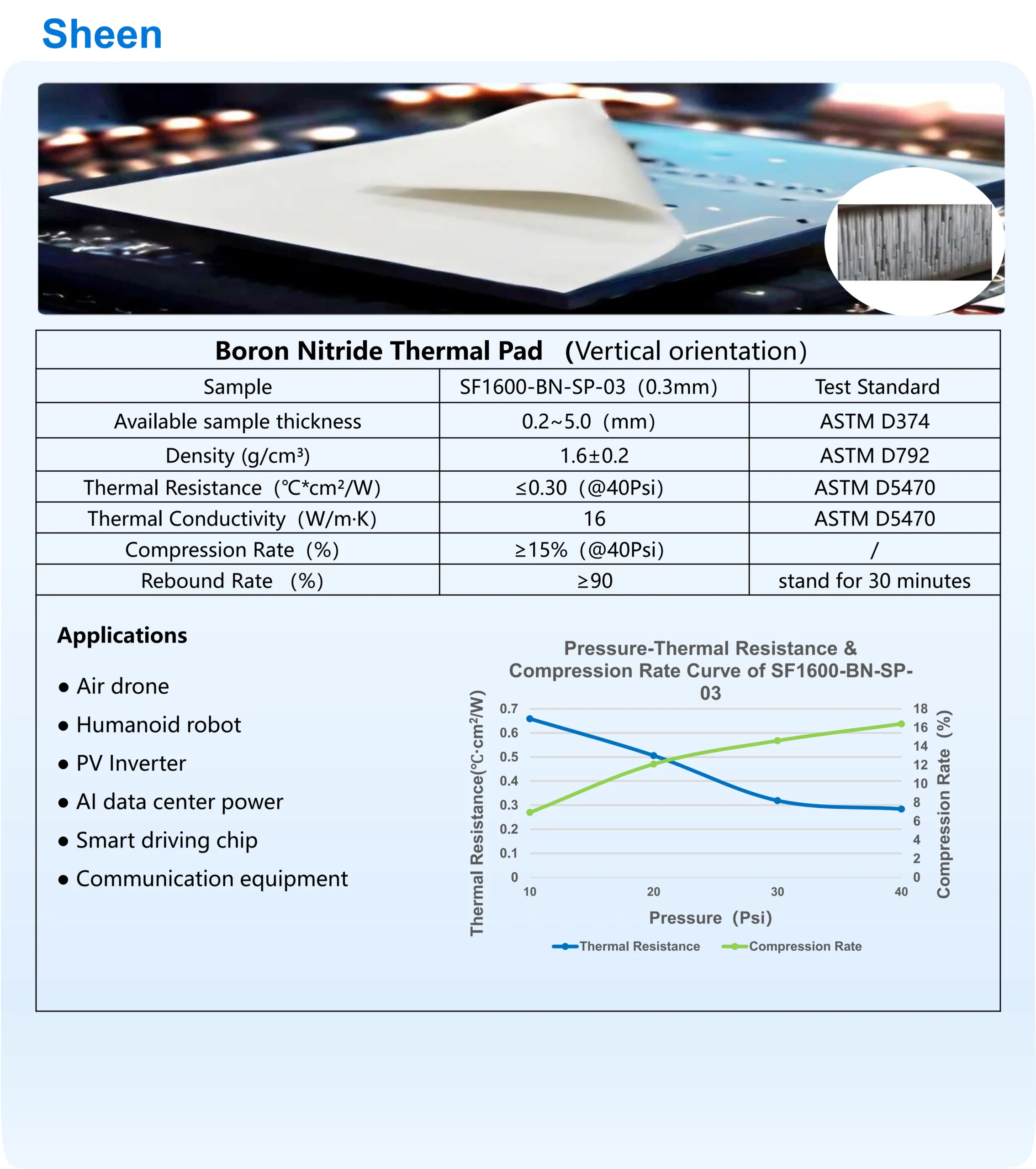
Scenario: Rural 5G Site – Thermal Challenges Solved
Rolling out rural 5G isn’t just about signal strength. Heat quietly decides uptime. Wind, dust, long cable runs, and sealed cabinets push electronics hard. A Boron nitride thermal conductive solution for 5G base stations keeps remote hardware stable, cool, and online when maintenance crews are hours away.
Pyrolytic Boron Nitride Coatings for Harsh Environments
Remote towers face dust storms, temperature swings, and moisture creep. Pyrolytic Boron Nitride acts as a barrier and heat spreader at once.
- Coatings built with Dielectric properties prevent leakage in high-frequency circuits.
- Stable under High temperature cycling.
- Shield metal parts from oxidation and Corrosion resistance loss.
- Surface prep of aluminum housings
- Vapor deposition of a ceramic BN layer
- Thickness calibration for the thermal management balance
- Electrical isolation validation
For rural cabinets, a Boron nitride thermal conductive solution for 5G base stations often starts with a coating strategy:
- Core protection
- RF cavity interior
- Power amplifier shells
- Environmental resistance
- Salt fog
- Condensation
Long service life matters. Fewer truck rolls. Lower cost. Better uptime.
When applied correctly, Pyrolytic Boron Nitride coatings stabilize thermal gradients, reduce micro-cracking, and maintain signal integrity in Harsh environments without adding bulk weight.
Thermal Pads on Outdoor Antenna Arrays
Outdoor panels hide serious heat density. Thermal pads filled with BN improve Heat dissipation across Antenna arrays and compact 5G equipment.
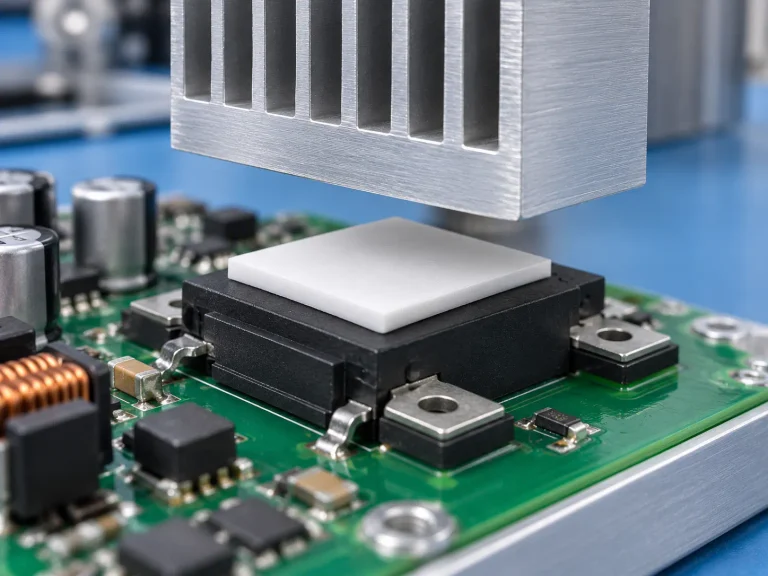
A Boron nitride thermal conductive solution for 5G base stations in pad form works as a reliable Thermal interface material between power modules and heat sinks.
Performance Snapshot of BN Thermal Pads
| 매개변수 | 표준 실리콘 패드 | BN-Filled Thermal Pads | Outdoor Spec Target | Field Result (Rural Site) |
|---|---|---|---|---|
| 열 전도성(W/m-K) | 1.5 | 4.5 | ≥4.0 | 4.6 |
| Operating Temp (°C) | -40~150 | -50~200 | ≥180 | 195 |
| 체적 저항(Ω-cm) | 10¹² | 10¹⁴ | ≥10¹³ | 10¹⁴ |
| Compression Set (%) | 35 | 18 | ≤20 | 17 |
| Weather Resistance (hrs UV) | 500 | 1200 | ≥1000 | 1250 |
Why it works in the field:
- Uniform contact pressure
- 안정적 Weather resistance
- Reduced thermal runaway
Inside antenna modules:
- Heat source
- Power amplifier
- Transceiver chip
- Interface layer
- BN pad
- Dissipation path
- Aluminum fin
- Ambient airflow
The result is steady throughput even during summer peaks.
Compounding Encapsulants with BN for Remote Reliability
Electronics in sealed enclosures expand and contract daily. That stress cracks standard Encapsulants. Adding 질화 붕소 changes the game.
A Boron nitride thermal conductive solution for 5G base stations in compounded resin form improves:
- 열 전도성
- 유전체 강도
- Structural stability of Electronic components inside 5G modules
Multi-layer reliability strategy:
- Material Level
- BN particle dispersion
- Controlled particle size distribution
- Module Level
- Potting of RF boards
- Shock absorption
- Site Level
- Lower maintenance intervals
- Reduced outage frequency
Short takeaways.
Cooler chips.
Longer lifespan.
Less stress on solder joints.
In 2025 outlook data, GSMA noted:
“Energy efficiency and thermal optimization remain central to sustainable 5G expansion, particularly in low-density and rural deployments.”
That’s where engineered compounding matters. Sheen Materials formulates BN-enhanced encapsulants tuned for remote cabinets, ensuring that every Boron nitride thermal-conductive solution for 5G base stations performs steadily across seasons. For operators pushing coverage outward, Sheen Materials delivers consistency without drama.
Future-Proof Cooling With Boron Nitride Solution
5G gear runs hot. Antennas are smaller, power density is higher, and outdoor cabinets face brutal weather. A Boron nitride thermal conductive solution for 5G base stations answers that heat challenge with electrical insulation and stable performance. When engineers talk about boron nitride thermal management, this is what they mean—cooler radios, longer life, fewer headaches.
CVD Boron Nitride Films for Next-Gen Transceivers
In compact radios, CVD-grown boron nitride films sit close to RF paths inside transceivers, quietly pushing heat away while blocking stray current. That balance is critical for a reliable Boron nitride thermal conductive solution for 5G base stations.
- Core performance indicators
- 열 전도성
- 유전체 강도
- Film uniformity
- Adhesion to substrates
- Application layering logic1) GaN or LDMOS device2) CVD boron nitride films interface3) Heat spreader4) Fin structure
| 속성 | CVD BN Film | Al₂O₃ | AlN | SiO₂ |
|---|---|---|---|---|
| 열 전도성(W/m-K) | 200–350 | 30 | 140–180 | 1.4 |
| Dielectric Strength (kV/mm) | 3-5 | 9 | 8 | 10 |
| Thickness Control (µm) | 1–50 | 50+ | 100+ | 1–10 |
| RF Compatibility | 높음 | Medium | 높음 | Medium |
Recent telecom outlooks from GSMA (2025) note that energy efficiency is now a top KPI for operators rolling out dense 5G networks.
“Energy intensity per bit must continue to fall as traffic grows,” GSMA Mobile Economy 2025 highlights.
That push makes boron nitride thermal management films more than a lab idea. 광택 재질 supplies precision-coated films tuned for high-frequency electronics, helping OEMs build a practical Boron nitride thermal conductive solution for 5G base stations.
BN Nanotubes in High Power Density Modules
When power modules get squeezed for space, BN nanotubes step in.
- High axial thermal conductivity
- Mechanical strength for vibration zones
- Chemical stability outdoors
Integration often follows this path:
1) Disperse BN nanotubes into the interface matrix
2) Align within the hotspot direction
3) Cure under controlled pressure
4) Validate heat dissipation in 전원 모듈
In high-density RF units, heat dissipation improves not just by material choice but by alignment strategy. Tiny tubes, big difference. That’s how advanced materials quietly upgrade electronics reliability.
Polymer Composites with Hexagonal BN for Longevity
Outdoor cabinets need toughness. Polymer composites filled with hexagonal boron nitride act as 열 인터페이스 재료, encapsulation layers, and structural fillers.
• Lower thermal resistance
• Better heat transfer
• Improved reliability under thermal cycling
Inside a typical base station cabinet:
- Encapsulation layer1) Silicone or epoxy matrix2) h‑BN filler network
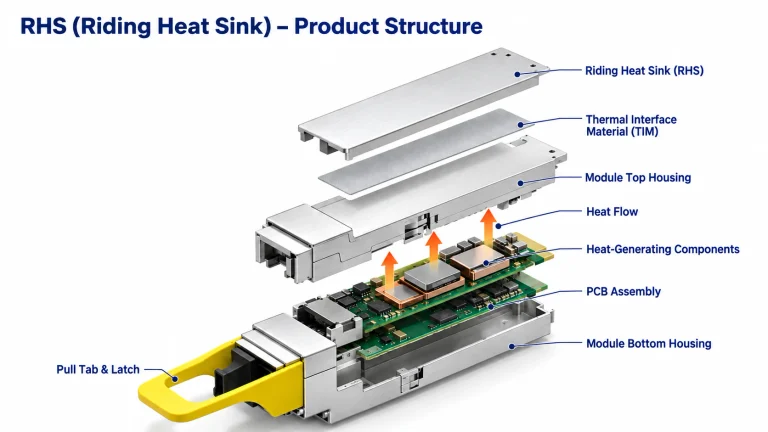
- Heat path design1) Device → TIM2) TIM → aluminum plate3) Plate → ambient air
The result is a stable Boron nitride thermal conductive solution for 5G base stations that handles rain, dust, and 24/7 loads. 광택 재질 engineers these composites to balance flow, curing speed, and thermal conductivity—so operators get longevity without complicated processing.
In short, boron nitride thermal management keeps 5G cool, steady, and ready for what’s next.