-
ADD: Building 2, No. 8 Hengzhutang Road, Dongguan
-
Phone: +86 135 4224 3751

Why Flexible Thermally Conductive Insulating Film is Crucial for Power Electronics
It’s wild how the smallest things in a power module can throw everything off—like the heat sneaking in under the radar and frying your trusty electronics from the inside out. That’s where flexible thermally conductive insulating film comes in hot (but, you know, not literally). It kicks out heat while keeping voltage right where it belongs: not zapping through places it shouldn’t.
In high-voltage systems packed tighter than a rush-hour subway, this stuff isn’t just helpful—it’s your quiet MVP. Fail to manage thermal overloads properly? You’re staring down warranty claims like they’re going out of style.
Key Points: Flexible thermally conductive insulating film
➔ Fundamental Duality: High thermal conductivity paired with superior electrical insulation prevents overheating and current leakage.
➔ Composite Design: A flexible polymer matrix loaded with boron nitride or graphene fillers optimizes heat transfer and dielectric performance.
➔ Robust Performance Metrics: Evaluate thermal conductivity, dielectric strength, tensile strength, elongation at break, and temperature resistance for reliable operation.
➔ Diverse Applications: Ideal for power modules, LED lighting, EMI‐sensitive ICs, and high-temperature automotive electronics.
➔ Smart Selection Criteria: Match filler type, manufacturing process (casting, extrusion, coating), and form factor (sheets, tapes, die-cuts) to your design requirements.
Understanding the Science Behind Flexible Thermally Conductive Films
Let’s break down how a flexible thermally conductive insulating film really works—what makes it bend, cool, and stay safe around electricity.
Fundamentals of Thermal Conductivity and Electrical Insulation
- Thermal conductivity allows heat to move through the material, keeping devices cool.
- Electrical insulation stops unwanted current from leaking out and frying circuits.
- High thermal resistance can trap heat—bad news for electronics.
- Good films balance both: they transfer heat but resist electricity.
- Think of it like a coffee mug—keeps heat in without shocking your hand.
Role of Polymer Matrix and Filler Particles in Film Performance
- The polymer matrix gives the film its stretchiness and flexibility.
- Additives called filler particles, like graphite or ceramic powders, boost performance.
- These fillers improve both thermal conductivity and electrical insulation, depending on their type and dispersion.
✓ A well-designed combo ensures the film stays flexible but still handles heat like a champ.
Balancing Flexibility with Mechanical Strength in Thin Films
• Too much softness? It tears easily.
• Too stiff? It won’t wrap around tight spaces inside gadgets.
So engineers tweak things like:
– Tensile strength, which helps resist pulling forces;
– And elongation, so it stretches without snapping.
The trick is maintaining that sweet spot where flexibility meets durability—especially when dealing with ultra-thin formats used in compact electronics.
Understanding Dielectric Strength, Temperature Resistance, and Flame Retardancy
A good flexible thermally conductive insulating film must survive high voltages, hot environments, and even fire risks without breaking down.
“The demand for materials with high dielectric strength and flame retardancy is surging due to safety regulations in EVs,” reports TechInsights 2024 EV Materials Outlook.
That means:
– High dielectric strength to prevent voltage breakdown;
– Strong temperature resistance, so it won’t warp or melt;
– And solid flame retardancy, often rated by UL94 standards.
All this keeps devices safer—and users worry-free—even when things get heated.
How Flexible Thermally Conductive Insulating Film Enhances Performance
From power modules to LEDs, flexible thermally conductive insulating film quietly boosts performance across electronics. Here’s how it gets the job done.
Enhancing Heat Dissipation in Power Modules
To keep high-power modules cool and reliable, thermal management must be on point. Here’s how this film steps in:
A. Efficient Heat Transfer
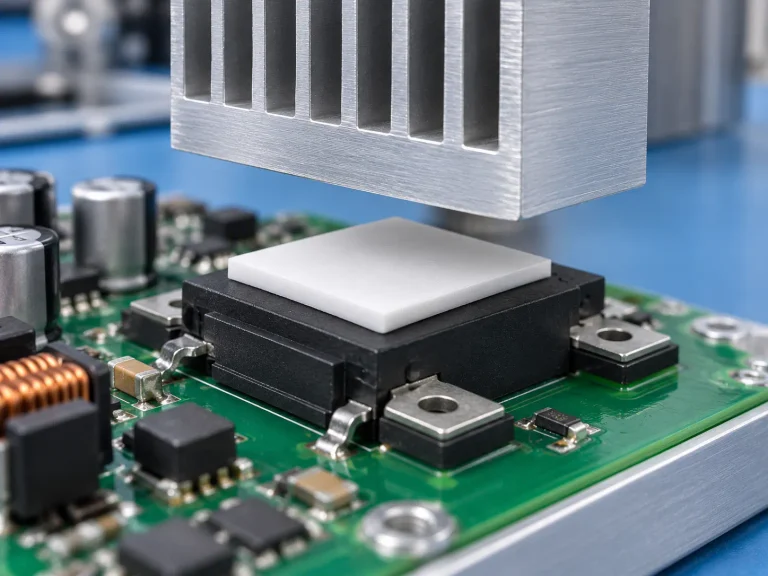
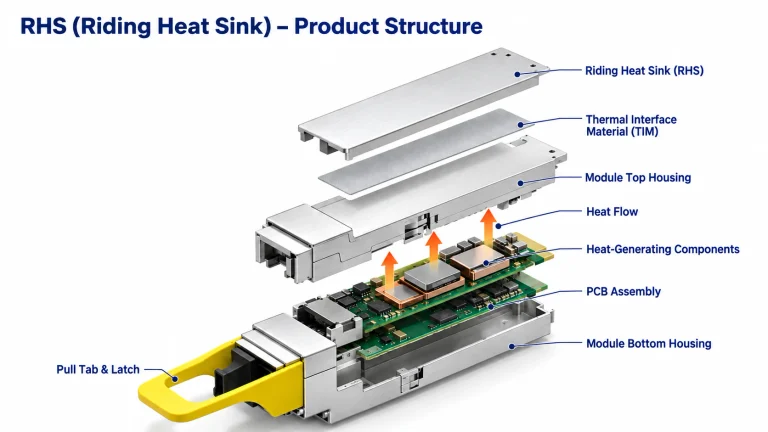
The film acts as a thermal interface material, reducing resistance between components and heat sinks.
Its flexibility allows it to conform tightly to surfaces, enhancing heat transfer even under mechanical stress.
B. Lower Junction Temperatures
By improving thermal flow paths, the film helps lower junction temperature, which is critical for reducing failure rates.
This directly supports higher power density without frying the system.
C. Boosting Module Reliability
Stable under long-term load, it reinforces overall module reliability.
When paired with smart cooling solutions, it extends component life by years—not months.
Achieving Electrical Isolation and EMI Shielding for ICs
This isn’t just about heat—there’s a whole electrical side too.
➤ Provides high dielectric strength, ensuring solid electrical insulation between layers of integrated circuits.
➤ Blocks out unwanted noise by shielding against electromagnetic interference, keeping your signals clean and sharp.
➤ Reduces risks of signal loss or distortion caused by internal crosstalk, especially in compact layouts.
➤ Helps maintain proper grounding and adds a layer of built-in circuit protection, all while staying thin and flexible.
You get quiet circuits—literally—and longer-lasting boards that don’t glitch out under load.
Lowering Thermal Impedance in LED Lighting Systems
LEDs hate heat—and this film knows how to help them shine brighter, longer.
A. Optimizing the Thermal Path
It creates a direct line for heat to escape from the chip through the board using efficient heat spreading.
With low intrinsic thermal resistance, less energy is trapped inside, boosting total efficiency.
B. Improving Light Output & Lifespan
Better cooling keeps brightness stable over time, supporting consistent lumen maintenance.
That also means fewer replacements due to degraded performance—hello longer device lifespan!
C. Matching with Advanced Substrate Materials
Works well with ceramic or metal-core PCBs thanks to its adaptable bonding with different types of substrate material.
Keeps things light but tough enough for industrial-grade applications.
Sustaining High Operating Temperature in Automotive Electronics
Automotive spaces are brutal on electronics—but this film doesn’t flinch.
A. Surviving Harsh Environments
Handles extreme heat from engines or batteries without cracking or warping.
Built-in resistance to oil mist, dust, and moisture makes it ideal for messy areas like EV drive systems or hybrid setups—classic examples of tough-as-nails use cases.
B. Battling Vibration & Cycling Stress
Tolerates constant movement and intense thermal cycling common in engine bays.
Reinforces fragile components like sensors or control units during rapid temperature shifts—a real win for long-term stability under pressure.
C. Supporting Critical Components
Protects everything from onboard chargers to tiny embedded chips inside complex systems like ADAS units or battery management systems.
Whether it’s shielding sensitive parts inside an ECU or stabilizing high-voltage lines near power converters—it’s got your back where failure isn’t an option.
With one thin layer of this techy wonder—protection, cooling, and performance go up while worries go way down.
Choosing the Right Flexible Thermally Conductive Film for Your Electronics
Picking the right flexible thermally conductive insulating film can make or break your device’s performance. Let’s break it down into what really matters.
3 Key Metrics to Evaluate Film Suitability
Start with these three core metrics:
Thermal conductivity – The higher, the better for heat transfer.
Dielectric strength – Essential for safe electrical insulation in compact electronics.
Flexibility – Critical when working with curved or moving parts.
In some cases, you’ll also want to check temperature resistance, mechanical strength, and overall thickness to ensure compatibility. Sheen Electronic Technology offers films that strike a smart balance across all these specs—perfect when you need performance without compromise.
Film Casting vs Extrusion vs Coating
Here’s how each method stacks up:
| Method | Strengths | Best Use Case | Considerations |
| Casting | Great for film uniformity | Thin, even layers | Slower production |
| Extrusion | Good for high volumes | Scalable manufacturing | Needs consistent viscosity |
| Coating | Ultra-thin applications | Conformal surfaces | May require post-curing |
Whether you’re dealing with low-viscosity slurries or high-viscous pastes, each process handles materials differently—so match it to your application goals.
Die-Cut Parts, Tapes, and Rolls: Matching Form to Function
Different formats serve different needs:
■ Use die-cut parts when precision is key—think tight-fitting components.
■ Go with thermal tapes if quick assembly is your thing.
■ Choose rolls for automated lines or bulk installs.
Each form factor impacts how easily the film integrates into your build. For example, die-cuts reduce waste while rolls cut down on downtime during production.
Selecting Graphene or Boron Nitride Fillers for Your Needs
Let’s group them based on what they do best:
If you want maximum heat transfer: go with a graphene filler—it delivers top-tier thermal performance, though it’s typically more conductive electrically.
Need both cooling and insulation? A boron nitride filler offers strong heat dissipation plus solid electrical isolation.
Some composite blends even mix both types to get a hybrid effect—perfect when you’re balancing power density and safety in one slick material stack. With Sheen Electronic Technology’s range of options, dialing in the right mix has never been easier.
FAQs about Flexible Thermally Conductive Insulating Film
How does it improve heat control in electronics?
A film with high thermal conductivity channels heat away from power modules, CPU coolers, and LED lighting. The electrical insulation within its polymer matrix protects integrated circuits while keeping temperature resistance steady under heavy loads.
Which filler particles bring out the best balance of qualities?
Graphene for sheer speed of heat transfer in battery packs or high-performance cooling systems.
Boron nitride for combining heat conduction with strong EMI shielding around memory modules or sensors.
Ceramic fibers when mechanical strength is just as important as conductivity in aerospace electronics.
Why pay attention to tensile strength versus elongation at break?
It’s a quiet tug-of-war: enough tensile strength lets the sheet endure stress; sufficient elongation means rolls and pads can flex around wearable devices without tearing during everyday motion.
In what ways does manufacturing shape performance?
Film casting gives flawless thickness for consistent dielectric constant across die-cut parts; extrusion makes infinite rolls ready for automated assembly lines; coating crafts ultra-thin silicone layers perfect for precision thermal management near delicate circuitry.
Can this material meet extreme demands in EVs and aircraft?
Yes—its cured polymer matrix stands up to harsh thermal cycling over broad operating temperature ranges, preserving dielectric strength even inside densely packed battery packs or critical aerospace navigation units.
What forms fit large-scale production best?
Sheets suit custom lamination work; rolls glide through high-speed machinery; tapes allow precise placement on hot zones during build-outs; pads deliver quick fixes where instant heat dissipation is vital yet space is scarce.