-
ADD: Building 2, No. 8 Hengzhutang Road, Dongguan
-
Phone: +86 135 4224 3751

Auto
In automotive and EV electronics, thermal and functional materials create low-thermal-resistance heat paths and stable interfaces for long-life operation in harsh environments. Sheen provides thermal pads, thermal gels/greases, phase change materials, silicone foam, thermally conductive potting compounds, and EMI absorbing materials to transfer heat to housings, heat sinks, or cold plates.
For ADAS/ECU modules, infotainment, OBC/DC-DC/inverters, and battery systems, these solutions help reduce hotspots, improve efficiency, support insulation safety, and maintain reliability under thermal cycling, vibration, and humidity—while enhancing sealing and overall system robustness.
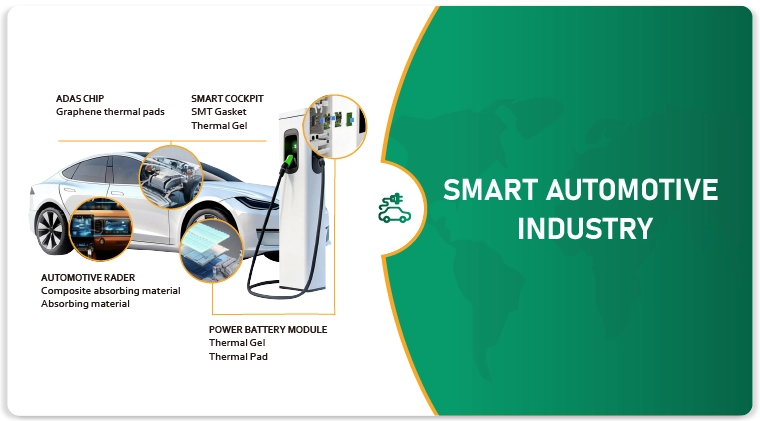
Overview
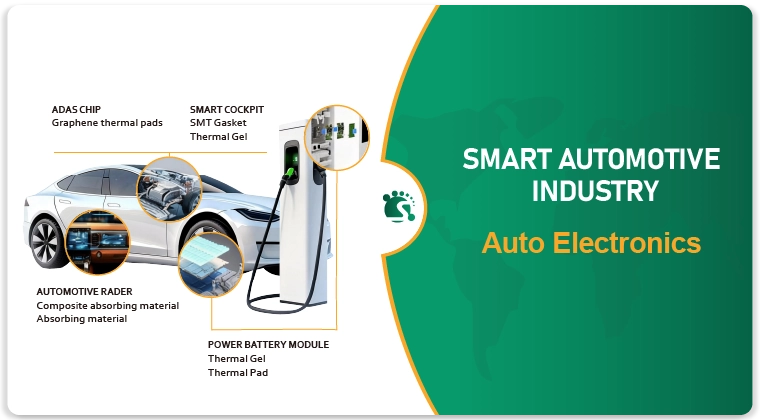
Auto Electronics Thermal Materials Applications
Optimize thermal performance for automotive electronics by managing hotspots across ECUs, ADAS domain controllers, infotainment units, and power stages. TIMs help transfer heat from key ICs and power components to heat sinks or housings for stable operation.
Automotive environments demand reliability under thermal cycling, vibration, and humidity. A multi-material approach—thermal pads/gels plus silicone foam for sealing and cushioning—improves durability and reduces long-term failure risk.
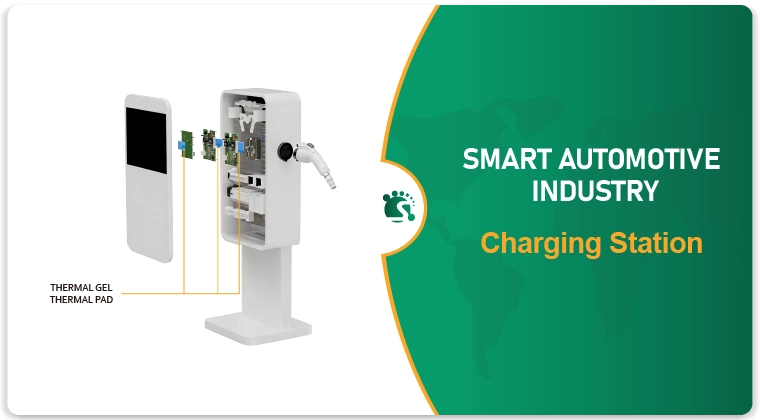
Charging Station Thermal Materials Applications
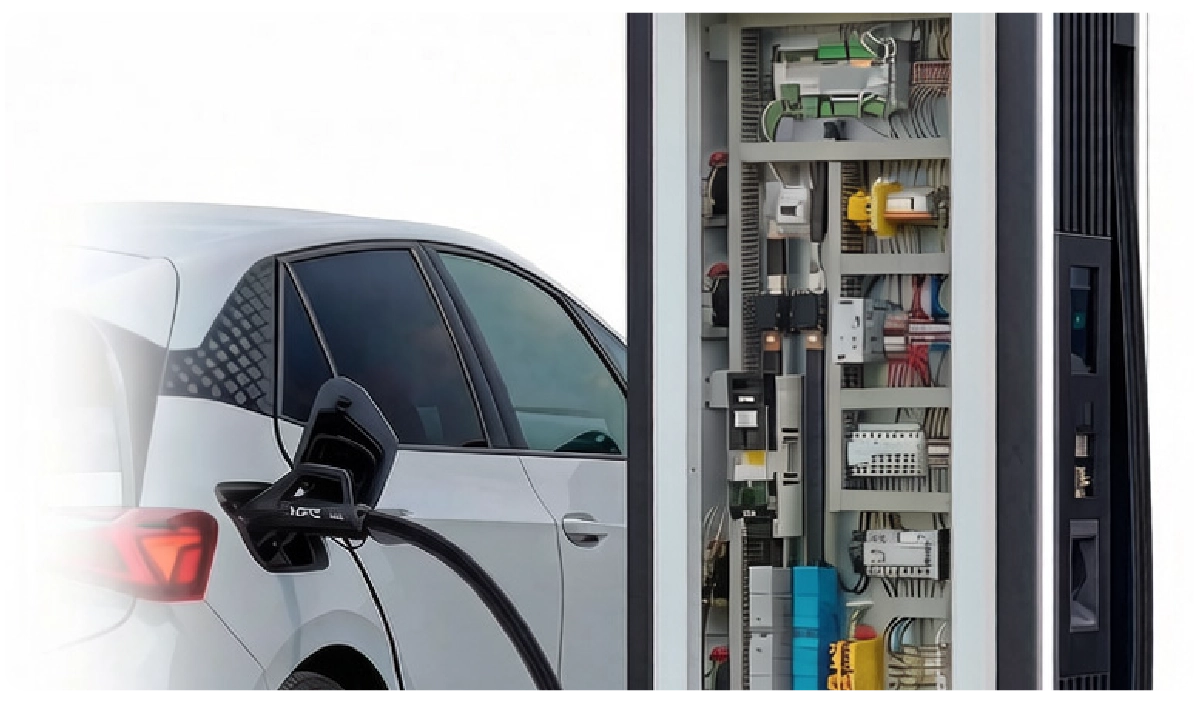
Charging stations generate continuous heat in power modules, rectifiers, transformers, and control electronics. Thermal pads, gels/greases, and conductive potting materials reduce thermal resistance and improve efficiency at high loads.
Outdoor operation requires stable performance under wide ambient temperatures and moisture exposure. Reliable thermal interfaces and sealing/cushioning materials help protect assemblies, reduce downtime, and extend service life.
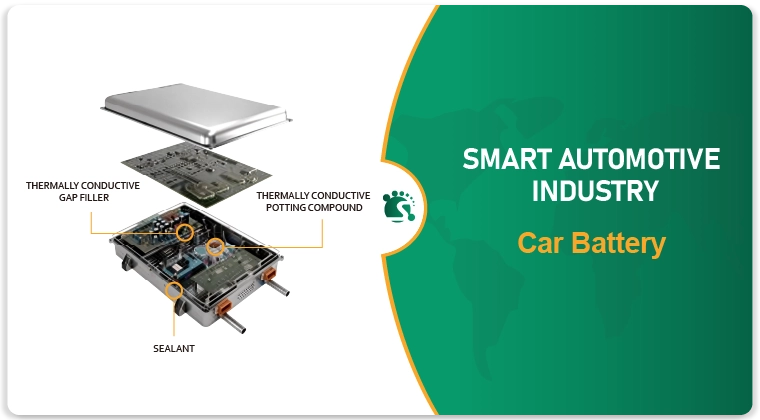
EV Battery Thermal Materials Applications
EV battery packs require temperature uniformity across cells and modules to support performance and safety. Gap fillers and thermal pads create consistent heat paths to cold plates or pack structures, helping control hotspots.
Materials must withstand compression set, vibration, and long-term aging while supporting insulation needs. Silicone foam and thermally conductive materials improve sealing, cushioning, and pack reliability over the full lifecycle.
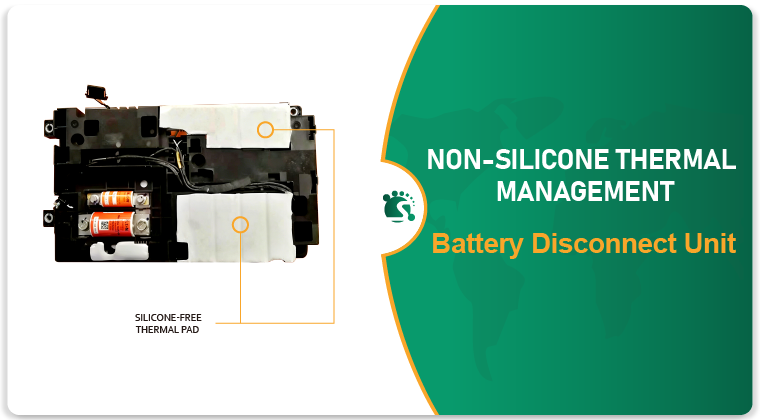
Non-Silicone Thermal Management
When silicone-based thermal interface materials are subjected to prolonged exposure to pressure and heat, the silicone-based polymers undergo thermo-oxidative aging.
Under these conditions, the siloxane bonds within the polymer backbone fracture and rearrange, resulting in the generation and subsequent exudation of low-molecular-weight siloxanes. This not only causes the material’s thermal conductivity to decay exponentially but also poses significant risks should these low-molecular-weight siloxanes migrate to the surfaces of adjacent components—potentially leading to connector degradation, optical lens fogging, or even device short circuits.
In contrast, silicone-free thermal pads utilize a silicone-free polymer system; as their raw materials contain no silicone molecules, they effectively resolve the aforementioned issues.
Benefits
Optimize Thermal Performance with Sheen Materials
Cooler Hotspots, Higher System Efficiency
Reduce hotspots in ECUs, power modules, and EV batteries—improving efficiency and stable performance under continuous load.
Longer Service Life, Lower Failure Risk
Automotive-grade materials resist thermal cycling, vibration, and humidity—helping reduce failures and extend lifetime.
Consistent Batches, Faster Qualification
Tight thickness control and repeatable compression/adhesion reduce re-validation work and accelerate qualification.
Faster Sampling, Scalable Mass Production
Rapid prototypes to volume supply with stable yield—supporting multi-SKU programs and on-time delivery.
Related Products
Discover product categories commonly used in this application. You can replace these cards with your own thermal materials, TIMs, foams, tapes, or soldering-related products.
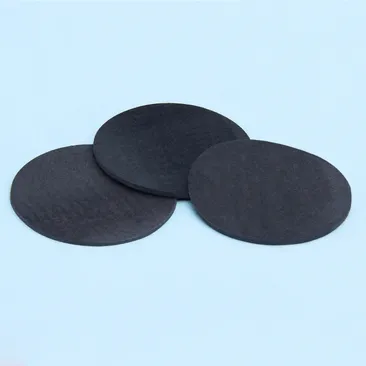
Thermal Pads
Soft, conformable thermal pads for gap filling and reliable heat transfer in electronics.
Browse ›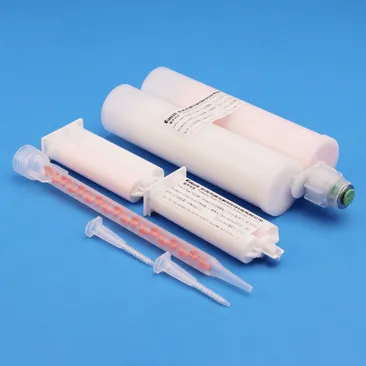
Thermal Grease
High-efficiency thermal grease solutions for CPUs, power modules, and industrial assemblies.
Browse ›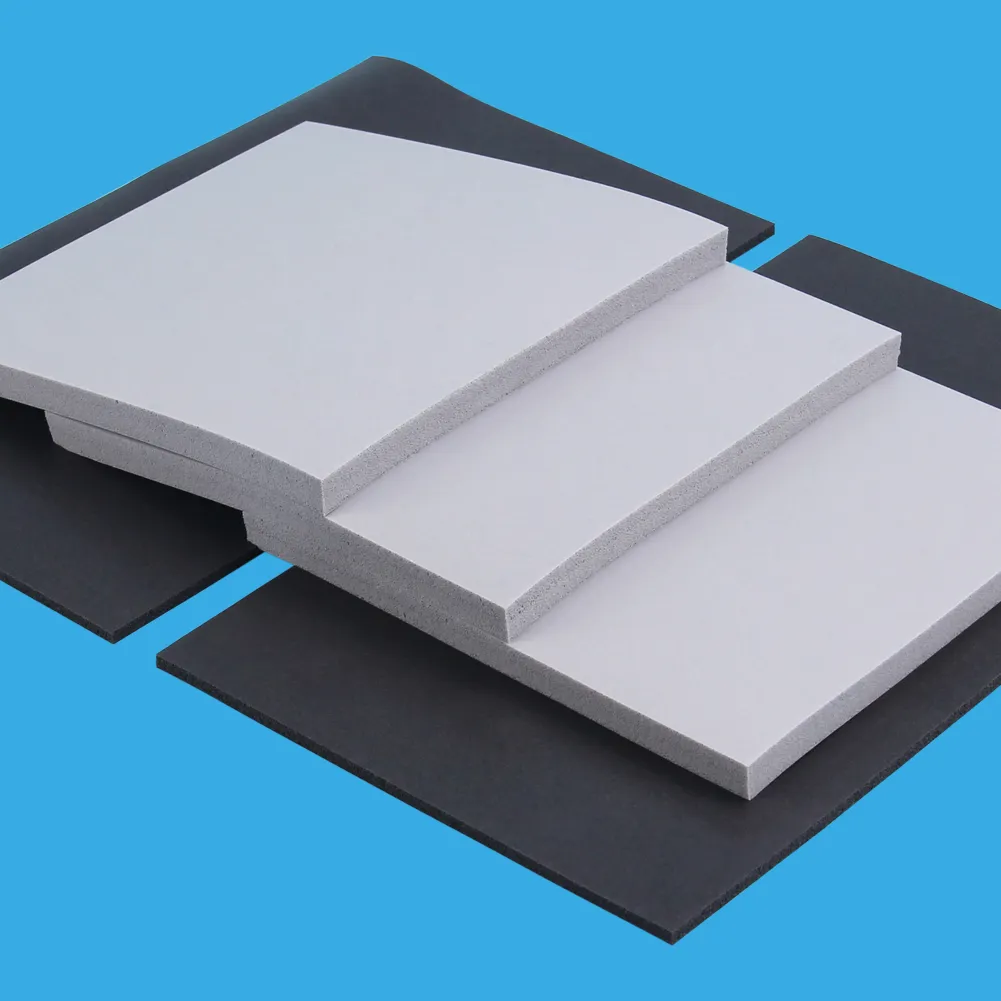
Silicone Foam
Foam materials for sealing, cushioning, insulation, and fire-barrier applications.
Browse ›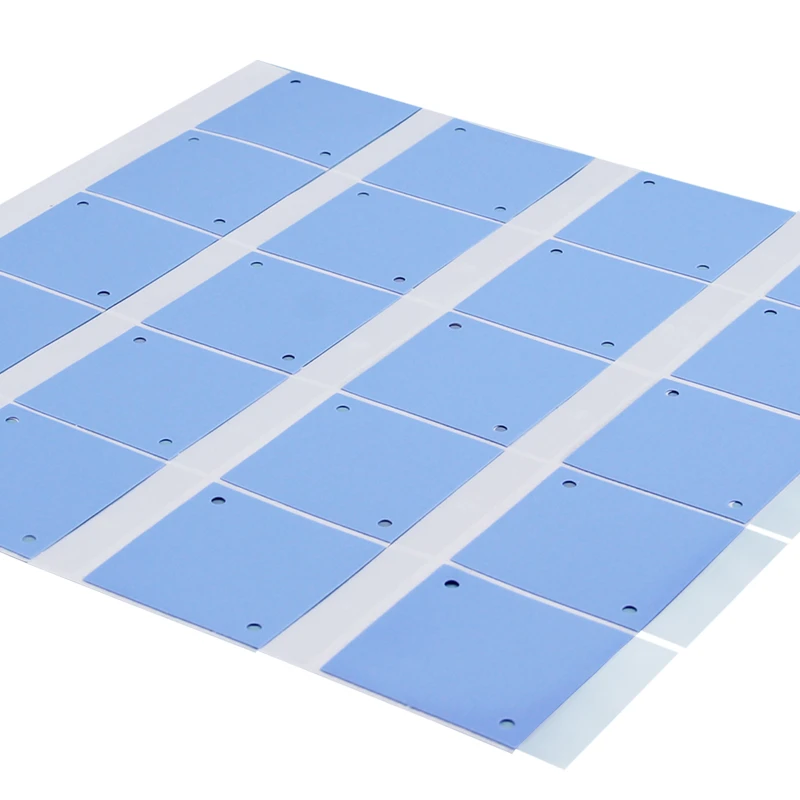
Thermal Tape
PSA laminated thermal tapes for fast assembly and consistent thermal interface bonding.
Browse ›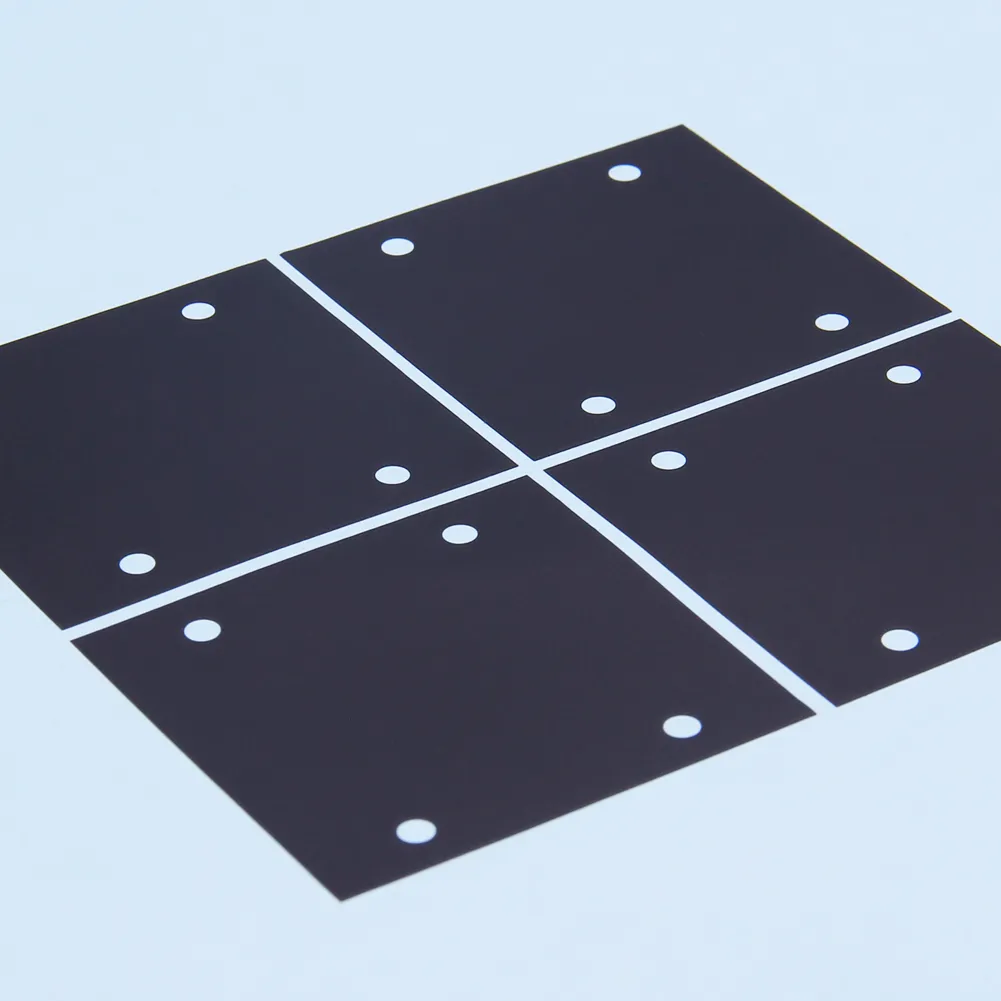
Graphite Sheet
High in-plane conductivity graphite materials for heat spreading in compact devices.
Browse ›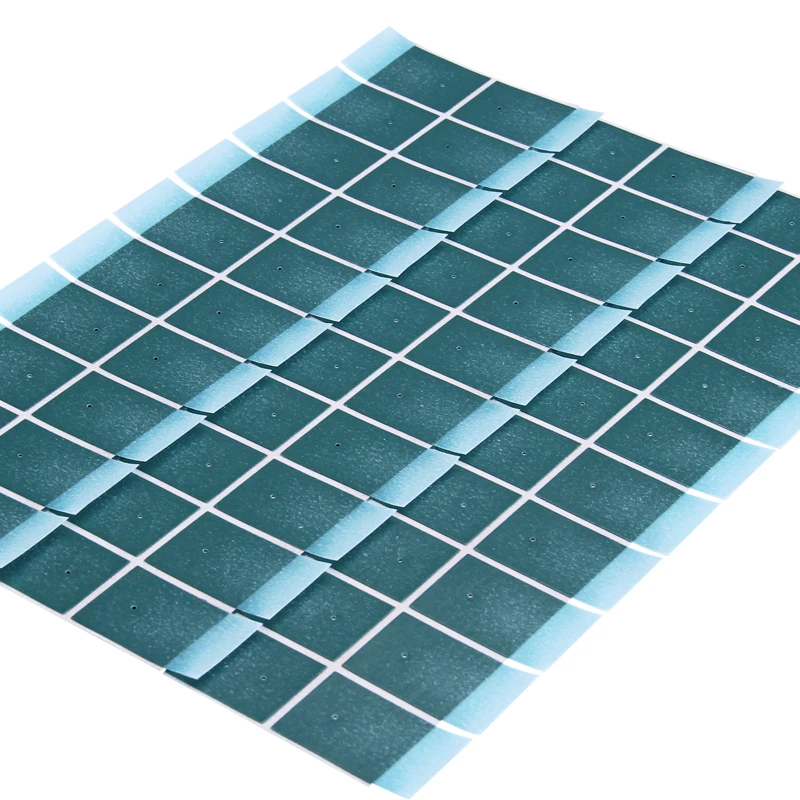
EMI Absorbers
EMI absorbing materials to reduce interference and improve signal integrity in electronics.
Browse ›Related Applications
Auto Electronics
Thermal solutions for ECUs, ADAS, and infotainment to reduce hotspots and improve long-term reliability.
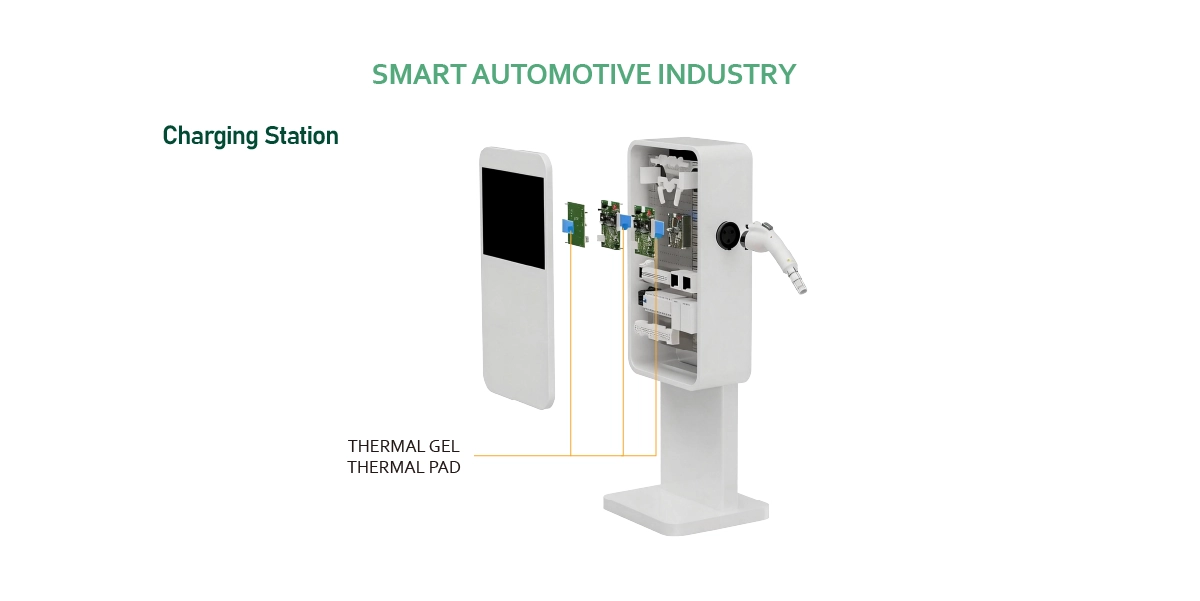
Charging Station
Manage heat in power modules and magnetics to improve efficiency and reduce downtime in outdoor charging systems.
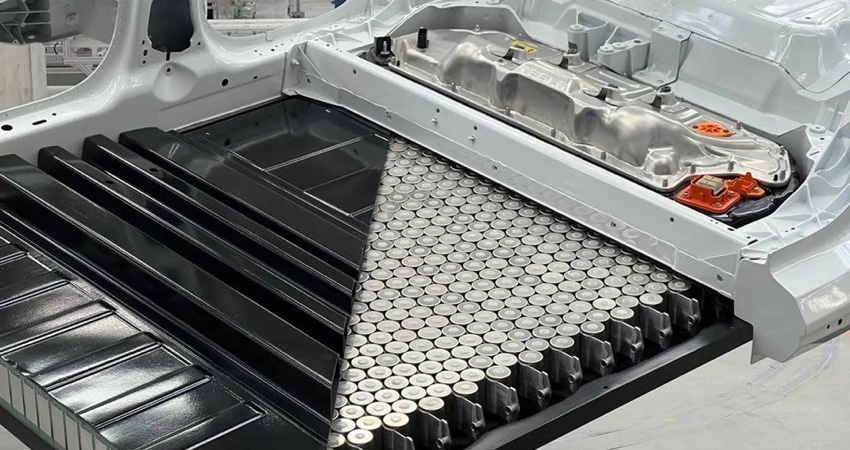
EV Battery
Improve temperature uniformity and pack durability using gap fillers, pads, and cushioning/sealing materials.
Related Markets
From EV charging to battery systems, Sheen materials support efficient cooling, sealing, and safety in harsh automotive environments.


