-
ADD: Building 2, No. 8 Hengzhutang Road, Dongguan
-
Telefone: +86 135 4224 3751

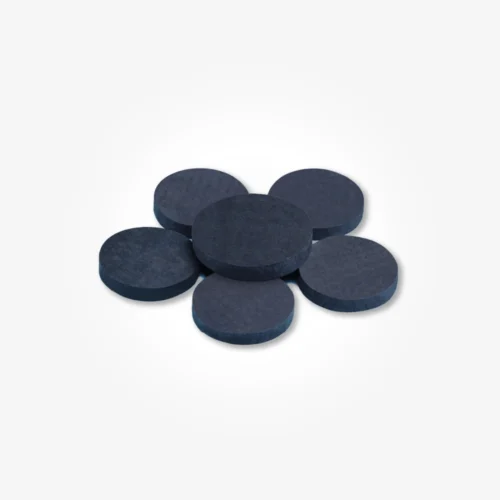
Carbon Fiber Thermal Pads CSF20-A1
CSF20-A1 is a carbon-fiber thermal pad designed to combine low density, good durability, and efficient thermal conduction across the thickness direction. Its silicone layer is soft and highly compressible, helping fill the contact interface, expel trapped air, and improve heat-transfer efficiency in compact electronic assemblies.
Principais benefícios
- High thermal conductivity for efficient heat transfer across the interface
- Carbon-fiber structure with strong through-thickness heat-conduction direction
- Good flexibility and high compression ratio for interface gap filling
- Low-density and durable material direction for weight-sensitive assemblies
- Excellent flame-retardant performance with UL94 V-0 rating
- Optional adhesive structure for easier assembly and pad positioning
Carbon Fiber Thermal Pads CSF20-A1
20W-Class Carbon Fiber Thermal Pad with Single-Sided Adhesive for Low-Weight, High Through-Thickness Thermal Conductivity, and Stable Interface Filling
CSF20-A1
Single-Sided Adhesive
18±2 W/m·K
20W-Class Design
Thermal Resistance 0.30 °C·in²/W
UL94 V-0
Single-Sided Adhesive
18±2 W/m·K
20W-Class Design
Thermal Resistance 0.30 °C·in²/W
UL94 V-0
Series Snapshot
Modelo
CSF20-A1
CSF20-A1
Cor
Black
Black
Thickness Range
0.3~12 mm
0.3~12 mm
Densidade
2.7±0.2 g/cm³
2.7±0.2 g/cm³
Informações técnicas
Review the product positioning, core data, thermal-interface behavior, integration options, and application fit for CSF20-A1.
Q1
What is CSF20-A1 designed for?
CSF20-A1 is designed as a carbon-fiber thermal interface pad for assemblies that need higher through-thickness heat transfer, soft gap filling, and more stable contact between a heat source and heat sink.
20W-Class Carbon Fiber TIM
Positioned as a higher-conductivity thermal pad for efficient interface heat transfer.
Soft Interface Filling
Its silicone layer is soft and compressible, helping discharge interfacial air and improve contact efficiency.
Low-Weight Thermal Path
The datasheet describes the material as combining low density with good durability.
Adhesive-Ready Integration
The A1 option supports single-sided adhesion for easier assembly and placement control.
Q2
What are the core technical data for CSF20-A1?
The datasheet provides the following values for material selection, interface design, and early-stage evaluation.
| Imóveis | Norma de ensaio | CSF20-A1 |
|---|---|---|
| Cor | Visual | Black |
| Espessura | ASTM D374 | 0.3~12 mm |
| Substrate | — | Liquid Silicone Rubber |
| Filling System | — | Carbon Fiber, Aluminum Oxide (Al2O3) |
| Densidade | ASTM D792 | 2.7±0.2 g/cm³ |
| Condutividade térmica | ASTM D5470 | 18±2 W/(m·K) |
| Dielectric Breakdown Voltage (AC) | ASTM D149 | 100 V/mm |
| Hardness (Shore 00) | ASTM D2240 | 40~90 |
| Standard Hardness (Shore 00) | ASTM D2240 | 40 / 60±5 |
| Alongamento | ASTM D412 | 30% |
| Resistência à tração | ASTM D412 | 30 psi |
| Thermal Resistance (1 mm, @20 psi) | ASTM D5470 | 0.30 °C·in²/W |
| Flame Retardancy Rating | UL94 | V-0 |
| Optimal Compression Ratio | — | 10±5% |
| Applicable Temperature | ASTM D1329 | -50~160°C |
Interfacial thermal resistance values are for reference. Actual performance depends on surface roughness, flatness, and applied pressure.
Q3
What interface-performance strengths does CSF20-A1 emphasize?
The datasheet highlights high thermal conductivity, good flexibility, high compression ratio, and improved interface contact as the main functional directions.
Through-Thickness Heat Transfer
Carbon fiber is positioned as anisotropic and especially effective for thermal conduction in the thickness direction.
Soft Compression Interface
The silicone layer is very soft and well compressed, supporting tighter contact and better gap filling.
Reduced Interfacial Air
The material helps expel air from the interface so thermal conduction efficiency can be improved.
Flame-Retardant Interface Material
The pad is also positioned as an electrically insulating, flame-retardant thermal interface solution.
Q4
How can CSF20-A1 be supplied and handled?
The datasheet provides adhesive options, storage guidance, safety notes, and customization direction for product implementation.
Adhesive Options
-A1 indicates single-sided adhesive
-A2 indicates double-sided adhesive
Customization
Color, thickness, and hardness can be customized according to customer requirements.
Storage & Transportation
Store in a well-ventilated, cool, and dry place. Keep away from open flames.
Packaging & Shelf Life
Customized packaging method
Shelf life: 24 months
Safety Note
- This product is described as non-toxic
- Stored and transported as a non-hazardous material
- Please refer to the MSDS for detailed safety information
Evaluation Note
- Verify compatibility before large-scale use
- Actual interface performance depends on surface and pressure conditions
- User-side process validation remains necessary
Q5
Which applications fit CSF20-A1 best?
The datasheet highlights semiconductor, automotive electronics, communication equipment, graphics hardware, and LED systems as key application directions.
Semiconductor Heat Sink
Suitable for semiconductor heat-sink interfaces that need efficient heat conduction and good compression contact.
Vehicle Navigator
Applicable to automotive electronics where stable heat transfer and vibration-tolerant interface filling are needed.
Communication & Power Equipment
Suitable for communication and power assemblies with compact thermal-interface requirements.
Graphics Card / Memory Module / LED
A good fit for graphics hardware, memory modules, and LED lighting equipment requiring thermal pad integration.
Transferências e FAQ
Technical Resources
Frequently Asked Questions
Q1. What does “A1” mean in CSF20-A1?
A1 indicates single-sided adhesive. If a double-sided adhesive structure is needed, the datasheet lists A2 for that option.
Q2. Why is carbon fiber used in this thermal pad?
The datasheet positions carbon fiber as an anisotropic thermally conductive filler with excellent heat transfer in the thickness direction, which is valuable for interface conduction.
Q3. Can thickness and hardness be customized?
Yes. The datasheet notes that color, thickness, and hardness can all be customized according to customer requirements.
Q4. What temperature range is listed for CSF20-A1?
The listed applicable temperature range is -50~160°C.
Q5. Is the listed thermal resistance an absolute guarantee in real products?
No. The datasheet states that the ASTM D5470 interfacial thermal resistance value is for reference, and actual performance depends on surface roughness, flatness, and pressure.