-
ADD: Building 2, No. 8 Hengzhutang Road, Dongguan
-
Telefone: +86 135 4224 3751

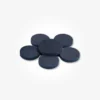
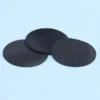
Carbon Fiber Thermal Pads CSF10
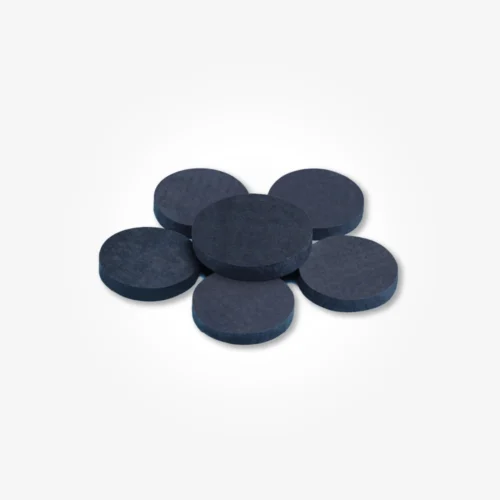
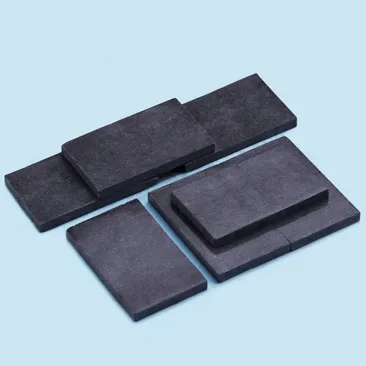
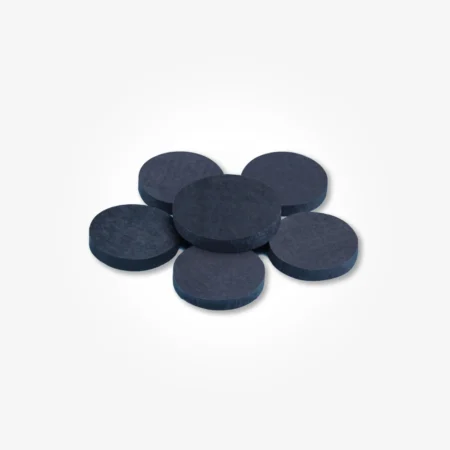
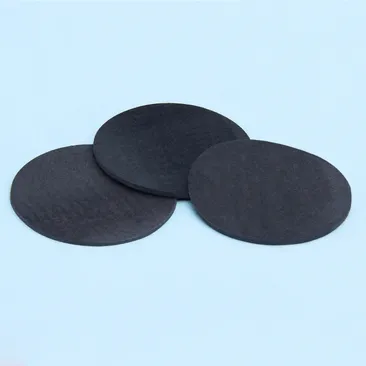
CSF10 is a carbon-fiber-based thermal pad designed to combine low density, good durability, and strong through-thickness heat conduction. The silicone sheet layer is soft and highly compressible, helping fill interface gaps, expel trapped air, and improve heat-transfer efficiency between heat sources and heat sinks.
Principais benefícios
- High thermal conductivity for faster heat transfer across interface gaps
- Excellent flame-retardant performance for safety-focused electronics applications
- Good flexibility and high compression ratio for improved surface contact
- Carbon-fiber-based structure with good durability and lightweight thermal-management direction
- Soft silicone layer helps discharge interfacial air and improve effective heat conduction
- Supports customized thickness, hardness, color, and adhesive configuration
Carbon Fiber Thermal Pads CSF10
10 W/m·K Carbon Fiber Thermal Pad for High-Performance Thermal Interface, Gap Filling, and Lightweight Thermal Management
CSF10
Carbon Fiber Thermal Pad
10,0 W/m-K
1 mm Thermal Resistance 0.28 ℃·in²/W
UL94 V-0
-50~160℃
Carbon Fiber Thermal Pad
10,0 W/m-K
1 mm Thermal Resistance 0.28 ℃·in²/W
UL94 V-0
-50~160℃
Series Snapshot
Modelo
CSF10
CSF10
Cor
Black
Black
Thickness Range
0.3~12 mm
0.3~12 mm
Substrate
Liquid Silicone Rubber
Liquid Silicone Rubber
Informações técnicas
Review the product positioning, material construction, core parameters, application fit, and handling information for CSF10 carbon fiber thermal pads.
Q1
What is CSF10 designed for?
CSF10 is designed for thermal-interface applications where through-thickness heat transfer, interface gap filling, and improved contact efficiency are all important. Its carbon-fiber-based construction and soft silicone layer help create a more effective heat path between the heat source and heat sink.
Carbon Fiber Heat Path
Carbon fiber provides anisotropic thermal conduction with strong heat transfer in the thickness direction.
Preenchimento de lacunas
The silicone layer is soft and well compressed, helping fill the contact interface more effectively.
Air Removal
The product is intended to discharge trapped interface air so the effective heat-conduction efficiency can improve.
High-Power Electronics Fit
Well suited to electronics and modules that need both thermal performance and mechanical compliance.
Q2
What are the core parameters of CSF10?
The table below reflects the currently published one-page CSF10 datasheet values.
| Imóveis | Reference | CSF10 |
|---|---|---|
| Cor | Visual | Black |
| Espessura | ASTM D374 | 0.3~12 mm |
| Substrate | Datasheet | Liquid Silicone Rubber |
| Filling | Datasheet | Carbon Fiber, Aluminum Oxide (Al₂O₃) |
| Densidade | ASTM D792 | 2.7 ± 0.2 g/cm3 |
| Condutividade térmica | ASTM D5470 | 10.0 W/(m·K) |
| Dielectric Breakdown Voltage (AC) | ASTM D149 | 100 V/mm |
| Hardness (Shore 00) | ASTM D2240 | 40~90 |
| Standard Hardness (Shore 00) | ASTM D2240 | 40 / 60 ± 5 |
| Alongamento | ASTM D412 | 40% |
| Resistência à tração | ASTM D412 | 30 psi |
| Thermal Resistance (1 mm, @20 psi) | ASTM D5470 | 0.28 ℃·in2/W |
| Flame Retardancy | UL94 | V-0 |
| Optimal Compression Ratio | Datasheet | 10 ± 5% |
| Applicable Temperature | ASTM D1329 | -50~160℃ |
| RoHS | IEC 62321 | PASSAR |
| Halogéneo | EN 14582 | PASSAR |
| REACH | EN 14372 | PASSAR |
Q3
What compression and thermal-performance characteristics does CSF10 emphasize?
CSF10 combines a soft, compressible silicone structure with carbon-fiber-based heat conduction, so it is positioned to work best when moderate compression is available and the designer wants a balance between contact compliance and thermal performance.
High Conductivity
10.0 W/m·K class thermal conductivity supports faster heat transport through the interface stack.
Good Compression Fit
The pad is described as flexible and highly compressible, helping it conform to uneven mating surfaces.
Reference Thermal Resistance
At 1 mm thickness and 20 psi, the published reference thermal resistance is 0.28 ℃·in²/W.
Recommended Compression Window
The datasheet gives 10 ± 5% as the optimal compression ratio for thermal-conductivity performance.
Q4
How can CSF10 be configured and handled?
The current sheet allows thickness, hardness, and color customization, and also supports optional adhesive structures for easier assembly integration.
Optional Adhesive
-A1 indicates single-sided adhesive; -A2 indicates double-sided adhesive.
Customization
Thickness tolerance is ±10%; hardness tolerance is ±5%; color, thickness, and hardness can be customized.
Storage & Transportation
Store in a well-ventilated, cool, and dry place. Keep away from open flames. The product is non-toxic and transported as a non-hazardous material.
Prazo de validade
24 meses
Q5
Which applications fit CSF10 best?
The current sheet explicitly points to heat-transfer and thermal-interface use in computing, communications, automotive display/navigation, lighting, and consumer-display assemblies.
Semiconductor Heat Sink
Suitable for semiconductor heat-sink interfaces that need both conductivity and interface compliance.
Communication Power Equipment
A strong fit for communication and power hardware that needs stable thermal contact under compression.
Graphics Card / Memory Module
Suitable for graphics and memory thermal-management positions that need a compressible but conductive pad.
LED / LCD / Plasma TV / Vehicle Navigator
Applicable to lighting, display, and vehicle-electronics structures where low-profile thermal transfer is important.
Transferências e FAQ
Technical Resources
Frequently Asked Questions
Q1. What is the main reason to choose CSF10?
The main reason is to combine 10 W/m·K class thermal conductivity with flexible gap filling and better interfacial air removal in one thermal pad structure.
Q2. Does CSF10 support adhesive options?
Yes. -A1 indicates single-sided adhesive, and -A2 indicates double-sided adhesive.
Q3. What compression level is recommended for thermal-conductivity performance?
The published optimal compression ratio is 10 ± 5%.
Q4. Is CSF10 suitable for graphics cards and communication equipment?
Yes. The datasheet explicitly lists graphics cards, memory modules, and communication power equipment among the recommended applications.
Q5. What compliance and environmental items are listed?
The current sheet lists RoHS PASS, Halogen PASS, and REACH PASS.