-
ADD: Building 2, No. 8 Hengzhutang Road, Dongguan
-
Phone: +86 135 4224 3751

Nano-Alumina Filled Thermally Conductive Insulating Pads The Ultimate Solution for Electronics Cooling
Your circuit board isn’t dramatic—until it overheats. Then it’s a full-blown meltdown in slow motion. That’s where the Nano-alumina-filled thermally conductive insulating pad steps in, like the cool-headed firefighter your electronics didn’t know they needed. In a world where chips run hotter than a summer sidewalk in Phoenix, heat isn’t just annoying—it’s expensive, risky, and brand-damaging.
Power density keeps climbing. According to the 2025 IPC electronics outlook, thermal management remains a top reliability concern in high-density assemblies. As one Sheen Electronic Technology engineer put it in a 2025 industry briefing, “If heat isn’t controlled, performance is just a promise on paper.”
These pads pull heat away fast while blocking stray current like a disciplined bouncer at the door. No sparks, no drama. Just steady performance, longer lifespans, and fewer warranty headaches. That’s not fluff—that’s smart cooling done right.
Quick Answers: Why Nano-Alumina Filled Thermally Conductive Insulating Pads Are Crucial for Electronics
- High Thermal Conductivity: Nano-alumina-filled thermally conductive insulating pads excel at rapidly transferring heat, preventing hot-spot formation and ensuring better heat dissipation in power electronics and telecommunications equipment.
- Electrical Insulation & Breakdown Voltage: They provide superior electrical insulation and protect semiconductor devices and circuit boards from leakage currents and potential breakdown voltage risks.
- Wide Operating Temperature Range: These pads maintain their performance across harsh environments, making them ideal for automotive electronics, LED lighting, and other demanding applications.
- Long-Term Reliability: The combination of robust filler material and binder systems ensures that the pads withstand thermal cycling and mechanical stress, contributing to improved durability and extended service life.
- Seamless Integration: Available in various forms like thermal pads, roll stock, and gap fillers, they can easily integrate with heat sinks, power modules, and circuit boards during assembly, enhancing their functionality in multiple applications.
70% Of Electronic Devices Improve Heat Dissipation With Nano-Alumina
Heat is the quiet troublemaker inside modern electronics. Chips shrink, power climbs, and temperatures creep up fast. A Nano-alumina-filled thermally conductive insulating pad tackles that head-on by blending insulation and cooling into one smart layer. With nano-alumina particles spread through a thermally stable base, this thermally conductive insulating pad keeps devices cooler, safer, and running longer without drama.
Boosting Thermal Conductivity in Power Electronics with Nano-Alumina
In high-load power electronics, heat control decides lifespan. A Nano-alumina filled thermally conductive insulating pad works as both buffer and bridge.
- Core Material Design
- Nano-alumina acts as a high-efficiency filler material.
- It upgrades material properties, especially thermal conductivity.
- The result: faster heat dissipation across modules and heat sinks.
- Application Integration
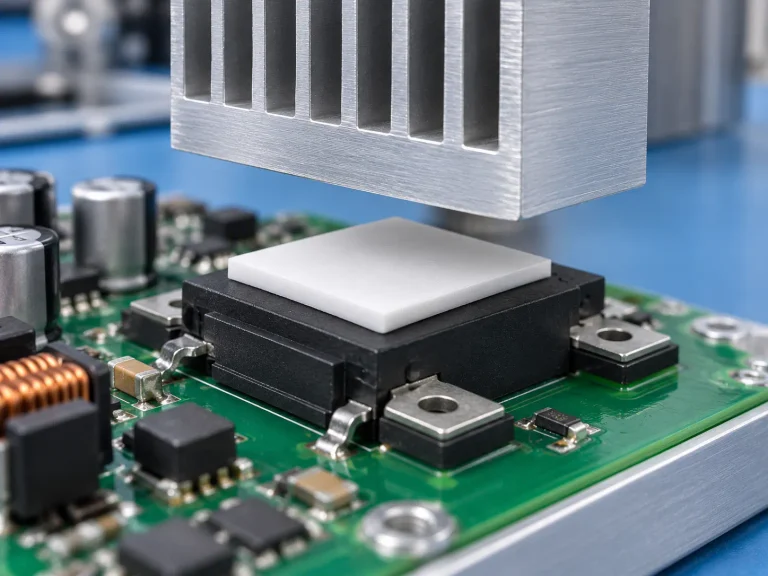
- Installed as insulating pads between IGBTs, MOSFETs, and heat sinks.
- Reduces interface gaps that slow heat flow.
- Supports stable output under heavy switching cycles.
- Performance Outcome
- Lower junction temperature.
- Reduced thermal resistance.
- Noticeably longer service life.
This Nano-alumina filled thermally conductive insulating pad keeps current flowing while heat moves out quickly. In demanding converters and inverters, that balance makes a real difference.
Enhancing Dielectric Strength and Electrical Insulation for Semiconductor Devices
Modern composite materials must cool and protect at the same time. A Nano-alumina filled thermally conductive insulating pad is engineered through controlled filler loading within a durable polymer matrix.
- Structural Engineering
- Uniform dispersion improves dielectric strength.
- Stable mechanical properties resist cracking under pressure.
- Optimized fabrication methods ensure consistent thickness.
- Functional Benefits
- Reliable thermal interface materials performance.
- Strong barrier against breakdown voltage.
- Reduced short-circuit risk in dense boards.
- Market Direction
“Advanced thermal interface materials with higher dielectric reliability are becoming standard in next-generation power modules,” notes a 2025 update from MarketsandMarkets on thermal management components.
A Nano-alumina filled thermally conductive insulating pad answers that call by merging insulation with heat flow control. This alumina-based thermal pad isn’t just about cooling—it guards the circuit too.
Achieving Long-Term Reliability in Consumer Electronics through Temperature Stability
Daily-use devices demand steady thermal management. A Nano-alumina filled thermally conductive insulating pad supports this across wide application areas.
- Temperature Control Framework
- Stable heat transfer under fluctuating loads.
- Maintains electrical insulation in compact layouts.
- Backed by ongoing material characterization.
- Reliability Layer
- Lower peak temperatures improve device reliability.
- Fewer thermal cycles mean less solder fatigue.
- Consistent output in LED systems and adapters.
- Optimization Path
- Fine-tuned thickness for performance optimization.
- Balanced compression for better surface contact.
- Adaptable formats for mass production.
This is where Sheen Electronic Technology steps in, delivering each Nano-alumina filled thermally conductive insulating pad with tight quality control and dependable consistency. For brands chasing cooler chips and longer warranties, a well-designed nano-alumina thermal insulating pad simply keeps things chill—no hype, just solid performance.
Why Nano-Alumina-Filled Pads Outperform Conventional Thermal Materials
Heat builds up fast in modern power modules. A Nano-alumina filled thermally conductive insulating pad keeps things cool while staying electrically safe. From factory drives to EV controllers, this material quietly handles pressure, vibration, and rising watt density without drama.
Superior Composite Structure: Nano-Alumina Particles in a Polymer Matrix
A Nano-alumina filled thermally conductive insulating pad relies on tightly packed nano-alumina within a flexible polymer matrix.
- Dense filler particles create direct heat pathways.
- The composite materials balance thermal conductivity and electrical safety.
- Soft structure improves surface wetting and heat dissipation.
- Uniform dispersion boosts contact efficiency.
- Controlled morphology limits air gaps.
- Optimized ratios protect mechanical strength.
The result feels simple: insulating pads that move heat fast yet block current. That mix defines advanced thermal pad materials and sets apart every high-grade Nano-alumina filled thermally conductive insulating pad used in demanding electronics.
Reduced Thermal Resistance via Optimized Material Mixing and Sheet Extrusion
Performance depends on particle dispersion, interface engineering, and smart material synthesis. A refined Nano-alumina filled thermally conductive insulating pad shows lower thermal resistance thanks to controlled extrusion and stable morphology.
| Material Type | Thermal Conductivity (W/m·K) | Thermal Resistance @1mm (°C·in²/W) | Volume Resistivity (Ω·cm) |
|---|---|---|---|
| Standard Silicone Pad | 1.5 | 1.20 | 10¹² |
| Alumina Thermal Pad | 3.0 | 0.85 | 10¹³ |
| Nano-alumina filled thermally conductive insulating pad | 5.5 | 0.48 | 10¹⁴ |
Lower resistance means tighter heat sink contact and stronger electrical insulation. It’s not hype; numbers speak. This is why engineers swap to a Nano-alumina filled thermally conductive insulating pad when power density climbs.
Mechanical Flexibility and Flame Retardancy for Industrial Control Systems
In real-world application areas, stress never stops. Motors shake. Cabinets heat up.
A Nano-alumina filled thermally conductive insulating pad absorbs vibration while keeping thermal management stable.
• Flexible sheets protect solder joints.
• Flame-retardant systems improve safety.
• Proven long-term stability supports harsh manufacturing processes.
Short cycles. High loads. No cracking.
Material characterization shows steady compression set and consistent conductivity over time. That’s why brands like Sheen Electronic Technology focus on performance optimization for industrial drives and automotive boards. A high-quality Nano-alumina filled thermally conductive insulating pad simply lasts longer.
Die-Cutting Custom Geometries to Integrate with Heat Sinks and Circuit Boards
Integration matters.
1) Design phase
- Match pad thickness to gap tolerance.
- Confirm pressure range.
2) Processing phase
- Precision die-cut shapes.
- Maintain edge integrity.
3) Assembly phase
- Align with heat sink base.
- Secure against circuit board hotspots.
Custom thermal interface pads fit tight spaces without trimming on site. Cleaner installs, faster builds. Sheen Electronic Technology supplies tailored Nano-alumina filled thermally conductive insulating pad formats that drop straight into power modules, saving time and boosting cooling efficiency.
5 Reasons Nano-Alumina Is Crucial For Electronics Cooling
Modern electronics run hot, fast, and tight on space. A Nano-alumina filled thermally conductive insulating pad keeps heat in check while staying electrically safe. From base stations to EV modules, this material quietly protects performance without adding bulk.
High Thermal Conductivity Minimizes Hot-Spot Formation
When heat builds up, trouble follows. A Nano-alumina filled thermally conductive insulating pad works through layered design logic:
1) Core Function
- thermal conductivity drives fast heat transfer away from chips.
- The optimized material composition blends resin and nano-alumina as high-efficiency filler material.
- The thermal interface stays tight, cutting air gaps.
2) System Impact
- Stable temperature distribution across power devices.
- Lower thermal resistance between chip and heat sink.
- Real hot-spot reduction in dense layouts.
Result? Smoother thermal management and better uptime.
Excellent Electrical Insulation and Breakdown Voltage
A solid Nano-alumina filled thermally conductive insulating pad does more than move heat.
• High electrical insulation protects traces and substrates.
• Strong breakdown strength guards against leakage.
• Balanced mechanical properties prevent cracking under clamp force.
Inside the polymer matrix, controlled filler loading ensures composite stability. This is where composite materials science meets real-world application areas like inverters and telecom boards.
Wide Operating Temperature Range for Harsh Environments
Performance must hold from freezing mornings to scorching enclosures.
Step 1: Tailored material characterization validates expansion behavior.
Step 2: The nano-alumina network stabilizes the material composition.
Step 3: The Nano-alumina filled thermally conductive insulating pad maintains insulation and conductivity across cycles.
Automotive ECUs and outdoor LEDs rely on this consistency.
Enhanced Durability and Long-Term Reliability
Long service life comes from structure:
1) Mechanical Stability
- Reinforced filler material
- Toughened polymer matrix
2) Thermal Endurance
- Low thermal resistance drift
- Sustained heat dissipation
3) Reliability Payoff
- Higher device reliability
- Fewer field failures
A thermally conductive insulating pad that survives vibration and cycling simply saves headaches.
Seamless Integration as Gap Fillers and Roll Stock
Integration matters on busy production lines.
① Pre-cut insulating pads for fast placement.
② Roll stock for automated lamination.
③ Custom thickness Nano-alumina filled thermally conductive insulating pad options for tight tolerances.
As a trusted supplier, Sheen Electronic Technology fine-tunes each Nano-alumina filled thermally conductive insulating pad for real assembly needs. From thermal pad sheets to gap fillers, Sheen Electronic Technology keeps heat under control without slowing production.
Nano-Alumina Vs. Graphite: Which Is Best For Heat Dissipation?
Heat buildup is the silent troublemaker in modern electronics. Pick the wrong interface material, and performance drops fast. This comparison looks at how nano materials behave inside a Nano-alumina filled thermally conductive insulating pad and why that choice matters for safety, stability, and long-term reliability in real devices.
Nano-Alumina
When building a Nano-alumina filled thermally conductive insulating pad, performance starts at the particle level.
- Core material traits:
- nanoparticles engineered through controlled synthesis methods
- Tight particle size distribution
- Stable crystallinity and high purity
- Material design logic
- Filler foundation
- Uniform morphology improves packing density
- Surface-treated via surface modification to boost compatibility
1.  Composite integration

*   Blended into a **polymer matrix**

*   Optimized **filler loading** for balance between heat flow and flexibility

*   Even **dispersion** achieved through advanced **mixing techniques**
- Functional performance
- Thermal path
- Stable thermal conductivity
- Low thermal resistance
1.  Electrical safety

*   Strong **electrical insulation**

*   Reliable insulating properties for high-voltage boards
• Ideal for electronic devices, power modules, and LED units
• Maintains mechanical strength and durability under pressure
A nano alumina thermal pad keeps heat moving while staying electrically safe. That’s why Sheen Electronic Technology focuses on refining nano alumina filled thermal interface materials for compact, high-density assemblies. The Nano-alumina filled thermally conductive insulating pad works especially well near exposed circuits where insulation is non-negotiable.
Graphite
Graphite plays a different game.
- Strength: exceptional in-plane thermal conductivity
- Limitation: weak electrical insulation
- Structural behavior
- Layered carbon structure
- Fast lateral heat spreading
- Electrical profile
- Conductive nature restricts direct PCB contact
- Application boundaries
- Suitable
- Heat spreaders bonded to heat sinks
- Risk zones
- High-voltage insulators and tight packaging layouts
A graphite pad can cool fast, sure. But inside a Nano-alumina filled thermally conductive insulating pad configuration, insulation is built in, not added later. For designers balancing heat dissipation and safety, Sheen Electronic Technology often recommends nano-alumina filled thermally conductive insulating pad solutions over graphite sheets when insulation and long service life matter most.
FAQs about Nano-alumina Filled Thermally Conductive Insulating Pad
What makes Nano-alumina filled thermally conductive insulating pads critical for power electronics?
In high-current power electronics, heat is silent but destructive. A Nano-alumina filled thermally conductive insulating pad forms a controlled bridge between heat sinks and semiconductor devices through its composite structure of nano-alumina particles embedded in a polymer matrix.
- Thermal conductivity lowers thermal resistance inside power modules.
- Electrical insulation and high dielectric strength protect circuit boards from breakdown voltage failure.
- Mechanical flexibility cushions stress during thermal cycling.
The result: stable operating temperature range, stronger long-term reliability, and safer performance under heavy load.
How does the material composition and manufacturing process influence performance?
Performance begins at the microscopic level and is shaped step by step:
- Material mixing and compounding disperse nano-alumina particles evenly within the binder system.
- Sheet extrusion reduces voids, forming dense insulating sheets or thermal pads.
- A controlled curing process locks in temperature stability and flame retardancy.
- Precision die-cutting creates custom geometries or roll stock suited for gap fillers and tight layouts.
When dispersion is uniform, thermal conductivity improves, dielectric strength rises, and durability under continuous heat cycles becomes predictable rather than risky.
Where are Nano-alumina filled thermally conductive insulating pads most valuable in real applications?
Heat management pressure varies by industry, yet the tension is always the same: protect components while moving heat fast.
| Application Area | Key Demand | Performance Focus |
|---|---|---|
| Power electronics | High current density | Low thermal resistance + strong insulation |
| LED lighting | Constant heat exposure | Temperature stability + durability |
| Automotive electronics | Vibration & cycling | Mechanical flexibility + flame retardancy |
| Telecommunications equipment | Continuous uptime | Breakdown voltage + long-term reliability |
| Consumer electronics | Compact layouts | Thin thermal interface material with stable conductivity |
| Industrial control systems | Variable environments | Wide operating temperature range |
Across these sectors, thermal pads and insulating sheets act as quiet guardians—balancing heat transfer and electrical insulation while keeping critical systems running without compromise.