-
ADD: Edificio 2, nº 8 de Hengzhutang Road, Dongguan
-
Teléfono: +86 135 4224 3751

How to Select the Best Non-Volatile Thermal Conductive Materials
Recommendations for non-volatile thermal-conductive materials start where failures hurt most—heat creep, pump-out, and quiet breakdowns that drain uptime and budgets fast.
Sheen Materials’ engineering team notes in its 2025 technical brief that stability under cycling and vibration governs long-term interface performance.
Pick materials that stay put, or pay later in costly failures.
Key Points: Recommendation of non-volatile thermal conductive materials
➔ Evaluate Fillers’ Stability: Choose boron nitride composites, graphite sheets or PCMs for lasting thermal cycling, low impedance and controlled expansion.
➔ Compare Paste Chemistries: Silicone pastes offer flexibility and reworkability; epoxy formulations deliver strong adhesion and mechanical strength.
➔ Optimize Bond Line: Minimize thickness to reduce thermal resistance in CPUs/GPUs.
➔ Ensure Mechanical Reliability: Prioritize compressibility for vibration resistance, high adhesion for SSDs, and consistent shear strength in industrial controls.
Which Fillers Deliver The Best Stability?
When engineers ask for a solid Recommendation of non-volatile thermal-conductive materials, they’re really asking one thing: what filler stays stable when heat keeps cycling up and down? In power electronics and LEDs, stability is king. Below, we break down three serious contenders and connect them directly to your Recommendation of non-volatile thermal conductive materials strategy.
Boron Nitride Composites: Evaluating Thermal Cycling Stability in Power Modules
For high-load módulos de potencia, the Recommendation for non-volatile thermal-conductive materials often starts with nitruro de boro-based composites. The reason is layered:
- Material Core: 1.1 Conductividad térmica remains consistent under repeated ciclo térmico. 1.2 Electrical insulation protects circuit density in compact layouts. 1.3 Filler dispersion stability prevents cracking.
- Performance Under Cycling: 2.1 Expansion compatibility reduces interface fatigue. 2.2 Dielectric strength holds during temperature swings. 2.3 Low pump-out risk supports long-term stability.
- Application Impact: 3.1 Reliable bonding in insulated gate modules. 3.2 Reduced delamination during high-current operation. 3.3 Improved lifetime in inverter systems.
Recent industry tracking from IDC’s 2025 power semiconductor outlook notes that thermal interface reliability is now “a primary driver of module replacement cycles in EV platforms.” That trend strengthens the case for a clear Recommendation of non-volatile thermal conductive materials built around boron nitride fillers.
Materiales brillantes tailors filler morphology to balance conductivity and stress relief, which keeps modules running cool without surprise failures.
Graphite Sheets for Junction Temperature Reduction in LED Drivers
When LED designers request a Recommendation of non-volatile thermal conductive materials, graphite sheets often enter the chat.
Why?
- High in-plane heat spreading
- Bajo resistencia térmica
- Flexible integration into tight LED drivers
From a gestión térmica angle:
1) Junction temperature drops fast.
2) Heat spreads laterally before hotspots form.
3) Consistent disipación del calor extends driver life.
Key technical points:
- ✦ Strong anisotropic conductivity
- ✦ Thin profile for compact lighting
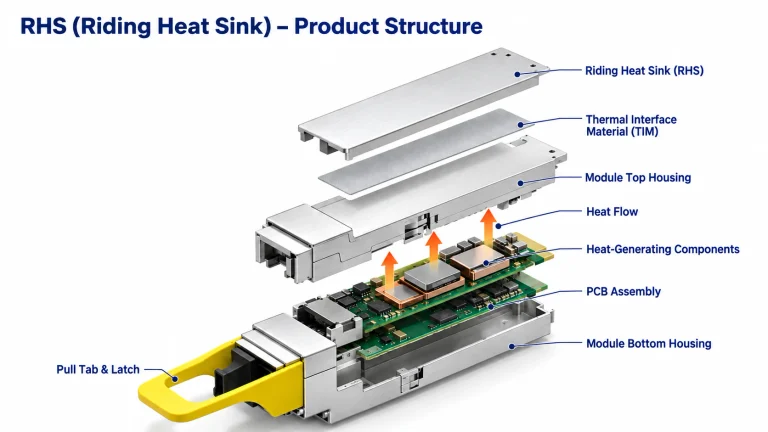
- ✦ Stable structure as a material de interfaz térmica
Short take: cooler chips, longer life.
Longer view: graphite reduces peak temperatures while maintaining mechanical flexibility. In signage, street lighting, and compact industrial lamps, that balance matters. For teams drafting a Recommendation of non-volatile thermal conductive materials, graphite sheets offer practical thermal control without fluid migration issues seen in volatile compounds.
Materiales brillantes integrates graphite with composite backings, improving handling strength while preserving thermal pathways—smart engineering, no drama.
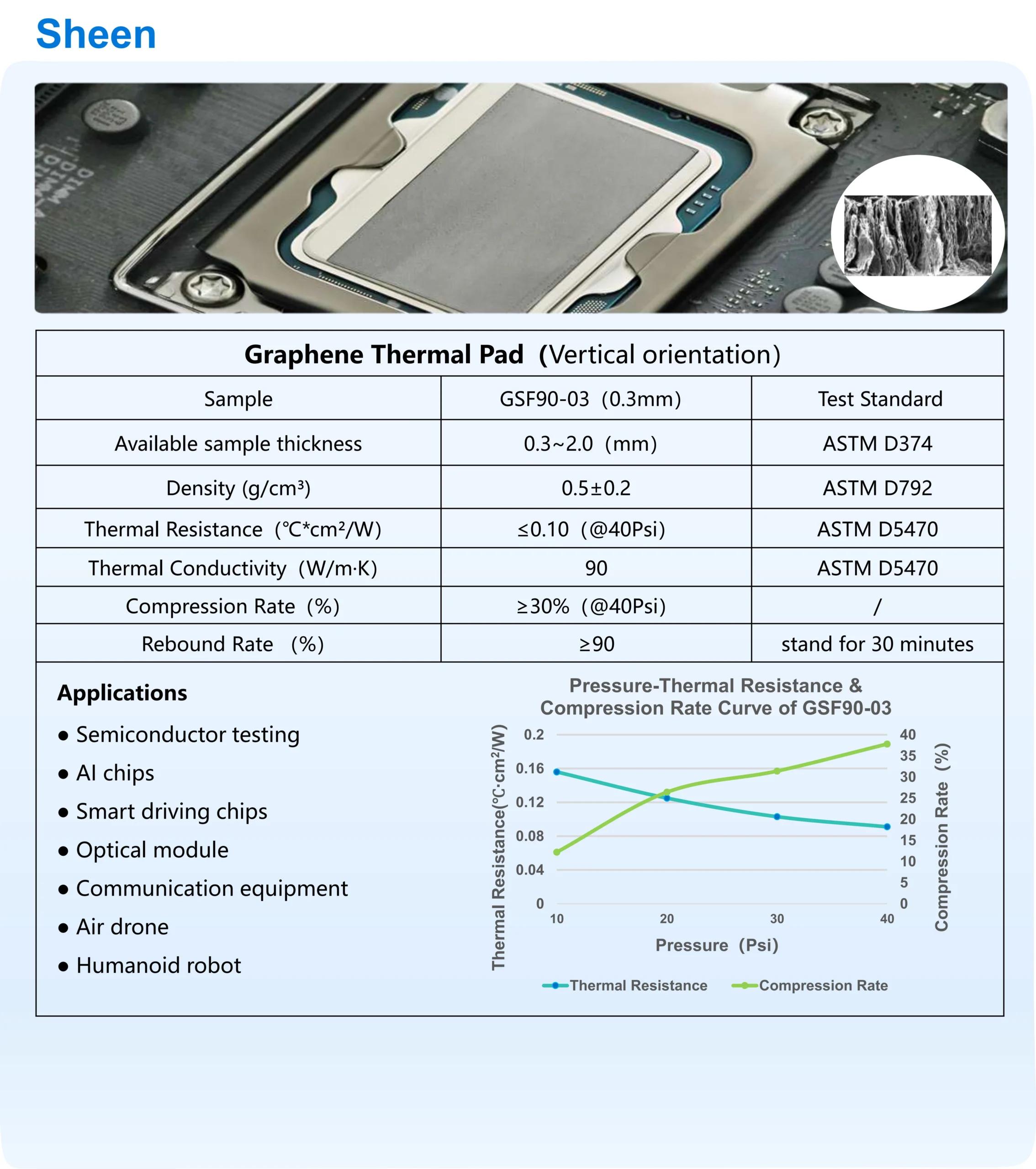
Phase Change Materials’ Control of Thermal Expansion Coefficient
A smart Recommendation of non-volatile thermal conductive materials should also weigh phase change materials.
Here’s how PCMs manage the thermal expansion coefficient step by step:
- At low temperature, the material stays solid and stable.
- As heat rises, phase transition begins at a tuned threshold.
- Latent heat absorbs excess energy.
- Mechanical stress drops as expansion mismatch softens.
- On cooling, the material resolidifies without leakage.
That cycle repeats while supporting estabilidad térmica, heat absorption, and controlled expansion. In boards where copper, ceramics, and polymers meet, PCMs reduce shear stress and microcracks.
For engineers finalizing a Recommendation of non-volatile thermal conductive materials, combining boron nitride, graphite sheets, and PCMs often delivers the most balanced approach. With optimized propiedades del material and careful filler design, suppliers like Materiales brillantes help teams lock in long-term reliability instead of crossing their fingers during thermal cycling tests.
Comparative: Silicone Vs. Epoxy Thermal Pastes
Choosing the right material often comes down to a practical Recommendation of non-volatile thermal conductive materials that balance heat flow, durability, and real-world handling. This Recommendation of non-volatile thermal conductive materials guide breaks down silicone and epoxy options in a clear way, helping engineers refine their Recommendation of non-volatile thermal conductive materials for electronics, power modules, and structural bonding. If you’re building a smarter Recommendation of non-volatile, thermally conductive materials, this side‑by‑side view keeps things grounded and practical.
Silicone-based Compounds
When drafting a Recommendation of non-volatile thermal conductive materials, silicona systems often come up first. A typical thermal grease based on silicona works as a non-curing material de interfaz térmica, keeping surfaces connected without locking them together forever.
- Key traits:
- Alta flexibilidad
- Bajo modulus
- Estable dielectric strength
- Fiable transferencia de calor
- Performance Layer
- Thermal Path
- Maintains steady heat transfer across uneven substrates
- Reduces air gaps in heat sinks
- Mechanical Response
- Absorbs vibration due to low modulus
- Handles expansion mismatch in power cycling
- Thermal Path
- Application Layer
- Dispensing
- Low viscosity supports automated lines
- Maintenance
- Reworkable; easy cleaning during repair
- Dispensing
In plain terms, silicone-based compounds are forgiving. They support a practical Recommendation of non-volatile thermal conductive materials for devices needing service access. For consumer electronics and LED modules, this flexible material de interfaz térmica keeps temperatures stable without forming a permanent bond.
Quick takeaway: adaptable, easy to handle, field-friendly.
Epoxy-based Formulations
If the Recommendation of non-volatile thermal conductive materials leans toward permanence, epoxy solutions step in. A thermal adhesive built on epoxy chemistry cures into a rigid network, forming a permanent bond with high bond strength and lasting integridad estructural.
| Propiedad | Silicone TIM | Epoxy Thermal Adhesive | Typical Test Standard |
|---|---|---|---|
| Conductividad térmica (W/m-K) | 1.5–4.0 | 1.0–3.5 | ASTM D5470 |
| Shear Strength (MPa) | 0.2–0.5 | 8–25 | ASTM D1002 |
| Operating Temp (°C) | -50 a 200 | -40 a 180 | IEC 60068 |
| Reworkability | Alta | Very Low | Practical Evaluation |
According to a 2025 IDC materials outlook:
“Thermally conductive adhesives are seeing accelerated demand in EV power modules, driven by the need for structural integration and improved heat dissipation.”
That trend aligns with the current Recommendation of non-volatile thermal conductive materials practices in automotive electronics.
Performance logic unfolds like this:
- Curing Stage
- Chemical crosslinking
- Volume stability after set
- Bonding Stage
- High adhesion to aluminum, copper, and ceramics
- Mejorado disipación del calor through fixed contact
- Lifecycle Outcome
- Long-term mechanical reliability
- Minimal pump-out risk
For applications where parts must stay locked in place—battery packs, inverters, industrial drives—epoxy-based systems deliver a serious Recommendation of non-volatile thermal conductive materials strategy.
Brands like Materiales brillantes fine-tune both silicone and epoxy portfolios, helping engineers align their recommendations of non-volatile thermal conductive materials with real production demands instead of lab-only numbers.
4 Points On Mechanical Reliability
Reliable hardware is not just about performance; it is about staying cool and staying intact under pressure. This is where the Recommendation of non-volatile thermal conductive materials becomes critical. From processors to control units, smart material choices shape durability, heat flow, and long-term mechanical stability.
Minimizing Bond Line Thickness for CPU/GPU Processors
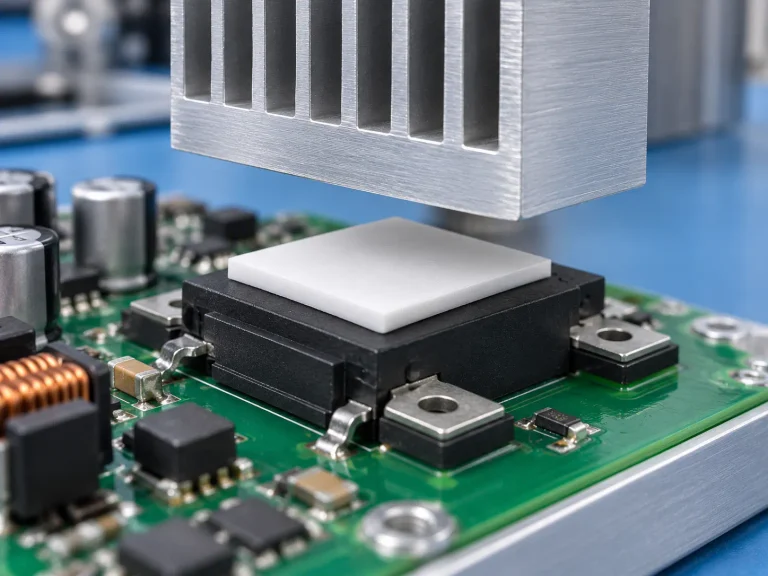
When working with a high-power processor, every micron in the bond line matters. A thinner interface means lower resistencia térmica and faster transferencia de calor from the die to the substrate.
- Reduced bond gap improves contact efficiency
- Controlled spread of material de interfaz térmica enhances stability
- Optimizado TIM viscosity avoids pump-out under load
To apply a proper Recommendation of non-volatile thermal conductive materials, teams usually:
- Measure surface flatness of the die and heatsink
- Select low-bleed material de interfaz térmica
- Calibrate dispensing volume
- Validate thermal resistance under cycling
Within this flow, a thermal conductive material recommendation must focus on non-volatile behavior. Evaporation leads to dry-out. Dry-out leads to hotspots. That is bad news for gaming GPUs and AI accelerators running flat out.
A practical Recommendation of non-volatile thermal conductive materials keeps bond lines tight while preventing material migration during long thermal cycling.
Optimizing Compressibility to Withstand Vibration in Automotive ECUs
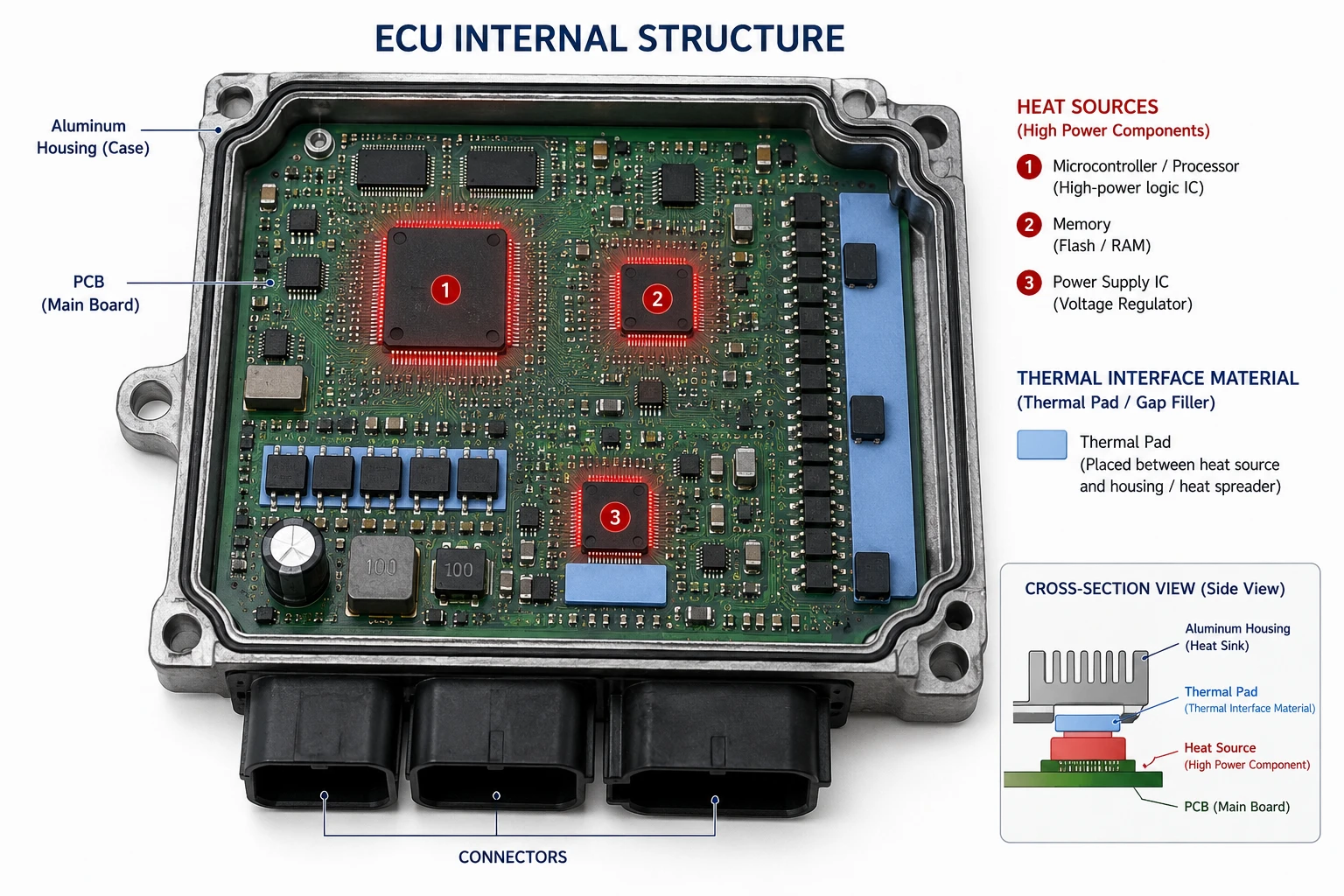
En electrónica del automóvil, especially an ECU, vibration never really stops. Roads shake. Engines hum. Components shift.
Key performance expectations:
- High compliance in almohadilla térmica design
- Eficaz vibration damping
- Estable gestión térmica under shock
A focused Recommendation of non-volatile thermal conductive materials for cars typically includes:
- Materials with controlled softness
- Low oil bleed gap filler formulations
- Demostrado shock absorption ratings
According to a 2025 McKinsey automotive electronics outlook:
“Thermal reliability and vibration resilience remain top design priorities as vehicle computing density increases across EV platforms.”
That insight lines up with field data. A dependable relleno de huecos with elastic recovery keeps contact intact, even after thousands of vibration cycles.
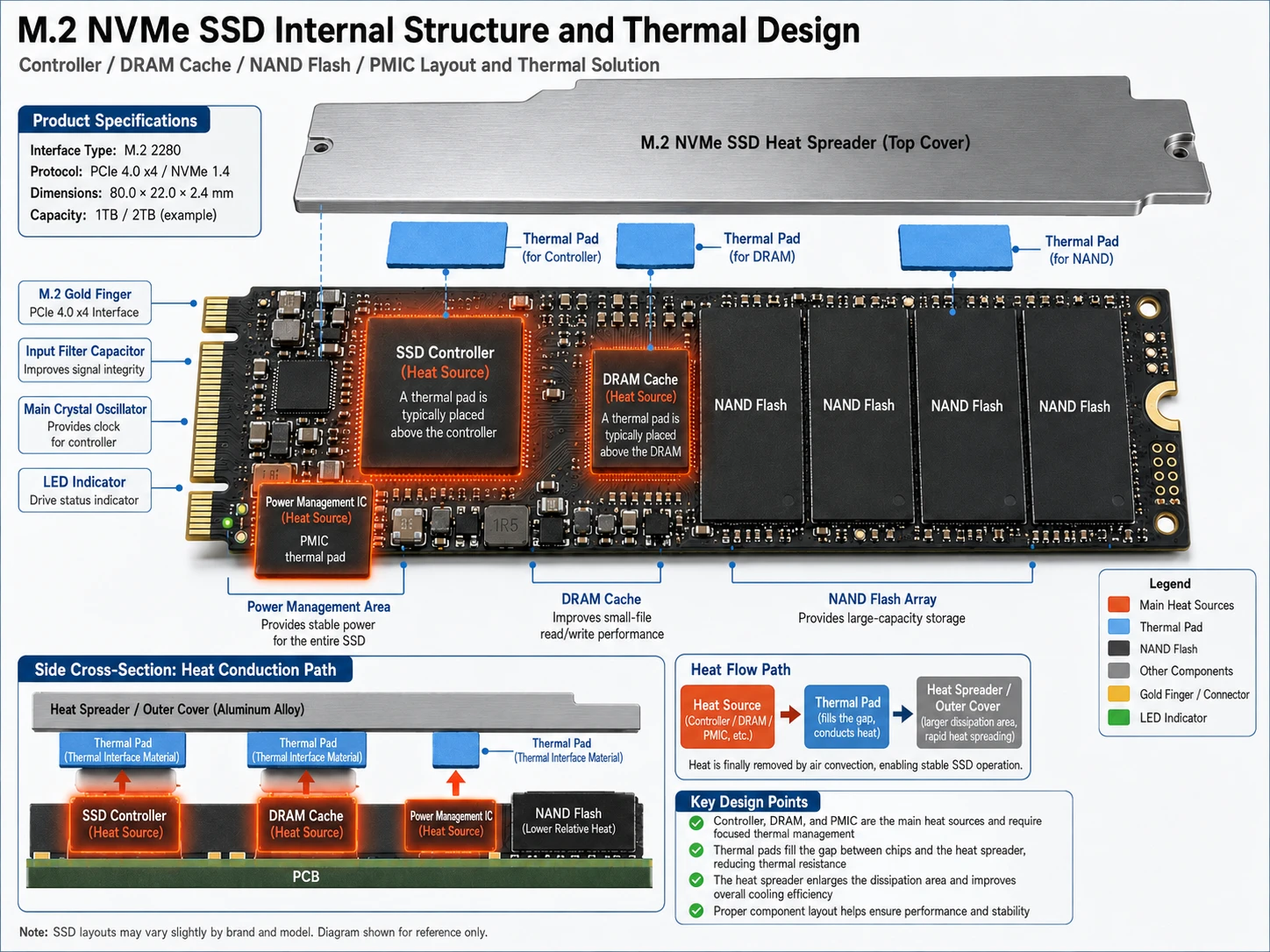
Ensuring High Adhesion Strength in Solid State Drives (SSDs)
Compact solid-state drive assemblies leave little room for error. Weak bonding means potential delamination, and that kills reliability fast.
For SSD builds, material selection often follows this path:
- Surface preparation of the controller and casing
- Application of controlled-thickness adhesive
- Thermal validation with simulated workloads
- Long-term aging assessment
In parallel:
- Strong interface compatibility reduces peeling
- Estable thermal paste chemistry avoids bleed
- Secure mechanical lock improves overall fiabilidad
A refined Recommendation of non-volatile thermal conductive materials ensures the adhesive layer does not shrink or crack during thermal cycling. That keeps NAND and controller chips cool and firmly attached.
Brands like Sheen Materials support SSD makers with low-volatility systems that balance adhesion and heat flow without overcomplicating assembly lines.
Achieving Consistent Shear Strength for Industrial Control Systems
En industrial electronics, continuous load is normal. A control unit may run day and night, exposed to vibration, heat, and repetitive ciclo térmico.
Mechanical expectations can be organized like this:
- Shear stress tolerance
- Estable thermal grease layer
- Even pressure distribution
- Mechanical stability
- Secure mounting
- Long-term assembly integrity
Consistent shear performance depends on:
- Controlled curing profile
- Balanced filler distribution
- Verified post-cycle inspection
A serious Recommendation of non-volatile thermal conductive materials focuses on low mass loss and steady modulus over time. That keeps joints stable even when temperature swings are routine.
For manufacturers seeking dependable performance without overdesign, Sheen Materials aligns material science with real-world assembly demands, offering practical guidance in every Recommendation of non-volatile thermal conductive materials scenario.
In short, mechanical reliability is not luck. It is a smart material choice, applied with discipline.