-
ADD: Edificio 2, nº 8 de Hengzhutang Road, Dongguan
-
Teléfono: +86 135 4224 3751

Graphene TIM for Semiconductor Burn-In and IC Testing
Graphene TIM, Semiconductor Burn-In, and IC testing have a heat problem: tiny interfaces can become big headaches when junction temperatures drift, and test results wobble.
SEMI reported semiconductor manufacturing equipment sales reached $117.1 billion in 2024, up 10% year over year, underscoring production-scale demand.
So specs alone won’t cut it. Engineers and buyers need repeatable application, cycling stability, package compatibility, qualified insulation properties, consistent lots, and dependable bulk supply.
Quick Insights on Graphene TIM, Semiconductor Burn-In, IC
- Exceptional Thermal Conductivity stabilizes junction temperatures for accurate burn-in testing of microprocessors, Power MOSFETs, and FPGA chips.
- Low Coefficient of Thermal Expansion minimizes mechanical stress and interface degradation during repeated thermal cycling.
- Superior Electrical Resistivity in burn-in sockets prevents leakage paths while maintaining efficient heat transfer.
- Precise Application Process—surface cleaning, calibrated dispensing, compression bonding, and junction-temperature verification—ensures repeatable performance.
- Bulk Supply & Inventory Management with vendor qualification, lot traceability, and shelf-life control supports production-scale testing demands.
What Makes Graphene TIM Ideal For Burn-In?
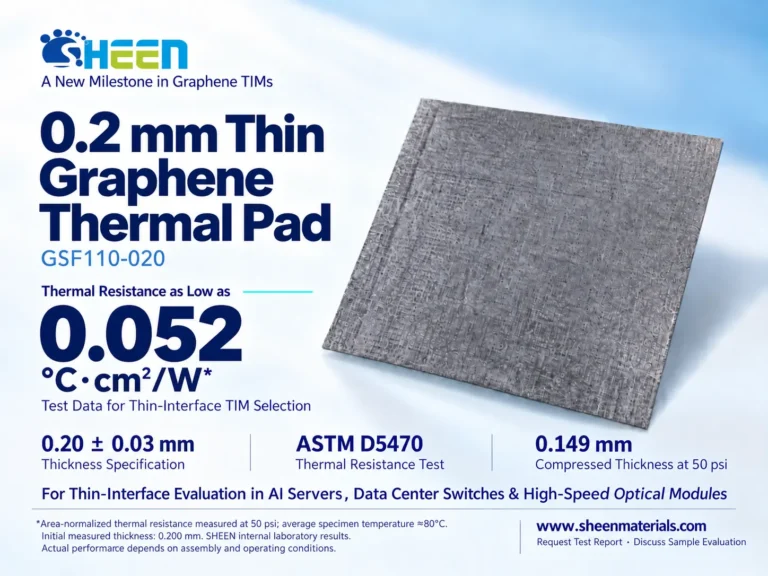
Graphene TIM can make Semiconductor Burn-In y IC testing easier to control by moving heat quickly while limiting unwanted electrical and mechanical effects. For demanding IC qualification, Materiales brillantes solutions help engineers maintain repeatable test conditions without overcomplicating the setup.
Exceptional Thermal Conductivity for IC Burn-In
En Semiconductor Burn-In, IC devices generate plenty of heat, so steady cooling matters.
- Thermal control
- Graphene TIM provides high conductividad térmica, supporting rapid disipación del calor from each semiconductor.
- Mejor gestión térmica guarda temperatura de unión closer to its target during IC testing.
- Test value
- Stable IC temperatures give microprocessors, MOSFETs, and FPGAs consistent stress conditions.
Q2
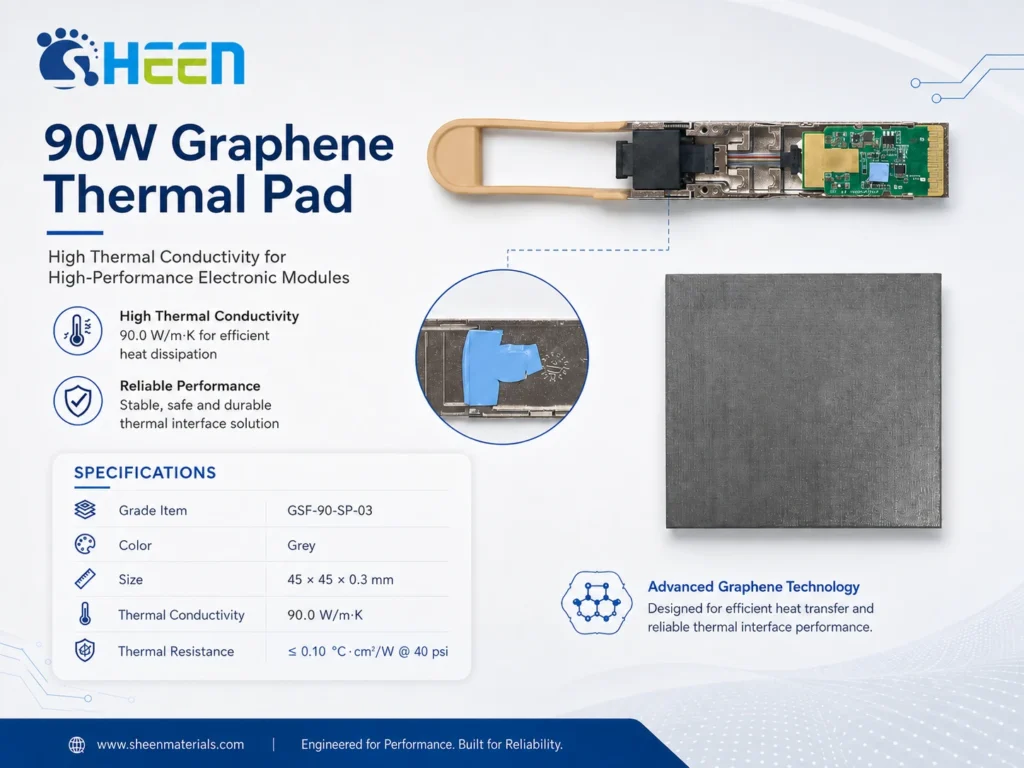
What are the core technical data for GSF90-03?
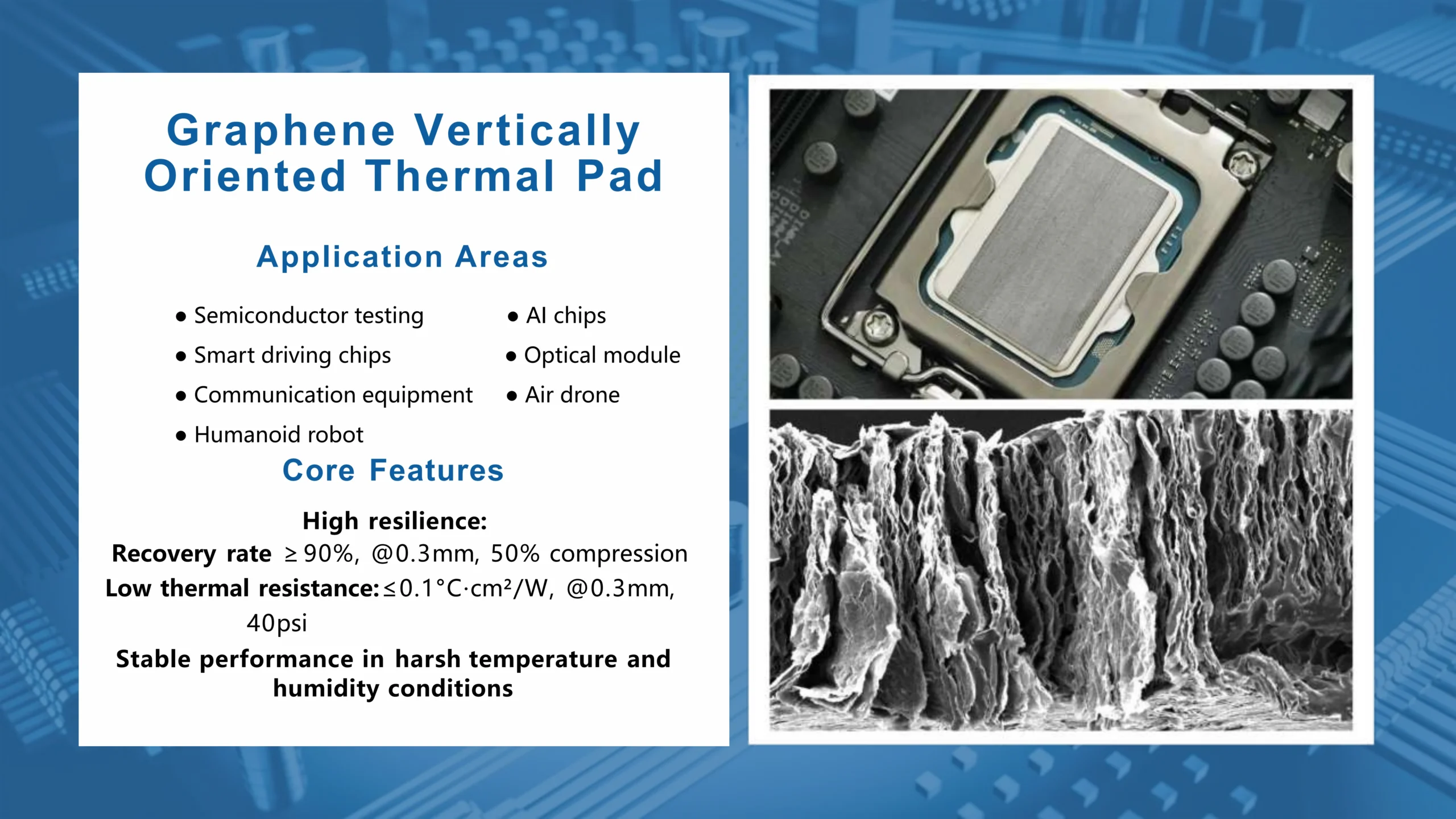
The table below reflects the currently published updated datasheet values for the GSF90-03 graphene thermal pad.
| Propiedad | Método de ensayo | GSF90-03 |
|---|---|---|
| Conductividad térmica | ASTM E1461 | 90 W/m·K |
| Thermal Resistance (@40 psi) | ASTM D5470 | ≤0.10 °C·cm²/W |
| Temperatura de aplicación | / | -40 to 150°C |
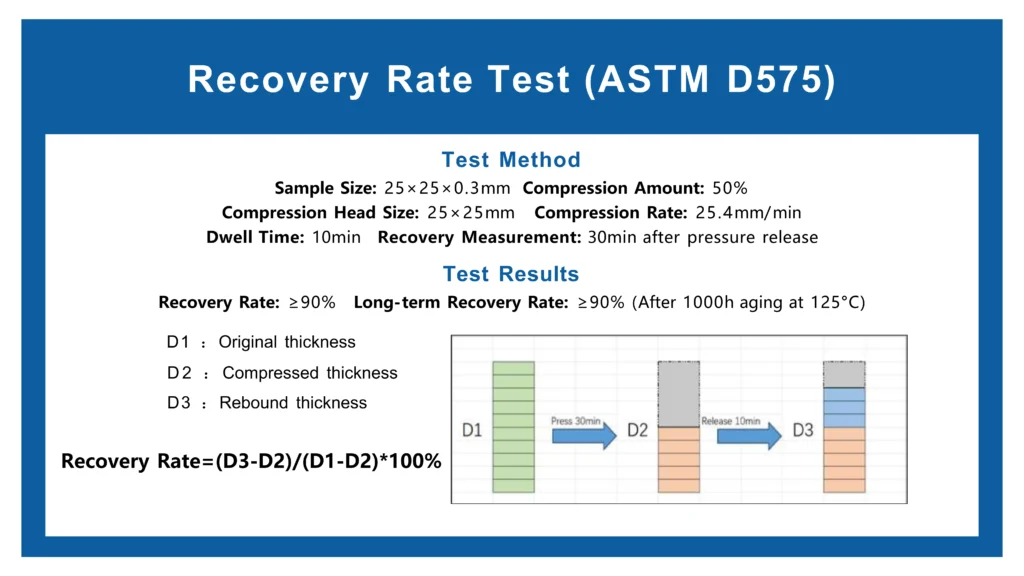
| Rebound Rate | / | ≥90% |
| Tensile Strength (Oriented Direction) | ASTM D412 | ≥0.05 MPa |
| Color | Visual | Black |
| Espesor | ASTM D374 | 0.3–2.0 mm |
| Densidad | ASTM D792 | 0.3–0.7 g/cm³ |
| Oil Bleeding Rate | / | ≤3% |
| Inflamabilidad | UL94 | V-0 |
| Compliance | / | RoHS 2.0 / Halogen-Free / REACH |
Low Coefficient of Thermal Expansion Reduces Stress
Repeated heating and cooling can be rough on an IC assembly.
- Material behavior
- A low coeficiente de dilatación térmica límites material deformation.
- Reducido thermal mismatch disminuye thermal stress during Graphene TIM use.
- Long-cycle benefits
- Less mechanical fatigue supports interface stability y packaging reliability throughout Semiconductor Burn-In cycles.
Superior Electrical Resistivity in Burn-In Sockets
Insulating Graphene TIM formulations add another useful safeguard around IC hardware.
- Electrical control
- Alta electrical resistivity promotes electrical isolation y short-circuit prevention near burn-in sockets.
- Test accuracy
- Proper material selection helps limit parasitic capacitance effects while preserving integridad de la señal.
- Stable interfaces can also avoid unwanted changes in resistencia de contacto.
Enhanced Reliability Assessment Under Thermal Stress Test
A stable interface makes Semiconductor Burn-In more meaningful.
- During the burn-in procedure
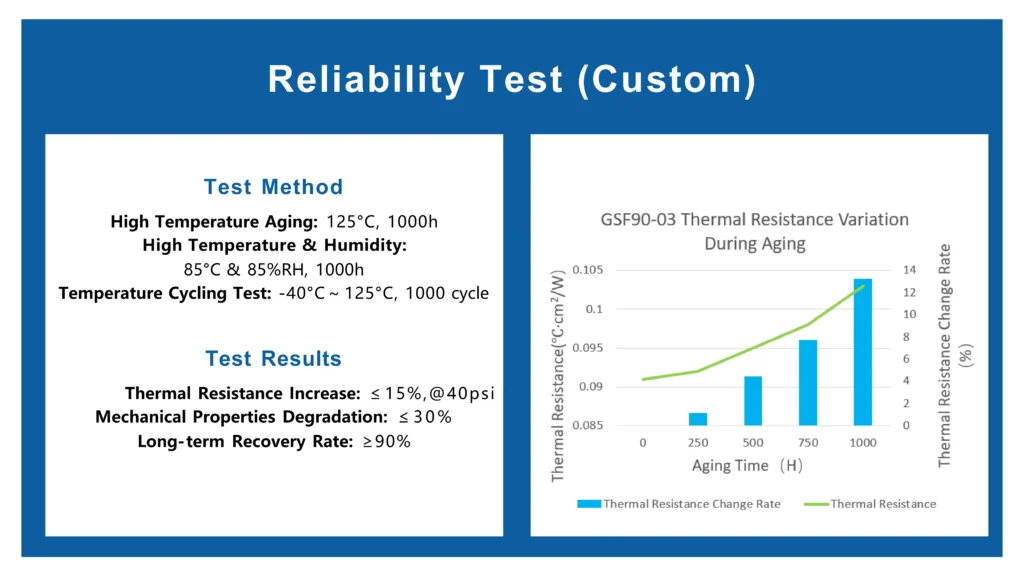
- Graphene TIM maintains repeatable temperatures through each thermal stress test.
- During evaluation
- Controlled heat supports accelerated aging of the integrated circuit.
- Engineers gain clearer análisis de fallos, stronger reliability assessment, and more useful lifetime prediction data.
4-Step Guide To Applying Graphene TIM Properly
Getting graphene thermal material right during burn-in comes down to clean contact, controlled placement, stable bonding, and reliable temperature checks. Sheen Materials supports this workflow for Graphene TIM, Semiconductor Burn-In, and IC applications where repeatable heat transfer can make or break IC test results.
Step 1: Surface Preparation and Cleaning
- Prepare the contact area.
- Remove old TIM and loose contaminants from each package substrate.
- Utilice alcohol isopropílico with a lint-free microfiber wipe for careful degreasing.
- Check the finish.
- Clear any oxidation layer that could raise contact resistance.
- Keep cleaned surfaces dry and untouched. Simple, but it matters.
Clean interfaces give Graphene TIM, Semiconductor Burn-In, and IC setups more uniform thermal contact.
Step 2: Accurate Dispensing Technology Application
- Set up the dispenser.
- Match the nozzle size to graphene TIM viscosidad.
- Calibrate volume before production runs.
- Control placement.
- Pick a pattern that provides full coverage without spilling over package edges.
- Account for basic fluid dynamics as material spreads under load.
Sheen Materials graphene TIM can support repeatable Semiconductor Burn-In processing when dispensing stays consistent. For Graphene TIM, Semiconductor Burn-In, IC work, too much material can be just as troublesome as too little.
Step 3: Optimal Thermal Compression Bonding
- Establish the bond.
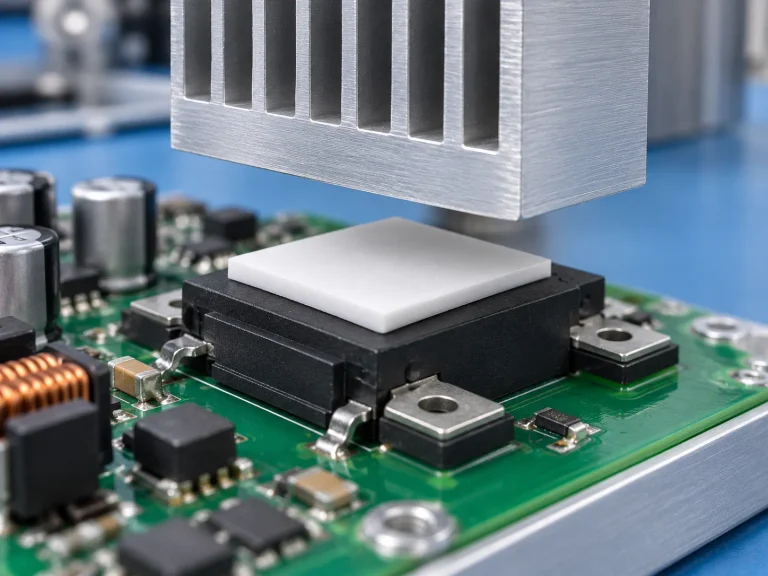
- Seat the disipador de calor evenly across the interface.
- Apply specified pressure y clamping force without overstressing the IC.
- Stabilize the joint.
- Follow the qualified temperature profile y tiempo de curado.
- Inspect for trapped voids, which create unwanted thermal barriers.
This keeps the Graphene TIM, Semiconductor Burn-In, and IC contact thin and consistent.
Step 4: Junction Temperature Measurement Verification
- Verify measurement.
- Position a calibrated thermocouple or package sensor near the expected hot spot.
- Connect suitable data acquisition hardware and confirm calibration.
- Run representative burn-in power and airflow.
- Wait for thermal steady state.
- Calculate resistencia térmica and compare junction temperature against the qualified IC limit.
This final check confirms the graphene TIM performs under real Semiconductor Burn-In conditions, not just on the bench.
Graphene TIM Vs. Traditional TIM: Performance Comparison
Graphene TIM, Semiconductor Burn-In, IC testing puts thermal interfaces under repeated heat, pressure, and cycling, so headline conductivity is only part of the story. In day-to-day test work, contact quality, electrical behavior, handling, and aging matter too. Graphene TIM and traditional options tackle those jobs in quite different ways.
Graphene TIM
Graphene-based interfaces use a carbon nanomaterial to move heat efficiently.
- Thermal performance
- Alta conductividad térmica supports fast disipación del calor.
- Thin contact layers can reduce interface resistance around an IC.
- Burn-in use
- Bien fiabilidad y longevity can suit repeated Semiconductor Burn-In cycles.
- Formulation still matters; graphene alone does not guarantee low resistance.
For Graphene TIM, Semiconductor Burn-In, and IC applications, that combination can be a strong fit.
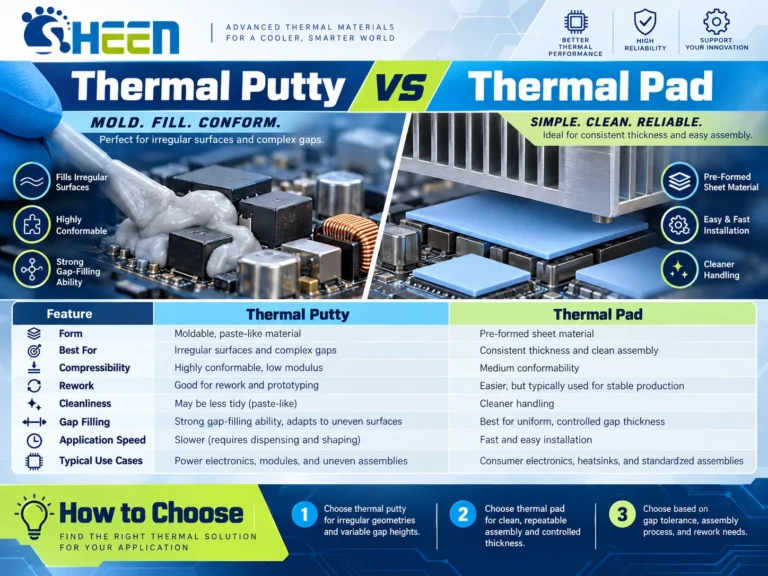
Grasa térmica
Grease is forgiving when test surfaces are not perfectly flat.
- Comportamiento de los contactos
- Controlado viscosidad helps the silicone base fill tiny surface gaps.
- Adecuado application thickness guarda impedancia térmica down.
- Aging concerns
- Repeated heating can cause the pump-out effect.
- Migration may encourage formación de vacío, so maintenance can get messy.
Phase Change Material
Phase change materials become more conformable around a designed melting point.
- During heating:
- En phase transition mejora wetting behavior.
- Mejor conformabilidad promotes micro-gap filling.
- During cooling:
- Stable cycling matters more than latent heat alone, especially in semiconductor burn-in fixtures.
Hoja de grafito
Graphite sheet is clean, thin, and handy for spreading localized IC heat.
- Heat movement
- Fuerte in-plane conduction comes from planar orientation and pronounced anisotropy.
- Physical design
- Bajo density, useful flexibilidad, and solid resistencia mecánica aid handling.
- Through-plane transfer can lag, while electrical conductivity may call for added insulation.
Ceramic Substrate
Ceramics serve a different role from soft Graphene TIM materials.
- Electrical needs
- Alta rigidez dieléctrica provides dependable aislamiento eléctrico.
- Mechanical and thermal needs
- Fuerte resistencia al calor y estabilidad mecánica suit hot testing.
- Substrate rigidity limits conformity, while dilatación térmica mismatch can raise contact stress during repeated IC cycling.
Scenario: High-Volume IC Testing With Graphene TIM
High-volume testing gets tricky when heat, packaging, and material supply vary from batch to batch. A controlled Graphene TIM, Semiconductor Burn-In, IC workflow can tighten thermal results while keeping production moving. Sheen Materials supports this goal with repeatable graphene-based thermal interface options.
Streamlining Wafer Level Packaging for Burn-In
Pairing Wafer Level Packaging with automated Semiconductor Burn-In creates a cleaner path from assembly to stress testing.
- Thermal setup
- Solicitar Graphene TIM at a controlled thickness and contact pressure.
- Check coverage before the Packaging Process moves forward.
- Test handling
- Set fixture pressure consistently during IC Testing.
- Track device temperature rather than relying only on heater settings.
- This improves Thermal Management.
- It also makes hot-device comparisons less hit-or-miss.
For large lots, the Graphene TIM, Semiconductor Burn-In, and IC process should be validated on representative packages before production ramps.
Inventory Management and Bulk Procurement Strategies
Bulk buying can cut handling work, but material controls still matter. Component Sourcing should connect directly with Material Management, especially when Graphene TIM becomes part of a repeatable manufacturing recipe.
- Qualify the supplier and review safety documentation.
- Record lot numbers, shelf life, storage conditions, and incoming inspection results.
- Link consumption forecasts with the Supply Chain plan.
- Hold suitable safety stock.
- Avoid buying beyond validated storage life.
That approach supports Semiconductor Manufacturing y Eficacia de la producción without turning extra inventory into dead stock. Sheen Materials can also be assessed for lot traceability and supply continuity before volume orders.
Accelerated Life Testing in Power MOSFET and FPGA Chips
A Graphene TIM, Semiconductor Burn-In, and IC setup become especially useful when stress tests run hot for long periods.
- Power MOSFET
- En Accelerated Life Testing, monitor case temperature and Junction Temperature.
- Keep Thermal Interface Material mounting pressure fixed between samples.
- FPGA Chips
- Log workload, power, temperature, and failure time.
- During each Semiconductor Stress Test, inspect interface placement after thermal cycling.
Stable heat transfer helps Reliability Testing separate actual silicon or package degradation from test-fixture thermal variation, giving engineers cleaner data for lifetime comparisons.