-
ADD: Building 2, No. 8 Hengzhutang Road, Dongguan
-
Phone: +86 135 4224 3751

How to Use a Boron Nitride Thermal Pad for Power Electronic Modules
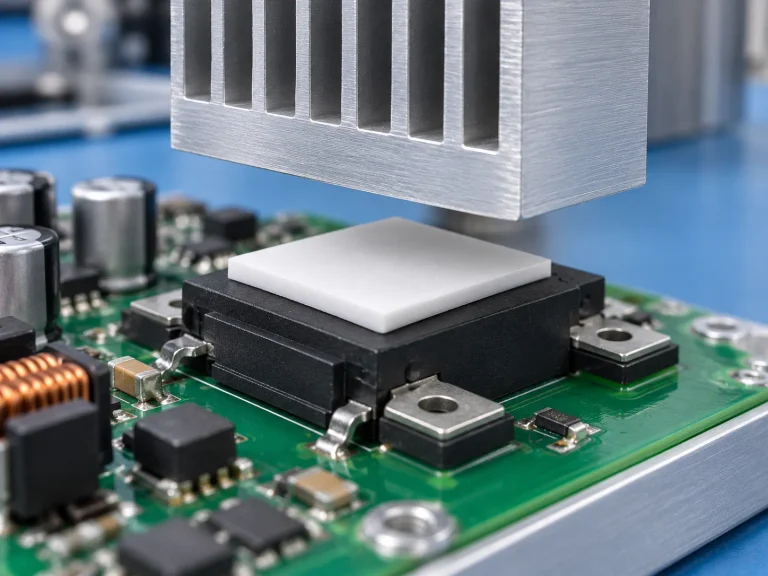
Heat kills performance fast, and Boron Nitride Thermal Pad Heat dissipation for power electronic modules steps in like a calm fixer when systems start running hot and messy.
Grease smears, gels shift, lines hate inconsistency; pads stay clean, predictable, steady under pressure, cutting rework and building on track.
IEA and McKinsey note thermal management demand in electrification, reinforcing adoption of advanced interface materials.
Quick Answers: Boron Nitride Thermal Pad Heat dissipation for power electronic modules
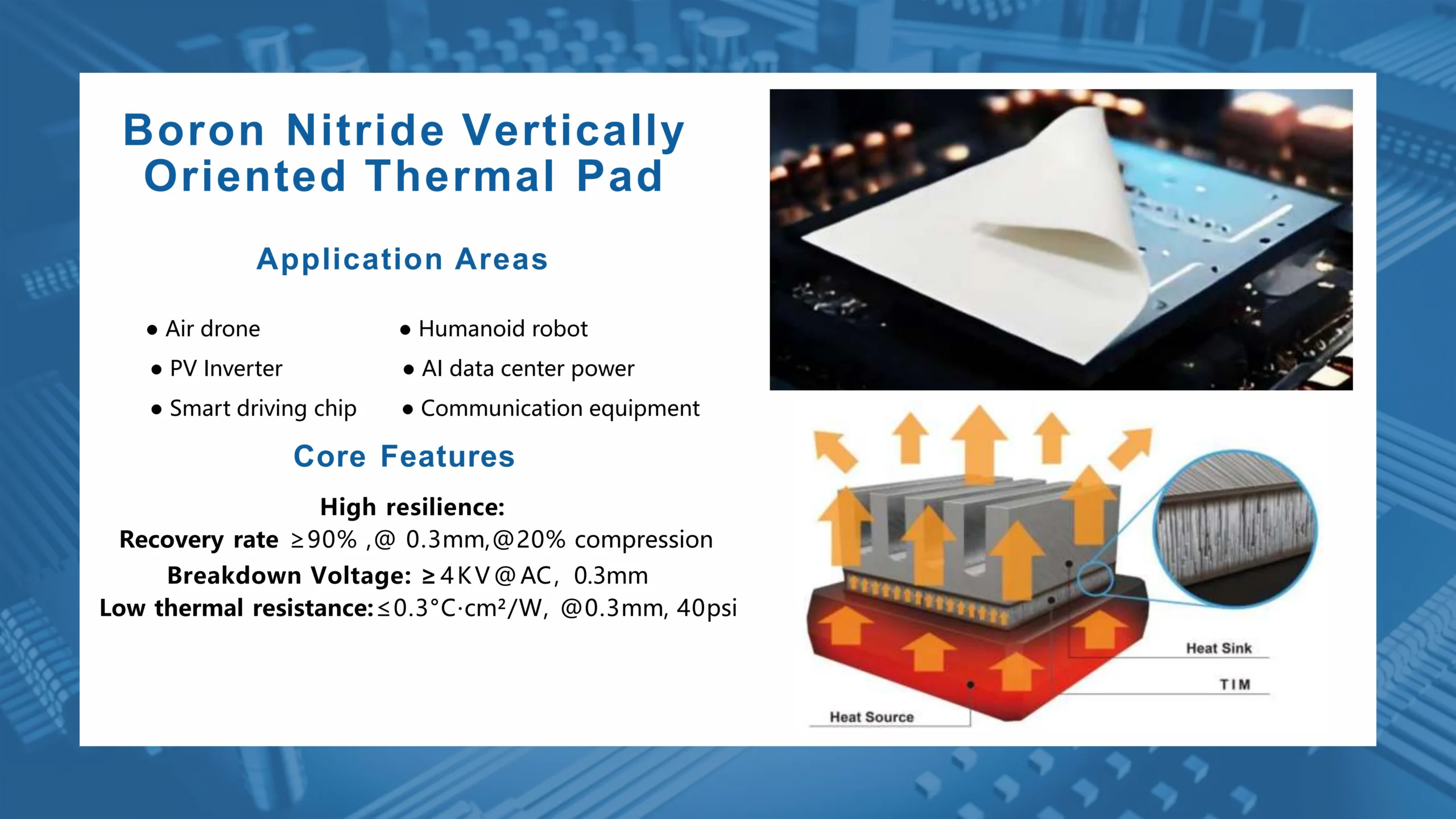
-> Maximized Conductivity: Hexagonal BN fillers form pathways that cut thermal resistance and boost heat transfer to heat sinks.
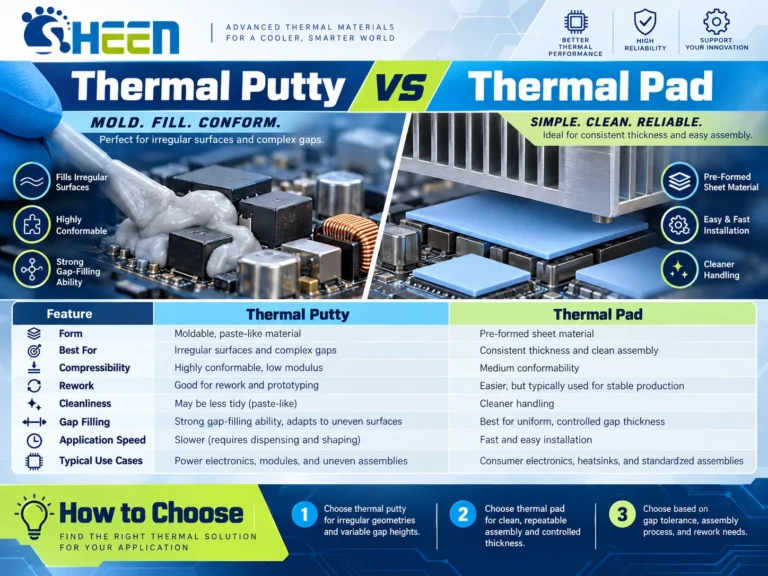
-> Clean, Consistent Interface: Pads replace grease and gels for uniform thickness, stable dielectric strength, and vibration-resistant performance.
-> Lower Junction Temps: Enhanced spreading minimizes hot spots in IGBTs, MOSFETs, and diodes, preventing thermal runaway in high-power systems.
-> Easy Installation & Maintenance: Simple surface prep, correct pad thickness, controlled pressure, plus routine checks on compressibility and dielectric strength ensure lasting efficiency.
80% Heat Dissipation Boost With BN Thermal Pads
Boron Nitride Thermal Pad: Heat dissipation for power electronic modules isn’t just lab talk—it’s what keeps real systems from overheating mid-operation. Break the phrase down: boron nitride, thermal pad, heat dissipation, power modules. Each piece matters, and together they unlock cooler, safer performance.
Understanding Thermal Conductivity in Boron Nitride Pads
- Thermal conductivity rises as boron nitride aligns within thermal pads
- Smoother interface contact cuts thermal resistance
- Better heat transfer comes from tuned material properties
Short view: heat moves faster, losses drop.
In layered paths, phonons travel across BN networks, making Boron Nitride Thermal Pad Heat dissipation for power electronic modules noticeably steadier under load.
Comparing Hexagonal Boron Nitride with Thermal Grease and Gels
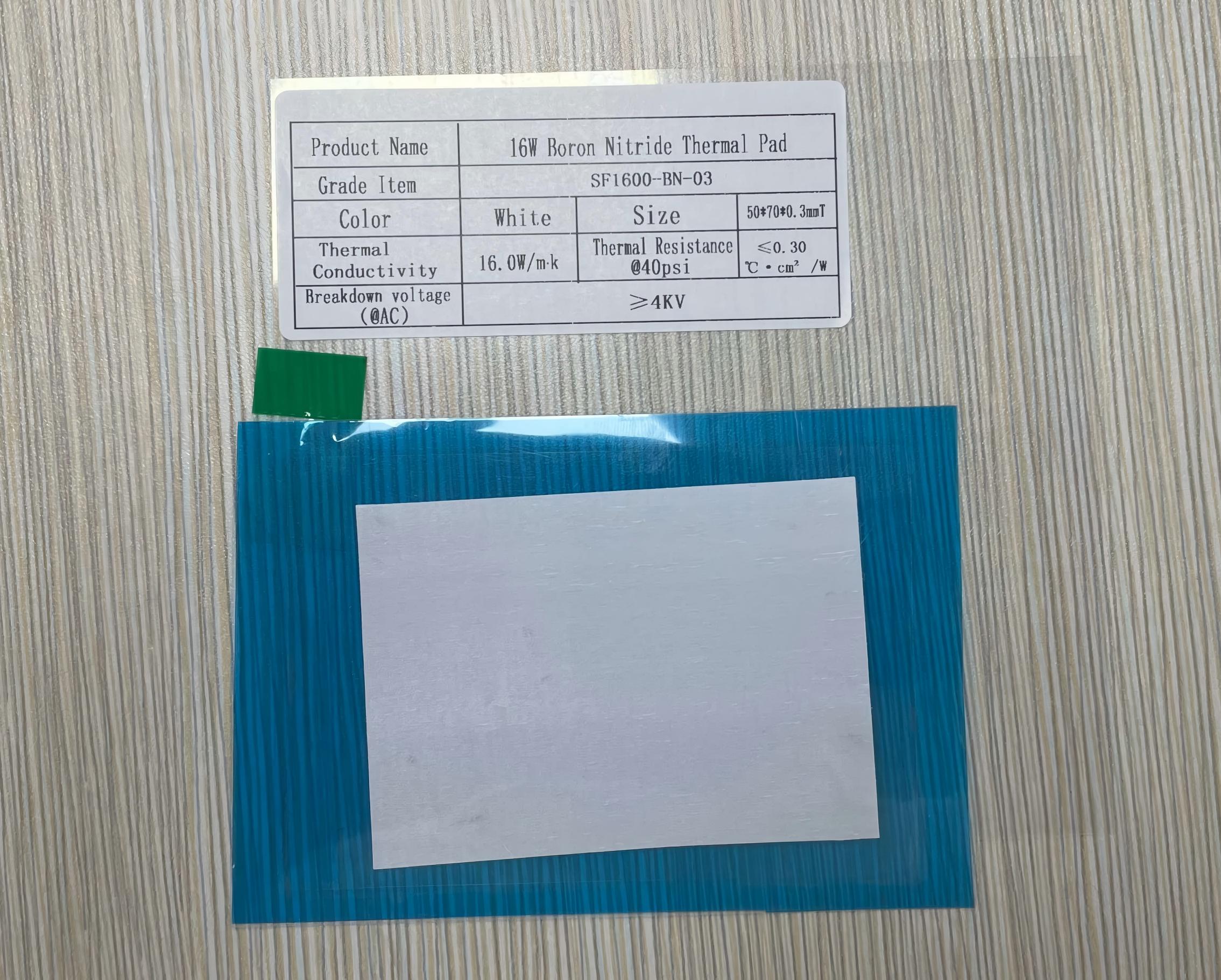
- Hexagonal boron nitride pads keep thickness stable
- Thermal grease pumps out under cycling
- Thermal gels shift with vibration
➤ Clean install, no mess
➤ Strong TIMs consistency
➤ Safer interface materials
Sheen Materials pushes pad uniformity, so Boron Nitride Thermal Pad Heat dissipation for power electronic modules stays predictable across installs.
How Sheen Materials’ BN Pads Lower Junction Temperature and Hot Spots
Step flow:
- heat leaves die → spreads via BN pads
- reduced junction temperature limits drift
- fewer hot spots protect power modules
Efficiency and Reliability Gains in Inverters and Converters
Nested view:
- efficiency gains
- lower switching loss
- stable thermal paths
- reliability improvements
- less thermal stress
- longer operational lifespan
Sheen Materials solutions help Boron Nitride Thermal Pad Heat dissipation for power electronic modules scale across inverters and converters, keeping systems cooler without overcomplicating design.
3 Steps To Install Boron Nitride Thermal Pad
Getting Boron Nitride Thermal Pad Heat dissipation for power electronic modules right isn’t rocket science, but sloppy prep will ruin performance fast. This quick guide keeps things clean, even, and properly clamped so your boron nitride pad actually moves heat instead of trapping it. Think practical moves, not theory dumps—just what works on real modules.
Step 1 – Surface Preparation and Cleaning for Optimal Adhesion
- Core flow:
- Inspect the substrate and interface
- Remove visible contaminants and old residue
- Check flatness for consistent bonding
- Clean process:
- Use lint-free wipes + solvent for proper cleaning
- Dry fully to avoid micro-film that hurts adhesion
- Final check:
- Light reflection test across the surface preparation area
- No streaks = ready for boron nitride thermal pad placement
- Inspect the substrate and interface
Short note: Good prep directly lowers contact resistance in heat dissipation for power modules and keeps the BN pad stable over time.
Step 2 – Selecting Pad Thickness and Ensuring Even Contact
- Selection logic:
- Match pad thickness to gap:
- Too thin → poor gap filling
- Too thick → stress on module surface
- Verify thermal interface coverage:
- Full contact across heat sink and chip
- No air pockets in the interface material
- Match pad thickness to gap:
- Quick checks:
- Uniform compression pattern
- No edge lift on the thermal pad
Using Sheen Materials BN pads helps maintain consistent compressibility for Boron Nitride Thermal Pad Heat dissipation for power electronic module setups.
Step 3 – Applying Proper Pressure and Testing Thermal Resistance
- Installation stack:
- Align module → place pad → mount heat sink
- Apply controlled clamping force
- Ensure even applied pressure
- Align module → place pad → mount heat sink
- Validation:
- Measure thermal resistance
- Compare before/after install
- Run load test:
- Track thermal performance under real current
- Measure thermal resistance
- Fine-tuning:
- Adjust torque if hotspots appear
- Re-seat if contact pattern looks uneven
Sheen Materials solutions are often used where stable heat transfer and repeatable performance evaluation matter, especially in Boron Nitride Thermal Pad Heat dissipation for power electronic modules and similar high-load systems.
Maintenance Checklist For Boron Nitride Thermal Pad
Boron Nitride Thermal Pad Heat dissipation for power electronic modules keeps systems cool without drama, but only if the pad stays healthy. From surface checks to lifecycle calls, small details matter. This guide walks through how Boron Nitride pad performance, heat dissipation, and insulation hold up in real-world power modules.
Inspecting Pad Compressibility and Surface Integrity
- Inspection of pad behavior starts simply
- Check compressibility under light pressure
- Uneven rebound → possible deformation
- Scan surface for micro cracks
- Edges curl → loss of integrity
- Check compressibility under light pressure
- Quick touch test + visual pass often reveals early failure in Boron Nitride Thermal Pad Heat dissipation for power electronic module setups.
- If stiffness rises, contact resistance climbs, hurting heat dissipation for power modules.
Verifying Dielectric Strength and Electrical Insulation
Mix hands-on checks with numbers:
- Measure resistance and leakage current under rated voltage
- Watch for early breakdown signs in BN thermal interface layers
| Test Item | Voltage (kV) | Leakage (µA) | Result |
|---|---|---|---|
| Sample A | 3.0 | 2.1 | Pass |
| Sample B | 3.0 | 6.8 | Risk |
| Sample C | 4.0 | 3.5 | Pass |
“Thermal interface reliability now directly ties to insulation stability in high-density modules” — 2025 power electronics reliability outlook
Monitoring Thermal Cycling Effects on Heat Transfer
- Run controlled thermal cycling (−40°C to 125°C)
- Track temperature delta per cycle
- Note degradation in heat transfer and efficiency
- Flag shifts after repeated cycles
Short bursts of data often reveal long-term drift in Boron Nitride Thermal Pad Heat dissipation for power electronic modules performance.
Scheduling Replacement Based on Efficiency and Lifetime Metrics
- Maintenance logic for BN pads:
- Efficiency drop >8%
- schedule replacement
- Rising junction temp trends
- Check metrics vs rated lifetime
- Visible degradation + performance loss
- Immediate swap
- Efficiency drop >8%
- Sheen Materials solutions help extend lifetime while keeping heat dissipation for power modules stable.
- Smart scheduling avoids surprise downtime and keeps Boron Nitride pad systems predictable.