-
ADD: Building 2, No. 8 Hengzhutang Road, Dongguan
-
Phone: +86 135 4224 3751

How Low Thermal Resistance Insulating Thermal Pad Enhances Electronics Performance
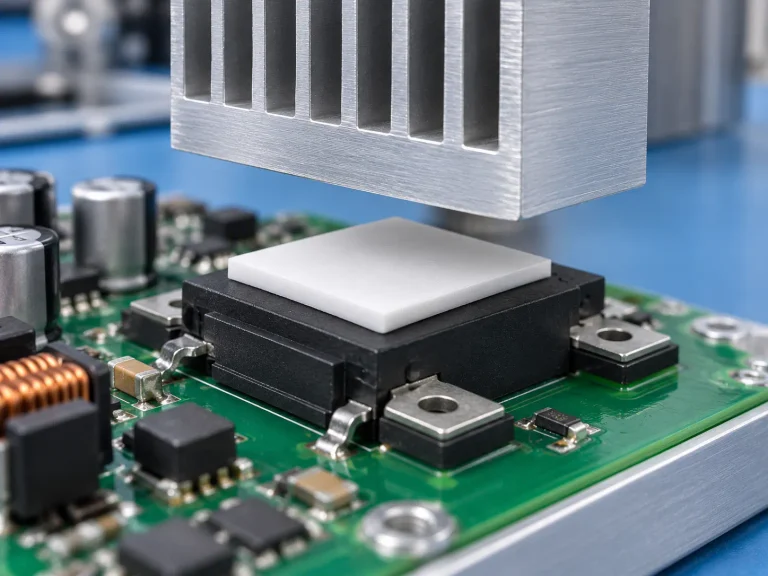
Electronics today run hotter than a summer highway. As chips pack more punch into tighter spaces, heat builds up fast—and performance starts to wobble. That’s where the Low Thermal Resistance Insulating Thermal Pad steps in, acting like a heat highway between your power device and its heat sink. No drama, no sparks—just cooler systems and steadier output.
“Thermal failure is still one of the top causes of field returns,” notes a 2025 IPC reliability brief. Sheen Electronic Technology engineers echo the same tune: shave thermal resistance, extend product life. In plain terms? Less heat stress, fewer headaches, longer uptime.
3 Key Benefits Of Low Thermal Resistance Insulating Thermal Pad
Heat is the silent troublemaker inside modern electronics. When power devices run hot, performance drops and lifespan shrinks. That’s why a Low Thermal Resistance Insulating Thermal Pad matters so much. By combining low thermal resistance, strong insulation, and stable material design, this thermal pad keeps electronic components cool, safe, and running smoothly. Let’s break down how a low thermal resistance pad, or insulating thermal pad, really upgrades thermal management and long-term system stability.
Maximized Heat Dissipation Through High Thermal Conductivity
A Low Thermal Resistance Insulating Thermal Pad works by tightening the path for heat transfer between hot chips and heat sinks. The goal is simple: reduce thermal impedance and move heat fast.
- Material Foundation1.1 Silicone Elastomer Base
- Flexible structure fills surface gaps between MOSFETs and heat sinks.
- Reduces air pockets that block thermal conductivity.
1.2 Boron Nitride or Ceramic Filler

*   Enhances internal heat flow.

*   Maintains electrical safety while boosting **heat dissipation**.
- Functional Heat Path Optimization2.1 Interface Contact
- A low thermal resistance pad adapts to uneven surfaces.
- Improves real contact area for smoother heat transfer.
2.2 Power Device Protection

*   Stabilizes temperature in IGBT modules and other **power devices**.

*   Prevents sudden overheating during peak loads.
- Performance Impact on Electronics3.1 Improved power efficiency3.2 Reduced thermal throttling3.3 Better overall system stability
When a Low Thermal Resistance Insulating Thermal Pad is installed correctly, the difference is obvious. Devices run cooler. Fans work less. Systems stay sharp under pressure.
Enhanced Long-Term Reliability in Automotive Electronics
Cars today pack serious computing power. That means more heat around sensitive electronic components.
- Temperature Stabilization1.1 Continuous Heat Cycling Control
- A Low Thermal Resistance Insulating Thermal Pad reduces temperature swings.
- Limits the expansion and contraction stress on solder joints.
1.2 Operating Temperature Balance

*   Maintains safer **operating temperature** ranges for ECUs and control modules.
- Reliability and Compliance2.1 Protection of Power Transistors and Chipsets2.2 Alignment with automotive durability expectations2.3 Extended component lifespan through consistent thermal management
- Overheating Prevention Strategy
- Lower thermal resistance
- Stable insulation layer
- Reliable thermal interface material behavior over time
In tough automotive environments, a thermal insulating pad is not optional. It directly supports device reliability and long-term field performance.
Superior Electrical Isolation with Boron Nitride and Silicone Elastomer
Cooling is critical, but insulation cannot be compromised. A Low Thermal Resistance Insulating Thermal Pad balances both.
- Electrical Protection Structure1.1 High Dielectric Strength
- Boron nitride filler maintains strong electrical insulation.
- Prevents short circuits between live parts and heat sinks.
1.2 High Volume Resistivity

*   Keeps current flow controlled and contained.
- Material Synergy2.1 Silicone Elastomer Flexibility2.2 Ceramic Particle Stability2.3 Flame resistance meeting UL standards
- Application-Level Benefits
- Safe integration with high-voltage power devices
- Cleaner separation between ICs and metal cooling plates
- Stronger overheating prevention without electrical risk
A well-designed Low Thermal Resistance Insulating Thermal Pad does more than cool. It insulates, protects, and quietly boosts enhancing electronics performance across demanding systems. Brands like Sheen Electronic Technology continue refining low thermal resistance pad solutions that bring together thermal conductivity, insulation strength, and dependable heat dissipation—because in real-world electronics, steady performance beats flashy specs every time.
4 Criteria To Choose Thermal Interface Materials
Choosing a Low Thermal Resistance Insulating Thermal Pad isn’t just ticking boxes on a spec sheet. It’s about keeping devices cool, stable, and alive longer. From MOSFETs to LED drivers, the right insulating thermal pad makes heat behave. Let’s break it down in a practical way.
Thermal Conductivity and Thermal Impedance Requirements
When evaluating a Low Thermal Resistance Insulating Thermal Pad, heat control starts with numbers—but performance shows up in real devices.
1) Core Performance Indicators
1.1 Thermal Conductivity
- Measured in watt per meter-kelvin, it defines how quickly heat transfer happens through the material.
- Higher conductivity reduces temperature gradient between chip and heat sink.1.2 Thermal Resistance
- Includes bulk resistance and contact resistance.
- Interface gaps increase thermal resistance, so a low thermal resistance pad must fill surface irregularities.
2) Interface Behavior
2.1 Surface Contact
- Poor surface wetting creates interface gaps.
- A quality insulating thermal pad adapts to micro-roughness.2.2 System Impact
- Lower impedance improves power supply stability.
- Reduced hot spots protect long-term material properties.
A Low Thermal Resistance Insulating Thermal Pad works best when conductivity and contact efficiency are balanced, not chased blindly.
Optimal Thickness Range and Hardness (Shore) for MOSFETs
Thickness and hardness shape real-world performance.
1) Thickness Control
1.1 Bond Line Management
- Too thin → incomplete coverage.
- Too thick → higher thermal resistance.
- Ideal thickness keeps bond line consistent.1.2 Mechanical Compensation
- Absorbs tolerance stack-ups in IGBT modules.
- Maintains even pressure distribution.
2) Shore Hardness Selection
2.1 Conformability
- Lower Shore improves surface contact.
- Reduces trapped air and improves heat transfer.2.2 Structural Stability
- Excessively soft pads risk pump-out under mechanical stress.
- Balanced hardness supports device reliability during thermal cycling.
A Low Thermal Resistance Insulating Thermal Pad with tuned hardness keeps MOSFETs cool without sacrificing structure.
Compatibility: RoHS Compliance and Halogen-Free Standards
Regulatory alignment matters just as much as performance.
1) Environmental Standards
1.1 RoHS & REACH
- Controls hazardous substances.
- Supports global shipment.1.2 Halogen-Free Composition
- Reduces corrosive risks.
- Enhances component protection.
2) Material Reliability
2.1 Chemical Stability
- Strong chemical inertness avoids reaction with substrates.
- Low outgassing prevents contamination.2.2 Electrical Safety
- High electrical insulation strength.
- Stable under defined temperature limits.
A compliant Low Thermal Resistance Insulating Thermal Pad keeps both regulators and engineers happy.
Manufacturing Ease: Die-Cutting, Laminating, and Curing Processes
Production flow can’t be ignored.
1) Processing Flexibility
1.1 Die-Cutting
- Clean edges reduce scrap.
- Supports automated placement.1.2 Laminating
- Stable adhesion improves substrate adhesion.
- Maintains consistent bond line thickness.
2) Application Performance
2.1 Handling
- Good surface wetting behavior.
- Minimal debris during cutting.2.2 Reliability in Assembly
- Resists material degradation at the rated operating temperature range.
- Ensures long-term performance in telecom and industrial units.
Manufacturers looking for dependable insulating thermal pads often turn to Sheen Electronic Technology for a Low Thermal Resistance Insulating Thermal Pad that balances process efficiency with thermal stability.
Low Thermal Resistance Insulating Thermal Pad ROI
Heat is sneaky. It creeps into control cabinets, power modules, and sleek consumer gadgets, slowly eating away at margins. A Low Thermal Resistance Insulating Thermal Pad sounds simple, yet the mix of low thermal resistance, electrical insulation, and steady heat dissipation can seriously shift ROI. Let’s break down how smarter thermal management turns into real money.
Reduced Downtime Costs in Industrial Controls via Improved Heat Sinks
A Low Thermal Resistance Insulating Thermal Pad works at the intersection of thermal conductivity and electrical insulation, keeping IGBTs, MOSFETs, and control chips cool without risking short circuits. In industrial cabinets, that balance directly impacts component reliability.
1) Equipment Layer
1.1 Power Modules
- Reduced junction temperature through low thermal resistance paths
- Stable material properties under high load cycles1.2 Control Boards
- Better heat dissipation across heat sinks
- Lower risk of insulation breakdown
2) Operational Layer
2.1 Downtime Reduction
- Fewer thermal shutdowns
- Less emergency maintenance2.2 Maintenance Planning
- Predictable service intervals
- Extended replacement cycles
3) Financial Layer
3.1 Direct Savings
- Lower spare part inventory
- Reduced technician hours3.2 Indirect Gains
- Higher production uptime
- Improved contract compliance
When a thermal insulating pad with low resistance replaces a standard interface sheet, heat moves faster into the sink. Cabinets run cooler. Fans cycle less. Over a year, that steady improvement stacks up. Sheen Electronic Technology designs thermal interface materials tuned for heavy-load environments, where even a 5°C drop can prevent repeated transistor failures.
Total Cost of Ownership: Volume Resistivity vs. Contact Resistance Trade-Off
Balancing volume resistivity and contact resistance isn’t just lab talk. It’s a cost decision.
- High electrical insulation (volume resistivity) protects circuits.
- Low contact resistance improves heat dissipation.
- Excess focus on one can hurt the other.
In automotive ECUs and telecom power supplies, a Low Thermal Resistance Insulating Thermal Pad must deliver both. A quick comparison shows why:
| Pad Type | Thermal Conductivity (W/m·K) | Volume Resistivity (Ω·cm) | Contact Resistance (°C·cm²/W) | Estimated 3-Year Failure Rate (%) |
|---|---|---|---|---|
| Standard Silicone Pad | 1.5 | 1×10¹² | 0.45 | 8.2 |
| Enhanced Insulating Pad | 3.0 | 5×10¹¹ | 0.32 | 5.6 |
| Low Thermal Resistance Insulating Thermal Pad | 5.0 | 1×10¹¹ | 0.18 | 3.1 |
| High-End Graphite Hybrid | 7.5 | 5×10⁸ | 0.12 | 2.8 |
Lower contact resistance cuts operating temperature. Strong volume resistivity keeps isolation safe. The sweet spot reduces warranty claims and boosts long-term component reliability. That’s where a carefully engineered low thermal resistance pad pays off. Sheen Electronic Technology focuses on tuning both parameters instead of pushing only conductivity numbers.
Payback Period Analysis for Consumer Electronics Thermal Management
In phones, gaming consoles, and smart home hubs, tight layouts make thermal management tricky. A Low Thermal Resistance Insulating Thermal Pad spreads heat fast while maintaining electrical insulation between chips and shields.
1) Product Level
1.1 Chip Protection
- Stable material properties under rapid thermal cycling
- Fewer hot spots1.2 Battery Area
- Controlled surface temperature
- Improved safety margin
2) Business Level
2.1 Warranty Metrics
- Reduced overheating returns
- Lower service logistics cost2.2 Brand Perception
- Fewer performance throttling complaints
- Better user reviews
3) Payback Calculation
3.1 Initial Upgrade Cost
- Slightly higher per-unit pad price3.2 Recovery Path
- Drop in return rate
- Extended device lifespan3.3 Net Effect
- Faster ROI within product cycle
IDC’s 2025 consumer device reliability outlook notes that thermal-related failures remain among the top three causes of early returns in compact electronics, pushing manufacturers to prioritize advanced thermal interface materials.
Switching to a thermal insulating pad with low thermal resistance can shave failure rates by a few percentage points. That sounds small. In mass production, it’s huge. With solutions from Sheen Electronic Technology, brands often see the payback window close within a single product generation, while users just notice one thing: their device runs cool and keeps running.
FAQs about Low Thermal Resistance Insulating Thermal Pad
1. How does a Low Thermal Resistance Insulating Thermal Pad improve heat dissipation in power components?
A Low Thermal Resistance Insulating Thermal Pad acts as the thermal bridge between heat sinks and active devices such as MOSFETs, IGBT modules, and power transistors.
- Filled with boron nitride or ceramic filler inside a silicone elastomer matrix to raise thermal conductivity.
- Reduces thermal impedance and contact resistance at the interface.
- Spreads heat evenly across integrated circuits and chipsets.
Result: steadier heat dissipation, controlled operating temperature, and longer life in power supplies and industrial controls.
2. What factors matter most when selecting a pad for large-scale electronics assembly?
Selection is a balance of physics, process, and compliance:
- Physical match
- Suitable thickness range
- Balanced hardness shore for surface conformity
- High dielectric strength and volume resistivity
- Process compatibility
- Clean die cutting and slitting
- Stable curing during lamination or molding
- Optional acrylic adhesive backing
- Global acceptance
- RoHS compliance
- REACH regulation
- UL certification and ISO standards
This mix ensures smooth integration into consumer electronics and telecommunications equipment lines.
3. Can a Low Thermal Resistance Insulating Thermal Pad improve ROI in industrial controls?
Yes—through performance that protects investment.
Lower thermal impedance means fewer overheated power transistors.
Better electrical isolation reduces failure risks.
Stable flammability rating and long-term reliability limit maintenance cycles.
In industrial controls and power supplies, fewer shutdowns translate directly into cost savings and steadier output.
4. What materials are commonly used for automotive electronics applications?
Automotive electronics demand endurance under vibration and high operating temperature.
Core structure often includes:
- Silicone elastomer base for flexibility
- Boron nitride or graphite particles for heat dissipation
- Fiberglass reinforcement for dimensional stability
Key properties checked in qualification:
| Property | Typical Focus |
|---|---|
| Thermal conductivity | Efficient transfer to heat sinks |
| Dielectric strength | Safe isolation of chipsets |
| Volume resistivity | Reliable insulation |
| Flammability rating | Compliance for vehicle safety |
Such construction supports power transistors and LED lighting modules inside harsh engine environments.
5. Why is volume resistivity critical in insulated thermal pads?
Volume resistivity defines how well the pad blocks unwanted current while conducting heat.
In compact assemblies—heat sinks pressed against integrated circuits—thermal conductivity must coexist with strict electrical isolation.
High dielectric strength prevents short circuits.
Low contact resistance maintains heat flow.
This tension between insulation and heat dissipation shapes the true performance of a Low Thermal Resistance Insulating Thermal Pad across automotive electronics and consumer devices alike.