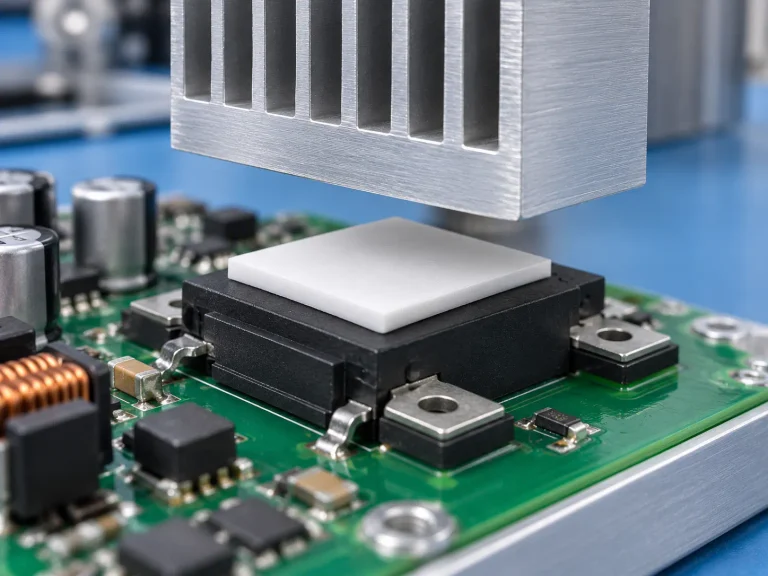
-
ADD: Building 2, No. 8 Hengzhutang Road, Dongguan
-
Telefone: +86 135 4224 3751

How Phase Change Heat Dissipation Protects New Energy Vehicle Batteries
Phase-change heat dissipation for new-energy vehicle batteries is no longer a lab curiosity; it’s a frontline fix for overheating packs that push limits every day.
Hotspots kill performance, drain lifespan, and quietly rack up warranty costs while drivers expect fast charging without drama.
IEA and BloombergNEF report growing emphasis on advanced EV battery thermal management.
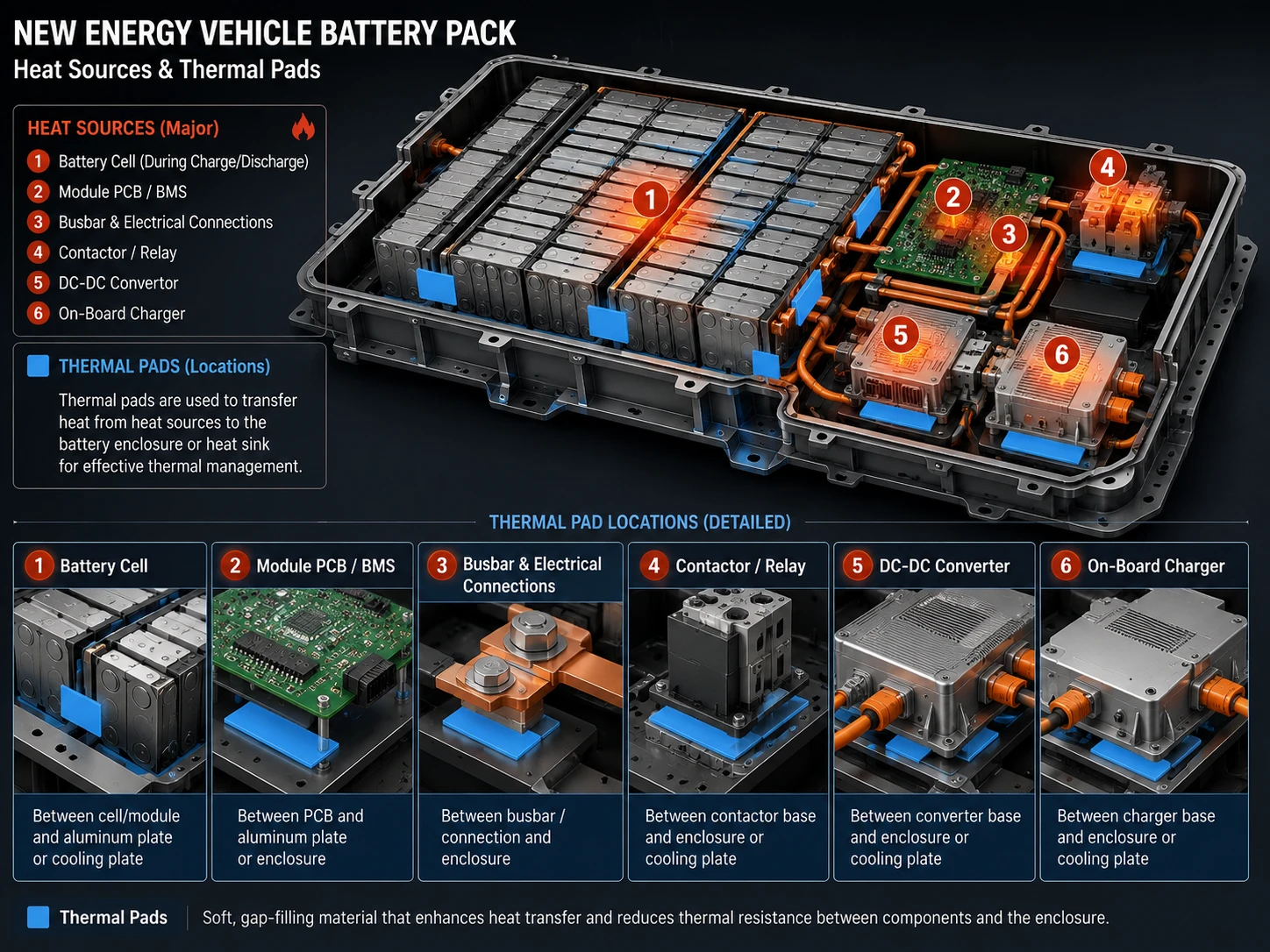
This image was generated using AI. Its content has been reviewed and approved by Sheen Materials; please feel free to save it.
Key Highlights of Phase Change Heat Dissipation for New Energy Vehicle Batteries
➔ PCM Selection: Choose paraffin wax, salt hydrates, eutectic mixtures, or microencapsulated PCMs based on melting point, latent heat, and chemical stability.
➔ Integration Strategy: Design cooling channels, cold plates, and thermal interface materials; apply vacuum impregnation and sealing for leak-free performance.
➔ Performance Gains: Achieve uniform temperature, faster cooling rates, extended cycle life, and reduced flammability through optimized PCM deployment.
➔ Safety Synergy: Combine high latent heat PCMs with Battery Management Systems and thermal runaway testing to enhance real-time monitoring and prevent hotspots.
How Phase Change Heat Dissipation For New Energy Vehicle Batteries Works
Phase-change heat dissipation for new-energy vehicle batteries sounds fancy, but it’s really about moving heat before it gets annoying. Here’s how phase change cooling, smart interfaces, and liquid loops team up to steady pack temps.
Paraffin Wax vs. Salt Hydrates: Comparing PCM Types
Picking a phase change material for phase change heat dissipation for new energy vehicle batteries is a trade, not a trophy. One option behaves nicely. The other hits harder, then needs babysitting..
- PCM types
- Paraffin wax
- Melting point: easy to tune so the PCM melts around the battery’s comfort zone.
- Thermal conductivity is on the low side, so heat can soak in slowly unless you add conductive paths.
- Specific heat: helps a bit before melting, then latent heat takes over during the phase change.
- Pack reality: stable chemistry and low corrosion, so fewer “surprise” reactions near busbars.
- Salt hydrates
- Latent heat: typically higher, so the same volume can swallow more heat spikes.
- Condutividade térmica: better than wax, so hot spots calm down faster.
- Watch-outs: phase separation can quietly reduce capacity over time, and corrosion risk raises the stakes inside modules used for phase change heat dissipation for new energy vehicle batteries.
- Paraffin wax
Thermal Interface Materials in Lithium-Ion Cells
Heat doesn’t teleport from lithium-ion cells into a sink; it has to cross messy contact surfaces. That’s where material de interface térmica choices can make battery thermal management feel either smooth or painfully laggy.
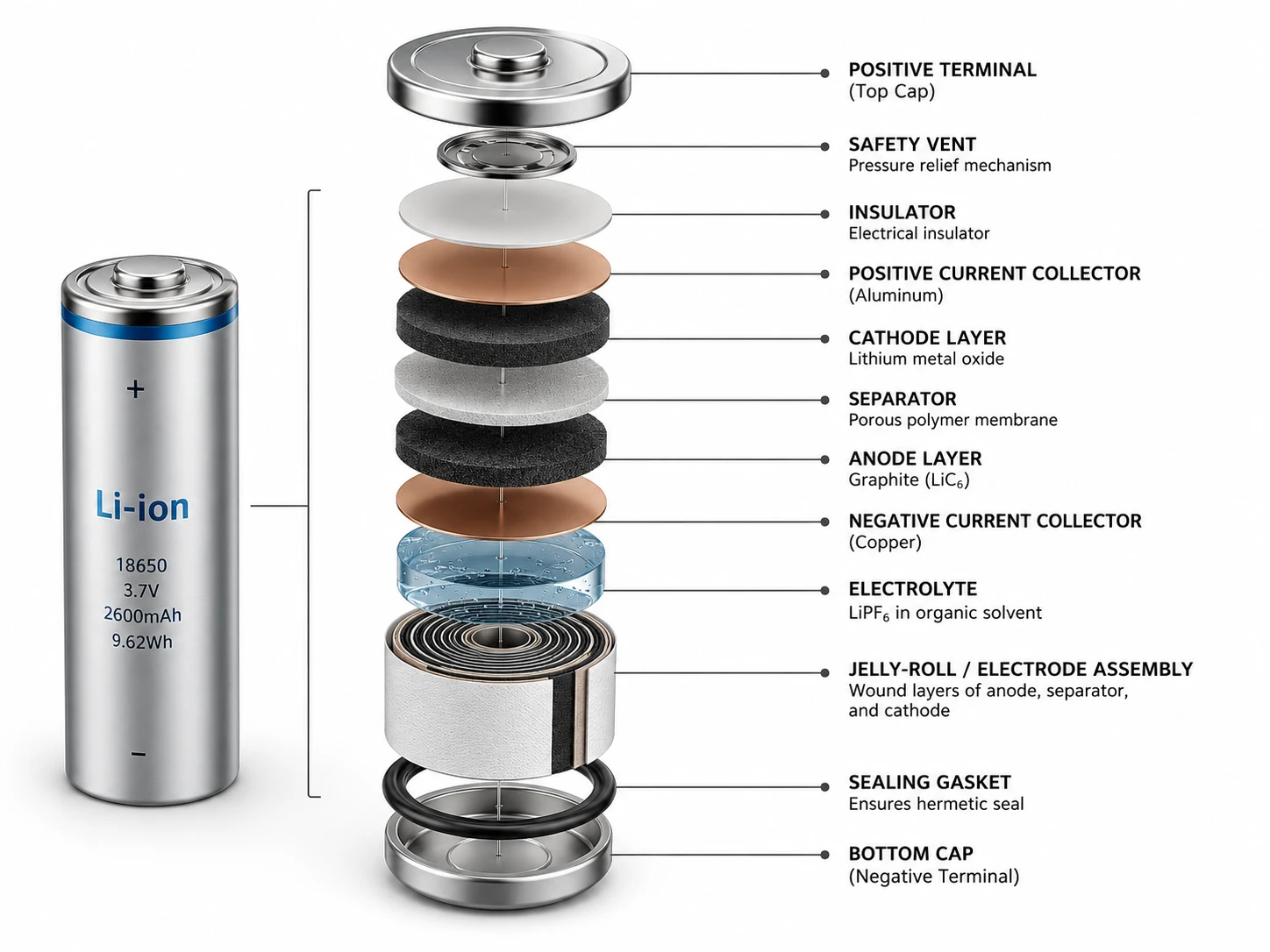
This image was generated using AI. Its content has been reviewed and approved by Sheen Materials; please feel free to save it.
- Kill the air gaps: use preenchedores de lacunas so cell faces actually touch something thermally useful.
- Cut resistência térmica: thinner, well-wet interfaces beat thick “squishy” pads most days.
- Keep condutividade térmica consistent: a TIM that pumps out or dries up turns phase change heat dissipation for new energy vehicle batteries into a guessing game.
- Quick gut-check bullets:
- Cell-to-cell variations matter; even a small TIM thickness change can shift transferência de calor paths.
- Num battery module, TIM also helps heat flow toward PCM blocks, cold plates, or heat pipes, improving temperature balance during fast charging.
Integrating Cold Plates and Cooling Channels
PCM can store heat, but it still has to go somewhere, and that’s where cold plates e cooling channels earn their keep in a thermal management system. For phase change heat dissipation for new energy vehicle batteries, this is the “carry it away” part.
- Hardware stack inside a battery pack
- Cold plates
- Spread heat laterally, so one angry cell doesn’t bully its neighbors.
- Pair well with PCM layers: PCM dampens spikes, plates keep the average under control.
- Cooling channels
- Route liquid cooling near the hottest zones.
- Channel geometry sets the pressure drop and how evenly the coolant sweeps the pack.
- Cold plates
- How it runs (nested logic that shows up in real designs)
- Active cooling loop
- Pump sets coolant flow based on load and sensor feedback.
- Coolant absorbs heat from plates/channels, acting as heat exchangers.
- Stored PCM heat bleeds into the loop after the peak, smoothing temperatures instead of whiplashing them.
- Active cooling loop
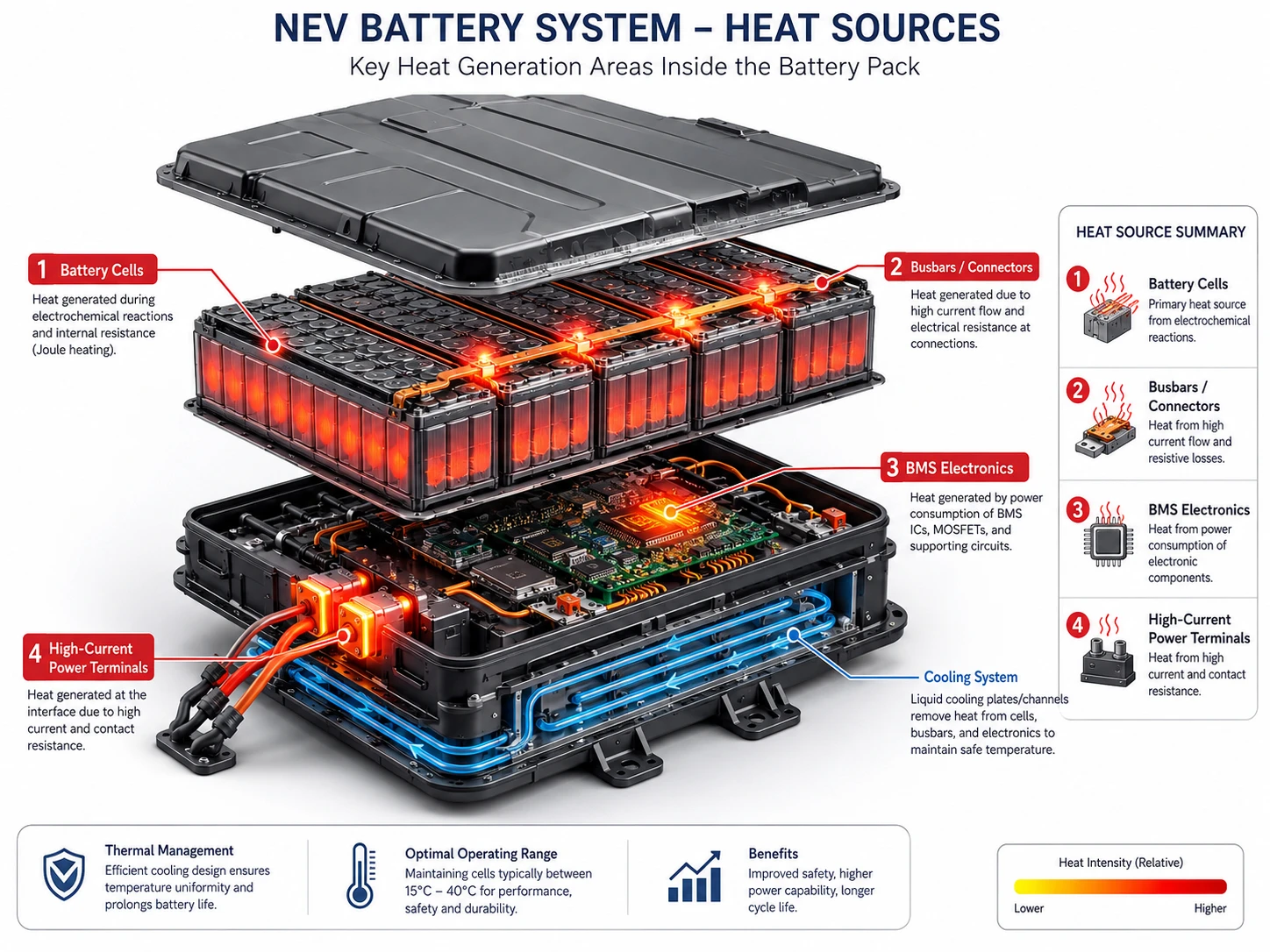
This image was generated using AI. Its content has been reviewed and approved by Sheen Materials; please feel free to save it.
Microencapsulated PCMs inside Cell Casings
Sometimes you want the PCM closer to the drama. Microencapsulated PCMs inside cell casings can grab heat right where it’s born, which helps phase-change heat dissipation for new energy vehicle batteries during punchy charge/discharge bursts.
- What makes it workable:
- O encapsulation shell mantém o core material from leaking when it melts, so the assembly stays clean.
- Melhor estabilidade térmica than “loose” PCM, especially under vibration and cycling.
- A simple flow of what happens in use:
- Cell warms; local PCM starts heat absorption at the melt point.
- Temperature rise slows, buying time for plates, channels, or external PCM to catch up.
- Safety angle: delaying peak temps can reduce the odds of pushing toward fuga térmica, supporting battery safety.
- Tiny but real bonus: this approach can make EV battery cooling feel less twitchy because heat gets buffered before it spreads.
5 Key Benefits Of Phase Change Heat Dissipation
Phase change heat dissipation for new energy vehicle batteries isn’t hype; it’s a practical way to keep packs calm when power demand gets jumpy. This phase-change heat dissipation for new energy vehicle batteries approach uses phase-change material tricks to steady temps, push heat out faster, and help cells age less dramatically.
Enhanced Temperature Uniformity Across Battery Packs
Phase change heat dissipation for new energy vehicle batteries targets temperatura swings that quietly wreck consistency. It’s basically a fairness plan for a battery pack.
- Heat distribution controlo
- Across modules: PCM melts where the load is high, then shares heat sideways instead of letting one corner cook.
- Across cells: reduced gradients cut the “hot cell / cold cell” split that makes balancing harder.
- Thermal management outcomes
- More stable surface temperatura = fewer sudden resistance spikes.
- Melhor uniformity lowers the odds that one weak lane sets the pace for the whole pack.
Faster Cooling Rate for Battery Modules
When peak current hits, phase-change heat dissipation for new energy vehicle batteries acts like a sponge for heat, buying time for active cooling.
- During acceleration, PCM grabs heat fast via latent heat, raising thermal efficiency without a huge temperatura jump.
- Under steady cruising, the cooling loop catches up, improving heat removal and overall dissipation.
- On repeated bursts, pairing phase change material with plates or chambers boosts transferência de calor e desempenho térmico.
Quick hits:
- Melhor cooling rate for tightly packed battery modules.
- Less “yo-yo” heat, so control logic doesn’t overreact.
Materiais de brilho often specifies PCM formats that sit close to the module skin for shorter heat paths.
Improved Thermal Conductivity with Eutectic Mixtures
Plain PCM can stall if condutividade térmica is low; eutectic mixtures help by tuning propriedades dos materiais so melting happens cleanly at a useful melting point.
- Why do eutectics feel less finicky
- A single, sharp melting point reduces partial-melt dead zones.
- Composite add-ins can lift transferência de calor rates without killing latent heat.
| PCM option | Condutividade térmica (W/m-K) | Melting point (°C) |
|---|---|---|
| Paraffin-based PCM | 0.20 | 45 |
| Eutectic fatty-acid blend | 0.35 | 42 |
| Eutectic + graphite composite | 1.20 | 43 |
| Salt-hydrate eutectic | 0.55 | 48 |
For phase-change heat dissipation for new energy vehicle batteries, these materiais compósitos can make the pack feel less “laggy” under load. Materiais de brilho can tailor eutectic recipes to match target melt windows.
Extended Cycle Life of Lithium-Ion Cells
Phase change heat dissipation for new energy vehicle batteries protects long-term value by cutting the kind of heat stress that ages packs early.
- What drives battery degradation
- High average temperatura speeds side reactions.
- Big swings create thermal stress, which stacks up as aging.
- What steadier temps change
- Cleaner capacity retention through calmer SEI growth patterns.
- Melhor battery health because weak cells don’t get punished by local hotspots.
- Real-world payoff
- Mais tempo cycle life para lithium-ion cells and a steadier lifespan curve instead of a sudden cliff.
If you’re shopping for phase change cooling for EV batteries, this is the quiet benefit that pays back over the years.
Reduced Flammability and Corrosion Resistance
Safety talk gets real fast in Phase change heat dissipation for new energy vehicle batteries, since you’re trying to avoid battery fires and slow fuga térmica pathways.
- Inflamabilidade:
- Bio-based blends and form-stable matrices can lower burn risk, especially when the PCM is locked in place.
- Additive choices can act like a mild fire retardant without making the PCM useless.
- Corrosion resistance:
- Encapsulation matters; it keeps reactive salts away from busbars and housings, improving corrosion resistance e chemical stability near the electrolyte.
Two quick checks teams use:
• Verify compatibility with aluminum and copper coupons.
• Confirm no leakage after repeated melt/freeze cycling.
Sheen Materials can support encapsulation choices so the PCM helps safety instead of creating new headaches.
Phase Change Heat Dissipation For New Energy Vehicle Batteries Cost Analysis
Phase change heat dissipation for new energy vehicle batteries keeps showing up in cost talks, not just lab chats. This cluster breaks down where the money goes, why some costs sting early, and how smart thermal choices can quietly pay back over time without drama.
Material and Extrusion Costs for Form-Stable PCMs
Para Phase Change Materials, cost starts with chemistry and ends on the factory floor. Form-stable PCMs don’t come cheap, mostly because consistency matters.
- Material composition
- Polymer matrices
- High-purity paraffin blends
- Extrusion process
- Tight temperature windows
- Slower line speeds to protect thermal properties
- Encapsulation methods
- Shell materials
- Leak resistance testing tied to técnicas de fabrico
| Tipo de material | Purity Level (%) | Extrusion Speed (m/min) | Cost Index |
|---|---|---|---|
| Paraffin PCM | 99.5 | 1.8 | 1.0 |
| Composite PCM | 99.9 | 1.2 | 1.4 |
| Bio-based PCM | 98.8 | 2.0 | 0.9 |
| Hybrid PCM | 99.7 | 1.5 | 1.3 |
É aqui que phase-change heat dissipation for new energy vehicle batteries starts to feel real. Partners like Sheen Materials focus on trimming waste without hurting stability.
Module Integration and Assembly Automation Expenses
Plugging PCMs into packs shifts the bill toward machines and time. Battery module integration isn’t manual-friendly anymore.
- Thermal system assembly moves onto the line
- Automation technology handles dosing and placement
- Robotic assembly seals and checks alignment
- System integration testing runs in line with other processos de fabrico
Short version: higher capex, smoother scale-up. For phase-change heat dissipation for new energy vehicle batteries, this setup cuts human error and keeps output steady. Sheen Materials often gets pulled in early to align PCM formats with the production line.
Long-Term Savings from Reduced Thermal Management Maintenance
Here’s where patience pays. Thermal management built around PCMs changes the service math.
- Maintenance intervals stretch out
- System reliability improves under load
- Battery degradation slows, which helps resale
- Operational costs drop through lower energy draw
Under the hood, fewer pumps and fans mean calmer systems. Over the years, lifecycle benefits show up as a stable range and performance stability. Phase change heat dissipation for new energy vehicle batteries isn’t flashy, but it quietly protects margins. Many OEMs loop back to Sheen Materials after seeing those long curves flatten.
4 Steps To Integrate Phase Change Heat Dissipation
Phase change heat dissipation for new energy vehicle batteries sounds fancy, but day-to-day, it’s about keeping cells calm when power spikes. You’re picking the right PCM, shaping the metalwork, locking the fill in place, then proving it survives abuse. Phase change heat dissipation for new energy vehicle batteries lives or dies on details.
Step 1 – Selecting Suitable PCM Types
Phase change heat dissipation for new energy vehicle batteries starts with PCM seleção de materiais that matches real drive heat, not brochure numbers. Keep a tight spec on melting point so the phase window sits near your target cell temp, then check latent heat so the pack buys time during fast charge.
- Para thermal properties, prioritize: higher latent heat, decent condutividade térmica, low volume swing.
- Para encapsulation, pick shells that don’t crack under vibration.
Quick screen, in order:
1) Verify chemistry and seleção de materiais against electrolyte vapors.
2) Measure cycling drift in the melting point e latent heat.
3) Confirm that condutividade térmica with fillers won’t corrode tabs.
Use Phase change heat dissipation for new energy vehicle batteries as the filter phrase: phase change, heat dissipation, new energy vehicle, batteries, all have to fit your duty cycle.
Step 2 – Designing Cooling Channels and Cold Plates
Phase change heat dissipation for new energy vehicle batteries performs best when cooling channels e cold plates stop fighting each other.
- Design optimization map
- Flow path choices
- Straight runs: low pressure drop, weaker corner pickup
- Serpentine: better uniformity, higher pump demand
- Heat exchanger contact
- Plate-to-cell: maximize area, control interface thickness
- Plate-to-PCM: ensure the melt can reach the hottest spots
- Fluid dynamics checks
- Avoid dead zones near busbars
- Keep velocity stable through manifolds for consistent gestão térmica
- Flow path choices
Numeric sanity table (example targets for thermal management tuning):
| Channel width (mm) | Coolant velocity (m/s) | Plate thickness (mm) | ΔT cell spread (°C) |
|---|---|---|---|
| 2.0 | 0.6 | 2.5 | 4.8 |
| 2.5 | 0.8 | 2.0 | 3.6 |
| 3.0 | 1.0 | 2.0 | 3.0 |
| 3.5 | 1.2 | 1.5 | 2.7 |
For Phase change heat dissipation for new energy vehicle batteries, that last column is the whole game.
Step 3 – Vacuum Impregnation and Sealing Techniques
Phase change heat dissipation for new energy vehicle batteries gets messy when the vacuum impregnation step is rushed. You want deep void filling, not a surface coat that leaves hot pockets.
- Process control ladder
- Prep
- Dry parts to cut trapped moisture
- Verificar compatibilidade de materiais with the gasket and interface térmica materials
- Fill
- Pull vacuum, then introduce PCM slowly to prevent foam
- Hold time until mass gain stabilizes (simple, but it works)
- Lock it down
- Choose sealing based on service needs
- Reworkable: gasket + clamp
- Permanent: weld + hermetic seal
- Add encapsulation where splash or grit is expected
- Prep
If you’re sourcing PCM systems, Materiais de brilho can supply encapsulated options that are easier to process without leak drama.
Step 4 – Validation via Thermal Cycling and Heat Flux Sensors
Phase change heat dissipation for new energy vehicle batteries has to survive Monday-morning cold starts and summer fast-charge back-to-back. Run ciclo térmico until failure modes show their face, not just until the calendar says stop.
Do it like this:
1) Place heat flux sensors at peak hotspots and at a “boring” mid-plane for contrast.
2) Log data acquisition at a high rate during step loads; slow logging hides spikes.
3) Track battery temperature spread and correlate to melt/freeze lag.
4) Stress for edge cases tied to fuga térmica prevention, then close with a written validation protocol that’s repeatable.
If results wobble, tighten sealing or swap PCM grade; Materiais de brilho can help tune melt range for phase change cooling of EV batteries without turning the build into a science project.
Can Phase Change Heat Dissipation Stop Thermal Runaway?
Heat builds fast inside new energy vehicle packs, and cooling tricks need to react even faster. This cluster talks straight about phase-change heat dissipation for new energy vehicle batteries, mixing lab results, cycling reality, and real-time control. The goal is simple: slow the heat, buy time, and keep batteries calm.
Assessing Latent Heat Impact on Thermal Runaway Testing
- Latent heat acts like a heat sponge during abuse tests.
- Phase change material absorbs energy before cell cases spike.
- Testing protocols show a delay, not a full stop.
- The heat starts rising from internal shorts.
- Heat absorption kicks in during melting.
- Temperature control holds longer, then fades.
◼ Thermal runaway still pushes through without backup cooling.
In practice, labs see a softer curve, not a miracle. fuga térmica gets delayed, which helps battery safety, but flames still win if nothing else steps in. That’s why phase-change heat dissipation for new energy vehicle batteries is tested alongside vents, barriers, and spacing.
| Test Mode | PCM Mass (g) | Peak Temp (°C) | Delay Time (s) |
|---|---|---|---|
| Nail | 120 | 410 | 95 |
| Overcharge | 150 | 395 | 130 |
| Crush | 100 | 430 | 70 |
| Heating | 180 | 380 | 160 |
Role of Specific Heat Capacity in Charge/Discharge Cycling
Short bursts, long drives, fast plugs—cycling is messy.
- Specific heat capacity smooths heat swings.
- Battery cycling stays steadier at higher C-rates.
Natural mix in action:
1) Rising heat generation during fast charge
2) Stored energy spreads through energy storage layers
3) Temperature regulation cuts stress on electrodes
The payoff shows up as calmer estabilidade térmica, better life, and safer charge rate limits. For phase-change heat dissipation for new energy vehicle batteries, higher heat capacity pairs well with PCM, especially in city driving.
Integration with Battery Management System for Real-Time Monitoring
This is where it all ties together, and where Materiais de brilho solutions often land.
- Core layer
- Battery Management System logic
- real-time monitoring from thermal sensors
- continuous data acquisition
- Battery Management System logic
- Decision layer
- Control algorithms adjust cooling
- fault detection flags abnormal melt behavior
- Action layer
- fans, valves, alerts via tight system integration
The BMS doesn’t guess. It reads the PCM response live and reacts. That’s why phase-change heat dissipation for new energy vehicle batteries works best when software stays in the loop. Materiais de brilho focuses on making that handshake smooth, practical, and ready for real roads.