-
ADD: Bâtiment 2, No. 8 Hengzhutang Road, Dongguan
-
Téléphone: +86 135 4224 3751

Engineering High-Density AI Server Cooling with Boron Nitride
AI racks are running hot, and boron nitride for AI server cooling isn’t a science fair project—it’s fast becoming a survival move.
When GPUs pack tighter than rush-hour traffic, copper starts acting like a frayed wire, and downtime hits your budget where it hurts. Boron nitride keeps heat moving while staying electrically chill, so performance doesn’t melt under pressure.
Recent industry reports flag advanced cooling materials.
Quick Insights: Boron Nitride for AI Server Cooling
➔ Exceptional Thermal Conductivity: Hexagonal boron nitride disperses heat rapidly from high-density GPUs and CPUs, lowering junction temperatures under heavy AI workloads.
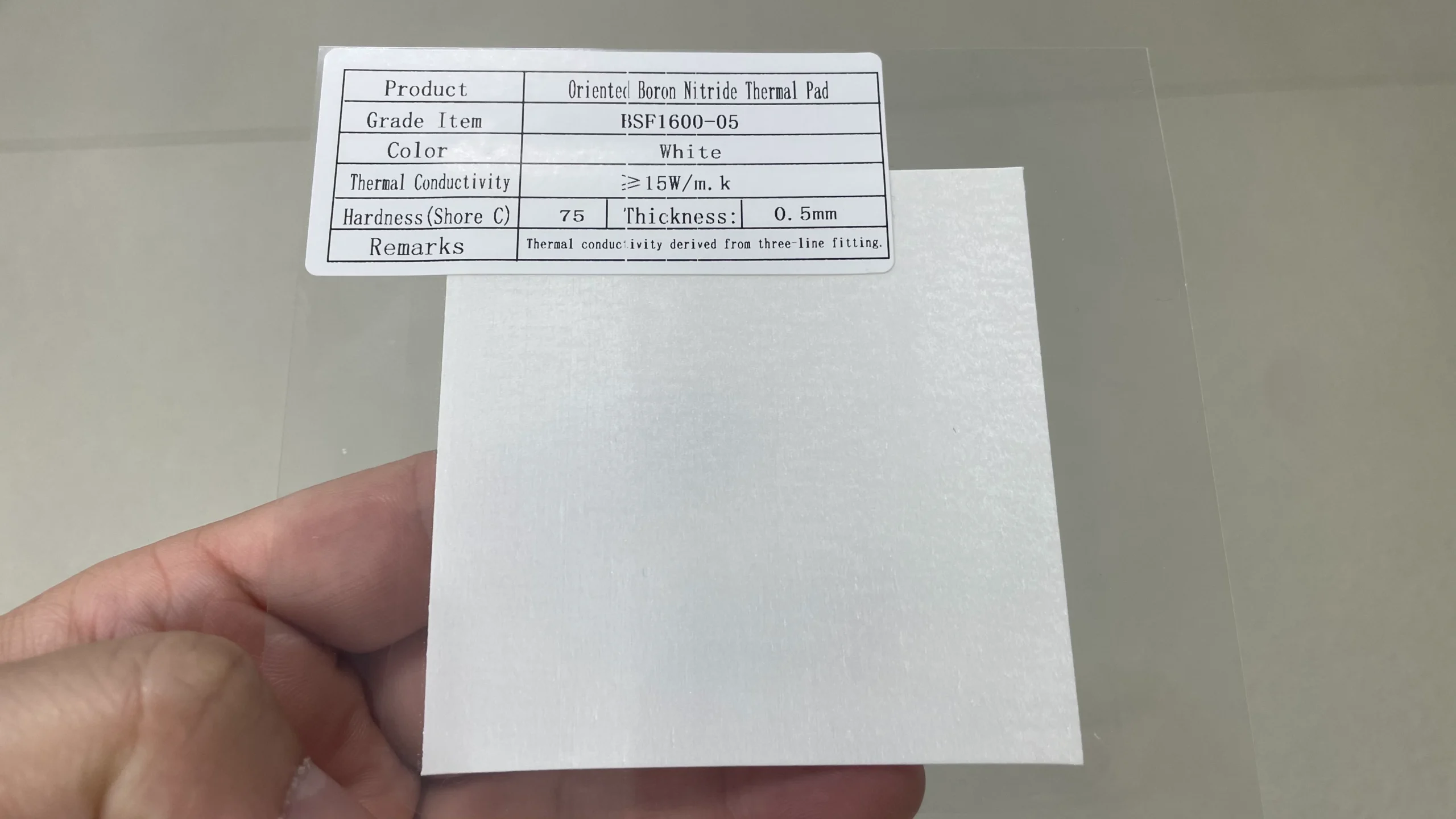
Boron Nitride For AI Server Cooling: Core Thermal Properties
➔ Superior Electrical Insulation: Its high dielectric strength protects power delivery and memory modules, avoiding short-circuit risks in compact server designs.
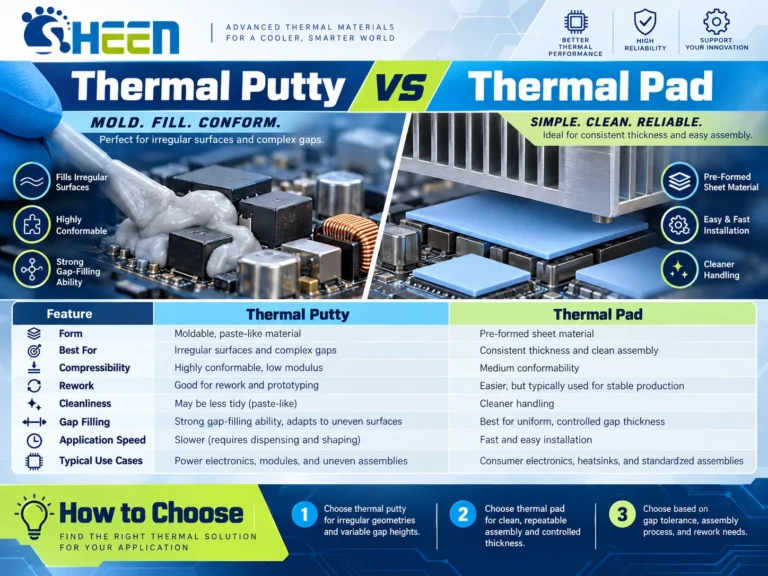
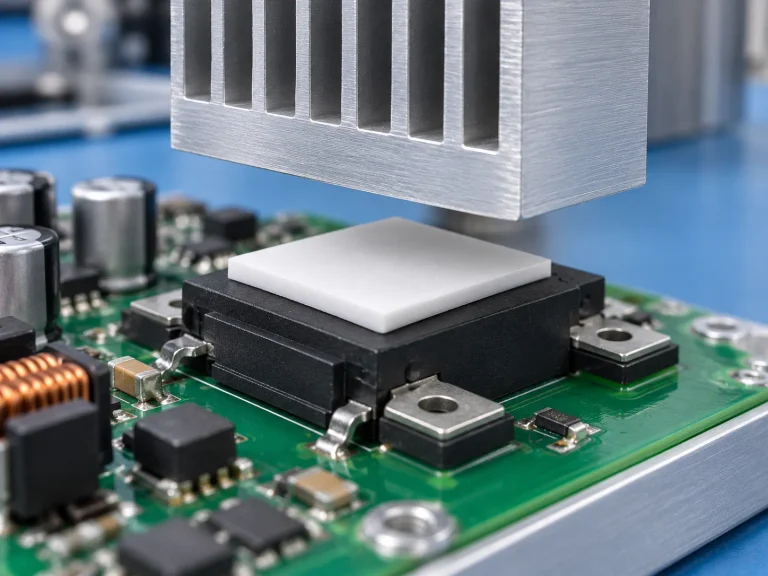
➔ Seamless Integration: BN powders and nanosheets blend into thermal greases, pads, and vapor chambers for efficient, reliable heat transfer in data centers.
AI racks are running hotter than ever, and plain metal just doesn’t cut it anymore. That’s why boron nitride for AI server cooling is getting serious attention. From heat spread to insulation safety, this material quietly keeps high-density systems stable and efficient.
Exceptional thermal conductivity of hexagonal boron nitride
When engineers talk about boron nitride for AI server cooling, heat flow is the big win. Hexagonal boron nitride stands out for its strong conductivité thermique, especially in-plane, pushing efficient transfert de chaleur right where GPUs need it.
- At the material level
- Crystal structure
- Layered alignment enables rapid phonon movement
- Supports directional dissipation de la chaleur
- Thermal metrics
- Crystal structure
| Matériau | In-Plane Thermal Conductivity (W/m·K) | Electrical Conductivity | Density (g/cm³) |
|---|---|---|---|
| Hexagonal BN | 300–400 | Insulating | 2.1 |
| Aluminium | 205 | Conducteur | 2.7 |
| Copper | 385 | Conducteur | 8.9 |
| Aluminum Nitride | 140–180 | Insulating | 3.3 |
| Graphite | 200–500 | Conducteur | 2.2 |
- In AI server cooling environments
- High-density GPU clusters
- Faster lateral spreading lowers hotspot risk
- Advanced thermal management stacks
- Reduces interface resistance
- Stabilizes junction temperatures
- High-density GPU clusters
Pour boron nitride for AI server cooling, this means cooler chips without adding bulk metal. Sheen Technology tunes particle morphology to boost contact efficiency in real AI server cooling builds.
Dielectric strength and electrical insulation advantages
Heat removal is only half the story. In AI server cooling, safety matters just as much. Boron nitride for AI server cooling brings strong rigidité diélectrique and true isolation électrique, keeping sensitive boards protected.
- Electrical performance core
- Haut tension de claquage
- Shield composants électroniques under high load
- Stable propriétés électriques
- Non-conductive even at elevated temperatures
- Haut tension de claquage
- System-level value in AI servers
- Power delivery units
- Reduced short-circuit risk
- Modules de mémoire
- Cleaner signal integrity
- Power delivery units
- Practical integration
- Matériaux d'interface thermique
- Insulating heat spreaders
- Hybrid pads for AI server cooling
Unlike copper plates, boron nitride for AI server cooling handles heat while staying safely non-conductive. Matériaux brillants applies this in custom fillers designed for dense AI server boards where spacing is tight, and failure is not an option.
Low thermal expansion with high temperature stability
Hot today, cooler tonight. Data centers swing through load cycles all day long. Boron nitride for AI server cooling keeps its shape through it.
Its low coefficient de dilatation thermique limites thermal stress between chips and substrates. That helps preserve solder joints and boosts AI server reliability en high-temperature environments.
In practical AI server cooling builds:
- Material stays dimensionally steady.
- Interfaces remain sealed.
- Long terme material stability protects uptime.
That balance of dilatation thermique control and high temperature stability is why boron nitride for AI server cooling is becoming a go-to choice for advanced AI server cooling systems. It’s simple: less strain, fewer failures, cooler performance that just keeps going.
4 Reasons To Adopt Boron Nitride For AI Server Cooling
AI racks are running hot, and power density keeps climbing. That’s why boron nitride for AI server cooling is gaining serious traction. From GPU clusters to liquid loops, nitrure de bore, AI thermal materials, and advanced server cooling solutions are rewriting the rules of heat control in modern data centers.
Unmatched heat dissipation for high power density GPUs
Quand high power density meets nonstop AI workloads, dissipation de la chaleur becomes mission‑critical. Here’s how boron nitride for AI server cooling changes the game:
- Niveau des matériaux
- High in-plane conductivité thermique
- Electrical insulation for GPU safety
- Component level
- Lower interface resistance in gestion thermique
- Better contact across uneven GPU surfaces
- Niveau du système
- Stable server cooling
- Reduced throttling in AI servers
Thermal Performance Comparison
| Matériau | Conductivité thermique (W/m-K) | Electrical Conductivity | Typical GPU Temp Drop |
|---|---|---|---|
| Aluminium | 205 | Conducteur | 3–5°C |
| Graphite | 150–400 | Conducteur | 5–8°C |
| Nitrure de bore | 250–600 (in-plane) | Insulating | 8–15°C |
For teams deploying boron nitride for AI server cooling, that temp drop directly supports stable GPUs under extreme cooling loads.
Chemical inertness for long-term reliability in data centers
Data halls deal with humidity, coolants, and long duty cycles. Chemical inertness matters.
- Resists oxidation
- Maintient stability in a harsh server infrastructure
- Protects propriétés des matériaux over the years
Dans le monde réel data centers, durability equals uptime. Boron nitride for AI server cooling doesn’t corrode in liquid-assisted systems. It keeps fiabilité à long terme intact, even in dense racks running 24/7.
This is why advanced operators treat nitrure de bore as more than a filler—it’s a reliability layer inside AI hardware.
Seamless integration into thermal interface materials
Adopting boron nitride for AI server cooling inside matériaux d'interface thermique is straightforward:
- Blend boron nitride powder into grease or pads.
- Optimize the loading ratio for peak conductivité thermique.
- Apply across chips and cold plates for tight component integration.
The result? Lower contact resistance, smoother material integration, and more efficient gestion thermique. Many engineers working with TIMs prefer boron nitride for AI hardware because it balances insulation with heat flow. That’s critical for next-gen accelerators.
Enhanced performance in liquid cooling systems and heat sinks
In advanced liquid cooling systems, heat must move fast—no excuses.
- A l'intérieur dissipateurs thermiques
- Boron nitride coatings improve spreading.
- Within coolant loops
- Chemically stable surfaces protect cooling efficiency.
- Across full racks
- Supports scalable solutions thermiques.
From hyperscale clusters to edge nodes, boron nitride for AI server cooling strengthens every layer of advanced cooling design.
Au Sheen Technology, engineered boron nitride materials are tailored for AI workloads where gestion thermique can’t slip. As AI power density keeps rising, boron nitride for AI server cooling is quickly becoming the go-to choice for serious infrastructure teams.
Thermal Interface Materials Compared: BN Vs. Copper
High-density racks are running hot, and engineers keep hunting for smarter thermal interface material options. That’s where boron nitride for AI server cooling starts getting real attention. From conductivité thermique to electrical safety, the contrast between BN and copper shapes modern AI server cooling design choices.
Nitrure de bore
When discussing boron nitride for AI server cooling, performance isn’t just about moving heat fast. It’s about balance.
- Core Material Nature 1.1 Ceramic material foundation
- Built on a hexagonal structure
- Provides strong isolation électrique
- Maintains stable conductivité thermique under load
1.2 Stability Under Server Stress

*   Low thermal expansion

*   Resistant to chemical reactions

*   Supports long-cycle **heat dissipation**
- Functional Role in AI Infrastructure 2.1 Inside the matériau d'interface thermique layer
- Fills microscopic gaps
- Reduces contact resistance
- Improves chip-to-plate heat flow
2.2 In dense **AI server cooling** assemblies

*   Prevents short circuits

*   Enables thinner insulation spacing

*   Helps compact GPU stacks run cooler
For teams adopting boron nitride for AI server cooling, performance metrics often look like this:
| Matériau | Conductivité thermique (W/m-K) | Electrical Conductivity | Thermal Expansion (ppm/K) | Typical Use |
|---|---|---|---|---|
| BN (Hexagonal) | 30–200 | Insulator | ~1–4 | TIM fillers |
| Copper | ~400 | Conductor | ~16–17 | Heat spreader |
| Aluminium | ~205 | Conductor | ~23 | Heat sink base |
- Why Sheen Technology Focuses on BN3.1 Material Engineering
- Particle size tuning
- Surface treatment for better bonding
3.2 Application Fit

*   Optimized **boron nitride for AI server cooling** pads

*   Designed for next-gen **AI server cooling** clusters
Sheen Technology keeps pushing boron nitride for AI server cooling because the mix of insulation and thermal transfer just makes practical sense in packed server racks.
Copper
Copper has long been the go-to thermal conductor in electronics.
- Material Identity 1.1 Metallic material with high bulk conductivity
- Excellent diffuseur de chaleur
- Widely used in dissipateur thermique assemblies
1.2 Electrical Behavior

*   Strong **electrical conductor**

*   Raises short-circuit risk near high-density chips
- Role in Server Hardware 2.1 Structural Cooling Components
- Baseplates
- Vapor chambers
- Large-format matériau d'interface thermique pairings
2.2 Constraints in AI Racks

*   Requires added insulation layers

*   Limits miniaturization

*   Increases design complexity
- BN vs. Copper in Real AI Loads 3.1 In high-density GPU clusters
- Copper spreads heat fast
- BN-based layers control electrical risk
3.2 In compact systems using **boron nitride for AI server cooling**

*   Better dielectric safety

*   More flexible integration
Copper still rules as a bulk thermal conductor, no doubt. Yet in tight, power-hungry systems, boron nitride for AI server cooling offers a smarter path. Sheen Materials aligns material science with practical rack design, helping data centers stay cool without trading off safety.
FAQs about Boron Nitride For AI Server Cooling
Why is boron nitride for AI server cooling preferred over copper and other thermal materials?
Inside dense data centers, heat is relentless. Copper conducts well, yet it also conducts electricity, raising short-circuit risks around graphics processing units and power delivery units.
Boron nitride changes that balance:
- High thermal conductivity + strong electrical insulation
- High dielectric strength under rising operating temperature
- Low thermal expansion that protects memory modules and solid-state drives
Compared with graphene, carbon nanotubes, or even aluminum nitride, hexagonal boron nitride delivers heat dissipation without sacrificing chemical inertness. In hyperscale data centers where power density keeps climbing, that difference protects uptime.
How does hexagonal boron nitride improve GPU and CPU heat dissipation?
When heat flux surges across central processing units and accelerators, junction temperature can spike in seconds. Hexagonal boron nitride spreads that heat laterally, reducing thermal resistance at the source.
In practice:
- Boron nitride nanosheets disperse heat across wider surfaces.
- Boron nitride powder, compounded into thermal grease or thermal pads, improves contact inside thermal interface materials.
- Boron nitride films integrated into vapor chambers or heat sinks stabilize performance under sustained loads.
The result is steadier operating temperature in high-performance computing clusters and cloud infrastructure racks running nonstop workloads.
What should buyers consider when sourcing boron nitride materials for server farms?
Selecting the right form depends on both processing and cooling architecture.
| Application Need | Recommended BN Form | Processing Method | Typical Integration |
|---|---|---|---|
| Matériaux d'interface thermique | Boron nitride powder | Compounding | Thermal grease, thermal pads |
| High-flux spreading layers | Boron nitride films | Chemical vapor deposition | Vapor chambers |
| Structural cooling parts | Boron nitride composites | Sintering, hot pressing | Heat sinks, liquid cooling systems |
| Advanced lightweight designs | Boron nitride nanotubes | Additive manufacturing | Custom cold plates |
Beyond form, confirm thermal conductivity targets, compatibility with liquid cooling systems, and stability under long-term heat dissipation cycles. In server farms and edge computing sites, small material choices decide how calmly the system survives constant thermal stress.