-
ADD: Edificio 2, nº 8 de Hengzhutang Road, Dongguan
-
Teléfono: +86 135 4224 3751

How to Select the Right IGBT Module Thermally Conductive Insulating Sheet
Selecting the right IGBT module thermally conductive insulating sheet can make or break your power design, fast, and your budget too.
In 2025 technical materials, Materiales brillantes engineers stress that interface thermal impedance, not headline conductivity, drives junction temperature control.
Choose with insulation strength, thickness control, and real-world cycling in mind, or watch efficiency slip and costs climb quietly.
Types Of Thermally Conductive Insulating Sheet Materials
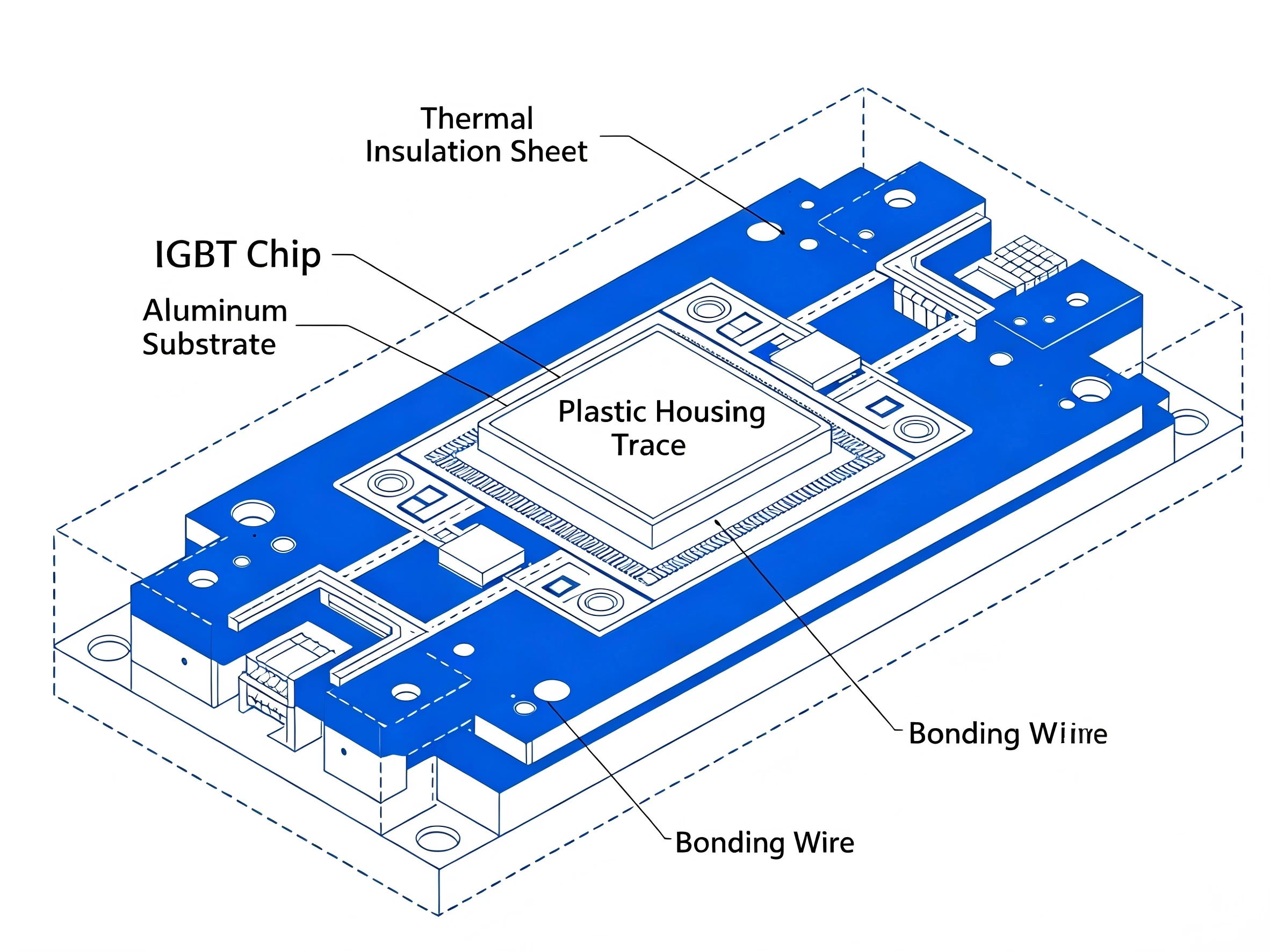
Picking an Lámina aislante termoconductora para módulos IGBT isn’t just “grab whatever’s in stock.” Heat flow, voltage isolation, and assembly pressure all tug in different directions. Below is a practical breakdown—pads, ceramics, gap fillers, and films—so your IGBT module build runs cooler without sketchy shortcuts.
Thermal Pad Solutions: Silicone vs. Graphite Compositions
For an IGBT module, thermally conductive insulating sheet, and thermal pad choices are usually split like this:
- Silicona
- composition: elastomer + ceramic filler; classic material de interfaz térmica
- transferencia de calor: steady through-thickness path, handles uneven surfaces
- aislamiento eléctrico: built-in, so the “insulating sheet” job is simpler
- Grafito
- Grafito sheet excels at in-plane transferencia de calor, but it’s not naturally an aislamiento eléctrico layer
- Typical stack-up for a power module:
- graphite spreader
- dielectric layer
- interface to cooler
If you’re spec’ing an IGBT module conductor térmico sheet for IGBT assemblies, Materiales brillantes often sees buyers prioritize assembly tolerance first, then chase conductivity numbers.
Ceramic Substrate Sheets Featuring Alumina and Aluminum Nitride
When the design requires stiffness and long-life isolation, a ceramic substrate sheet becomes the default Lámina aislante termoconductora para módulos IGBT material, especially near high bus voltages and harsh thermal cycling.
Quick decision cues:
- alumina: strong aislamiento eléctrico, proven reliability, mid conductividad térmica
- aluminum nitride: higher conductividad térmica, still solid insulation, but cost and handling can be touchy
A simple numeric snapshot for common substrate picks:
| Material | Conductividad térmica (W/m-K) | Rigidez dieléctrica (kV/mm) |
|---|---|---|
| alumina (Al₂O₃) | 24 | 10 |
| aluminum nitride (AlN) | 170 | 12 |
| BeO (reference) | 260 | 8 |
| Si₃N₄ (reference) | 90 | 15 |
Use this style of “thermally conductive insulating sheet” when the baseplate and IGBT module need mechanical stability at high temperature, not just soft compliance.
Nitruro de boro–Filled Thermal Gap Fillers
A nitruro de boro thermal gap filler is the “make it fit” answer when tolerances stack up between MOSFET/IGBT surfaces and the heat sink.
- What’s inside the compound
- soft matrix + filler particles of nitruro de boro
- tuned for gestión térmica without losing aislamiento eléctrico
- Where it earns its keep
- housing-to-sink contact patches
- lid-to-cooler bridges
- How does it help with disipación del calor
- compresses to kill air pockets
- lowers the interface thermal resistance versus dry contact
In an Lámina aislante termoconductora para módulos IGBT bill of materials, gap filler is the flexible cousin—less “structural sheet,” more “pressure-fit thermal path.”
Polyimide Insulating Films for High-Temperature Power Modules
A polyimide insulating film is what you reach for when things run hot and uptime matters in renewable inverters and industrial drives.
- Electrical behavior (the “don’t arc on me” checklist)
- high rigidez dieléctrica
- strong aislamiento eléctrico and volume resistivity
- Thermal behavior
- excellent estabilidad térmica at high temperature
- keeps shape and insulation performance when power cycling gets nasty
- Fit in the stack
- as an insulation layer paired with a material de interfaz térmica
- as a thin “insurance layer” inside an IGBT module, a thermally conductive insulating sheet stack-up
If you’re trying to simplify sourcing, Materiales brillantes typically suggests locking film thickness and adhesive style early, since late swaps can mess with creepage and clamp load.
4 Key Parameters For Sheet Thermal Conductivity
Quick heads-up: picking an IGBT module thermally conductive insulating sheet isn’t just chasing a high number on a datasheet. It’s balancing heat flow, electrical safety, temperature grit, and compliance—so your module runs cool and drama-free.
Thermal Conductivity vs. Thermal Impedance: What Matters Most
Conductividad térmica looks great on paper, but Impedancia térmica is the real “in your build” story of Heat transfer y Disipación del calor. For an lámina aislante, think in layers:
- Material layer (Propiedades de los materiales)
- Bulk k-value (Conductividad térmica) sets the ceiling for Performance.
- Thickness choices swing Resistencia térmica fast; doubling thickness often hurts more than you expect.
- Interface layer (Impedancia térmica)
- Surface finish and wet-out decide contact quality.
- Clamping pressure and flatness can beat “better k” materials.
- Practical takeaway for Lámina aislante termoconductora para módulos IGBT picks
- Ask for impedance data at your pressure and thickness, not just k.
- Sheen Materials typically positions datasheets around interface reality, not just lab bragging.
Dielectric Strength and Volume Resistivity Requirements
When an IGBT module has a thermally conductive insulating sheet between silicon and a heatsink, Aislamiento eléctrico is non-negotiable. You’re guarding Safety, uptime, and your warranty budget.
Key checks that usually catch issues early:
- Rigidez dieléctrica: ties directly to Tensión de ruptura, especially with thin pads.
- Resistividad volumétrica: backs long-term Insulation resistance when heat and humidity show up.
- Propiedades eléctricas drift: contamination, pump-out, or micro-voids can quietly lower margins.
A quick “sanity path” many teams use:
1) Define bus voltage + surge margin for the Módulo IGBT
2) set minimum dielectric spec at end-of-life, not day-one
3) Confirm resistivity after thermal aging, not just the initial test
If you’re sourcing a thermally conductive sheet for IGBT module builds, Sheen Technology can help map test conditions to real inverter stress instead of ideal lab setups.
Operating Temperature Range and Thermal Resistance Limits
Operating temperature is where good materials either stay steady or start acting weird. For an IGBT module thermally conductive insulating sheet, the goal is stable Resistencia térmica so the junction temperatura doesn’t creep up over time.
- Temperature behavior (your real Temperature limits)
- Low-temp: hardening can reduce conformity and raise contact impedance.
- High-temp: softening can cause pump-out, boosting effective Resistencia térmica.
- Reliability mechanics (Reliability, Thermal cycling)
- Repeated expansion/contraction can create void paths.
- “Set and forget” assemblies often fail because pressure relaxes.
- Heat control outcomes (Heat management, Module performance)
- Small resistance changes can swing junction temperatures enough to shorten life.
| Material Temp (°C) | Espesor (mm) | Thermal Resistance (K/W, ref) | Junction Temp Rise (°C @ 200W) |
|---|---|---|---|
| 25 | 0.20 | 0.08 | 16 |
| 80 | 0.20 | 0.09 | 18 |
| 120 | 0.20 | 0.11 | 22 |
| 25 | 0.30 | 0.12 | 24 |
| 120 | 0.30 | 0.16 | 32 |
Use the table like a gut-check: if your sheet’s resistance climbs hard at heat, your junction runs hotter even when power stays the same.
Flammability Rating and RoHS Compliance in IGBT Modules
This is the part nobody wants to talk about—until a fault happens. Grado de inflamabilidad y Conformidad con RoHS sit right next to thermal specs in real procurement.
- Fire and fault safety (Safety standards, Certificación UL)
- Aim for a clear, documented flammability level that matches your end equipment.
- Watch adhesives and liners; they can be the weak link even if the pad passes.
- Chemical and legal guardrails (Environmental regulations, Hazardous substances, Regulatory compliance)
- Conformidad con RoHS should cover the full bill of materials, not just the base polymer.
- Keep material declarations ready for audits in industrial drives and energy gear.
- Fit for IGBT hardware (Material safety)
- A thermally conductive insulating sheet that chars, smokes, or drips can turn a minor event into a big one.
- Sheen Technology can supply compliance-ready options that don’t force you to trade safety for thermal performance.
Application Scenario: Automotive Inverter Insulation
Modern electric vehicles push power density hard, and heat builds up fast. Inside every inverter, the Lámina aislante termoconductora para módulos IGBT quietly handles transferencia de calor, aislamiento eléctrico, and mechanical stress so the drive system keeps its cool—literally and figuratively.
Electric Vehicle Motor Drives: Insulating Sheet Performance Needs
In an electric vehicle traction system, the motor drive depends on a stable power module layout. The IGBT module’s thermally conductive insulating sheet sits between the baseplate and heat sink, balancing insulation and cooling.
- Performance priorities in high-speed temperatura de funcionamiento ranges
- Thermal path control
- Alta conductividad térmica to move heat away from the chip
- Low thermal resistance to stabilize junction temperature
- Seguridad eléctrica
- Fuerte aislamiento eléctrico under high DC bus voltage
- Resistencia a ruptura dieléctrica during surge events
- Thermal path control
- Mechanical endurance under vibration
- Stable compression set
- No cracking during rapid torque changes
When engineers select an Lámina aislante termoconductora para módulos IGBT, they often compare it with other thermal interface materials. A true thermally conductive insulation sheet must cool efficiently without sacrificing voltage isolation.
Module Housing Integration: Surface Treatment and Curing Tips
Within the module housing, integration starts at the substrate.
- Surface control
- Careful preparación de la superficie
- Remove oxidation
- Control roughness for better adhesion strength
- Careful preparación de la superficie
- Lamination and bonding
- Align the interfaz térmica layer precisely
- Maintain uniform bond line espesor
- Curing management
- Follow strict curing parameters
- Confirm final integridad mecánica after compression
A poorly mounted Lámina aislante termoconductora para módulos IGBT can trap air, raising thermal resistance. That is why suppliers like Sheen Technology focus on material stability and process guidance, helping maintain consistent bonding in inverter assembly.
Ensuring Reliability: Thermal Cycling and Humidity Testing
Long-term durability comes down to solid reliability assessment.
- Environmental stress validation
- Thermal cycling
- Repeated expansion and contraction
- Tracking the fatigue life of the insulation layer
- Humidity testing
- Monitoring moisture ingress
- Checking dielectric retention after exposure
- Thermal cycling
- Accelerated verification
- Accelerated aging at elevated temperatura de funcionamiento
- Post-test análisis de fallos of the IGBT stack
During testing, the IGBT module’s thermally conductive insulating sheet must maintain insulation resistance and thermal performance at the same time. A dependable IGBT thermal insulating sheet keeps the inverter steady under rain, heat, and constant load swings.
That’s exactly where Sheen Technology positions its materials—engineered not just for lab numbers, but for real road stress inside modern EV motor drives.
Preguntas frecuentes sobre la lámina aislante conductora térmica para módulos IGBT
How do I specify an IGBT module thermally conductive insulating sheet for high-power inverters?
Choosing the right sheet for Power Modules y Inverters is a balance between heat, voltage, and lifetime risk.
1) Thermal path:
Target Conductividad térmica vs. required Resistencia térmica at real thickness.
Confirm measured Thermal Impedance on an actual IGBT Module stack (Baseplate + Heat Sink).
2) Electrical safety:
Minimum Rigidez dieléctrica for DC bus voltage.
Estable Resistividad volumétrica across full Temperatura de funcionamiento.
3) Compliance & durability
Flammability Rating for fault scenarios.
Demostrado Thermal Cycling, Humidity Testing, and automotive-grade Reliability Testing para Electric Vehicles.
A thin sheet may look attractive on paper—but only validated data protects long-term Lifetime Expectancy in demanding Motor Drives.
How do die cutting and lamination impact sheet performance?
Manufacturing details quietly decide success or failure.
• Die Cutting for precise Pre-cut Shapes.
• Avoid burrs from poor Punching that increase interface gaps.
• Controlled Surface Treatment before Laminación.
• Proper Curado of Silicone, Polyimide, or Boron Nitride–filled Thermal Gap, Filler.
In real production of IGBT, MOSFET, y Industrial Control assemblies, small process shifts raise Thermal Impedance or reduce Rigidez dieléctrica. Clean edges, stable coating, and traceable RoHS Compliance keep the sheet material steady under heat and voltage stress.
Alumina or aluminum nitride ceramic substrate—how do we choose?
The decision often comes down to power density and cost pressure inside Renewable Energy Systems and traction Inverters.
1. Alumina Ceramic Substrate :
– Reliable Aislamiento eléctrico.
– Good mechanical strength.
– Cost-friendly for standard Power Modules.
2. Aluminum Nitride Ceramic Substrate :
– Higher Conductividad térmica.
– Lower junction temperature under heavy IGBT load.
– Preferred in high-current Electric Vehicles.
Check flatness, thickness tolerance, and compatibility with Laminación y Curado to the Placa base. A strong ceramic with poor bonding still leads to rising Resistencia térmica.
Silicone thermal pad or graphite sheet for IGBT modules—what’s better?
Both serve heat flow, yet behave very differently inside IGBT Modules y Power Semiconductor assemblies.
| Aspect | Silicone Thermal Pad | Hoja de grafito |
|---|---|---|
| Aislamiento eléctrico | Excellent | Needs added Insulating Film |
| Conductividad térmica | Moderate–High | Very high in-plane |
| Surface Fit | Compressible for uneven Baseplate | Limited compliance |
| Typical Use | Inverters, Industrial Control | Layered designs with dielectric barrier |
If the interface between Module Housing y Heat Sink is uneven, Silicona pads reduce air gaps. If heat spreading is critical and insulation is handled separately, Grafito earns attention.