-
ADD: Gebäude 2, Nr. 8 Hengzhutang Road, Dongguan
-
Telefon: +86 135 4224 3751

Engineering- und Beschaffungsunterstützung
Hersteller von Wärmeleitpads und TIMs aus Graphen, Silikon und Gap Fillern
Sheen Materials ist ein 2005 in Dongguan, China, gegründeter Hersteller von Wärmeleitpads; seit 2008 produzieren wir TIMs im eigenen Haus. Wir fertigen Wärmeleitpads aus Silikon, silikonfrei, Graphen, Kohlenstofffaser und Bornitrid mit 2 bis 130 W/m·K, gestanzt von 0,3 bis 12 mm Dicke, minimale Stanzgröße 0,2 × 0,2 mm. IATF 16949-zertifiziert und zertifizierter Lieferant von Henkel, Toyota und Samsung. Senden Sie eine Zeichnung für ein Angebot – Muster versenden wir in 3–5 Werktagen.
- IATF 16949:2016 certified
- 20,000 m² manufacturing plant
- 225 full-time employees
Passende Materialfamilie finden
Von uns gefertigte Wärmeleitpad-Typen
Sechs Materialfamilien decken konforme Spaltfüllung, Hochleistungs-Schnittstellen und Phasenwechselanwendungen ab. Wählen Sie die Güte anhand von Grenzflächenstärke, Druck und elektrischen Anforderungen.
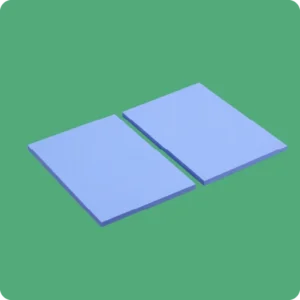
SF series
Silikon-Wärmeleitpads
Nachgiebige Gap Filler der SF-Serie für die Elektronik. Wählen Sie Dicke und Härte passend zu Ihrem Montagespalt.
Explore silicone pads →
AF series
Silikonfreie Wärmeleitpads
AF-Serie-Pads für silikonempfindliche optische, Imaging- und Automobilbaugruppen.
Explore non-silicone pads →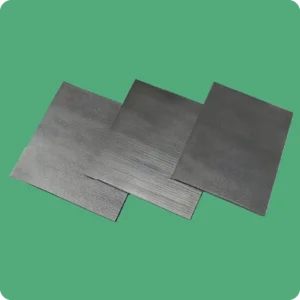
GSF series
Graphen-Wärmeleitpads
GSF-Serie für anspruchsvolle Schnittstellen – mit modellspezifischen Daten zur Wärmeleitfähigkeit und zum Wärmewiderstand in Durchgangsrichtung.
Explore graphene pads →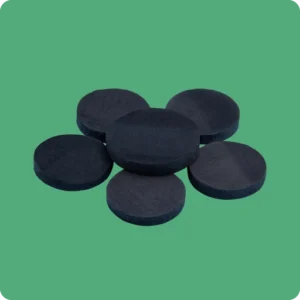
CSF series
Kohlefaser-Wärmeleitpads
CSF-Serie-Pads für Hochleistungselektronik, passend zur Grenzflächengeometrie und den elektrischen Anforderungen.
Explore carbon fiber pads →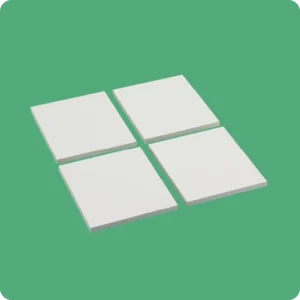
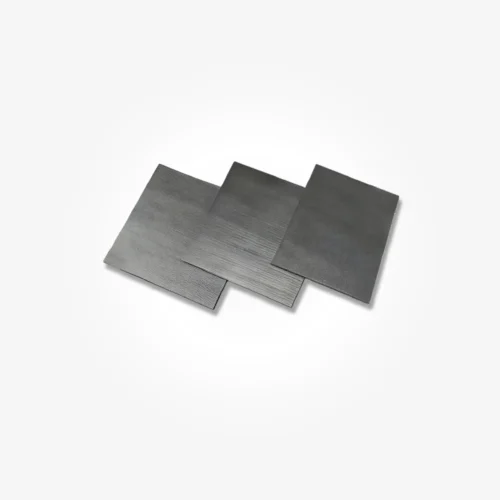
Bornitrid-Materialien
Bornitrid-Wärmeleitpads
Bornitrid-Pads, die thermische Leistung und elektrische Isolierung vereinen – inklusive gradespezifischer Dielektrizitätsdaten.
Explore BN pads →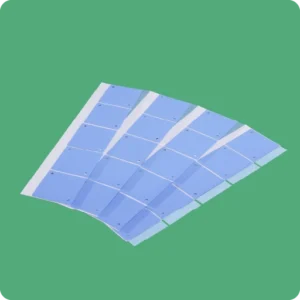
SP205A series
Phasenwechselmaterialien
SP205A-Serie-Materialien für dünne CPU-, GPU- und andere flache Schnittstellen.
Explore phase change TIMs →Vom Zeichnungsentwurf zum montagefertigen Bauteil
Fertigungskapazitäten für kundenspezifische Wärmeleitpads
Jedes Teil wird nach Ihrer Zeichnung gefertigt: Dicke von 0,3 mm bis 12 mm, minimale Stanzgröße 0,2 × 0,2 mm (erreichbare Abmessungen hängen von Materialhärte und -dicke ab), mit Klebebeschichtung, Abdeckfolien, Lieferung als Bogen und Rolle sowie kundenspezifischen Werkzeugen für unregelmäßige Konturen, Aussparungen und Mehrfachnutzen-Layouts.
Individuelle Formen
Unregelmäßige Konturen, Aussparungen und Mehrfachnutzen-Layouts
Dicke und Passung
0,3 bis 12 mm, abgestimmt auf Spaltoleranz und Kompression.
Handhabungsoptionen
Klebebeschichtung und Abdeckfolien für die Bauteilplatzierung
Lieferformate
Zuschnitte, Lieferung als Bogen und Rolle sowie projektspezifische Verpackung
Supplier qualification
Zertifizierungen und Prüfberichte
Sheen Materials ist ein nach IATF 16949:2016 zertifizierter Hersteller von Wärmeleitpads und zertifizierter Lieferant von Henkel, Toyota und Samsung. Die Unterlagen für Ihre Qualifizierungsakte sind unten aufgeführt.
Dokumente des Managementsystems
IATF 16949:2016 NQA-Zertifikat Nr. T179463; IATF-Zertifikat Nr. 0466349.
ISO 9001:2015 — Certificate No. 94126Q00071R301.
ISO 14001:2015 — Certificate No. 04126E0007R001.
Kopien sind auf Anfrage für Ihre Lieferantenqualifizierungsakte erhältlich.
Konformitäts- und Entflammbarkeitsberichte
Unsere Silikon-Wärmeleitpads, einschließlich der Güte SF1200, sind UL 94 V-0 zertifiziert — getestet von YCCT, Bericht Nr. YCCT512021102605RY01. Die Materialien sind RoHS-konform, verifiziert durch CTI (Centre Testing International), Bericht Nr. A2260351200101001E.
Zutreffende Berichte anfordern →Datasheets & Test Conditions
Prüfen Sie die thermischen, elektrischen und mechanischen Daten der ausgewählten Güte. Unabhängige Materialprüfung durch CTI, Bericht Nr. A2250540950101001E.
Datenblätter ansehen →Fordern Sie Zertifikatskopien, Prüfberichte und Datenblätter für Ihre Lieferantenqualifizierungsakte an.
Dokumentationspaket anfordern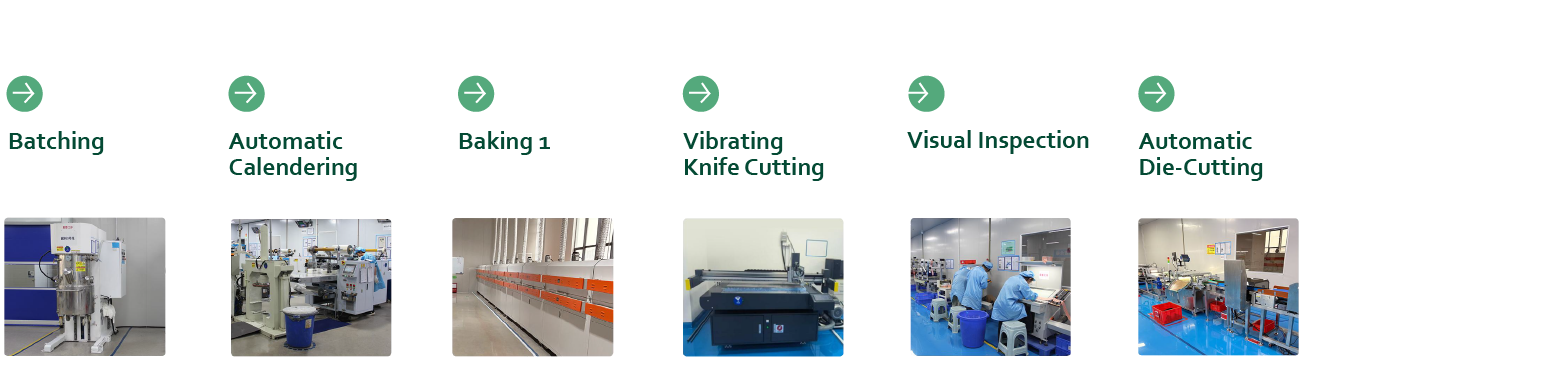
Fertigung in Dongguan, China
Unsere Fabrik und Produktionsprozesse
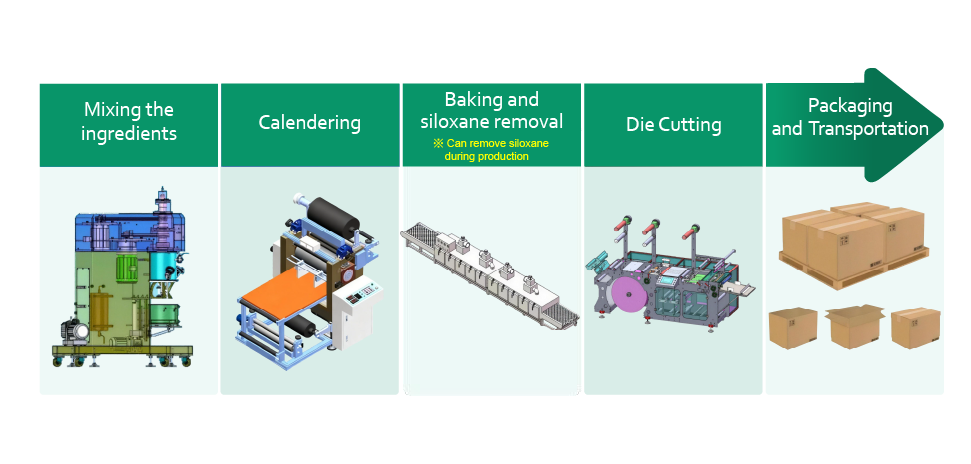
Sheen wurde 2005 als Handelsunternehmen für Thermomaterialien gegründet und startete 2008 die eigene Fertigung – zunächst in einer 400-m²-Anlage mit 15 Mitarbeitenden. Heute betreibt das Unternehmen ein 20.000-m²-Werk mit 225 Vollzeitbeschäftigten und deckt Compoundierung, Kalandrieren, Stanzen und Qualitätskontrolle ab.
- Materialvorbereitung und Formgebungsprozesse
- Schneiden und Konvertieren für die Bauteilgeometrie
- Prüfung nach vereinbarten Spezifikationen
- Verpackungs- und Versandplanung für Ihr Projekt
Standardbestellungen werden nach Musterfreigabe innerhalb von 7–10 Werktagen versandt. Jede Charge wird auf Wärmeleitfähigkeit, Dicke und Materialkonsistenz geprüft; Rückverfolgbarkeitsunterlagen werden für Automobil- und Medizinkunden aufbewahrt.
Entdecken Sie unsere Produktionsprozesse →Die gesamte Schnittstelle bewerten
Die gesamte Schnittstelle bewerten
Vergleichen Sie die thermische Leistung im eingebauten Zustand, die Kompression und die Isolierung zusammen mit der Wärmeleitfähigkeit. Verwenden Sie beim Vergleich der Kandidatengüten dieselben Testbedingungen.
| Auswahlparameter | Worauf Sie bei Ihrer Anwendung achten sollten |
|---|---|
| Wärmeleitfähigkeit | Güte, Messmethode und Messrichtung; für den Wärmefluss durch die Pad-Dicke Through-Plane-Daten verwenden. |
| Thermischer Widerstand | Dicke, Anpressdruck und Oberflächenbeschaffenheit – einschließlich etwaiger Klebeschichten – prüfen. |
| Dicke und Kompression | Nenndicke, Toleranz, Arbeitsspalt und verfügbare Montagekraft. |
| Elektrische Eigenschaften | Isolationsanforderungen, dielektrische Daten und freiliegende leitfähige Kanten. |
| Betriebsumgebung | Betriebstemperatur, Temperaturwechsel, Kontaminationsempfindlichkeit und Zuverlässigkeitsziele. |
| Prüfung und Dokumentation | Kritische Maße, Abnahmekriterien und Chargendokumentation. |
Anwendungsorientierte Auswahl
Wärmeleitpads für Elektronik- und Leistungsanwendungen
Materialien für Elektronik, Kommunikation und Leistungsumwandlung – ausgewählt entlang des thermischen Pfads jeder Baugruppe.
KI-Server und Beschleuniger
Niederohmige Schnittstellen um Prozessoren, Speicher und Leistungskomponenten.
Server-Anwendungen →Optical Modules
Kompakte Schnittstellen mit Anforderungen an Steckverbindung und Kontaminationskontrolle.
Anwendungen für optische Module →Kfz-Elektronik
Thermische Schnittstellen mit definierten Toleranzen, Isolations- und Qualifizierungsanforderungen.
Automobil-Anwendungen →Energiespeicherung & BESS
Spaltfüllung und Isolierung für Module, Leistungsumwandlung und Steuerbaugruppen.
Energiespeicher-Anwendungen →PV Inverters & Power Electronics
Thermal and electrical requirements around power conversion components.
Inverter applications →Industrial & Connected Equipment
Constrained thermal paths in telecom, industrial and connected electronics.
Explore all applications →A practical sourcing process
From Project Requirements to Production
A defined interface and approved specification guide the project from sampling to production.
Share Requirements
Send your drawing, gap, quantity, destination and thermal or electrical targets.
Review Material Options
Select candidate grades, construction and documentation for the quotation.
Evaluate Samples
Validate fit, handling and thermal performance in your assembly.
Plan Production
Approve the part, packaging, inspection criteria and delivery schedule.
MOQ is USD 500 in order value, with no minimum quantity per part number. Samples ship in 3-5 working days after drawing and material confirmation. Production lead time is 7-10 working days for standard orders.
Thermal interface basics
What Is a Thermal Pad?
A thermal pad is a thermally conductive interface material placed between a heat-generating component and a heat sink, cold plate or enclosure. It replaces air in the interface; compliant grades also accommodate the designed gap between mating surfaces.
Pre-cut pads provide defined shapes for assembly. Material selection depends on thickness, contact pressure, electrical properties and the operating environment.
Choose a thermal pad manufacturer that supports both material performance and your required geometry, documentation and production volume.
Browse Thermal Pad Options →Engineering & purchasing questions
Frequently Asked Questions
What information do you need for a thermal pad quotation?
Send your drawing or dimensions, thickness, quantity and destination, plus thermal, electrical, adhesive and packaging requirements.
What is your minimum order quantity?
MOQ is USD 500 in order value. There is no minimum quantity per part number, so mixed part numbers can be combined to reach it.
Can I request samples before placing a production order?
Yes. Samples ship in 3-5 working days after drawing and material confirmation. Contact us on sample charges; tooling is credited on repeat orders.
How long does custom thermal pad production take?
7-10 working days for standard orders, after sample approval.
Can you manufacture thermal pads to my drawing?
Yes. We offer custom outlines, cut-outs and tooling. Thickness ranges from 0.3 mm to 12 mm; minimum die-cut size is 0.2 × 0.2 mm, depending on material hardness and thickness.
Do you offer non-silicone thermal pads?
Yes. AF-series non-silicone pads serve silicone-sensitive optical, imaging and automotive applications.
What thermal conductivity should I specify?
Our range covers 2 to 130 W/m·K. Start with the heat path, interface gap, available contact pressure and target thermal performance. Compare model-specific data and test conditions. A higher conductivity value alone does not establish the lowest installed thermal resistance.
Can thermal pads be supplied with adhesive?
Yes, subject to material and construction. Specify the required side and bonding surfaces; account for adhesive thickness and thermal resistance.
Which certificates and compliance reports can I request?
IATF 16949:2016 (NQA T179463 / IATF 0466349), ISO 9001:2015 (94126Q00071R301), ISO 14001:2015 (04126E0007R001). Silicone pads including SF1200 are UL 94 V-0 rated — tested by YCCT (Report No. YCCT512021102605RY01). Materials are RoHS compliant, verified by CTI (Report No. A2260351200101001E).
Can you support OEM packaging or custom supply formats?
Yes. OEM/ODM options include private-label packaging, sheet and roll supply, and custom converted parts.
Start your material review
Request a Thermal Pad Quote
Send your drawing, material requirements and target volume for a quotation. MOQ starts at USD 500; samples ship in 3-5 working days after drawing and material confirmation.
Need selection support? Include the interface gap, contact pressure and insulation requirements.
For technical selection, you can also contact our technical support team.
- Application & interfaceDevice, heat source and mating surfaces
- Drawing & dimensionsPart shape, thickness and gap tolerance
- Performance requirementsThermal targets, contact pressure and insulation needs
- Quantity & deliverySample quantity, production volume and destination
- Additional requirementsAdhesive, liners, packaging and qualification documents