-
ADD: Gebäude 2, Nr. 8 Hengzhutang Road, Dongguan
-
Telefon: +86 135 4224 3751

Best high-temperature-resistant silicone-free thermal conductive sheet (130℃+) for EVs
High-temperature-resistant silicone-free thermal-conductive sheet (130℃+) isn’t a luxury anymore—it’s the line between stable EV performance and slow, costly failure creeping in under heat and pressure. As systems run hotter and tighter, materials that bleed, dry out, or drift out of spec quietly stack risk where it hurts most.
Smart buyers are shifting to cleaner, longer-lasting interfaces that stay put, protect components, and scale without surprises in production.
Melodic Reading Notes: High-temperature resistant silicone-free thermal conductive sheet (130℃+)
➔ Core Applications: Enhance heat transfer in battery packs, inverters, and motor control units to prevent hotspots and sustain high-performance EV operations.
➔ Durability Criteria: Evaluate thermal conductivity under load, electrical insulation, compression resistance, and long-term aging stability to ensure lasting reliability.
➔ Performance & Specs: Offers >150℃ operating range, varied thickness, silicone-free formulation, UL/RoHS compliance, stable conductivity at 130℃+, reliable cycle life, and high dielectric strength.
Automotive Powertrain: Sheet Application Scenarios
Modern EV platforms run hotter, tighter, and faster. From battery cells to Leistungsmodule, stable Wärmemanagement keeps performance steady. The High-temperature-resistant silicone-free thermal conductive sheet (130℃+) is built for this heat-intensive reality.
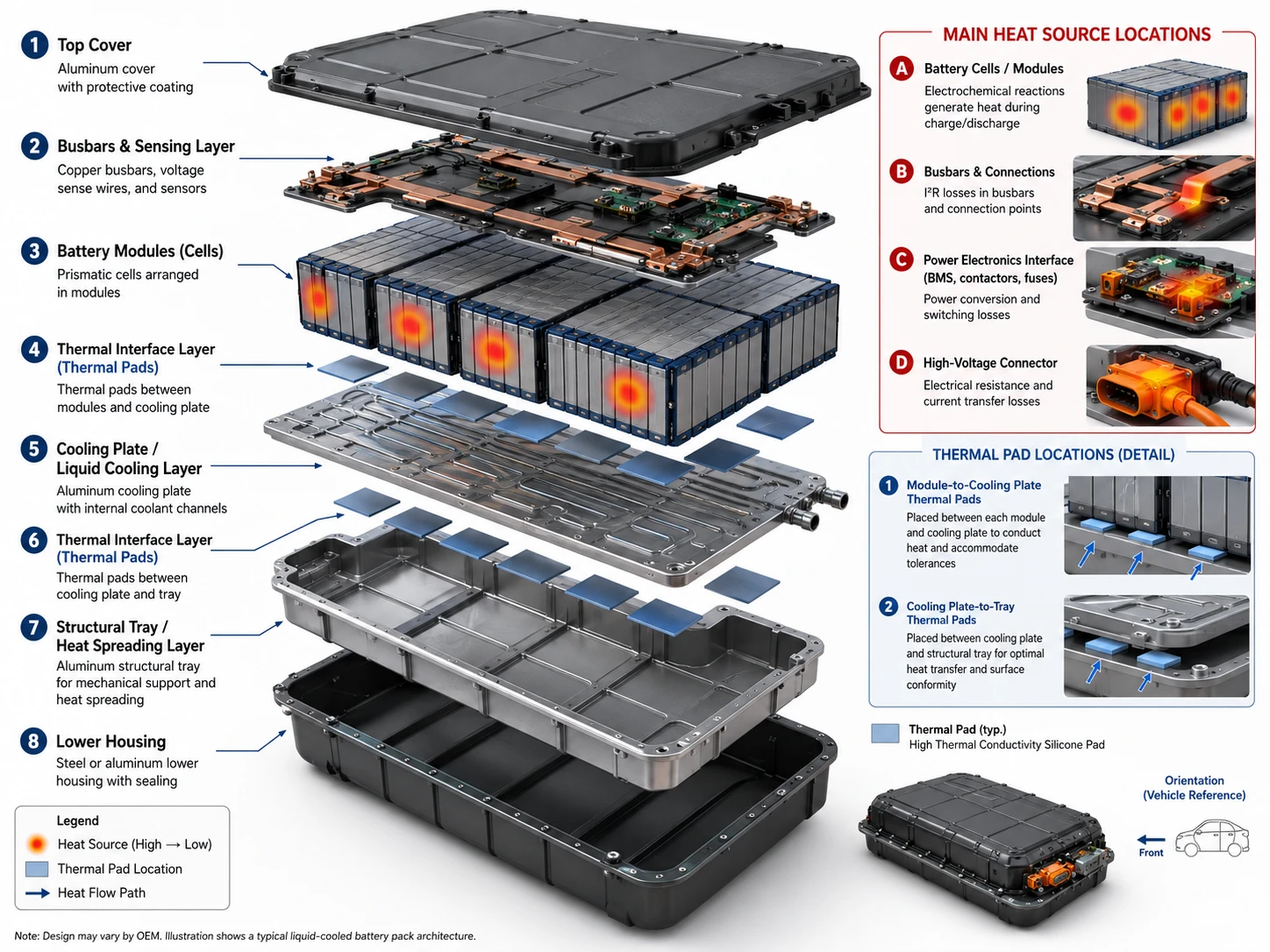
Battery Pack Thermal Interface
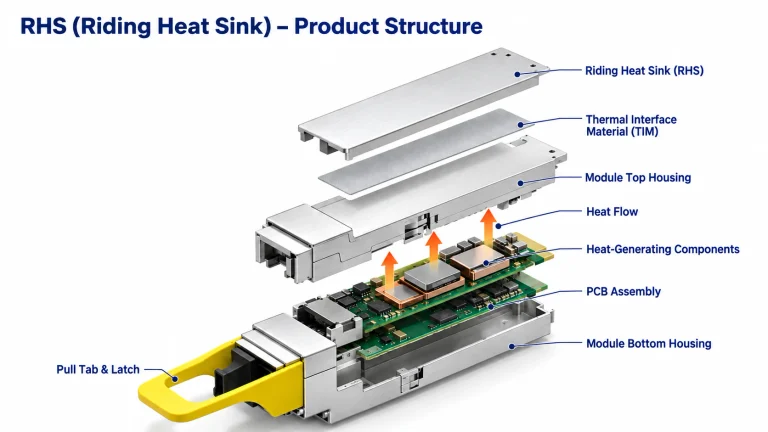
In an EV battery, heat flows through layers before reaching cooling plates. A high-temperature-resistant silicone-free thermal conductive sheet (130℃+) works as the core Material der thermischen Schnittstelle between:
- Cell surface
- Battery cells generate peak heat during fast charging
- Local gaps reduce Wärmeleitfähigkeit
- Interface layer
- Thermopad structure fills micro voids
- Maintains compression under 130℃+ cycling
- Cooling assembly
- A liquid plate absorbs heat
- The system stabilizes Wärmeabfuhr
Performance Snapshot
| Material Typ | Wärmeleitfähigkeit (W/m-K) | Max Temp (℃) | Volumenwiderstand | Anmeldung |
|---|---|---|---|---|
| Standard Pad | 3.0 | 100 | 10¹² Ω·cm | Low-load packs |
| Silicone Gap Filler | 4.5 | 120 | 10¹¹ Ω·cm | Mid-range EV |
| High-temperature resistant silicone-free thermal conductive sheet (130℃+) | 6.0 | 150 | 10¹³ Ω·cm | Fast-charge EV |
| Ceramic Sheet | 2.5 | 180 | 10¹⁴ Ω·cm | Insulation layer |
| Graphite Film | 8.0 | 120 | Leitfähig | Surface spread |
Inverter Cooling Enhancement
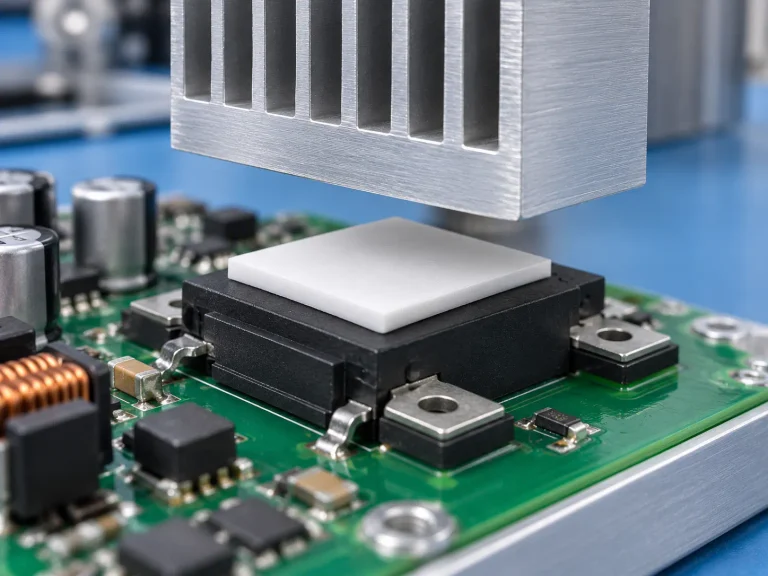
Im Inneren einer power inverter, heat stacks up around IGBT-Module and dense Leistungselektronik.
- Lower thermal resistance between the module and the sink
- Improve heat removal Effizienz
- Support stable high-frequency switching
1) Apply the high-temperature-resistant silicone-free thermal conductive sheet (130℃+)
2) Compress evenly
3) Verify contact under 130℃+ cycling
Short take: less air gap, better switching stability.
BloombergNEF’s 2025 EV Outlook notes that power electronics efficiency gains are now “a key cost and reliability driver in next-generation electric drivetrains.”
That’s why Glänzende Materialien pushes the high-temperature-resistant silicone-free thermal-conductive sheet (130℃+) for advanced cooling systems.
Motor Control Unit Heat Mitigation
A compact motor controller packs signals, drivers, and elektronische Komponenten into tight space. Heat builds fast.
- Reduce thermal stress
- Protect ECU logic
- Stabilize Leistungsmodule
Within the housing:
- Control board →
- Silicone-free gap control
- High-temp silicone-free thermal conductive sheet spreads heat
- Aluminum shell →
- Direct chassis dissipation
The high-temperature-resistant silicone-free thermal conductive sheet (130℃+) keeps the ECU cool under 130℃+ spikes. Less throttling. More steady torque. Sheen Materials makes sure it stays that way.
4 Criteria To Evaluate Sheet Durability
Bei der Auswahl einer high-temperature-resistant silicone-free thermal conductive sheet (130℃+), it’s not just about specs on paper. Real-world durability shows up under heat, pressure, voltage, and time. Let’s break it down in a practical, no-fluff way.
Thermal Conductivity Under High Load
Für eine high-temperature-resistant silicone-free thermal conductive sheet (130℃+), stable Wärmeleitfähigkeit under stress defines product value.
- Heat Flow Core Performance
- Heat transfer efficiency under sustained high pressure
- Control of Wärmeimpedanz as Leistungsdichte rises
- Einheitlich Wärmeabfuhr across contact surfaces
- Structural Stability at 130℃+
- Retention of Wärmeleistung during peak cycling
- Minimal interface resistance shift
- Stable bonding in silicone-free systems
- Application-Level Validation
- EV battery modules
- Inverters operating above 130℃
- Compact high-power converters
A high-temperature sheet 130℃+ that loses conductivity under load is basically a bottleneck. Sheen Materials optimizes filler dispersion so the thermally conductive sheet 130℃+ maintains cooling output even during continuous overload.
Electrical Insulation Performance
In high-voltage systems, insulation isn’t optional—it’s survival.
- Stark Durchschlagsfestigkeit
- Hoch electrical resistivity
- Zuverlässig insulation barrier
1) Check Durchbruchspannung margins.
2) Monitor Ableitstrom under thermal stress.
3) Validate Dielektrizitätskonstante stability at 130℃+.
A silicone-free thermal conductive sheet must balance insulation and heat flow. That’s tricky.
According to the 2025 International Energy Agency EV Outlook:
“Higher voltage platforms are accelerating material innovation in insulation systems across electric mobility.”
This is why a high-temperature-resistant silicone-free thermal conductive sheet (130℃+) is becoming standard in next-gen platforms. Sheen Materials aligns its material system with evolving electrical safety demands.
Compression Resistance Over Time
Long-term pressure changes everything.
Step 1: Apply continuous load simulating module clamping.
Step 2: Track compression set und creep deformation.
Step 3: Evaluate thickness retention after thermal cycling.
Step 4: Confirm preserved mechanische Unversehrtheit und stress retention.
A high-temperature-resistant thermal conductive sheet must resist pump-out. Once thickness drops, contact weakens, and cooling falls apart.
Für eine high-temperature-resistant silicone-free thermal conductive sheet (130℃+), material resilience keeps the structure tight even after years of long-term pressure.
Long-Term Thermal Aging Stability
Heat ages materials fast. The wrong sheet becomes brittle. The right one holds steady.
- Thermal Degradation Control
- Verringert thermal degradation at 130℃+
- Protection against material embrittlement
- Property Retention
- Stabil material stability after accelerated aging
- Maintained conductivity and elasticity
- Service Environment Endurance
- Widerstand gegen thermal cycling and fatigue
- Erweitert Nutzungsdauer in EV and industrial drives
A silicone-free thermal sheet designed for 130℃+ must survive years of exposure, not just lab tests. The High-temperature resistant silicone-free thermal conductive sheet (130℃+) from Sheen Materials focuses on long-term property retention, ensuring performance doesn’t quietly fade when systems run hot day after day.
Thermal Sheet Vs. Thermal Grease: Which Wins?
Thermal management isn’t just lab talk anymore; it’s everyday engineering reality. From electric vehicles to power modules, picking between grease and a high-temperature-resistant silicone-free thermal conductive sheet (130℃+) can change product lifespan and reliability. Let’s break it down in a way that actually helps you decide.
Thermal Sheet
When stability matters, the high-temperature-resistant silicone-free thermal conductive sheet (130℃+) stands out. It balances Wärmeleitfähigkeit, insulation, and long-term durability without messy handling.
- Core Performance
- Heat Path Control
- Einheitlich film thickness
- Zuverlässig interface contact
- Predictable Wärmeabfuhr
- Material Stability
- Stark high-temperature resistance (130℃+)
- Excellent Durchschlagsfestigkeit
- Low aging risk
- Heat Path Control
- Application Benefits
- Manufacturing
- Clean placement
- Ideal for automation
- No cure time
- Reliability
- No pump-out
- No silicone bleed
- Stabil Lückenschließung unter Vibration
- Manufacturing
High-temperature-resistant silicone-free thermal conductive sheet (130℃+) also fits EV battery modules where insulation and Konformität are critical.
| Eigentum | Thermal Sheet (130℃+) | Typical Requirement |
|---|---|---|
| Wärmeleitfähigkeit | 3–8 W/m·K | ≥3 W/m·K |
| Operating temp | -40 to 150℃ | ≥130℃ |
| Durchschlagsfestigkeit | ≥5 kV/mm | ≥3 kV/mm |
| Druckverformungsrest | Niedrig | Stabil |
For brands like Sheen Materials, this silicone-free thermal sheet approach supports cleaner EV assembly and longer service cycles. The High-temperature resistant silicone-free thermal conductive sheet (130℃+) keeps performance steady when heat spikes hit hard.
Thermisches Schmierfett
Thermal grease wins on pure surface intimacy. Its wetting properties allow tight interface contact, especially on uneven substrates.
• Strengths
- High initial Wärmeleitfähigkeit
- Excellent micro Lückenschließung
- Adjustable Viskosität for custom application method
1) Where it struggles
- Pump-out effect under cycling
- Drying and degradation
- Contamination risks
Here’s the real-world flow: apply → compress → spread → run hot → recheck after cycles. Over time, film thickness shifts. That shift increases resistance.
Quick comparison:
- Short term: grease runs cooler.
- Long-term: sheets stay consistent.
- High vibration: grease may migrate.
In EV drives or power converters, the pump-out effect becomes a headache. Sheen Materials often recommends a high-temperature-resistant thermal sheet when durability outweighs short-term gains.
So which wins? If you need rework flexibility and max contact, grease works. If you need insulation, clean assembly, and stable Wärmeabfuhr above 130℃, the High-temperature resistant silicone-free thermal conductive sheet (130℃+) plays the long game.
High-Temperature Resistant Silicone-Free Thermal Conductive Sheet Specs
High-temperature-resistant silicone-free thermal-conductive sheet (130℃+) sounds technical, yet it solves a simple problem—moving heat out fast without leaving a mess behind. From EV battery packs to power modules, this high-temperature thermal conductive sheet keeps systems cool, clean, and steady. Below is how thickness, temperature range, formulation, and certifications shape real-world performance.
Thickness and Flexibility
When choosing a high-temperature-resistant silicone-free thermal conductive sheet (130℃+), the balance between Dicke und Flexibilität matters.
- Gemeinsame sheet thickness options range from ultra-thin to reinforced pads.
- Höher Komprimierbarkeit improves surface wet-out.
- Erweitert pliability supports uneven housings.
- Select target material thickness based on gap size.
- Bestätigen Sie Konformität under assembly pressure.
- Validate long-term rebound stability.
• Thin profiles reduce stack height.
At a deeper level:
- Mechanical Fit
- Surface tolerance absorption
- Stabil thinness unter Vibration
- Thermal Path
- Reduced interface resistance
- Consistent contact pressure
Sheen Materials fine-tunes density and softness so the high-temp thermal sheet fills gaps without pump-out, even after repeated thermal cycling.
Operating Temperature Range
Eine zuverlässige high-temperature-resistant silicone-free thermal conductive sheet (130℃+) must survive extreme Betriebstemperatur Schaukeln.
- Continuous Wärmebeständigkeit above 150℃
- Geprüft Wärmestabilität during long continuous operation
- Hoch maximum temperature tolerance
Performance logic flows like this:
- Material backbone ensures thermal endurance.
- Fillers maintain conductivity at peak temperature range.
- Aging tests confirm structural stability.
- Environmental Stress
- High humidity exposure
- Rapid thermal shock
- Electrical Modules
- IGBT cooling
- On-board chargers
“Thermal management remains a top design priority in EV power electronics through 2025 and beyond,” notes a 2025 BloombergNEF clean energy technology outlook, highlighting sustained demand for materials with proven high-temperature durability.
This is exactly where Sheen Materials positions its high-temperature-resistant thermal-conductive sheet.
Silicone-Free Formulation
Silicone bleed can ruin optics and contacts. A silikonfrei approach fixes that.
- No oil migration
- Unter Ausgasen
- Verringert VOCs
- Optimize Materialzusammensetzung.
- Kontrolle Materialreinheit.
- Prevent long-term contamination.
- Chemical Stability
- Non-silicone backbone
- Controlled additive ratio
- Reliability
- Clean surfaces
- Minimal residue
Die high-temperature-resistant silicone-free thermal conductive sheet (130℃+) from Sheen Materials uses a refined formulation that protects sensors and precision assemblies without compromising thermal flow.
Industry Certifications
Trust builds on verified certifications and strict Compliance.
- Meets global Industriestandards
- Aligns with automotive standards
- Supports RoHS environmental standards
- Material validation testing.
- Documentation for regulatory requirements.
- Laufend quality assurance audits.
- Safety Layer
- UL recognition
- Fire resistance checks
- Production Control
- Rückverfolgbarkeit der Chargen
- Performance verification
In short, a certified high-temperature-resistant silicone-free thermal-conductive sheet (130℃+) is not just about heat—it’s about safety, reliability, and ready-for-market confidence.
High-Temperature Resistant Silicone-Free Thermal Sheets Performance Data
High-temperature-resistant silicone-free thermal-conductive sheet (130℃+) products are built for heat that doesn’t back down. When equipment keeps running above 130℃, materials either stay stable or quietly fail. This Cluster reviews real performance behavior—thermal conductivity, thermal cycling stability, and dielectric strength—so you can judge if a High-temperature resistant silicone-free thermal conductive sheet (130℃+) truly holds up.
Conductivity Tested at 130℃+
Für eine High-temperature resistant silicone-free thermal conductive sheet (130℃+), heat isn’t just managed—it’s directed with control.
- Wärmeleitfähigkeit under elevated Betriebstemperatur
- 1.1 Stability of heat transfer coefficient
- Behält die Konsistenz bei Wärmeabfuhr efficiency beyond 130℃
- Controls rising Wärmebeständigkeit during sustained load
- 1.2 High-temperature performance validation
- Continuous exposure testing
- Peak-load endurance checks
- 1.1 Stability of heat transfer coefficient
- Material response as a Material der thermischen Schnittstelle
- 2.1 Interface conformity
- 2.2 Compression recovery at high heat
• Stable output
• Low drift in conductivity
• Reliable bonding surface
A high-temperature-resistant, silicone-free thermal-conductive sheet (130℃+) from Sheen Materials keeps thermal pathways clean and predictable, even when devices run hot for hours. That steady Wärmeleitfähigkeit is what keeps power modules and control units cool instead of cooking.
Cycle Life Thermal Stability
Heat expands. Cooling contracts. Repeat that hundreds of times, and weaker materials crack.
1) Thermal cycling stability across repeated stress
2) Resistance to Materialverschlechterung
3) Strong performance retention after aging
- Bewährt Haltbarkeit
• Reduced Wärmealterung impact
• Better tolerance to repeated thermal stress
Industry analysts continue to stress reliability in electrified systems:
“Thermal management materials must maintain long-term reliability above 125℃ as electrification platforms evolve.” — 2025 thermal materials outlook, Yole Group
Die High-temperature resistant silicone-free thermal conductive sheet (130℃+) category is gaining traction because stable insulation and conductivity together extend service life. Sheen Materials aligns its validation process with real operating cycles, not just lab snapshots.
Dielectric Breakdown Results
A high-temperature-resistant silicone-free thermal conductive sheet (130℃+) must insulate as well as it conducts heat.
Step 1: Measure baseline Durchschlagsfestigkeit und electrical resistivity.
Step 2: Increase the voltage until the Durchbruchspannung threshold appears.
Step 3: Re-test after heat exposure above 130℃.
Step 4: Confirm lasting dielectric integrity und Spannungsfestigkeit capability.
Key markers:
- Hoch elektrische Isolierung Zuverlässigkeit
- Stabil Isoliereigenschaften under thermal load
- Controlled leakage behavior
In high-voltage modules, dependable dielectric strength is non-negotiable. The right high-temp thermal sheet protects circuits while dissipating heat quickly. That balance defines performance in demanding environments.