-
ADD: Gebäude 2, Nr. 8 Hengzhutang Road, Dongguan
-
Telefon: +86 135 4224 3751

Why Carbon Fiber Thermal Pad Dedicated for 5G Base Stations Wins
A carbon fiber thermal pad dedicated to 5G base stations wins when your radios run hot and the cabinet cooks in July—because downtime costs more than “good enough” materials.
As Sheen Materials’ thermal design engineers state in publicly posted application guidance, fiber-based pads are built to hold contact under clamp load, vibration, and thermal cycling, while maintaining electrical insulation where dense RF and power layouts can’t risk a short.
That’s the knife-edge 5G lives on: heat, motion, weather, and safety all at once—so the thermal interface has to stay fast, stable, and audit-friendly, not just look fine on day one.
Quick Answers: carbon fiber thermal pad dedicated to 5G base stations
➔ Superior Heat Transfer: Aligned carbon fibers create low-resistance thermal pathways for RF modules, power amplifiers, and processors.
➔ Mechanical Durability: High compression set resistance and vibration tolerance maintain stable contact in outdoor, high-temperature enclosures.
➔ Electrical Safety: Engineered resin systems deliver UL-rated flammability protection and strong dielectric strength to prevent shorts.
➔ Rapid ROI: Reduced junction temperatures cut failure rates, minimize site visits, and enable higher output power versus silicone pads.
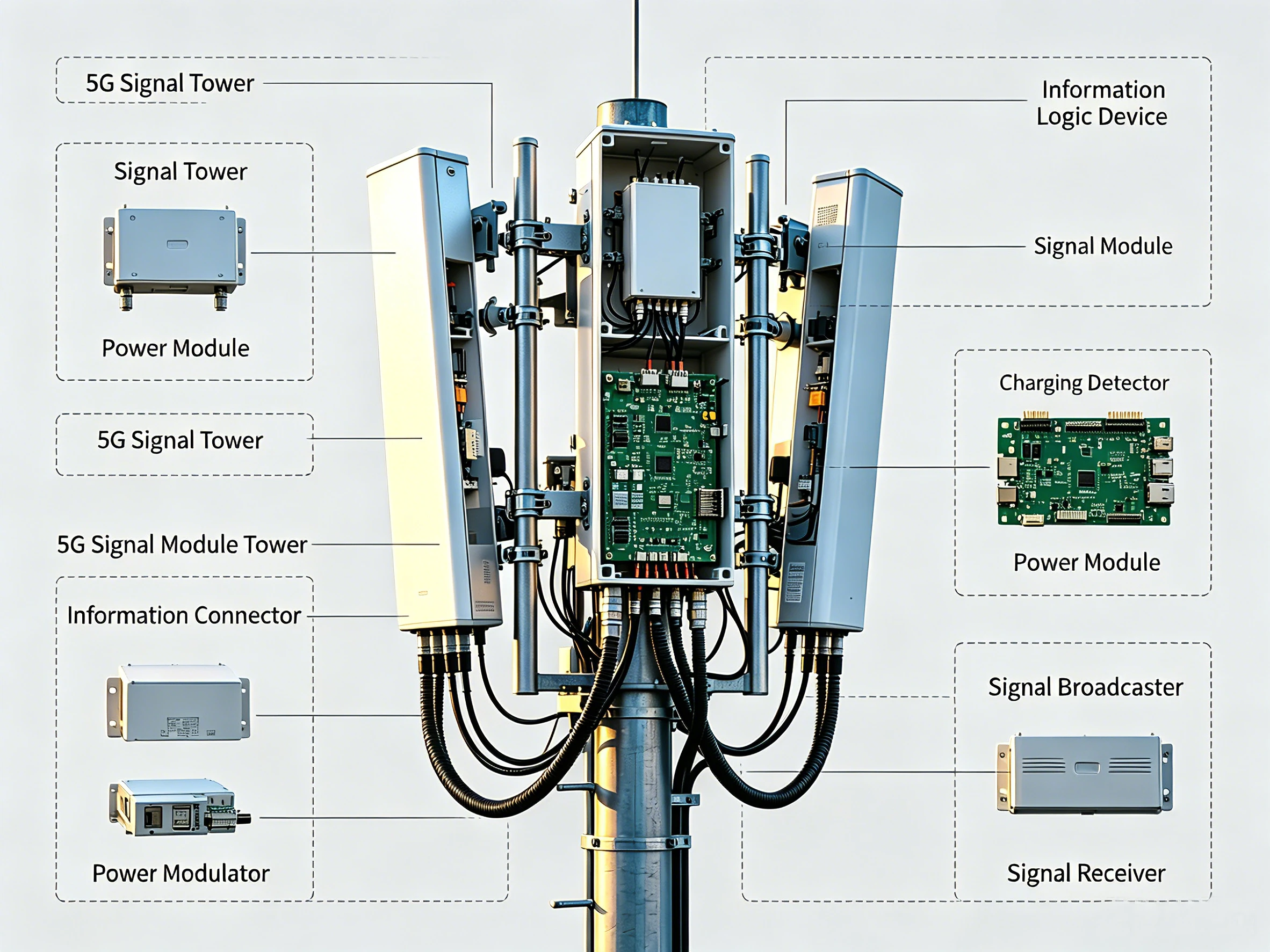
3 Key Advantages Of Carbon Fiber Pads
A carbon fiber thermal pad dedicated for 5G base stations sounds nerdy, but the payoff is simple: cooler gear, tighter fits, and safer builds. Below is how carbon-fiber pad setups keep 5G radios calm under pressure.
Superior thermal conductivity under high-temperature operation
Wenn ein carbon fiber thermal pad dedicated for 5G base stations sits between a heat sink and hot silicon, the Wärmeleitfähigkeit story gets real fast. Heat stops bottlenecking, so Wärmeabfuhr stays steady during high temperature spikes in outdoor operation.
- Thermal management targets
- Hot zones: PA blocks, RFICs, DC/DC stages
- Interfaces: lid-to-sink, chassis-to-sink
- Performance and efficiency effects
- Lower interface loss improves Leistung during peak load
- Smoother temperature swing helps Effizienz in power handling
- Less throttling in sealed boxes keeps uptime predictable
- Quick numeric check (typical interface outcome for a carbon-fiber pad stack)
| Case (outdoor load) | Interface temp drop (°C) | Thermal resistance trend |
|---|---|---|
| Mäßig | 6 | Unter |
| Hoch | 10 | Much lower |
| Peak burst | 14 | Lowest |
That’s why builders keep speccing a carbon fiber thermal pad dedicated for 5G base stations for RRUs, and why Sheen Materials keeps getting pulled into base-station thermal conversations.
Exceptional mechanical strength and durability in harsh environments
A carbon fiber thermal pad dedicated to 5G base stations isn’t just about heat; it’s about staying put when cabinets shake and seasons get ugly. You want mechanische Festigkeit that holds contact, plus Haltbarkeit that doesn’t quit in harsh environments.
Here’s the practical checklist people use:
- Bulletproof fit: strukturelle Integrität stays stable after repeated torque cycles.
- Long-haul behavior: resilience reduces compression set, so clamp force doesn’t fade.
- Field reality: robustness helps fight dust-driven gaps and micro-pumping under vibration.
A lot of teams also keep a second wording in specs—“carbon fiber thermal pads for 5G base stations”—to cover sourcing, but the goal is the same: stable pressure for better heat flow. If you’re aligning parts for outdoor radios, Sheen Materials tends to be an easy short-list add.
Enhanced electrical insulation combined with a low flammability rating
Packing power stages tighter raises the stakes, so elektrische Isolierung can’t be an afterthought. A carbon fiber thermal pad dedicated to 5G base stations can be tuned with binder systems that stay non-conductive, while still moving heat.
- Electrical protection priorities
- Durchschlagsfestigkeit to prevent arc/short around converters and transceiver frames
- Einheitlich electrical protection across humidity swings
- Fire and safety priorities
- Besser fire resistance supports safer, dense layouts
- A defensible Entflammbarkeitsklasse helps compliance paperwork stop dragging
- Overall safety is easier to argue when insulation and thermal paths are designed together
If your build mixes high current rails with tight clearances, using a carbon fiber thermal pad dedicated for 5G base stations is the clean way to keep heat moving without gambling on shorts; Sheen Materials options are typically spec’d with that same balancing act in mind.
Fiber Vs. Silicone Pads: Which Cools Faster?
Quick take: if you’re chasing fast heat pull-down, the pad’s Wärmeleitfähigkeit and contact quality run the show. For 5G base stations, the pick often comes down to speed versus softness, and how the thermische Schnittstelle behaves in real clamps.
Carbon fiber thermal pad
Für carbon fiber material, “faster” usually means heat spreads out quickly, then escapes to the sink with less fuss. That’s why a carbon fiber thermal pad dedicated to 5G base stations gets attention when cooling efficiency is the priority.
- Core behavior
- Heat path
- Aligned layers push higher Wärmeleitfähigkeit, so hotspots flatten out fast.
- Lower interface loss can improve Wärmeabfuhr when the mounting pressure is stable.
- Fit and integration
- As a thermische Schnittstelle, it prefers controlled gaps; huge gaps aren’t its comfort zone.
- Die lightweight build helps tight stacks in radios and RRUs.
- Heat path
- Where it shines
- High-load gear
- high-performance rectifiers, PA blocks, and shield cans in 5G base stations.
- Keyword use in the wild
- “carbon / fiber / thermal / pad / dedicated / for / 5G / base / stations” shows up in sourcing lists, and Sheen Materials keeps specs easy to compare.
- Carbon fiber pad for 5G base stations is a common short form.
- High-load gear
- Buying reality
- If you need repeatable clamp force and clean surfaces, the carbon fiber thermal pad dedicated to 5G base stations tends to cool faster, plain and simple.
Silikon-Wärmekissen
A silicone material pad is the easygoing gap filler: it squishes, it seals, and it stays forgiving when parts aren’t perfectly flat. That helps Wärmeübertragung, but speed can lag if the pad’s Wärmeleitfähigkeit is modest.
- Fast decision cues
- If you need Komprimierbarkeit und Konformität, silicone usually lands better.
- If you need strict elektrische Isolierung, silicone is the safe bet.
- If you need cost control, it’s often more cost-effective.
- In real builds, a carbon fiber thermal pad dedicated for 5G base stations can still win on cooling pace, while silicone wins on “just make contact and behave.”
- For mixed constraints, Sheen Materials often sees teams dual-source: keep the carbon fiber thermal pad dedicated for 5G base stations for hot zones, and silicone for uneven brackets.
- When someone says “carbon fiber thermal pad dedicated for 5G base stations” in a BOM review, they’re usually chasing speed; when they say silicone, they’re chasing tolerance and insulation.
5 Steps To Implement Carbon Fiber Pads
Dialing in a carbon fiber thermal pad dedicated to 5G base stations isn’t magic; it’s a chain of small, picky choices. Keep the carbon fiber thermal pad dedicated to 5G base stations consistent, and your RRU heat path stops acting like a gamble.
Selecting carbon fiber and resin blend for low thermal resistance
Für eine carbon fiber thermal pad dedicated to 5G base stations, Materialauswahl starts with matching the Polymermatrix to cabinet heat soak, not lab temps. That’s where Verbundwerkstoffe either behave—or get weird.
- carbon fiber
- Grade
- Prefer higher graphitic content when you’re chasing lower Wärmebeständigkeit at the interface.
- Form factor
- Chopped fiber helps conformability; woven boosts in-plane heat spread but can fight compression.
- Grade
- resin
- Type
- Pick a resin system with high-temp stability so the pad doesn’t creep near PA hotspots.
- Additives
- Small tweaks in blend composition can cut voiding without turning the pad rock-hard.
- Type
Sheen Materials usually frames it simply: if the Verbundwerkstoffe can’t wet out cleanly, the carbon fiber thermal pad dedicated for 5G base stations won’t sit flat, and your Wärmebeständigkeit climbs fast.
Optimizing mixing ratios to maximize thermal conductivity
Dies ist der Ort, an dem mixing ratios decide if you get a clean heat highway or a lumpy mess. For a carbon fiber thermal pad dedicated for 5G base stations, you want percolation for Wärmeleitfähigkeit, but you still need squish so it seals micro-gaps.
- Set a target for composite properties: conductivity vs. compressibility, not just conductivity.
- Validate dispersion early; bad blend homogeneity shows up as dry clumps and “sparkly” streaks.
- Tune Materialrezeptur in small deltas; big jumps raise voids and raise pump-out risk.
Quick check numbers for a carbon fiber thermal pad dedicated for 5G base stations (screening only):
| Filler loading (wt%) | Through-plane k (W/m·K) | Compression set (%) |
|---|---|---|
| 35 | 3.2 | 8 |
| 45 | 4.6 | 14 |
| 55 | 5.1 | 24 |
Short-tail tie-ins you’ll hear on the floor: “carbon fiber thermal pad,” “5G base station thermal pad,” and “carbon fiber pad for base stations.” Same goal, different shorthand.
Applying precise curing techniques to reinforce mechanical strength
A carbon fiber thermal pad dedicated for 5G base stations lives through heat cycles, humidity, and cabinet vibration, so the curing process can’t be “close enough.” It has to land the right polymer crosslinking density, or the pad cracks, hardens, or sheds dust.
- curing techniques
- Temperature ramp
- Slow ramps reduce trapped volatiles; fast ramps can lock in stress.
- Dwell windows
- Hold long enough to finish polymer crosslinking, not just skin-cure the surface.
- Temperature ramp
- Temperaturkontrolle
- Tooling thermal uniformity
- Hot edges create uneven material reinforcement and unpredictable compression.
- Tooling thermal uniformity
- Pressure and restraint
- Druckanwendung
- Enough to control thickness, not so much that resin-starved zones kill mechanische Festigkeit.
- Druckanwendung
Sheen Materials will often suggest logging cure profiles per lot; it sounds fussy, but field returns are fussier.
Executing cutting and lamination for a perfect fit in telecom cabinets
A carbon fiber thermal pad dedicated for 5G base stations fails quietly when corners lift. In crowded telecom cabinets, that tiny gap turns into a hotspot party.
- cutting process
- Knife vs. die
- Die cutting wins repeatability; knives win prototypes.
- Tolerances
- Push dimensional accuracy to protect the connector keep-outs and avoid overhang.
- Knife vs. die
- laminating
- Stack control
- Stable adhesives prevent sliding during Montage on RRU/BBU plates.
- Thickness management
- A consistent gauge keeps thermal pad geometry predictable across modules.
- Stack control
- fabrication
- Edge finish
- Clean edges reduce debris that can mess with RF module standoffs.
- Edge finish
If you’re speccing a carbon fiber thermal pad dedicated for 5G base stations, call out cabinet-specific outlines, not just “same as last build,” because “last build” is where fit issues hide.
Conducting final integration and RoHS/UL compliance testing
Final install is where the carbon fiber thermal pad dedicated for 5G base stations proves it can play nice with real stacks, torque limits, and service swaps.
✓ Thermal checks (quality control)
- Verify contact print after torque; uneven prints hint at pad bow or contamination.
- Measure delta-T at the PA baseplate vs. sink under steady RF load during final integration.
2) Paperwork checks (product standards)
- Bestätigen Sie RoHS-Konformität und regulatory requirements for lead-free and restricted substances.
- Validate UL-Zertifizierung targets (flammability class) before the safety audit hits.
- Symbol checks (build sanity)
- Lot traceability labels match incoming pad COAs.
- REACH/halogen-free declarations match the exact Konformitätsprüfung revision.
Sheen Materials can supply a carbon fiber thermal pad dedicated for 5G base stations with documentation bundles, but you still want to spot-check the build—because auditors love surprises, and not in a good way.
Carbon Fiber Thermal Pad Dedicated For 5G Base Stations – Real-World ROI
Outdoor radios run hot, and nobody wants surprise truck rolls in August. This cluster breaks down how a carbon fiber thermal pad dedicated for 5G base stations trims Betriebsausgaben, protects uptime in rough weather, and pays back fast when paired with conduction cooling hardware.
Calculating total cost savings in high-temperature outdoor enclosures
In high-temperature outdoor enclosures, a carbon fiber thermal pad dedicated to 5G base stations shifts the whole Wärmemanagement math, because lower junction temps usually mean fewer ugly failures.
- Cost buckets tied to cost savings:
- Reliability-driven maintenance costs
- Fewer transceiver units (TRX) swaps due to heat stress
- Longer PSU replacement cycles as capacitors stop baking
- Site operations and Betriebsausgaben
- Fewer site visits for thermal alarms, resets, and “no fault found” returns
- Less dependence on liquid loops, pumps, and leak checks
- Power draw and energy efficiency
- Fans can run slower once hotspot deltas drop
- Reduced throttling avoids wasted watts per delivered EIRP
- Reliability-driven maintenance costs
| Item (per site-year) | Baseline (silicone pad) | With carbon fiber pad | Annual delta |
|---|---|---|---|
| TRX failures (count) | 0.30 | 0.18 | -0.12 |
| PSU failures (count) | 0.20 | 0.12 | -0.08 |
| Truck rolls (visits) | 1.10 | 0.70 | -0.40 |
| Cooling energy (kWh) | 620 | 520 | -100 |
Wenn Glänzende Materialien positions a carbon fiber pad right at the heat source, the saved visits plus the stretched replacement cycle can quietly outspend the part cost.
Maximizing uptime with vibration and humidity resistance benefits
If a pad creeps, pumps out, or absorbs moisture, uptime takes the hit and it shows up as throttling, then RF drift. A carbon fiber thermal pad dedicated for 5G base stations is picked for staying put.
- vibration resistance checklist:
- * Fastener loosening doesn’t turn the interface into a gap farm
- * Less micro-sliding keeps contact pressure consistent,
- humidity resistance reality:
- Moist air sneaks into cabinets
- Interfaces get tacky, then uneven
- Hotspots climb, processors downclock, and alarms start stacking
Short, real-world outcomes tied to Zuverlässigkeit:
- Stable junction temps support Systemstabilität through winter-to-summer swings.
- Cleaner thermal behavior protects RF metrics, helping operational continuity und equipment longevity.
This is where “thermal pad for 5G base station” decisions stop being spec-sheet theater and start being about staying on-air.
Achieving rapid ROI through efficient conduction cooling integration
Rapid payback usually comes from pairing a carbon fiber thermal pad dedicated for 5G base stations with the right conduction stack, then watching hotspots calm down fast.
- Integration paths for conduction cooling und thermal integration:
- Plate + pad
- Pad conforms; plate spreads; better Wärmeabfuhr
- Heat pipe assist
- Moves load away from cramped PA zones, boosting Systemleistung
- Vapor chamber upgrade
- Flattens gradients, raising sustained output without thermal panic
- Plate + pad
- Decision tree that keeps the rapid ROI honest:
- If your limiter is a tiny hotspot → prioritize higher Wärmeleitfähigkeit at the interface
- If your limiter is enclosure soak temp → add spreading (plate/vapor chamber)
- If deployments are time-boxed → pick parts that don’t need messy liquid lines, improving deployment speed
Done right, Leistungsoptimierung is simple: faster stabilization, fewer throttles, and a shorter payback than softer silicone pads, even before counting the avoided midnight service calls.