-
ADD: Gebäude 2, Nr. 8 Hengzhutang Road, Dongguan
-
Telefon: +86 135 4224 3751

Top Materials Used in a Battery Management System: Thermal Pad Design
A Battery management system thermal pad can make or break your battery pack, plain and simple. Heat builds up fast in tight EV modules, and without the right material, performance slips and risks climb.
Smart buyers focus on conductivity, insulation, and compliance that stand up on the factory floor. Pick the wrong pad and you pay in recalls and downtime; choose wisely and your system runs cool, steady, and built to last.
Battery Management System Thermal Pad Classes
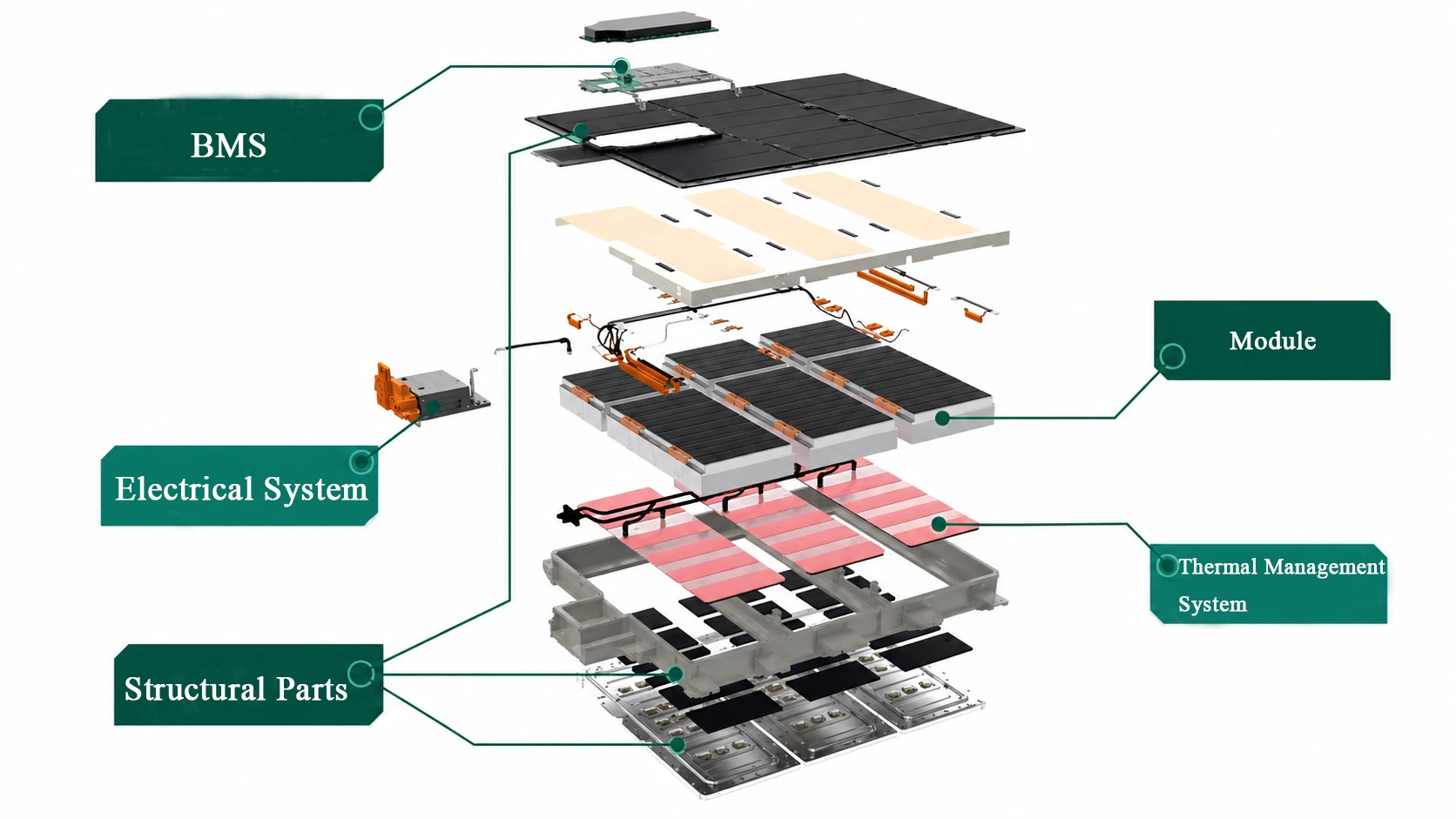
A Battery management system thermal pad keeps heat in check inside modern EV packs and energy storage units. Split the phrase into battery, management, system, thermal, pad—and you see the job clearly. Every Battery management system thermal pad supports battery safety, system stability, and smart thermal control. Let’s break down the main material classes shaping today’s battery management system cooling pad market.
Silicone-Based Thermal Pads with Ceramic Fillers
In einem Battery management system thermal pad, Silikon matrices blended with Keramische Füllstoffe define mainstream Thermal pads für BMS assemblies.
- Material composition
- Base: Silikon elastomer
- Fillers: aluminum oxide or boron nitride
- Goal: stable Heat transfer across uneven gaps
- Thermal interface behavior
- High compressibility improves Thermal management
- Electrical insulation protects control boards
- Balanced conductivity supports battery modules
- Application logic inside battery management system cooling pad design
- Between cell and cold plate
- Between PCB and heat sink
- Around busbars needing isolation
For brands like Glänzende Materialien, tuning filler loading and hardness makes each Battery management system thermal pad match pack pressure and cycling demands without cracking or pump-out.
Acrylic Gap Fillers for High Dielectric Strength
Acrylic-based Gap fillers in einem Battery management system thermal pad focus on Durchschlagsfestigkeit und Elektrische Isolierung under High voltage.
- Core material properties
- Strong volume resistivity
- Stable performance at elevated BMS temperatures
- Integration in battery management system thermal pad stacks
- MOSFET and IGBT insulation
- DC-DC converter interface layers
- Performance priorities
- Zuverlässig Thermal interface contact
- Controlled flow before cure
- Long-term dielectric reliability
Battery system engineers often choose this battery thermal pad option when insulation margin is tight and creepage distances are limited.
Phase Change Materials for Optimal Conductivity
Phase change materials innerhalb einer Battery management system thermal pad soften at the target temperature, lowering contact resistance.
- Thermal science basics
- Use of Latent heat
- Reduced air gaps during phase shift
- BMS thermal management impact
- Besser Wärmeableitung
- Stabil Wärmeleitfähigkeit under ASTM D5470 testing
- Practical battery management system thermal pad workflow
- Apply solid sheet
- Reach activation temperature
- Achieve uniform wet-out
The International Energy Agency’s 2025 EV Outlook notes that tighter battery thermal control is central to extending EV pack life and safety margins in high-density systems.
That industry push keeps phase change battery management system thermal pad demand climbing.
Graphite Sheets Offering Superior Heat Spreading
Graphite sheets in einem Battery management system thermal pad focus on in-plane Heat spreading.
- Materialeigenschaften
- Hoch Anisotropic Conductivity
- Ultra-thin profile
- Thermal management logic
- Rapid lateral Wärmeableitung
- Hotspot reduction across modules
- System-level placement
- Under prismatic cells
- Across module tops for equalized temperature
This battery management system cooling pad style works great when vertical space is tight but lateral spreading is critical.
Dielectric Pads Reinforced with Fiberglass and BN
A reinforced Battery management system thermal pad can combine Glasfaserverstärkung mit Bornitrid for stronger Dielectric pads.
- Composite structure
- Fiberglass mesh backbone
- BN-enhanced thermal pathway
- Electrical isolation goals
- Hoch Elektrische Isolierung in BMS
- UL 94 V-0 flammability support
- Reliability in harsh cycling
- Verbessert Thermal interface Haltbarkeit
- Better crack resistance in large packs
Advanced suppliers such as Glänzende Materialien refine these Material composites so every battery management system thermal pad meets vibration, voltage, and thermal insulation targets without adding bulk.
4 Key Materials For Thermal Pads
Battery packs run hot, and nobody likes surprise shutdowns. A well-matched Battery management system thermal pad keeps heat under control while protecting circuits. Below are four material systems commonly used in battery management system, battery thermal pad, and BMS thermal pad designs.
Silicone Loaded with Aluminum Oxide
When building a Battery management system thermal pad, material choice starts with:
- Silikon base for flexibility
- Aluminum Oxide filler for thermal conductivity
- Stabil elektrische Isolierung
In real battery management system layouts:
- Die Thermopad sits between cell module and heat sink.
- Komprimierbarkeit absorbs tolerance stack-up.
- Heat flows through filler particles, improving Wärmeübertragung.
Key performance layers:
- Material Core
- Polymer: Silikon
- Filler: Aluminum Oxide
- Functional Targets
- ≥3 W/m·K Wärmeleitfähigkeit
- Zuverlässig elektrische Isolierung
- Mechanical Traits
- Hoch Flexibilität
- Kontrolliert Komprimierbarkeit
For engineers tuning a Battery management system thermal pad, this combo keeps assembly simple and cost in check. Sheen Materials refines filler dispersion to stabilize long-term heat cycling in battery thermal pad projects.
Acrylic Formulation Enhanced by Ceramic Filler
Acrylic-based Battery management system thermal pad solutions focus on structure and adhesion.
Core attributes:
- Acrylic matrix
- Ceramic Filler network
- Stark adhesion to aluminum plates
Performance breakdown:
- Electrical
- Hoch Durchschlagsfestigkeit
- Thermische
- Ausgewogene Wärmeleitfähigkeit
- Effiziente Wärmeabfuhr
- Processing
- Die cutting
- Automated lamination
- Gut Konformität
For tight battery management system housings, this BMS thermal pad type reduces shifting during vibration. Sheen Materials supports custom thickness control for stable gap management.
Polyurethane Matrix Reinforced with Boron Nitride
In dynamic packs, flexibility matters.
Material stack:
- Polymer: Polyurethane
- Filler: Bornitrid
Functional logic:
- Elastic structure supports vibration damping.
- BN platelets guide heat for steady Wärmeleitfähigkeit.
- Insulating matrix ensures electrical isolation.
Applied to a Battery management system thermal pad, this design handles shock and wide temperature swings. For EV modules, it supports long-term Haltbarkeit and balanced Wärmemanagement without cracking under stress.
Graphite Sheet Composites for Ultra-High Conductivity
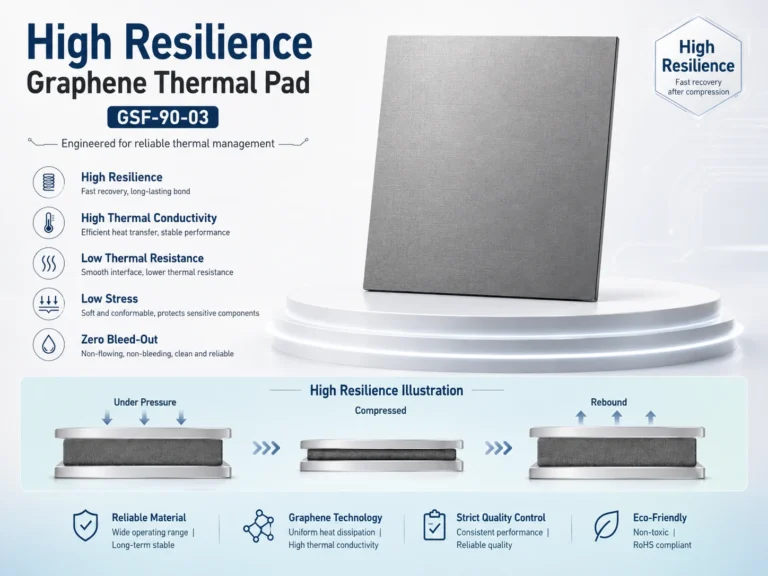
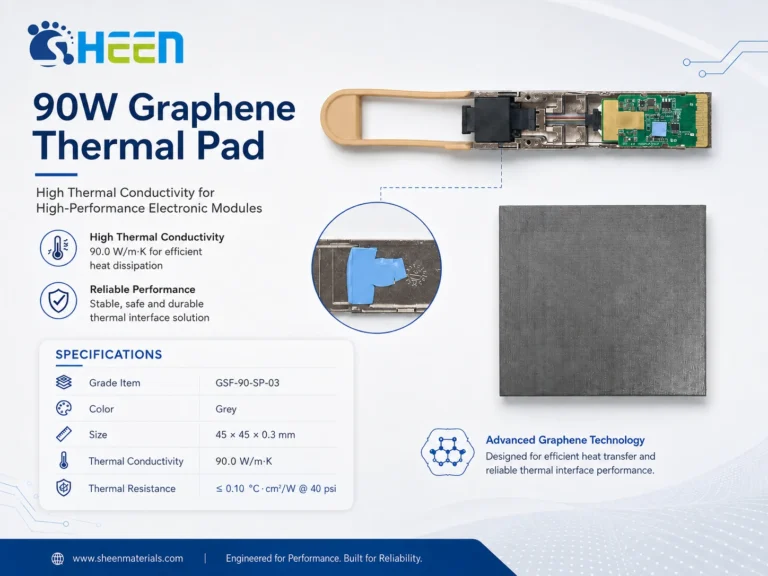
When ultra-fast heat spreading is required in a Battery management system thermal pad, Graphit Blatt materials stand out.
Thermal comparison for battery thermal pad selection:
| Material Typ | In-Plane Conductivity (W/m·K) | Dicke (mm) | Density (g/cm³) | Electrical Property |
|---|---|---|---|---|
| Silicone + Al₂O₃ | 3–6 | 0.5–3.0 | 2.1–2.5 | Insulating |
| Acrylic + Ceramic Filler | 2–5 | 0.3–2.0 | 1.8–2.3 | Insulating |
| Polyurethane + BN | 3–7 | 0.5–3.0 | 1.9–2.2 | Insulating |
| Graphite Sheet Composites | 300–1500 (in-plane) | 0.02–0.2 | 1.0–1.5 | Leitfähig |
Why engineers like it:
- ⚙ Ultra-high conductivity
- Thin, lightweight format
- Strong lateral Wärmeausbreitung
Used wisely inside a Battery management system thermal pad architecture, graphite handles peak loads while other layers provide insulation. Sheen Materials tailors hybrid stacks that blend graphite with insulating pads for safe, compact thermal management.
EV Pack Cooling: Graphite Pad Solution
Electric vehicles run hot, and nobody likes overheated cells. This is where the Battery management system thermal pad steps in. By breaking it down—Battery, Management, system, thermal, pad—each word plays a role in safer pack cooling and smarter heat control.
Integrating Graphite Pads into Battery Modules
When adding Graphit Pads into Battery Modules, the goal is clean Integration und stabil Thermische flow.
- Cell-Level Contact
- Align the battery management system thermal pad between prismatic cells and cooling plates.
- Keep the thickness tight to avoid mechanical stress.
- Use light compression to remove air gaps.
- Module Assembly
- a. Position pads before busbar fastening.
- b. Verify surface flatness under 0.1 mm variance.
- c. Confirm even heat spreading across the module base.
- System Check
- ▪ Run thermal imaging at 1C discharge.
- ▪ Compare hot-spot reduction before and after pad placement.
Short version? Good contact equals lower peak temperature. Great contact extends pack life. That’s why Sheen Materials designs graphite-based thermal interface options tuned for EV packs, including advanced battery cooling pad solutions that work seamlessly with the Battery management system thermal pad layout.
Custom Die-Cut Sheets for Efficient Heat Sink Contact
Precision Customization of Die-cut Sheets directly impacts Heat Sink Kontakt and overall Efficiency.
- Design Phase
- Define tolerance for thickness and width.
- Match pad outline to cooling plate geometry.
- Fabrication
- a. CNC die-cutting for repeat accuracy.
- b. Optional adhesive backing for stable placement.
- Assembly Interface
- Ensure full-surface bonding between graphite sheet and aluminum plate.
- Test contact resistance under vibration.
A well-fitted Battery management system thermal pad reduces pump load in liquid cooling loops. Less strain, smoother rides. Sheen Materials supports OEM drawings with custom battery thermal pad formats that slot right into existing battery management system hardware.
Ensuring UL 94 V-0 Compliance and Thermal Cycling Reliability
Safety is not optional. UL 94 V-0 Compliance ties directly to pack Safety, while Thermal Cycling proves long-term Reliability und Dauerhaftigkeit.
- Flammability Validation
- Confirm vertical burn performance meets V-0 rating.
- Cycling Test
- a. -40°C to 105°C cycling.
- b. 500+ cycles without cracking or delamination.
- Production Standards
- Align with automotive Standards under ISO 9001 and IATF 16949.
A dependable Battery management system thermal pad must survive vibration, heat spikes, and daily charging stress. With engineered graphite solutions from Sheen Materials, packs stay cooler, safer, and ready for the long haul.
FAQs about Battery Management System Thermal Pad
What makes a battery management system thermal pad critical in EV battery modules?
Heat inside a battery module builds quietly—between each battery cell and the cooling plate, around the controller board, beneath the DC-DC converter. A well‑designed thermal pad controls that tension by managing three essentials:
- Stable heat flow – High thermal conductivity materials, often silicone with ceramic filler such as aluminum oxide or boron nitride, move heat efficiently to the heat sink.
- Elektrische Sicherheit – Strong dielectric strength and volume resistivity protect power MOSFETs and IGBTs from short circuits.
- Fire resistance – UL 94 V‑0 flammability rating reduces ignition risk under extreme operating temperature range conditions.
Available as sheet material or custom die-cut parts with controlled thickness and adhesive backing, the pad becomes a silent safety layer within the assembly process.
How do material composition and structure affect thermal performance?
Performance is shaped by formulation and form:
- Silicone + ceramic filler → balanced compressibility and shore hardness for tight contact with uneven battery cells.
- Acrylic gap filler → dimensional stability for controller board insulation.
- Polyurethane with fiberglass reinforcement → added mechanical strength during thermal cycling test.
- Graphite sheet composite → rapid in-plane heat spreading across wide battery modules.
Test validation often follows ASTM D5470 to confirm thermal conductivity consistency. The right blend reduces interface resistance while maintaining RoHS compliance and REACH compliance for regulated markets.
How can custom processing improve contact and reliability in BMS assemblies?
Precision processing transforms raw thermal interface materials into reliable components:
- Die cutting and slitting ensure exact width and length for each battery module.
- Lamination and coating add dielectric pad layers or thermal adhesive backing.
- Controlled surface preparation improves bonding to heat sinks and power devices.
Under ISO 9001 and IATF 16949 systems, each thermal pad—molded, cut, or layered—must endure thermal cycling tests without cracking, pumping, or loss of compressibility.
In high-density EV packs, even a fraction of reduced thickness variation can mean cooler cells, steadier output, and longer service life.