-
ADD: Building 2, No. 8 Hengzhutang Road, Dongguan
-
Phone: +86 135 4224 3751

Why Choose High Thermal Conductivity Insulating Sheets for Your Projects
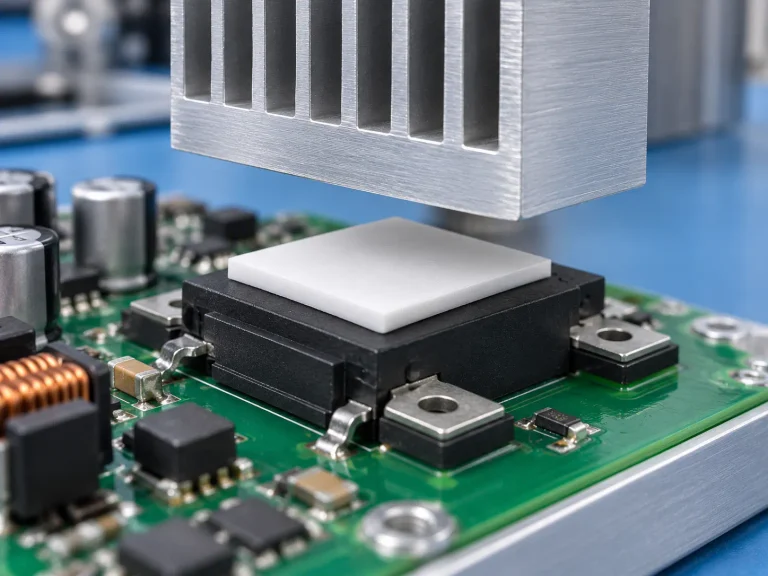
Your server room’s hotter than a jalapeño in July, and your LED arrays are baking like cookies on a dashboard. If heat’s the villain wrecking your circuits, then the hero might just be hiding in plain sight: the High thermal conductivity insulating sheet (5W/mK+) — thin as paper, tough as nails, and cooler than iced coffee on a Monday morning.
In high-stakes electronics—where downtime costs dollars and failures fry reputations—thermal management isn’t “nice to have,” it’s table stakes. You don’t just need insulation; you need smart insulation that hustles hard and keeps its cool under pressure.
Understanding the Role of Thermal Conductivity In Insulation Sheets
A quick look at how high thermal conductivity insulating sheets (5W/mK+) keep electronics cool and safe.
What Is Thermal Conductivity in Silicone Elastomer Insulating Sheets?
Understanding how heat flows through silicone elastomers helps explain why they’re essential for performance-critical devices.
- Thermal conductivity defines how well a material can carry heat—measured in watts per meter-kelvin (W/mK).
- A high thermal conductivity insulating sheet, rated above 5W/mK, pulls heat away from chips and circuits fast.
- These sheets often use silicone filled with ceramic particles to boost their ability to transfer heat without sacrificing flexibility.
The molecular makeup of these elastomers allows tight packing of thermally conductive fillers, which improves energy flow while maintaining electrical insulation. This balance is key when managing high-performance systems like GPUs or power modules. Sheen Electronic Technology’s materials hit that sweet spot between cooling power and insulation reliability.
Thermal Impedance vs Dielectric Strength: Balancing Material Properties
Keeping cool is great—but not if it fries your board. That’s where balance comes in.
Thermal impedance measures resistance to heat flow across an interface—lower values mean faster cooling.
But you also need high dielectric strength, so electricity doesn’t arc across components
A good sheet delivers both: strong electrical isolation and low thermal resistance
High-performance systems demand this combo, especially when voltage spikes or dense layouts are involved. The trick? Choosing a material that holds up under pressure—literally and thermally—without breaking down or shorting out.
Exploring Applications in Server Cooling and Power Electronics
Here’s where these sheets really shine—in places where things get hot fast and need to stay cool longer.
• Servers: They run 24/7, pushing processors hard. A high thermal conductivity sheet keeps CPUs from overheating during peak loads.
• Power converters: These generate massive heat during switching cycles; proper insulation ensures long-term reliability.
• Industrial drives: With high voltages and continuous operation, efficient cooling paired with solid electrical barriers is non-negotiable.
| Application Area | Heat Load Intensity | Required Sheet Rating | Typical Operating Temp |
| Data Center Servers | High | ≥5 W/mK | 60–90°C |
| EV Battery Modules | Medium | ~4–6 W/mK | 40–70°C |
| Power Transistors | Very High | ≥6 W/mK | 80–120°C |
| LED Lighting Systems | Moderate | ~3–5 W/mK | 30–60°C |
Sheen Electronic Technology’s product lineup supports all these needs with durable, flexible solutions that handle tough environments while keeping systems running as smoothly as butter.
4 Key Benefits Of High Thermal Conductivity Insulating Sheets
High thermal conductivity insulating sheets (5W/mK+) are changing the game in electronics. Here’s how they’re making devices cooler, safer, and more reliable.
Faster Heat Spreading in LED Lighting with Graphite Composite Sheets
LED setups get hot fast. That’s where thermal management comes in. A high thermal conductivity insulating sheet helps spread heat evenly across the surface, especially when made with graphite composites. These materials push heat away from delicate diodes quickly, preventing overheating and keeping brightness consistent.
“Thermal interface materials with higher than 5W/mK conductivity have shown a 27% improvement in LED lifespan during continuous operation cycles,” according to a 2024 report by FutureTech Insights.
You’ll notice fewer failures and longer-lasting lights—exactly what you want for both industrial and home lighting systems.
Enhanced Electrical Safety with High Breakdown Voltage
When voltage spikes hit, it’s not just about performance—it’s about safety. These insulating sheets come packed with high breakdown voltage, which shields circuits from electrical arcs or shorts. That matters big time for power electronics or sensitive control units.
• Keeps sparks out of tight spaces
• Minimizes risk of damage to nearby electronic components
• Adds peace of mind in high-voltage environments like EVs or telecom cabinets
It’s one less thing to worry about when designing compact power systems.
Design Freedom: Flexible Polymer Matrix for Custom Shapes
Squeezing components into tighter spots? No problem. The flexible polymer base lets these sheets bend, twist, and fold without losing their cool—literally. You can mold them into crazy shapes or die-cut them for exact fits under chips or along curved surfaces.
- Supports non-linear layout.
- Enhances design flexibility in compact assembly
- Works well across varying board geometries
- That kind of versatility makes it ideal for wearables, robotics, and even weird-shaped consumer gadgets.
Superior Flame Retardancy and Temperature Resistance in Automotive Electronics
Under the hood—or inside an EV battery pack—things get hot fast. These sheets don’t flinch at high temps; they’re built to resist flame spread while maintaining strong temperature stability above 150°C+. That means less thermal stress on surrounding parts and a lower overall system failure rate during long hauls.
- In automotive applications:
- They protect against a short-term surge.
- They hold up under constant vibration
- They support long-term component longevity
- No wonder more carmakers are switching to these materials as standard insulation layers within power modules today.
How To Choose The Right High Thermal Conductivity Insulating Sheets
Picking the right high thermal conductivity insulating sheet (5W/mK+) doesn’t have to be rocket science—just match the performance, materials, and form to your actual needs.
Key Performance Metrics: Thermal Resistance, Breakdown Voltage, Shore Hardness
To nail down the best insulating sheet, you’ve got to juggle three key metrics:
1. Thermal Resistance
Measures how well a material resists heat transfer
Lower values mean better thermal flow—ideal for thermal management in compact electronics
2. Breakdown Voltage
Indicates how much voltage the material can handle before it fails
Crucial for power modules, where electrical safety is non-negotiable
3. Shore Hardness
Tells you how soft or rigid the material is
Softer sheets conform better to uneven surfaces like rough heat sinks
| Property | Ideal Range | Use Case Example | Notes |
| Thermal Resistance | <0.5 °C·cm²/W | CPU/LED cooling pads | Lower = better heat conduction |
| Breakdown Voltage | >6 kV/mm | High-voltage inverters | Higher = safer under stress |
| Shore Hardness (00) | 30–70 | Custom-fit gaskets | Balance between compression & shape |
These numbers help you filter through dozens of options and land on a solution that won’t melt down under pressure—or voltage.
Comparing Silicone Elastomer and Ceramic Filler Compositions
Choosing between a flexible silicone elastomer base or a stiffened ceramic filler blend? Each has its perks:
• Silicone elastomers bring serious flexibility, which makes them perfect for applications needing tight seals or soft contact with uneven surfaces.
• Ceramic-filled compounds pack higher thermal punch thanks to materials like aluminum nitride or boron nitride—they boost both thermal conductivity and dielectric strength, making them rockstars in high-power setups.
• Want something in-between? Go hybrid: some composite sheets mix both worlds—elasticity from silicone, performance from ceramics.
When it comes to balancing mechanical comfort with reliable heat flow, think about your device’s shape, surface texture, and operating environment. A rigid ceramic-loaded pad might work wonders inside an EV battery pack but could be overkill for low-wattage LED strips.
Which Manufacturing Process Matches Your Sheet Form?
Getting the right format of your high thermal conductivity insulating sheet (5W/mK+) depends on how it’s made:
Identify your final application:
• Need pre-cut shapes for CPUs? → Die cutting.
• Want continuous roll stock for mass production? → Extrusion.
• Working with custom gaskets or odd geometries? → Molding is king.
Match process to material type:
• Soft silicone blends are easier to mold.
• Stiffer ceramic composites often suit die-cut formats better due to their density.
Consider installation ease:
• Molded parts drop into place without trimming.
• Die-cut pads might need adhesive backing for proper alignment during assembly.
• Extruded rolls offer flexibility during bulk manufacturing but may require post-processing like precision cutting or lamination.
Each method affects not just cost but also compatibility with your build process—so don’t just pick based on price tag alone!
FAQs about High Thermal Conductivity Insulating Sheet (5W/mK+)
1. What makes a high thermal conductivity insulating sheet (5W/mK+) stand out in industrial use?
A fusion of silicone elastomer and ceramic filler gives this sheet its character—moving heat swiftly while guarding against electric hazards.
Thermal conductivity often exceeds 5 W/m·K, diverting heat from power transistors and integrated circuits to nearby heat sinks.
Electrical insulation keeps delicate circuit boards safe even under voltage stress.
2. How do manufacturing processes shape product quality for large orders?
Performance starts on the production line: extrusion, lamination, slitting, or die cutting decides texture and precision. A molded finish ensures balanced thickness; roll stock supports continuous mass fabrication with less waste—each stage echoing stability across batches.
3. Why is Silicone elastomer favored over harder polymers in electronic assemblies?
Because flexibility matters more than stiffness when protecting components that pulse with energy:
Sustains mechanical flexibility between uneven surfaces on circuit boards.
Maintains dielectric strength through countless thermal cycles.
This resilience becomes visible when pressure mounts inside server cooling systems or industrial control cabinets.
4. How can key performance metrics guide supplier verification before bulk ordering?
Measurements speak where promises fade:
1️⃣ Breakdown voltage defines true dielectric endurance.
2️⃣ Shore hardness marks handling behavior during assembly;
3️⃣ Volume resistivity secures low current leakage paths;
Together, they predict how each pad performs once fixed beneath semiconductor devices.
5. Which critical conditions must automotive designers check before approving these sheets near engines or electronics bays?
Heat, vibration, flame risk—the triple trial every material must face:
☆ Temperature resistance decides if the structure endures engine proximity.
☆ Flame retardancy guards automotive circuits under fault scenarios;
☆ Elastic recovery upholds contact integrity after long road tremors.
In short lines of steel and circuitry, the High thermal conductivity insulating sheet (5W/mK+) carries both durability and quiet grace around every watt it tames.
6. In what ways does graphite composite differ from purely ceramic-filled materials in LED lighting modules?
Graphite composite whispers speed into heat spreading:
| Feature | Graphite Composite | Ceramic-Filled Type |
| Heat Spread | Rapid lateral flow | Concentrated through-plane |
| Density | Lower weight profile | Heavier build |
| Flexibility | Easier shaping for die-cut parts | Rigid form factor |
LED engineers turn to it when chasing brightness consistency without sacrificing design freedom.