-
ADD: Building 2, No. 8 Hengzhutang Road, Dongguan
-
Phone: +86 135 4224 3751

Ceramifiable / Fire Barrier Silicone Foam
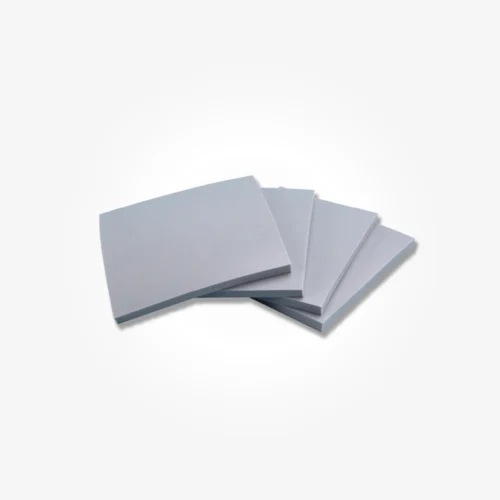
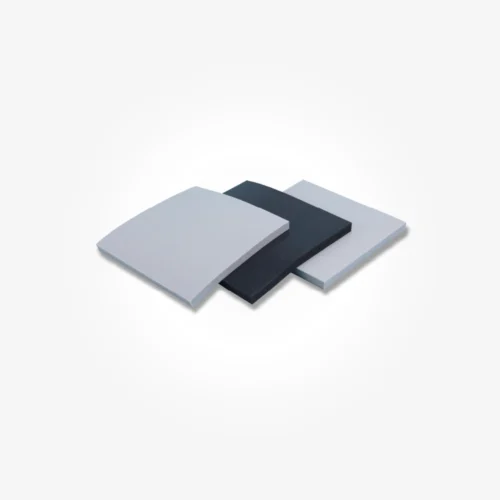
SA700-350-C is a ceramicified thermal insulation silicone foam that combines the flexibility of silicone, the compressibility and resilience of foam, and the extreme high-temperature resistance of a ceramic phase. At room temperature, it provides excellent sealing, damping, and thermal insulation. When exposed to open flames or temperatures above 500°C, it rapidly transforms into a rigid and dense porous ceramic protective layer that helps block flames and heat, making it suitable for EV batteries, energy storage systems, fire barriers, and safety partition structures.
Foamed Silicone Rubber SA700-350-C
Ceramifiable / Fire Barrier Silicone Foam for EV Battery, ESS, and High-Temperature Safety Partition Applications
- High-temperature ceramic conversion that forms a rigid ceramic body and continuous thermal barrier under flame or heat exposure
- Exceptional thermal insulation, helping reduce heat transfer and delay thermal runaway propagation
- Excellent compression resilience for long-term sealing performance and resistance to compression set
- Combines sealing, damping, thermal insulation, and fire protection in one foam structure
- High electrical insulation performance for protected battery and power-system structures
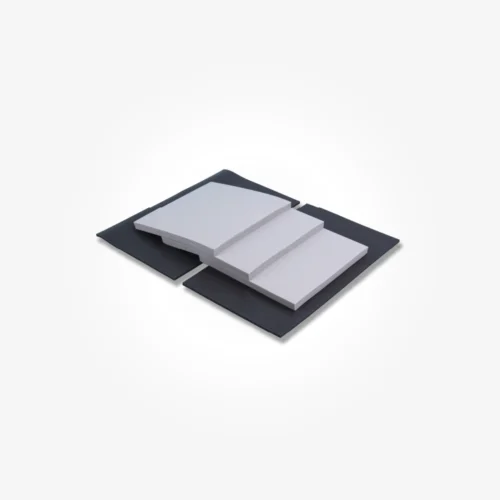
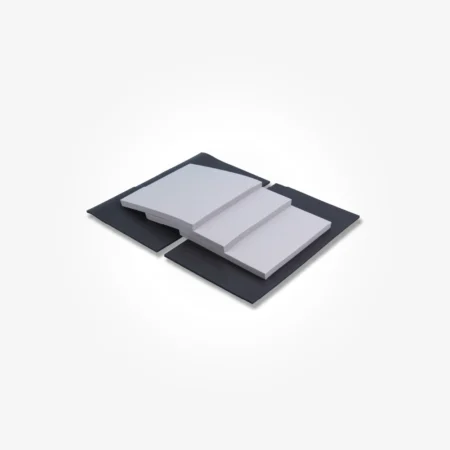
- Available in customized sheet products and die-cut converted parts
SA700-350-C
Ceramifiable Silicone Foam
Fire Barrier / Thermal Insulation
UL94 V0
Cold Side 140℃ @ 600℃ / 5 min
Customized Sheet / Die-Cut
Ceramifiable Silicone Foam
Fire Barrier / Thermal Insulation
UL94 V0
Cold Side 140℃ @ 600℃ / 5 min
Customized Sheet / Die-Cut
Series Snapshot
Model
SA700-350-C
SA700-350-C
Color
Gray
Gray
Thickness (typ.)
4.2 ± 0.4 mm
4.2 ± 0.4 mm
Density
300–600 kg/m³
300–600 kg/m³
Technical Information
Review the product positioning, technical data, thermal barrier performance, compression behavior, applications, and handling guidance for SA700-350-C ceramifiable silicone foam.
Q1
What is SA700-350-C designed to solve?
SA700-350-C is designed for structures that require sealing, thermal insulation, damping, and fire-barrier performance in one material—especially in EV battery packs, energy storage systems, and related safety partitions.
Ceramifiable Foam Direction
At room temperature it behaves as a compressible silicone foam; under flame or high heat it converts into a rigid ceramic-like protective layer.
Fire Barrier + Safety Partition
Designed for EV batteries and ESS fire barrier structures where flame penetration and heat transfer must be slowed down.
Sealing + Damping
Supports room-temperature sealing and damping before fire or overheating exposure occurs.
Thermal Runaway Delay
The TDS explicitly states it is used in energy storage units and between power battery cells to delay thermal runaway propagation.
Q2
What are the key technical data for SA700-350-C?
The TDS provides the following values for screening thermal barrier, compression, insulation, and flame-retardant performance.
| Property | Test Standard | SA700-350-C |
|---|---|---|
| Color | Visual | Gray |
| Thickness (mm) | / | 4.2 ± 0.4 |
| Density (kg/m³) | ASTM D3574-95 | 300–600 |
| Compressive Stress @10% | ASTM D3574-95 | 56 kPa |
| Compressive Stress @20% | ASTM D3574-95 | 87 kPa |
| Compressive Stress @30% | ASTM D3574-95 | 114 kPa |
| Compressive Stress @40% | ASTM D3574-95 | 159 kPa |
| Compressive Stress @50% | ASTM D3574-95 | 244 kPa |
| Electrical Insulation | JIS C 1302 | >1×10¹⁵ Ω·cm |
| Thermal Insulation (Cold Side) | Internal method | 140℃ at hot side 600℃ for 5 min (2.0 mmT) |
| Flame Retardancy | UL94 | V0 |
These values support preliminary comparison for sealing force, fire barrier design, and thermal insulation validation. Final qualification should still be based on the user’s real module stack-up and fire test method.
Q3
What functional strengths does SA700-350-C emphasize?
Its key strengths are thermal barrier formation, thermal insulation, compression resilience, sealing, and electrical insulation for fire-protection structures.
High-Temperature Ceramic Conversion
Transforms into a rigid ceramic body under high temperatures, providing a continuous thermal barrier.
Exceptional Thermal Insulation
Low cold-side temperature rise under flame exposure supports fire barrier and partition design.
Compression Resilience
Supports long-term sealing performance while still functioning as a foam structure before fire exposure.
Electrical Insulation
High insulation value makes it suitable for protected interfaces in battery and power-system structures.
Q4
How can SA700-350-C be supplied and handled?
The TDS provides direct guidance on configuration availability, storage, and transportation for project implementation.
Configurations Available
Sheet products: Customized
Die-cut products: Customized
Storage & Transportation
Store in a well-ventilated, cool, and dry place. Keep away from open flames.
Safety Note
The product is described as non-toxic and should be stored and transported as a non-hazardous material.
Project Communication
Confirm actual gap, target compression, fire barrier thickness, and battery / ESS structural position before sampling.
Q5
Which applications fit SA700-350-C best?
The TDS and current product page both point to EV battery, ESS, and charging-related fire barrier applications.
Battery Pack Module Fire Barrier
Thermal insulation and fire barrier between modules within the battery pack.
Battery Pack Cover Sealing
Sealing and thermal insulation between the battery pack cover and the enclosure.
Inter-Cell Insulation Pads
Suitable for inter-cell insulation pad structures where thermal runaway propagation delay is important.
Charging Pile Fire Sealing
Used for fire sealing inside charging piles and other protected power-system compartments.
ESS Safety Partition Structures
Suitable for energy storage systems requiring ceramic-conversion fire barrier behavior.
Downloads & FAQ
Technical Resources
Frequently Asked Questions
Q1. What is the most distinctive function of SA700-350-C?
Its most distinctive function is high-temperature ceramic conversion, allowing the foam to form a rigid ceramic-like protective layer that blocks flames and slows heat transfer.
Q2. Is this material only for fire barrier use?
No. At room temperature it also provides sealing, damping, and thermal insulation before any fire event occurs.
Q3. What makes it relevant for battery and ESS systems?
The TDS explicitly states it is used in energy storage units and between power battery cells to delay thermal runaway propagation.
Q4. Can it be converted into custom parts?
Yes. The TDS lists both customized sheet products and customized die-cut products.
Q5. What flame rating is listed?
The TDS lists UL94 V0 flame retardancy.