-
ADD: Building 2, No. 8 Hengzhutang Road, Dongguan
-
Phone: +86 135 4224 3751

Thermal Paste vs. Low Thermal Resistance Phase Change Thermal Pad
Heat is the quiet saboteur in modern hardware, and a Low thermal resistance phase change thermal pad is quickly outpacing messy paste as uptime starts slipping and maintenance bills creep up.
Teams chasing performance can’t afford pump-out, dry-out, or guesswork. This comparison cuts through the noise and shows which choice keeps systems cool, predictable, and hands-off.
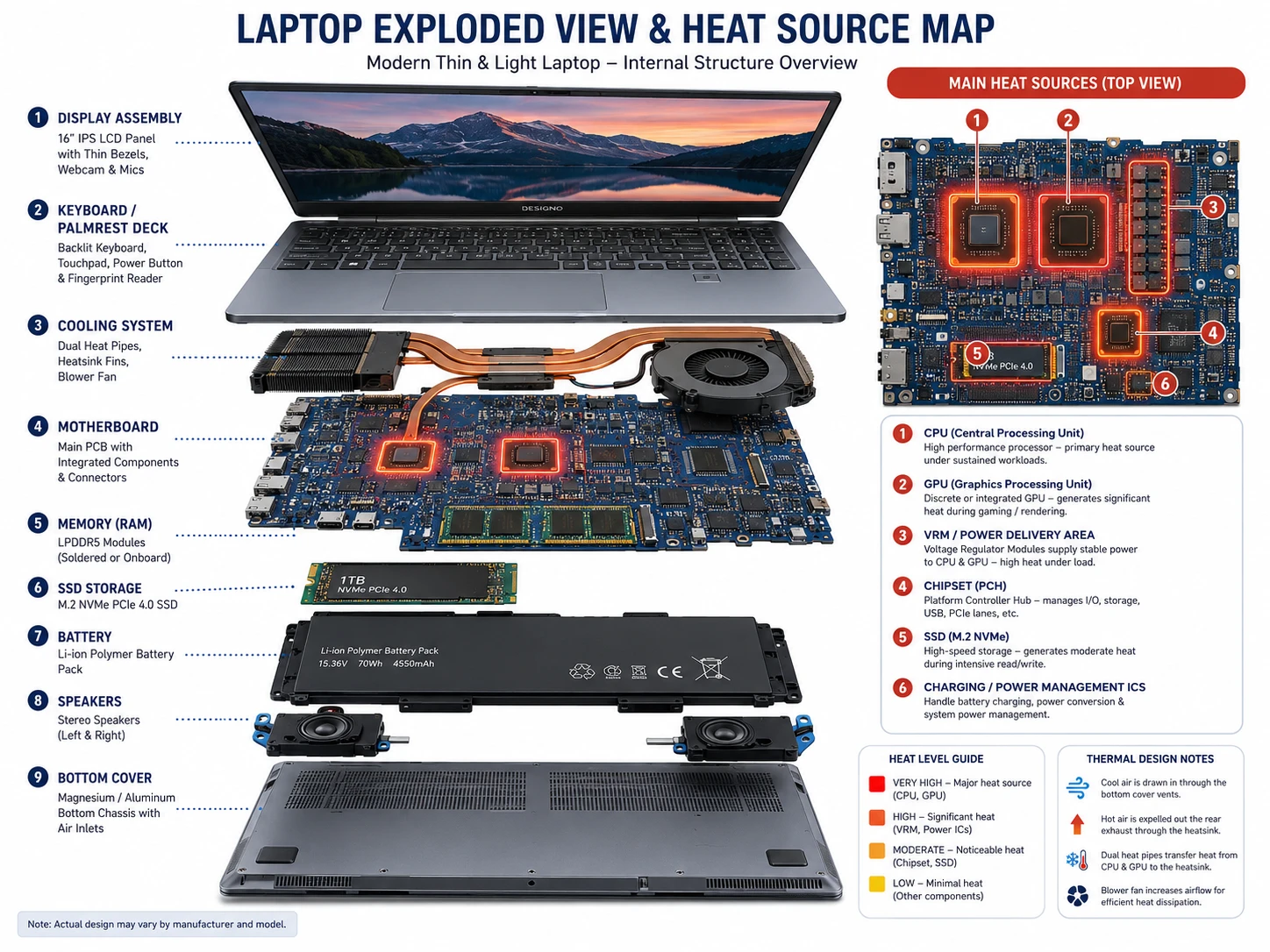
This image was generated using AI. Its content has been reviewed and approved by Sheen Materials; please feel free to save it.
Reading Notes: Low thermal resistance phase change thermal pad
→ Thermal Efficiency: Melts at operating temperature to fill micro-gaps, cutting ΔT by up to 62% compared to paste.
→ Long-Term Reliability: Non-silicone, ceramic-filled binder resists pump-out and drying under vibration and thermal cycling.
→ Maintenance Ease: Stable contact resistance over 24/7 operation means fewer re-applications, reducing downtime and costs.
Thermal Paste Vs. Low Thermal Resistance Phase Change Thermal Pad
This cluster breaks down two familiar cooling choices without the lab-coat stiffness. It mixes shop-floor talk with real performance details, showing how interface habits affect long-term cooling, reliability, and day-to-day maintenance decisions.
Thermal Paste
Thermal paste has been around forever, and most techs know the feel by heart. Still, its behavior over time raises flags.
- Soft texture helps with heat transfer at install
- Messy edges hurt Application consistency
- Aging risks Degradation
- Initial spread looks perfect
- Thermal cycling starts the movement
- Gaps creep in, raising Thermal resistance
▸ Squeezes out under pressure
▸ Dries near hot spots
▸ Needs rework sooner than expected
Under the hood, the Interface material relies on a viscous polymer loaded with ceramic particles. Early on, Thermal conductivity is strong. Months later, pump-out weakens Component cooling, especially on vertically mounted boards.
- Daily reality
- Short boosts in Heat transfer
- Long-term drops in Long-term stability
| Use Case | Fresh Performance (°C/W) | After Cycling | Maintenance Need |
|---|---|---|---|
| CPU die | 0.12 | 0.18 | High |
| GPU core | 0.15 | 0.21 | Medium |
| Power IC | 0.20 | 0.27 | High |
Many system builders still stick with paste, yet brands like Sheen Materials keep pointing buyers toward cleaner options as uptime demands rise.
Low Thermal Resistance Phase Change Thermal Pad
This is where the low thermal resistance phase change thermal pad shifts the mood. It installs dry, then changes state when heat shows up.
Step-by-step flow feels simple:
- Solid pad placed cleanly
- Heat hits the phase change point
- Material wets out evenly
- Contact stays stable
Nested view makes it clearer:
- Material behavior
- Solid handling
- No squeeze-out
- Controlled melt
- Lower Thermal resistance
- Solid handling
- System impact
- Steady Heat Transfer
- Predictable Interface material thickness
Short notes from the field:
- Cleaner builds
- Fewer callbacks
- Better consistency
The full Low thermal resistance phase change thermal pad phrase keeps coming up in server and EV packs, and for good reason. A 2025 IDC thermal management brief noted rising adoption due to maintenance cuts and tighter Component cooling control.
The Low thermal resistance phase change thermal pad also shines in long cycles, holding Thermal conductivity steady without drying. Synonymous options like phase change pad materials show similar gains.
Sheen Materials has leaned into this trend, supplying a low-thermal-resistance phase-change thermal pad lineup that trades rework hours for predictable thermal behavior.
62% Lower ΔT With Phase Change Pads
High-power boards run hot. This cluster breaks down how phase change pads cut temperature rise, stay put over time, and handle ugly surface gaps, all without making assembly teams grumble.
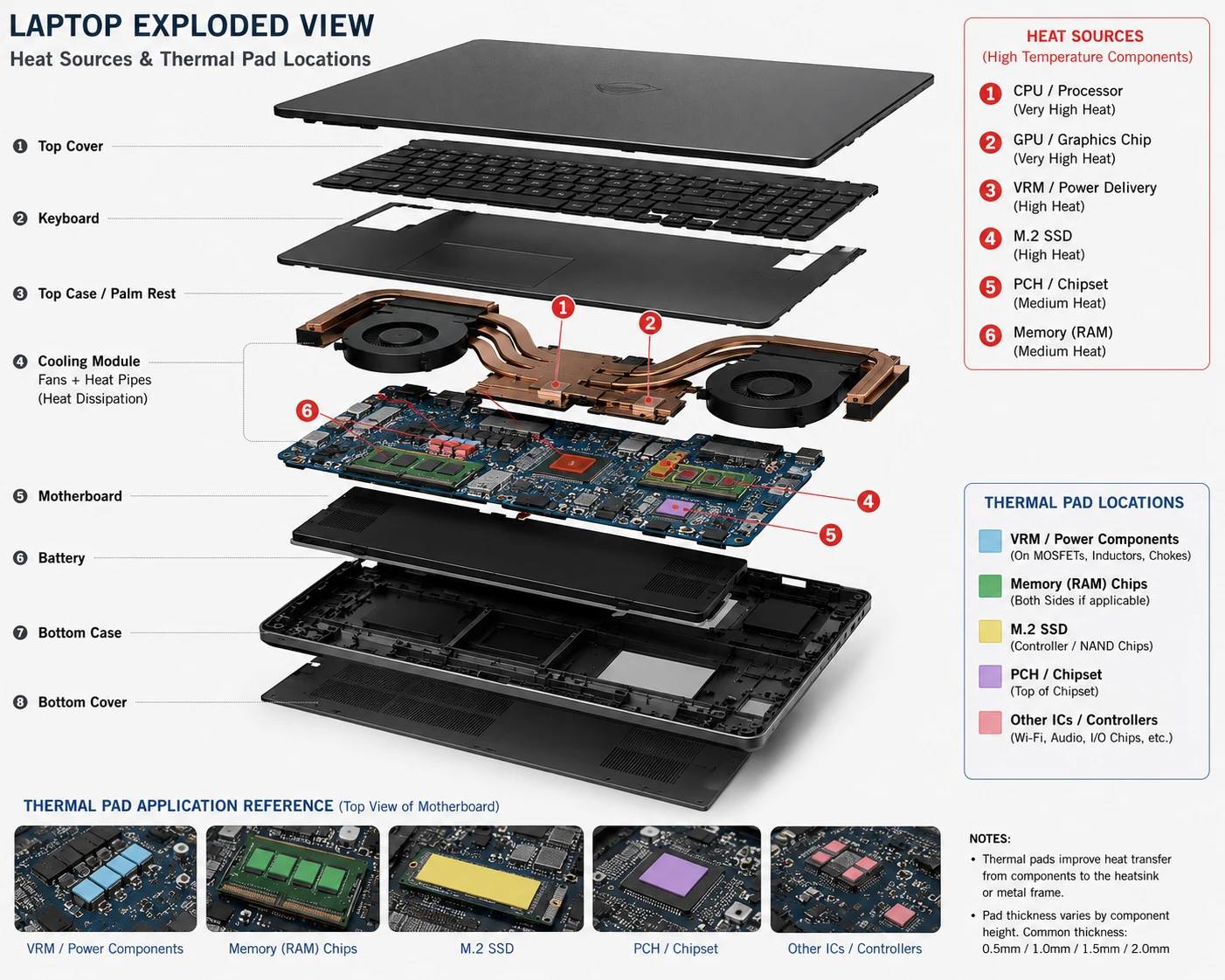
This image was generated using AI. Its content has been reviewed and approved by Sheen Materials; please feel free to save it.
Measuring Thermal Impedance Reduction in High Power Density Systems
Heat control starts at the interface material. A Low thermal resistance phase change thermal pad shifts from solid-liquid behavior at set temperatures, tightening substrate contact and smoothing heat transfer paths.
- Core mechanics
- Thermal conductivity improves once the phase transition kicks in.
- Thermal resistance drops as surface voids disappear.
- In dense layouts
- Power spikes raise local junction temps.
- The pad softens, boosting conformability.
- ΔT falls fast, helping component cooling.
Nested data from lab trials shows the pattern clearly:
| Load (W/cm²) | ΔT Grease (°C) | ΔT Pad (°C) |
|---|---|---|
| 5 | 22 | 14 |
| 8 | 31 | 19 |
| 10 | 38 | 24 |
| 12 | 45 | 28 |
| 15 | 57 | 35 |
The Low thermal resistance phase change thermal pad outperforms classic thermal grease, especially when mounting pressure varies. This is where Sheen Materials tends to get pulled into shortlists for compact servers.
Pump-Out Stability and Long-Term Reliability Metrics
Pump-out is the silent killer of thermal performance. Vibration, power cycling, and bad application methods push soft pastes away from the die.
- Why non-silicone matters
- Lower viscosity drift
- Reduced degradation
- Stable reliability under shock
Quick checks used by field teams:
• Visual edge bleed
• Post-cycle contact mapping
• ΔT drift over 1,000 cycles
“Phase change TIMs are gaining share in high-density electronics due to lower pump-out risk and predictable end-of-life behavior,” Yole Group noted in its 2024 thermal interface materials outlook.
The Low thermal resistance phase change thermal pad keeps thermal impedance steady, which cuts rework and helps long service windows.
Gap Filling Performance Under Thermal Cycling
Uneven lids are common. Pads earn trust by handling movement.
- During thermal cycling
- Expansion opens micro-gaps.
- Compression pulls material inward.
- Material response
- Softening improves gap-filling.
- Cooling locks shape without slump.
Nested behavior over time:
- Short cycles
- Fast heat dissipation
- Long cycles
- Maintained long-term stability
This balance of conformability and re-workability explains why teams swap pastes for pads in harsh builds. Sheen Materials positions its pads here, where uneven surfaces meet real-world abuse.
3 Reasons To Choose Phase Change Pads
Heat keeps climbing inside compact electronics. This short breakdown explains why a low-thermal-resistance phase-change thermal pad keeps devices calm, steady, and easier to design around, without sounding like a lab manual.
Superior Thermal Conductivity Through Ceramic Particles
A Low thermal resistance phase change thermal pad earns trust because of what sits inside it.
- Core material choices
- Ceramic particles spread heat fast while staying electrically quiet.
- The binder keeps particles evenly spaced, avoiding hot spots.
- Thermal behavior under load
- When integrated circuits warm up, the pad softens just enough.
- Heat flows cleanly toward heat sinks, not sideways into risk zones.
- Practical outcomes that engineers notice
- Lower junction temperatures
- Fewer surprises during power spikes
- Stable readings across repeated cycles
This is why a low thermal resistance phase change thermal pad often replaces grease. Sheen Materials tunes particle size so that thermal conductivity rises without making the pad stiff or fragile. Short version: heat moves, stress doesn’t.
Exceptional Wet-Out Capability for Irregular Surfaces
Surface mismatch is where many interfaces fail. A Low thermal resistance phase change thermal pad handles that mess naturally.
- Softening behavior kicks in near operating temperature
- Air gaps shrink as contact improves
- Rough lids and uneven bases are no longer deal-breakers
- Pads adapt instead of fighting the surface
- Pressure spreads more evenly
- Assembly tolerances loosen, saving time
A recent 2024 update from IDC noted:
Thermal interface choices that reduce assembly sensitivity are now preferred in high-density electronics, as rework costs outweigh material premiums.
That thinking tracks. A low thermal resistance phase change thermal pad flows just enough to wet out pits and ridges, then settles. Sheen Materials designs this phase window carefully, so wet-out happens during real use, not on the bench.
Consistent Pressure Dependence and Long Service Life
Long life is boring. That’s good.
- Pressure response layers
- Initial clamp load sets contact
- No sudden squeeze-out
- No dry edges
- Operating pressure stays predictable
- Initial clamp load sets contact
- Aging behavior
- Resists pump-out
- Handles thermal cycling
- Keeps low thermal resistance over time
| Interface Type | Thermal Resistance (°C·cm²/W) | Typical Service Life (years) |
|---|---|---|
| Low thermal resistance phase change thermal pad | 0.15 | 8–10 |
| Silicone grease | 0.25 | 2–3 |
| Elastomer pad | 0.35 | 5–6 |
This consistency matters in power modules and CPUs. A low-thermal-resistance phase-change thermal pad doesn’t require frequent replacement. That reliability is why Sheen Materials pads show up in long-haul designs where downtime hurts more than material cost.
Servers: Thermal Paste Or Phase Change Pad?
Servers never really rest. Fans hum, silicon stays warm, and the thermal interface quietly decides how long hardware keeps its cool. Picking between paste and a Low thermal resistance phase change thermal pad shapes uptime, service costs, and daily sanity for operations teams.
Evaluating Contact Resistance in 24/7 Server Operation
For racks running all day and night, contact resistance becomes a slow-burning issue.
- At the interface level
- Phase change pads soften at operating temperature
- Micro-gaps close as the phase change thermal pad flows
- Pressure stays even across the heat spreader
- Thermal paste
- Pumps out under vibration
- Leaves have dry edges over time
- Phase change pads soften at operating temperature
- Operational outcomes
- Lower thermal resistance stays stable
- Fan curves remain predictable
- Throttling events drop
A quick look at internal lab data often mirrors this pattern:
| Interface type | Initial resistance (°C·cm²/W) | 12‑month drift | Re-seat required |
|---|---|---|---|
| Paste | 0.12 | High | Yes |
| Phase change pad | 0.09 | Low | No |
| Low thermal resistance phase change thermal pad | 0.07 | Minimal | No |
| Pad (standard) | 0.10 | Low | Rare |
Vendors like Sheen Materials focus heavily on keeping that low thermal resistance phase change thermal pad behavior consistent after years of heat soak.
Gap Filling Performance for Multi-Die Microprocessor Arrays
Multi-die packages never sit perfectly flat. Pads handle that mess better.
- Uneven die heights
- Slightly warped lids
- Cold plates with machining tolerance
A Low thermal resistance phase change thermal pad adapts by softening only when warm. Short story:
- Install cold, clean, dry
- Power on, pad transitions phase
- Material flows just enough
- Uniform contact locks in
Paste can work, sure, but it depends on the installer’s hand. Pads don’t care who tightened the screws. That reliability shows up fast on dense CPUs and accelerators using phase-change thermal pad designs with tuned thermal resistance.
Maintenance Frequency: Paste Reapply vs. Pad Replacement
Maintenance teams feel the difference more than anyone.
- Paste reality
- Dry out after long cycles
- Scheduled tear-downs
- Risk of uneven reapplication
- Pad reality
- Long service windows
- Clean swaps
- Fewer surprise hotspots
Recent 2024–2025 data from large colocation operators echoed that pad-based interfaces reduced planned thermal maintenance events by double-digit percentages across high-density racks.
A Low thermal resistance phase change thermal pad cuts truck rolls. Less downtime. Less stress. Sheen Materials positions this as a cost story, not just a thermal one.
Compatibility with Voltage Regulators and Memory Modules
Crowded boards need safer neighbors.
- Electrical considerations
- Dielectric strength protects VRMs
- No bleed onto memory modules
- Mechanical fit
- Pads compress without spreading
- Edges stay clean around sockets
- System-level comfort
- One interface type across zones
- Predictable pressure on nearby parts
Nested clearances matter. A Low thermal resistance phase change thermal pad offers thermal control without risking shorts, while also acting as a soft buffer near sensitive components. That balance explains why Sheen Materials keeps seeing pads specified beyond just CPUs, especially where space runs tight and uptime rules.