-
ADD: Building 2, No. 8 Hengzhutang Road, Dongguan
-
Phone: +86 135 4224 3751

How to Choose: A Comprehensive Carbon Fiber Thermal Pad Selection Guide
Your line’s humming, then a few units run hot, and the RMA pile starts whispering. This Carbon fiber thermal pad selection guide is for buyers who can’t afford thermal roulette—one bad pad batch can torch yield, schedules, and trust.
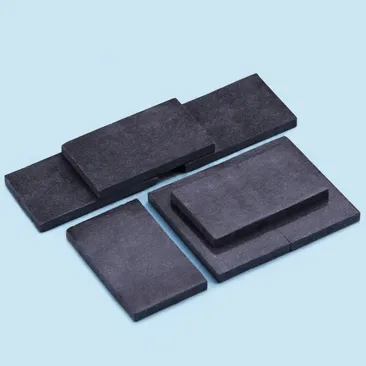
In 2025, Sheen Materials engineers and program managers point procurement teams back to the same basics in public technical documentation: verify anisotropic performance, specify thermal resistance at your clamp pressure, lock thickness tolerance, and match adhesive choice to rework and retention needs.
Next comes the practical stuff that keeps builds steady: gap stack-up, compression window, dielectric requirements, die-cut consistency, incoming QC, plus storage and handling that stops contamination and compression set before the box is even opened.
Quick Answers for Carbon Fiber Thermal Pad Selection Guide
➔ Validate in-plane vs through-thickness conductivity at your clamp pressure to avoid misleading W/m·K ratings.
➔ Match pad thickness and compression range to your measured gap stack-up, preventing excessive thermal resistance or bowing.
➔ Choose adhesive pads for retention and vertical mounts; opt for non-adhesive if reworkability and lower interface resistance are priorities.
➔ Store flat, sealed, and contamination-free; use gloves and avoid stacking loads to preserve compliance and dielectric integrity.
Carbon Fiber Thermal Pad Selection Guide Overview
Carbon fiber thermal pad selection guide talk can feel nerdy fast, but it doesn’t have to. This Carbon fiber thermal pad selection guide keeps it simple: what carbon fiber thermal pads do well, how the structures move heat, when bulk buying makes sense, and how to store it without wrecking material integrity. Keep this Carbon fiber thermal pad selection guide handy for real-world electronics cooling and cleaner builds.
Why Carbon Fiber Thermal Pads Excel in Electronics Cooling
For electronics cooling, a Carbon fiber thermal pad selection guide usually comes down to two wins: spreading heat sideways and actually touching the parts.
- Heat transfer behavior
- In-plane thermal conductivity pushes heat away from hotspots fast.
- Through-thickness conduction can be lower, so pairing with a heat spreader matters.
- Contact and performance
- Soft compliance helps the pad “sit down” on uneven parts.
- Lower interface resistance beats rigid graphite in messy assemblies.
- Real advantages you feel on the bench
- Fewer peak temps, less throttling, less fan ramp drama.
- More repeatable torque-to-temp results.
This Carbon fiber thermal pad selection guide point is simple: spread + contact equals better cooling.
How Carbon Fiber Structures Enhance Heat Dissipation
A Carbon fiber thermal pad selection guide should call out anisotropy up front; carbon fiber likes to move heat along the plane, not straight through.
- Material properties that matter
- Fiber alignment sets the lateral thermal pathways.
- Layering adds stability for thermal management.
- Quick comparison table for heat dissipation choices (typical ranges)
| Pad build style | In-plane k (W/m·K) | Thickness (mm) |
|---|---|---|
| Aligned fiber-laminate | 300–800 | 0.20–0.50 |
| Random fiber matrix | 80–250 | 0.30–1.00 |
| Layered porous composite | 150–500 | 0.50–2.00 |
- Tiny reality check
- Surface roughness and clamp load still call the shots on end temps, even with great structures.
Carbon fiber thermal pad selection guide takeaway: pick the structure that matches your pressure window.
Ideal Application Scenarios for Bulk Electronic Materials Purchases
Bulk planning in a Carbon fiber thermal pad selection guide is less about hype and more about boring consistency across builds.
- Best-fit application scenarios
- OEM programs with fixed BOMs and steady forecasts.
- Contract manufacturing, where the line stops, costs real money.
- Multi-SKU builds share one approved pad family.
- What to lock down for bulk purchases (nested, because details bite later)
- Manufacturing controls
- Incoming thickness checks, lot traceability, and cut-tolerance limits.
- Same release liner and tack, so pick-and-place doesn’t freak out.
- Production lines need
- Pre-cut formats to reduce waste and handling time.
- Agreed on packaging count per reel/stack to speed kitting.
- High-volume math + cost-efficiency
- Consumption rate per unit, scrap factor, and safety stock.
- Price breaks vs. cash tied up in inventory.
- Manufacturing controls
If you’re sourcing through Sheen Materials, ask for lot-level QA snapshots so bulk stays predictable.
Storage and Handling Best Practices for Large-Scale Orders
This Carbon fiber thermal pad selection guide bit is low-key important; bad storage can quietly wreck shelf life.
- Storage basics
- Keep pads flat, sealed, and clean—dust turns into thermal “speed bumps.”
- Hold temperature and humidity steady for inventory management sanity.
- Handling rules that save yield
- Wear gloves; skin oils mess with adhesion and surface wet-out.
- Avoid heavy stacking to limit compression set and keep material integrity.
- Practical logistics routine (short steps)1) Receive → inspect packaging damage 2) Record lot/date → FIFO labeling 3) Store sealed → open only what the line will use that shift
For large rollouts, Sheen Materials can align pack sizes to your kitting flow, so you’re not constantly re-bagging.
3 Key Parameters for Pad Selection
Picking a pad shouldn’t feel like a guessing game. This Carbon fiber thermal pad selection guide keeps it simple: check heat flow, fit, and electrical safety. If you’re speccing with Sheen Materials, these checks stop “looks good on paper” parts from biting you later.
Thermal Conductivity: Measuring Heat Transfer Efficiency
For this Carbon fiber thermal pad selection guide, start with thermal conductivity, but don’t get hypnotized by one W/mK number. Real heat transfer is about efficiency under clamp load, because the interface material behavior changes when squeezed.
- thermal conductivity direction check
- In-plane vs. through-thickness: anisotropy can bottleneck heat dissipation
- Ask for test orientation so the temperature gradient you care about matches the datasheet
- pressure-dependent performance
- Prioritize low thermal resistance at your operating pressure, not “hero” lab conditions
- confirm test method, mounting, and temperature window so results aren’t apples vs oranges
- quick sanity check for pad comparisons
- Compare “Rθ at X psi” before comparing W/mK
- If only bulk thermal conductivity is listed, request interface test data from Sheen Materials
Thickness & Compression: Balancing Gap Fill and Performance
In any Carbon fiber thermal pad selection guide, thickness is the trap: it fixes gap fill, then quietly raises thermal resistance. You want the thinnest pad that still lands reliable contact across the tolerance stack, because bond line thickness is basically the distance the heat must slog through.
- Measure real standoff (min/typ/max), not CAD dreams.
- Pick a pad thickness that covers the worst-case gap with the vendor’s recommended compression window.
- Check contact pressure vs. part limits; excessive squeeze can add mechanical stress or bow boards.
- Verify conformability by examining surface roughness and component-height mismatches—lumpy stacks need softer pads.
Quick rule-of-thumb table for performance optimization (illustrative comparison):
| Pad thickness (mm) | Target compression (%) | Contact pressure (kPa) | Estimated Rθ contribution (°C/W) |
|---|---|---|---|
| 0.5 | 20 | 150 | 0.18 |
| 1.0 | 25 | 120 | 0.32 |
| 2.0 | 30 | 90 | 0.60 |
If your build has tall parts beside short ones, this is where Sheen Materials can help match softness to gap fill without forcing ugly clamp loads.
Dielectric Strength & Durability: Ensuring Safe, Long-Lasting Use
A solid Carbon fiber thermal pad selection guide also treats electrical safety like a hard requirement, not a footnote. Check dielectric strength and electrical insulation stats up front, then ask how durability holds after months of heat and pressure.
- electrical safety pass/fail
- Confirm breakdown voltage with a margin over your max working voltage
- Verify volume resistivity so leakage doesn’t creep in over time
- map requirements to relevant safety standards for your end product
- aging and real-life wear
- thermal cycling: watch for cracks and material degradation that spike failures
- Creep and compression set: loss of spring-back can kill contact and reliability
- chemical exposure: cleaners, oils, plastics can quietly shorten longevity
- Simple questions that save headaches
- “What does insulation look like after 500 cycles?”
- “Any pump-out, pad shift, or adhesion loss at temperature?”
If you want fewer surprises, pick pads with documented aging results and a clear reliability story—Sheen Materials usually has the test notes to back up the datasheet claims.
Selecting Adhesive vs. Non-Adhesive Pads
Picking the right pad is less “tech magic” and more simple fit-for-purpose. This Carbon fiber thermal pad selection guide keeps it real: hold-it-in-place needs differ from clamp-it-down builds. You’ll see how thermal interface details, handling, and rework pain shape Carbon fiber thermal pad selection guide decisions.
Adhesive Pads
When attachment has to survive shipping vibes, vibration, or a vertical wall, adhesive earns its keep, and the Carbon fiber thermal pad selection guide mindset is “stick, stay, and still transfer heat.”
- Bonding checks
- Installation flow
- Liner: keep it clean, don’t touch the tacky face longer than needed
- Alignment: One shot is best, unless you picked repositionable stock
- Strength at temperature
- Shear creep: watch for slow slide under constant load
- Edge lift: plan for fillets or mechanical backup if temps swing hard
- Installation flow
- Thermal behavior checks
- Thermal interface impact
- Adhesive layer adds impedance; thin and uniform wins
- Gap-filling matters when surfaces aren’t flat
- Thermal interface impact
- Lifetime and service checks
- Permanent vs repositionable choice
- Rework: expect cleanup time and possible residue
- Reliability: fewer moving parts once set
- Permanent vs repositionable choice
For a quick Carbon fiber thermal pad selection guide shortcut, Sheen Materials typically positions adhesive options for “mount it once, forget it” builds.
Non-Adhesive Pads
Non-adhesive is the chill choice when the build already has compression from a bracket, and this Carbon fiber thermal pad selection guide angle usually means lower risk during rework. Short version: better serviceability, less mess.
- Set the pad for dry contact, then check it won’t creep during closing.
- Add clamping that spreads force evenly; hot spots hate uneven pressure.
- Verify mechanical pressure stays stable across temperature cycles.
- Keep an eye on reusability and easy removal if the unit gets serviced a lot.
- Confirm mechanical retention so the pad doesn’t skate sideways mid-assembly.
- If the design needs electrical insulation plus decent thermal conductivity, non-adhesive stacks can be a clean win.
This Carbon fiber thermal pad selection guide rule of thumb is simple: if hardware can hold it, skip the sticky, and Sheen Materials can help match pad feel to clamp force.