-
ADD: Building 2, No. 8 Hengzhutang Road, Dongguan
-
Telefone: +86 135 4224 3751

Solving ADAS Domain Controller Thermal Management Bottlenecks
Amidst the wave of technological transformation in new energy vehicles, domain controllers serve as the “super-brains” of vehicle electronic and electrical architectures; their performance directly impacts the stability of core functions such as autonomous driving and intelligent cockpits.
Recent reports from McKinsey and Deloitte highlight rising automotive compute density and continuous operation demands, pointing to material limits as a growing constraint on system reliability.
To address thermal management challenges—such as persistent heat generation from highly integrated chips and dynamic deformation under complex operating conditions—Sheen Materials’ SE400AB Thermal Gel offers an integrated solution combining high thermal conductivity with adaptive cushioning. Having successfully passed rigorous validation by multiple leading automakers, it has established itself as a benchmark product for thermal management in new energy vehicle domain controllers.
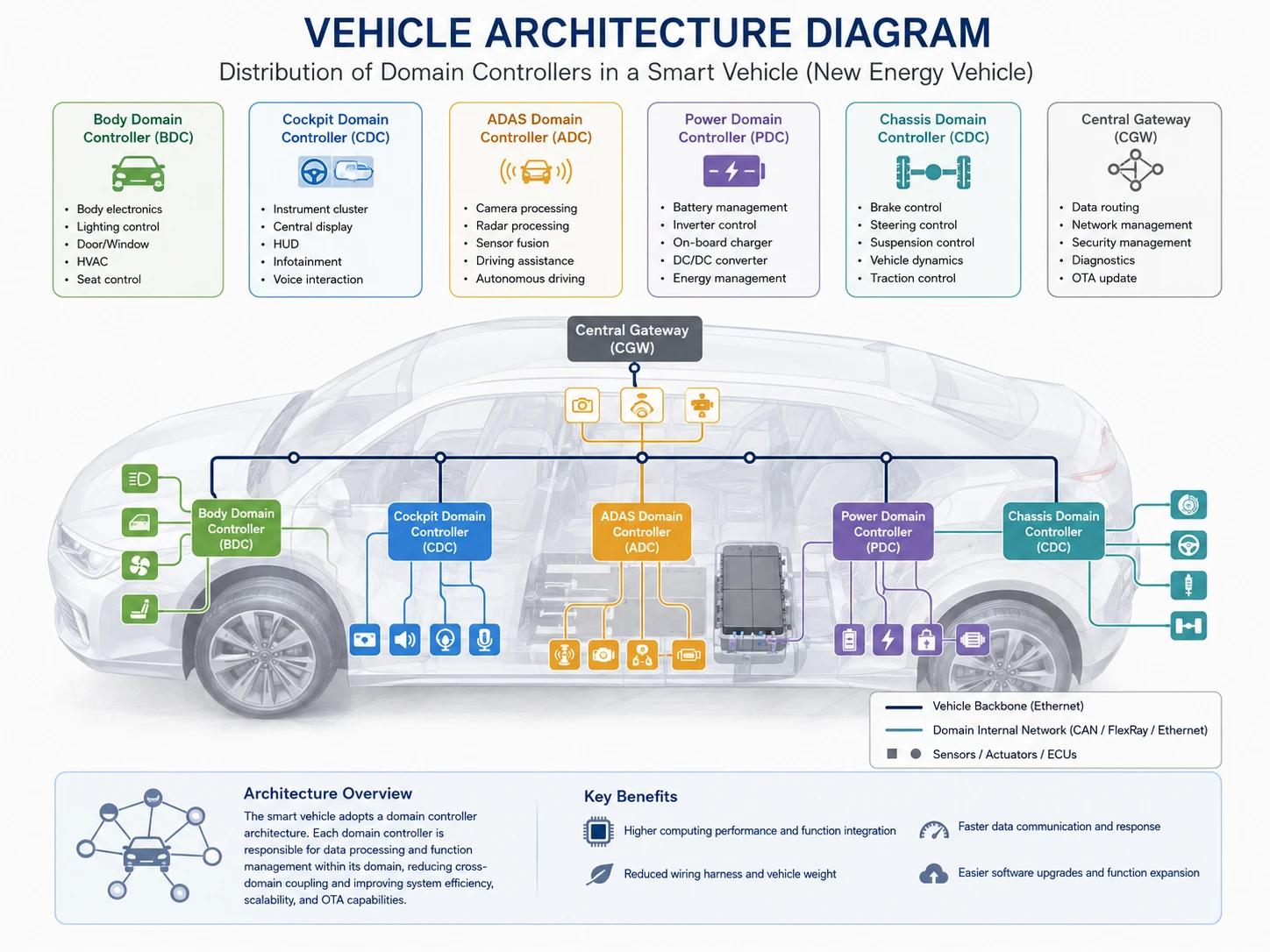
ADAS Domain Controller Thermal Management Solutions
1. Thermal Interface Reliability Optimization
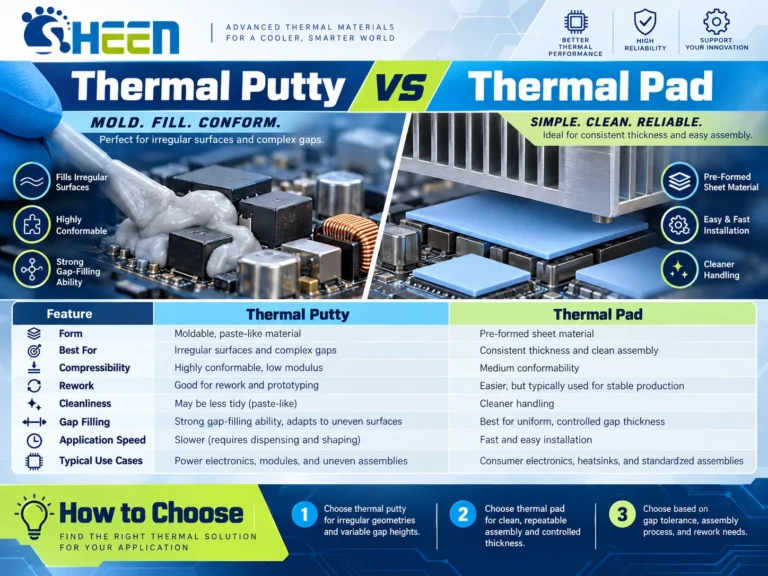
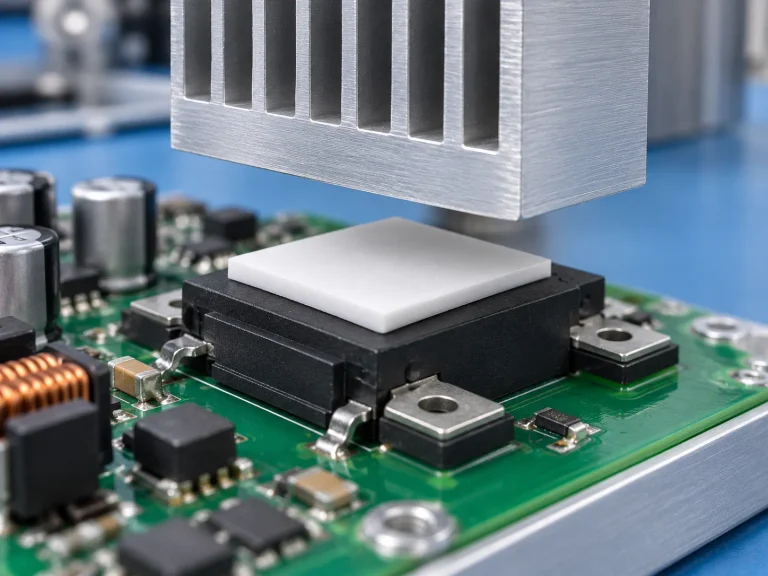
- Depending on the package height, gap tolerance, and clamping pressure of components such as SoCs, PMICs, and memory devices, appropriate thermal interface materials—such as thin-layer phase-change materials, flexible thermal pads, or curable liquid thermal gap fillers—are selected.
- By precisely controlling the final thickness, compression ratio, and coverage area, the risks of pump-out, delamination, and void formation from thermal cycling, vibration, and mechanical shock are minimized.
2. Optimization of hotspot spreading components:
- Retain the lightweight aluminum alloy housing or heat sink, and—based on hotspot heat flux density—selectively incorporate copper vapor chambers, heat pipes, or insulated, encapsulated graphite sheets to enhance in-plane heat spreading and transient hotspot suppression.
- The final design must be validated through system-level thermal simulation and reliability testing.
3. Optimized PCB Thermal Paths
- ADAS domain controllers typically utilize multi-layer PCBs made of high-Tg or low-loss materials, enhancing heat dissipation through internal copper planes, thermal vias, via-in-pad structures, localized copper inlays, and thermal interface material (TIM) paths connecting the chip to the metal housing.
- Metal-core PCBs and ceramic substrates are better suited for localized power modules rather than serving as a general replacement for the entire domain controller motherboard.
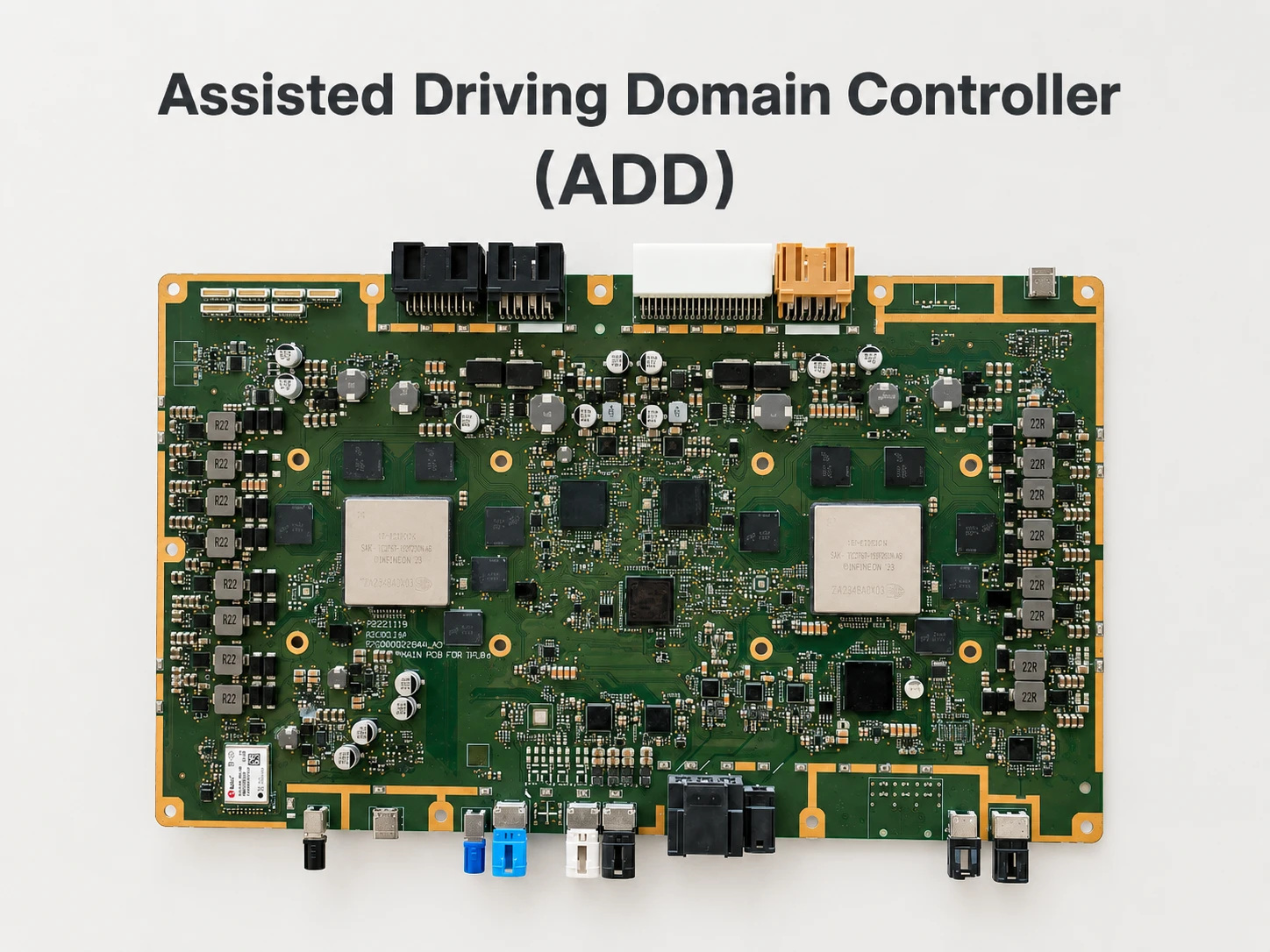
3 Hidden Bottlenecks In ADAS Domain Controller Thermal Management
ADAS domain controller thermal management sounds fancy, but in practice it’s a daily grind of heat, load spikes, and tight packaging. Break the phrase down—ADAS, domain controller, thermal, management—and you start seeing where things quietly fall apart under real driving conditions.
Underrated performance of thermal grease and pads
When ADAS domain controller thermal management fails, the weakest link is often the material de interface térmica, not the chip.
- Core issue: rising interface resistance
- Causes:
- Pump-out under vibration
- Drying after thermal cycling
- Poor wetting on uneven surfaces
- Impact:
- Reduzido transferência de calor
- Misleading condutividade térmica ratings in real use
- Causes:
- Material comparison path:
- Massa térmica → flexible but unstable over time
- Thermal pads → easier install, thicker, but higher resistance
- Advanced fillers → better gap control
- Liquid metal → lowest resistance, higher risk
- Real-world outcome in ADAS thermal systems:
- Hotspots creep in slowly
- Cooling performance drops before sensors notice
- Longo prazo degradação do desempenho becomes the hidden cost
Some suppliers, including Sheen Materials, are pushing stabilized fillers that resist pump-out, which matters more than lab-grade conductivity numbers.
“Interface reliability, not peak conductivity, is now the limiting factor in automotive thermal stacks.” — IDTechEx, 2025
ADAS domain controller thermal management lives or dies at that thin interface layer.
Aluminum alloy heat sink capacity limitations
Aluminum alloy still dominates every dissipador de calor, but it’s starting to show its limits in ADAS domain controller thermal management.
- Quick breakdown:
- Pros:
- Lightweight
- Cheap
- Easy to machine
- Cons:
- Inferior thermal capacity
- Limited heat spreading
- Mais alto resistência térmica vs copper
- Pros:
Short bursts of compute? Fine. Sustained AI workloads? Not so much.
- Heat enters the dissipador de calor faster than it spreads
- Local ताप rises (yes, it creeps up fast)
- Cooling systems lag behind
- System throttling kicks in
Mixing materials is becoming common:
- Aluminum base + copper inserts
- Graphite layers for lateral dissipação de calor
Sheen Materials has been seen promoting hybrid solutions that soften these material limitations without blowing up cost targets.
In modern ADAS cooling, sticking with pure aluminum is starting to feel like bringing a bike to a highway race.
PCB hotspots driven by FR-4 laminate design
ADAS domain controller thermal management often overlooks the PCB, yet FR-4 laminate quietly traps heat right where power density peaks.
- Heat path problem:
- Chip → copper → FR-4 laminate
- Baixa condutividade térmica
- Poor vertical escape
- Heat accumulates near traces
- Chip → copper → FR-4 laminate
- Nested thermal behavior:
- Camada eléctrica
- Alta densidade de corrente
- Local pontos de acesso
- Dielectric layer
- Insulates heat instead of spreading it
- Board level
- Uneven heat distribution
- Camada eléctrica
- Upgrade routes:
- Metal core PCB
- Better vertical conduction
- Substratos cerâmicos
- Stable, high conductivity
- Embedded heat spreaders
- Targeted hotspot control
- Metal core PCB
ADAS domain controller thermal management improves fast when PCB design joins the conversation instead of staying in the background.
Sheen Materials aligns its material stack with these newer board approaches, helping reduce hotspot buildup where it actually starts.
Ignore the board, and the system keeps overheating from the inside out.
SE400AB Two-Component Thermal Gel: Enabling the Safe Operation of Core Computing Power in Smart Vehicles
SE400AB Thermal Gel Becomes the “Thermal Guardian” for Automotive Domain Controllers
Sheen Materials’ thermally conductive gel SE400AB represents a significant breakthrough in addressing three major technical challenges associated with domain controller chips for new energy vehicles: high component density, compact spatial constraints, and frequent exposure to vibration.
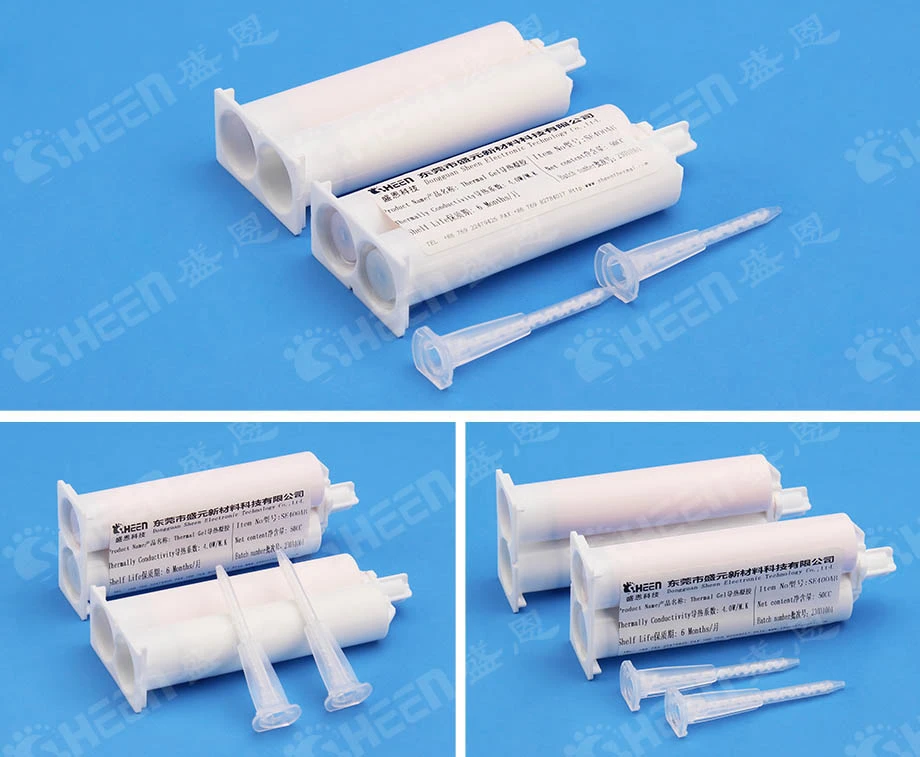
Possesses Superior Thermal Conductivity
SE400AB thermal conductive gel combines a thermal conductivity of 4.0 W/(m·K) with a low-viscosity fluid consistency, enabling it to automatically fill micron-scale gaps between the chip and the heat sink.
In our actual testing, the surface temperature of a central domain controller chip was significantly reduced, ensuring the stable operation of the computing module in high-temperature environments (full data cannot yet be disclosed due to project confidentiality).
| Tipo de produto | Norma de ensaio | Part A | Part B | Mixed (2mm) |
|---|---|---|---|---|
| Cor | Visual | Branco | Cor-de-rosa | Cor-de-rosa |
| Density (g/cm³) | ASTM D792 | 3.0±0.2 | 3.0±0.2 | 3.0±0.2 |
| Extrusion speed (g/min)50cc EFD cartridges 0.06″ orifice 90psi | / | 80±20 | / | / |
| Thermal resistance (℃·in²/W, @50psi) | ASTM D5470 | ≤0.07 | ≤0.07 | / |
| Minimum interface thickness (mm) | / | 0.12 | 0.12 | / |
| Condutividade térmica (W/m-K) | ASTM D5470 | / | / | 4.0±0.4 |
| Breakdown voltage (KV, @AC) | ASTM D149 | / | / | ≥10 |
| Volume resistivity (Ω·cm, @250V) | ASTM D257 | / | / | ≥10¹² |
| Application temperature (℃) | / | / | / | -40~150 |
| Tack-free time @25℃ (Min) | / | / | / | ≥60 |
| Full cure time 25℃ (H) | / | / | / | ≥2 |
| Full cure time 100℃ (Min) | / | / | / | ≥10 |
| Hardness after curing (Shore 00) | ASTM D2240 | / | / | 45~65 |
| Inflamabilidade | UL94 | / | / | V-0 |
| RoHS | IEC 62321 | PASSAR | PASSAR | PASSAR |
| Halogéneo | EN 14582 | PASSAR | PASSAR | PASSAR |
| REACH | EN 14372 | PASSAR | PASSAR | PASSAR |
The SE400AB Features Dynamic Buffer Protection
The unique thixotropic properties of SE400AB allow the gel to flow rapidly under applied pressure, conforming to irregularly shaped surfaces, and forming an elastic buffer layer after curing.
Following 500 hours of high- and low-temperature cycling tests (-40°C to 150°C) and 1,000 thermal expansion-contraction cycles, SE400AB retains its structural integrity, effectively mitigating solder joint cracking caused by thermal stress.
Reliable Guarantee
SE400AB has achieved UL 94 V-0 flame retardancy certification, preventing the spread of fire under extreme conditions; its high dielectric strength (10 kV/mm) isolates the chip from the metal housing, ensuring electrical safety; and its service life of over 10 years meets the requirements of the vehicle’s entire lifecycle.
Measured data: In an application involving an autonomous driving domain controller for a mass-produced vehicle model, SE400AB reduced chip junction temperature fluctuations by 40% and improved system response speed by 12%, effectively mitigating the risk of computing performance throttling caused by overheating.
Rigorous Verification System: The SE400AB has withstood end-to-end testing, spanning from the laboratory to mass production.
Our automotive clients have established a “four-dimensional validation standard” for thermal management materials used in domain controllers:
- Performance stability;
- Process compatibility;
- Cost controllability;
- Environmental compliance.
Can the SE400AB meet such stringent requirements?
When we first engaged with automakers, they specified that the thermal interface material must not only pass the ISO 16750-2 vibration test but also maintain consistent performance throughout vehicle-level durability testing.
Test results showed that after an 800-hour vehicle road durability test, the SE400AB exhibited a thermal performance degradation rate of only 1.8% and a volatile organic compound (VOC) content 50% lower than industry standards, fully satisfying the rigorous environmental requirements for smart cockpits.
Of even greater value to the industry, Sheen Materials will publicly share the SE400AB’s material rheological parameters, dispensing process parameters, and failure analysis reports. By providing a reference template for standardized thermal management solutions, the company aims to drive the development of transparent heat dissipation technology for domain controllers.
Intelligent Production System: A Reliable Foundation Supporting Mass Production at the Ten-Million Scale
When aligning on production requirements, we have frequently encountered concerns such as this: “The prototype products passed testing without issues, yet the subsequent mass-produced batches often show performance discrepancies compared to the samples; how do you ensure this doesn’t happen?”
The large-scale application of our SE400AB relies on Sheen Materials’ standardized and intelligent production system.
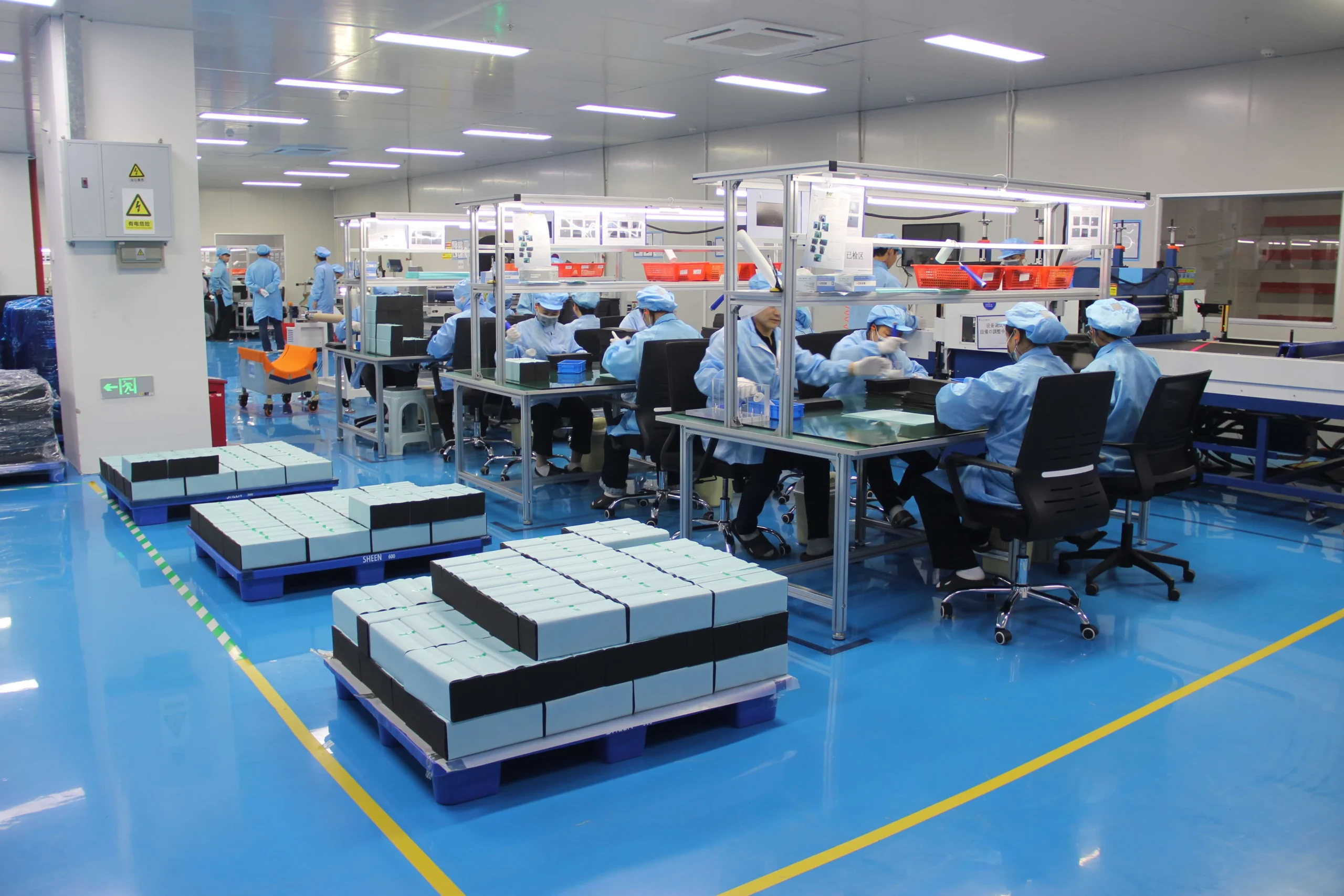
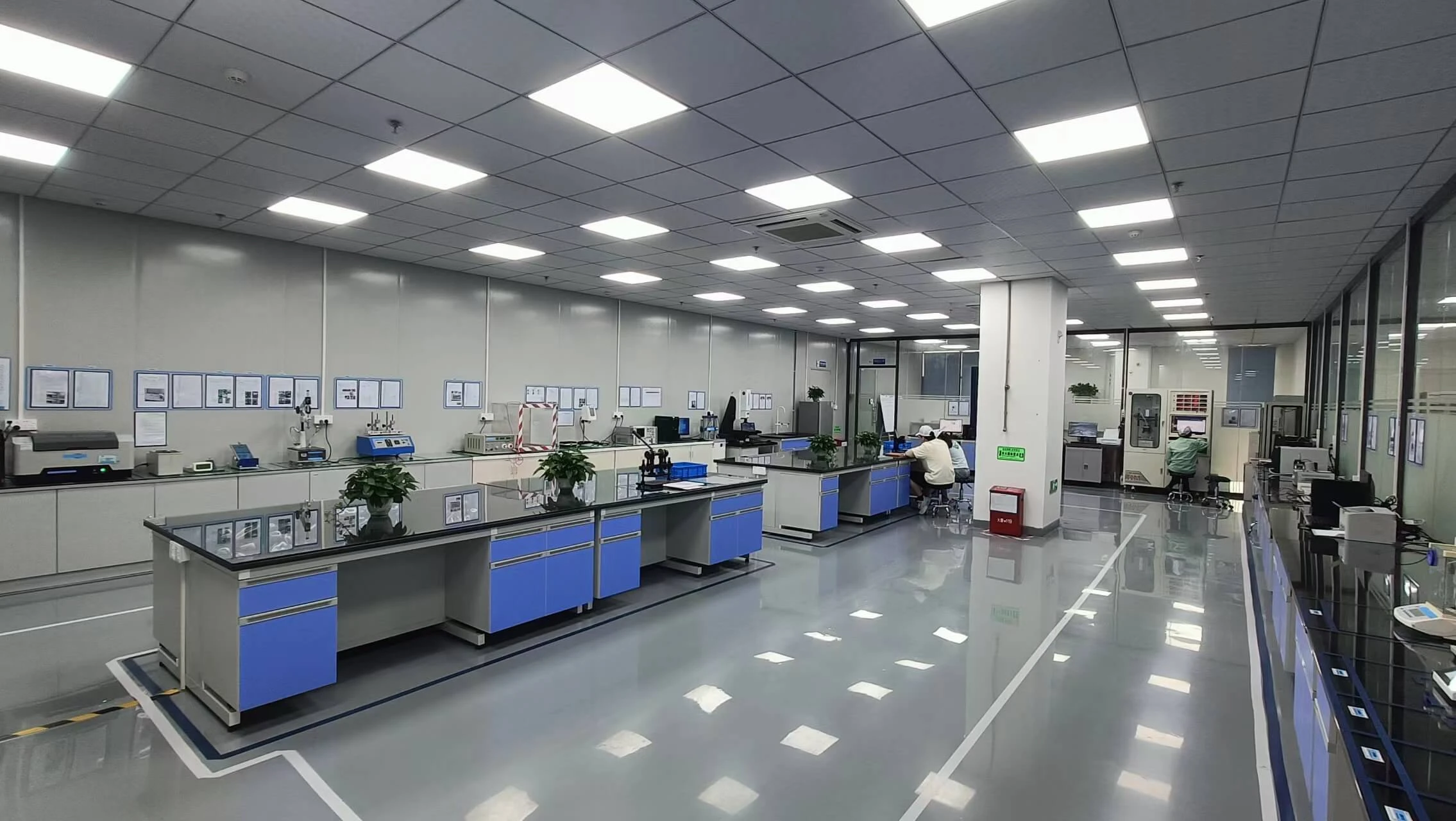
- Precision Dispensing Process: Utilizing high-precision screw-metering dispensing equipment with a dispensing volume tolerance controlled within ±1.5%, and integrated with a 3D vision positioning system, the process enables precise coating on complex circuit boards, meeting the specific requirements of ultra-thin, multi-chip domain controller layouts.
- Rapid and Punctual Delivery Capability: A rapid response mechanism—featuring 72-hour customized sample development and 10-day batch delivery—aligns with the customer’s development cycle of rapid iteration, small-batch pilot production, and large-scale mass production, thereby shortening project delivery times by over 30%.
- ISO-Standard Quality Control: Every product batch undergoes in-line thermal performance testing and CT scanning for internal defect detection, and complies with the automotive industry’s IATF 16949 certification; with a batch defect rate of less than 0.01%, the process ensures zero-defect product delivery.

Building a Comprehensive Thermal Management Ecosystem for New Energy Vehicles.
The successful application of the SE400AB marks a strategic foothold for Sheen Materials in the new energy vehicle (NEV) sector. The company has established a comprehensive product portfolio targeting core components such as motor controllers, battery management systems (BMS), and LiDAR units.
Martin, the founder of Sheen Materials, stated: “In this era of rapid NEV evolution, we leverage material innovation and open technology to collaborate with industry partners in building a highly efficient thermal management ecosystem, thereby ensuring safer and higher-quality mobility for new energy vehicles.”
Whether supporting the intelligent transformation of traditional automakers or the technological breakthroughs of emerging NEV players, Sheen Materials’ range of thermal interface products has become the “standard solution” for heat dissipation in automotive domain controllers.
Please contact us to obtain exclusive technical white papers and process guidelines, or to request free samples for testing—let’s unlock the limitless possibilities of NEV thermal management together!