-
ADD: Building 2, No. 8 Hengzhutang Road, Dongguan
-
Telefone: +86 135 4224 3751

5 Essential Testing Methods for Carbon Fiber Thermal Pads
Testing methods for carbon fiber thermal pads aren’t paperwork theater; at scale, one “typical” spec can turn into hot spots, pump-out, or a scary dielectric surprise. Carbon fiber pads play favorites with orientation and clamp load, so bench wins don’t always survive the line.
Buyers need proof that heat flow, softness, and insulation stay lot after lot. Up next: five tests that catch drift before it ships.
Quick Answers: Testing Methods for Carbon Fiber Thermal Pads
➔ Thermal Performance: Validate in-plane/through-plane conductivity and resistance under realistic clamp loads using Hot Disk, Laser Flash, and TPS testing.
➔ Mechanical Durability: Measure compressibility, hardness, recovery, and cycling stability per ISO and ASTM standards to prevent pump-out and cracking.
➔ Dielectric Safety: Assess breakdown voltage, insulation resistance, and volume resistivity after thermal aging and humidity exposure.
➔ Material Uniformity: Conduct rheological analysis for binder type, filler dispersion, fiber orientation, and density consistency across lots.
➔ Quality Assurance: Track defect density, compute process capability index (Cp/Cpk), and verify shelf-life stability for reliable batch-to-batch performance.
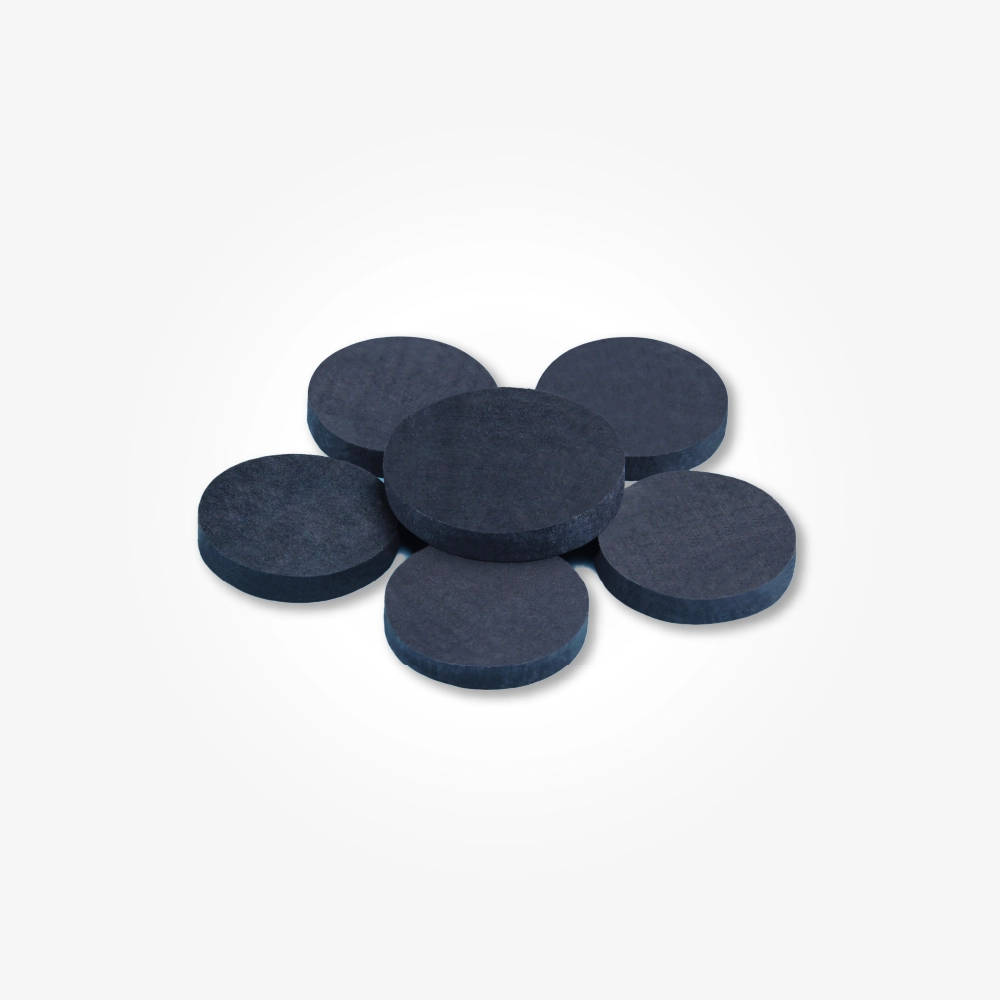
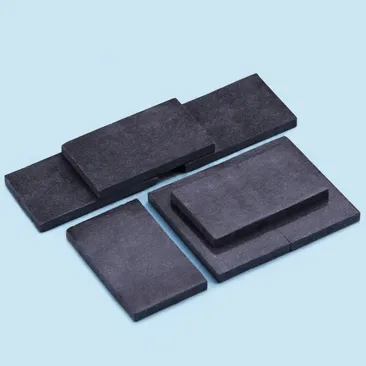
Why Test Carbon Fiber Thermal Pads?
People buy pads for heat, but real life throws clamp load, voltage spikes, and rough cycling at them. Testing methods for carbon fiber thermal pads keep the guesses out, so performance stays steady, safe, and repeatable with Sheen Materials.
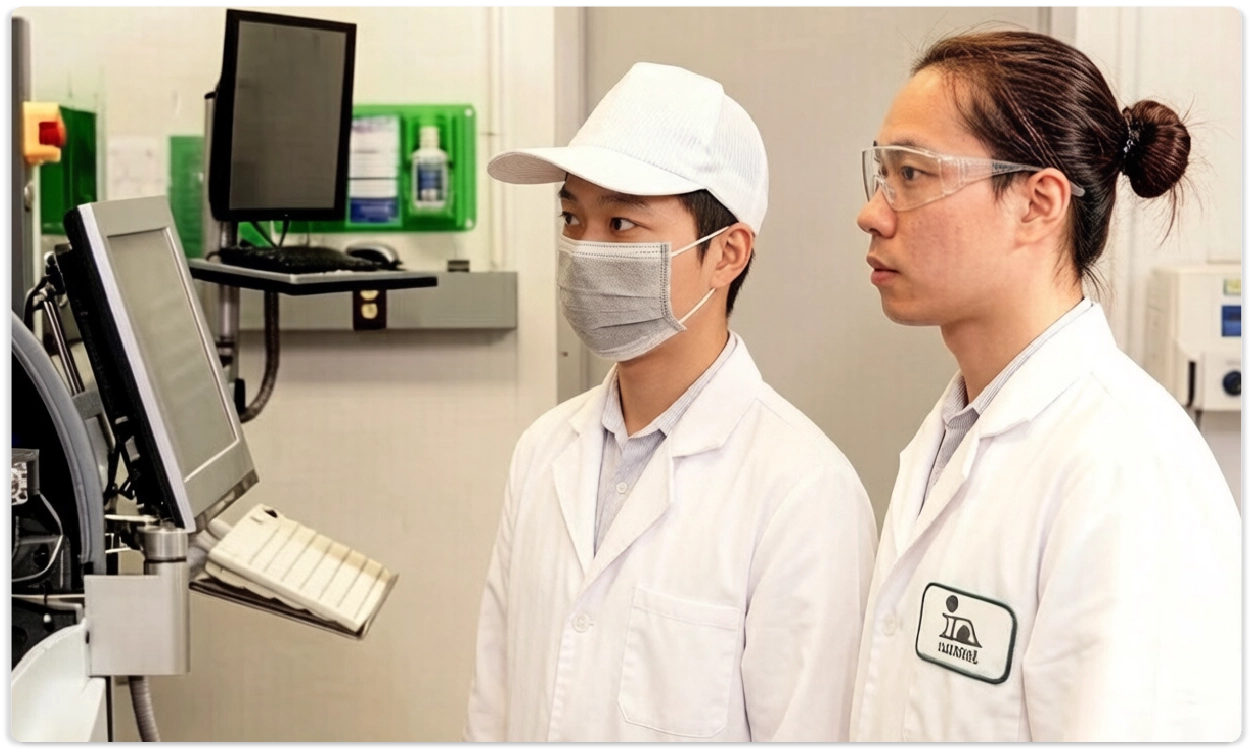
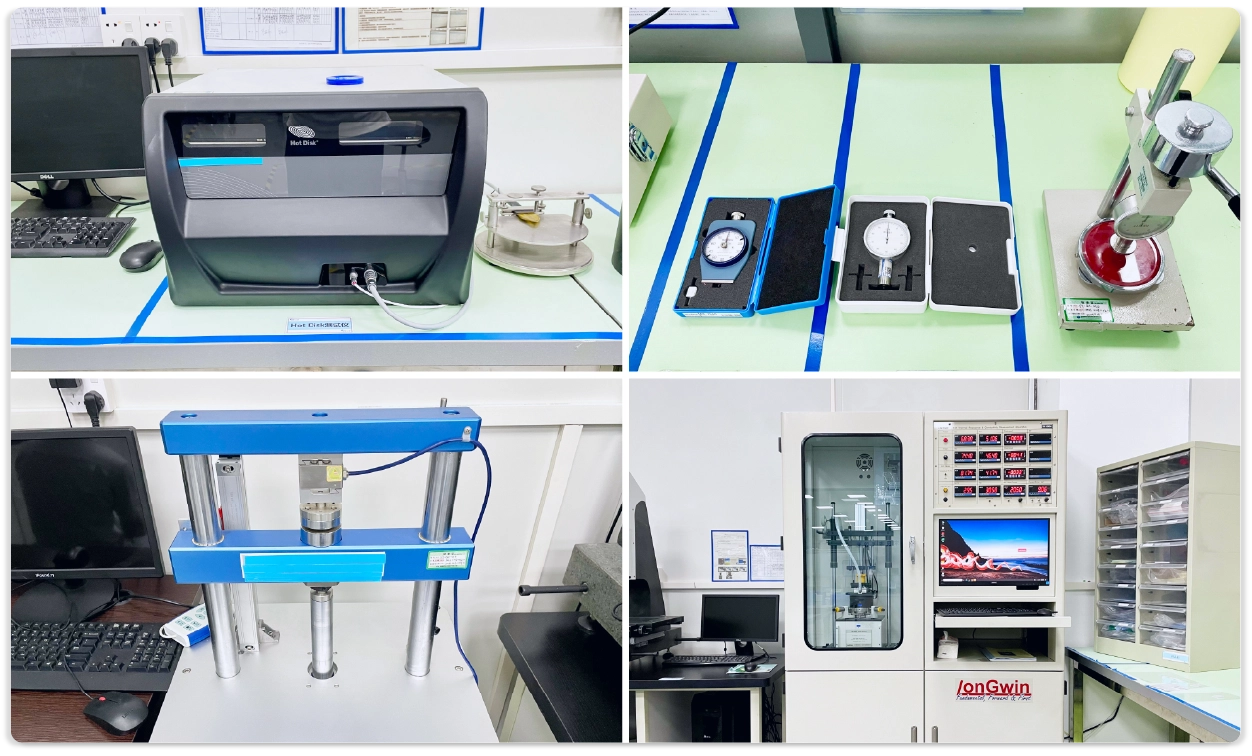
Ensuring Optimal Thermal Conductivity in Power Electronics Modules
Heat problems show up fast in eletrónica de potência modules, so Testing methods for carbon fiber thermal pads focus on gestão térmica under pressure, not on paper specs.
- Set up checks for heat transfer performance/eficiência
- Apply a realistic clamp load
- Track condutividade térmica across temperature
- Log interface resistência térmica drift after re-mounts
- Use a repeatable surface finish
- Compare “fresh” vs aged pad contact
- Apply a realistic clamp load
- Pass/fail logic tied to your build
- MOSFET/IGBT package targets
- Stable hotspot-to-sink delta means the Testing methods for carbon fiber thermal pads are actually matching your stack-up
- MOSFET/IGBT package targets
- Practical shortcut: run the same thermal conductivity testing twice, then once after cycling, and don’t accept “close enough.” Sheen Materials can align fixtures and acceptance bands.
Verifying Mechanical Durability via Compressibility and Hardness Metrics
Pads get bullied by stress e strain, so Testing methods for carbon fiber thermal pads must watch the body, not just the heat. Quick checks keep fiabilidade from sliding later.
- Medida compressibilidade at real clamp loads; note thickness loss.
- Verificar hardness (same dwell time each run) to confirm stable propriedades dos materiais.
- Red flags: pump-out tracks, edge cracking, or poor rebound after heat soak.
Then mix it with common sense: if it “sets” after cycling, Testing methods for carbon fiber thermal pads should flag rising thermal impedance before your field returns do.
Assessing Dielectric Strength for Reliable Insulation Resistance
In high-voltage builds, isolamento elétrico is non-negotiable, and Testing methods for carbon fiber thermal pads have to prove it with real margins.
- Core electrical checks for safety e fiabilidade
- Resistência dieléctrica screening
- Ramp to tensão de rutura with your actual thickness and clamp load
- Insulation resistance stability
- Measure before/after humidity and thermal aging
- Resistência dieléctrica screening
- Build context details that change results
- Electrode shape and edge distance
- Sharp edges can fake a failure; sloppy spacing can fake a pass
- Surface contamination control
- Residue can affect propriedades eléctricas fast
- Electrode shape and edge distance
Sheen Materials usually pairs these Testing methods for carbon fiber thermal pads with fixture discipline, so your “pass” keeps meaning something in production.
5 Steps For Testing Methods For Almofadas térmicas de fibra de carbono
Testing methods / for / carbon fiber / thermal / pads
If you’re serious about Testing methods for carbon fiber thermal pads, you can’t just “feel” performance and call it done. You test, you compare, and you keep pressure and thickness honest. This 5-step run-through keeps Testing methods for carbon fiber thermal pads practical for CPU/GPU heat paths, while still being lab-clean—something Sheen Materials also expects in supplier-quality checks.
Step 1: Hot Disk Method for Thermal Conductivity Measurement
With Testing methods for carbon fiber thermal pads, the hot disk measurement technique is the quick truth-teller for condutividade térmica. It’s a transient method that treats the sensor as both heater and thermometer, so transferência de calor e thermal properties show up in one go.
- Check directionality: in-plane vs through-plane condutividade térmica.
- Keep “real life” clamp force: compression changes caraterização de materiais fast.
Key setup moves in thermal pad testing:
1) Clamp to target pressure; log thickness drift.
2) Run repeats across fiber angles to map anisotropic thermal properties.
3) Compare density and carbon fiber loading; don’t mix batches mid-study.
Step 2: Laser Flash Analysis to Determine Specific Heat Capacity
Para Testing methods for carbon fiber thermal pads, laser flash is how you get thermal diffusivity without guessing. Then you translate that into specific heat capacity, so transient CPU spikes stop being a mystery.
- What to measure
- Temperature rise curve after the pulse
- Thermal diffusivity vs thickness
- What to combine
- Density (same compression state you’ll ship)
- Diffusivity to estimate specific heat capacity and cross-check thermal effusivity
- What to watch
- Edge losses that fake out heat absorption
- High loading that nudges expansão térmica during heating
Sheen Materials teams often pair this with pad stack-up modeling so the numbers actually land in package sims, not just lab notebooks.
Step 3: Transient Plane Source Testing of Thermal Impedance
Em Testing methods for carbon fiber thermal pads, transient plane source work answers the annoying question: why did the heatsink “feel” fine, yet temps climbed? Because impedância térmica is pressure- and time-sensitive, and contacto térmico can swing harder than bulk resistência térmica.
- Build the interface story
- Material interface flatness and surface energy
- Time under load (creep can drop the interface resistance)
- Capture the curve, not one point
- Heat flow response at 5 s, 30 s, 120 s
- Pressure sweep to see when contact stops improving
| Pressure (MPa) | Espessura (mm) | Thermal impedance (K·cm²/W) |
|---|---|---|
| 0.2 | 0.50 | 0.85 |
| 0.5 | 0.45 | 0.62 |
| 1.0 | 0.40 | 0.48 |
| 1.5 | 0.38 | 0.44 |
That table-style snapshot is the kind of thing good Testing methods for carbon fiber thermal pads should spit out—actionable for dissipação de calor decisions.
Step 4: Rheological Testing for Binder Type and Filler Particle Size
Yeah, Testing methods for carbon fiber thermal pads aren’t only thermal. Bad flow equals bad contact. Rheology tells you if the binder system and partículas de enchimento behave like a clean composite or a clumpy mess.
Quick checks that save production headaches:
- Symbol pass/fail cues:
- ✓ Stable viscosidade over time at target shear rate
- ✗ Big swings that hint at settling or poor particle distribution
1) Compare lots for consistent material flow.
2) Tie viscosity to void risk during die-cut or lamination in materiais compósitos.
3) Confirm filler dispersion so thickness stays steady after cure and storage.
Step 5: Reliability Testing under ISO and ASTM Standards
Real-world Testing methods for carbon fiber thermal pads end with reliability. No shortcuts. ISO and ASTM style programs prove material durability under the stress devices actually see.
- Environmental stress plan
- Thermal aging and ciclo térmico para long-term performance
- Humidity soak as environmental stress that can shift properties
- Electrical/mechanical checks
- Track dielectric drift (yes, it happens)
- Tensões mecânicas retention: peel, compression set, and rework cycles
- Control outputs
- Defect density trendline per lot
- Shelf-life stability window (sealed vs opened storage)
If you’re comparing pads across vendors, keep the same fixtures and timelines—otherwise, testing methods for carbon fiber thermal pads turns into “testing methods for vibes,” and nobody wins.
Inconsistent Heat Dissipation? Try Thermal Cycling Tests
When heat runs fine on the bench but acts weird in the car, it’s usually not magic—it’s drift. This is where Testing methods for carbon fiber thermal pads stop being “lab stuff” and start saving builds. Below are practical checks that connect ciclo térmico to real fiabilidade, then tie density e carbon fiber mix to steady desempenho térmico.
Evaluating Thermal Cycling Stability across Operating Temperature Range
For automotive electronics, ciclo térmico across the full temperatura de funcionamento window is the cleanest evaluation of stability under stress. With Testing methods for carbon fiber thermal pads, Sheen Materials teams often track:
- Performance shift signals
- resistência térmica trend per cycle block
- Pass: small, repeatable drift
- Fail: ratcheting increase that never comes back down
- degradation markers at the interface
- adhesion loss (lift, edge curl, pump-out)
- grease-like wet-out that suddenly disappears
- resistência térmica trend per cycle block
- Mechanical damage cues
- cracking along fiber-rich bands
- compression set that leaves permanent thickness loss
- fiabilidade flags when impedance rises after cool-down, not during heat
Linking Density and Carbon Fiber Content to Heat Dissipation Performance
This is the part where composição do material stops being a datasheet line and starts acting like a knob you can turn. In Testing methods for carbon fiber thermal pads, you’re hunting the sweet spot between conformability and dissipação de calor that doesn’t fade.
- Verificar density vs. contact quality: higher density can help bulk conduction, yet it may hurt surface wetting on rough housings.
- Map carbon fiber content to desempenho térmico: too little fiber starves conductivity; too much stiffens the pad and raises interface impedância térmica.
- Spot orientation effects (easy slang version: “fiber grain matters”):
- → aligned fibers can boost in-plane flow
- ≠ Random layups often behave more predictably across assemblies
- Keep repeating Testing methods for carbon fiber thermal pads while swapping only one variable at a time—otherwise the correlation turns to noise.
Quality Assurance: Reliability Testing and Process Capability Index
Quality isn’t a vibe; it’s math backed by testes de fiabilidade e statistical control. In Testing methods for carbon fiber thermal pads, Sheen Materials usually ties output stability to a process capability index (Cp/Cpk) so manufacturing doesn’t quietly drift.
- What gets controlled (batch to batch)
- thickness window
- incoming roll check
- post-die-cut check
- volume resistivity targets
- thermal spread variability limits
- thickness window
- How Cp/Cpk stays honest
- Define defect buckets for defect analysis
- out-of-thickness
- high thermal resistance outliers
- fiber clumping that spikes impedance
- feed results back into tooling settings, cure profile, and inspection cadence
- Define defect buckets for defect analysis
Run Testing methods for carbon fiber thermal pads on every lot, not just the “new material” lots, and the heat path stays boring—in a good way.
Testing Methods For Carbon Fiber Thermal Pads Vs. Standard Pads
Testing methods for carbon fiber thermal pads can feel fussy, while standard pad checks are usually calmer and repeatable. This write-up keeps it practical: how to test, what to watch, and where Sheen Materials tends to tighten the loop on pass/fail calls.
Almofadas térmicas de fibra de carbono
Testing methods for carbon fiber thermal pads start with the weird part: direction matters, because carbon fiber e graphite move heat differently along the weave than across it. That’s why Sheen Materials treats condutividade térmica as a mapping job, not a single number.
- Thermal / orientation work
- Fiber orientation mapping
- Scan or mark layup direction, then sample in-plane vs through-plane heat flow
- Record “hot lane” vs “cold lane” behavior tied to the fiber path
- Conductivity verification
- Run comparative coupons cut at 0°, 45°, 90° to expose anisotropy
- Repeat after cycling to see durabilidade drift in dissipação de calor
- Fiber orientation mapping
- Mechanical under load
- Compression checks
- Medida compressibilidade at real clamp forces, then rebound after soak
- Note the flexibilidade loss if the pad takes a set
- Interface reality check
- Inspect imprint uniformity; uneven contact fakes good results in testing methods for carbon fiber thermal pads
- Compression checks
- Segurança eléctrica
- Surface and dielectric checks
- Because electrical conductivity can creep up, verify dielectric strength and surface resistivity before and after compression
- Flag edge fray; stray fibers can short nearby parts
- Surface and dielectric checks
This is the testing method for carbon fiber thermal pads playbook when orientation can’t be ignored.
Standard Thermal Pads
Testing methods for carbon fiber thermal pads don’t translate cleanly here, since silicone-based material de interface térmica is usually isotropic and less touchy about direction. Still, you test it like you mean it, and Sheen Materials keeps the same no-nonsense acceptance style.
- Basic screening (quick, but not sloppy)
- Verificar softness and surface finish for handling and conformabilidade
- Confirmar polymer matrix consistency; batch-to-batch shifts change feel fast
- Numeric checks (simple sequence)
- Measure thermal impedance/heat transfer under a defined pressure stack
- Verify hardness (durometer) so clamp force assumptions don’t blow up later
- Run breakdown voltage for isolamento elétrico, typically aligned with ASTM practices
- Spot checks that catch surprises
- Use a small set of coupons to validate enchimento de cerâmica dispersion isn’t streaky
- Re-test after heat aging; some pads stiffen and lose contact, which raises impedance
If you’re comparing pads side by side, keep the wording straight: “testing methods,” “carbon fiber thermal pads,” and “standard thermal pads” are different lanes, even when the fixture looks the same.