-
ADD: Bâtiment 2, No. 8 Hengzhutang Road, Dongguan
-
Téléphone: +86 135 4224 3751

Is a Graphene Thermal Pad Electrically Conductive?
Is a Graphene Thermal Pad Electrically Conductive? It can be—but the label alone won’t settle it. Commercial pads mix graphene with polymers and other fillers, creating products that may conduct electricity, resist it, or sit somewhere in between. That detail can become a big headache near exposed contacts.
For buyers, check volume resistivity, surface resistivity, dielectric strength, and thermal performance before signing off. The guide explains why.
Key Insights: Graphene Thermal Pad Electrically Conductive
- Examine Composite Structure – Graphene flakes, fillers, and polymer matrix define electrical pathways and overall conductivity.
- Measure Resistivity – Surface and volume resistivity tests reveal insulating, dissipative, or conductive behavior near exposed electronics.
- Verify Dielectric Strength – Ensure the pad withstands voltage stress without breakdown to protect semiconductors.
- Balance Filler Content – Higher graphene load boosts conductivity; polymer interruptions raise resistivity.
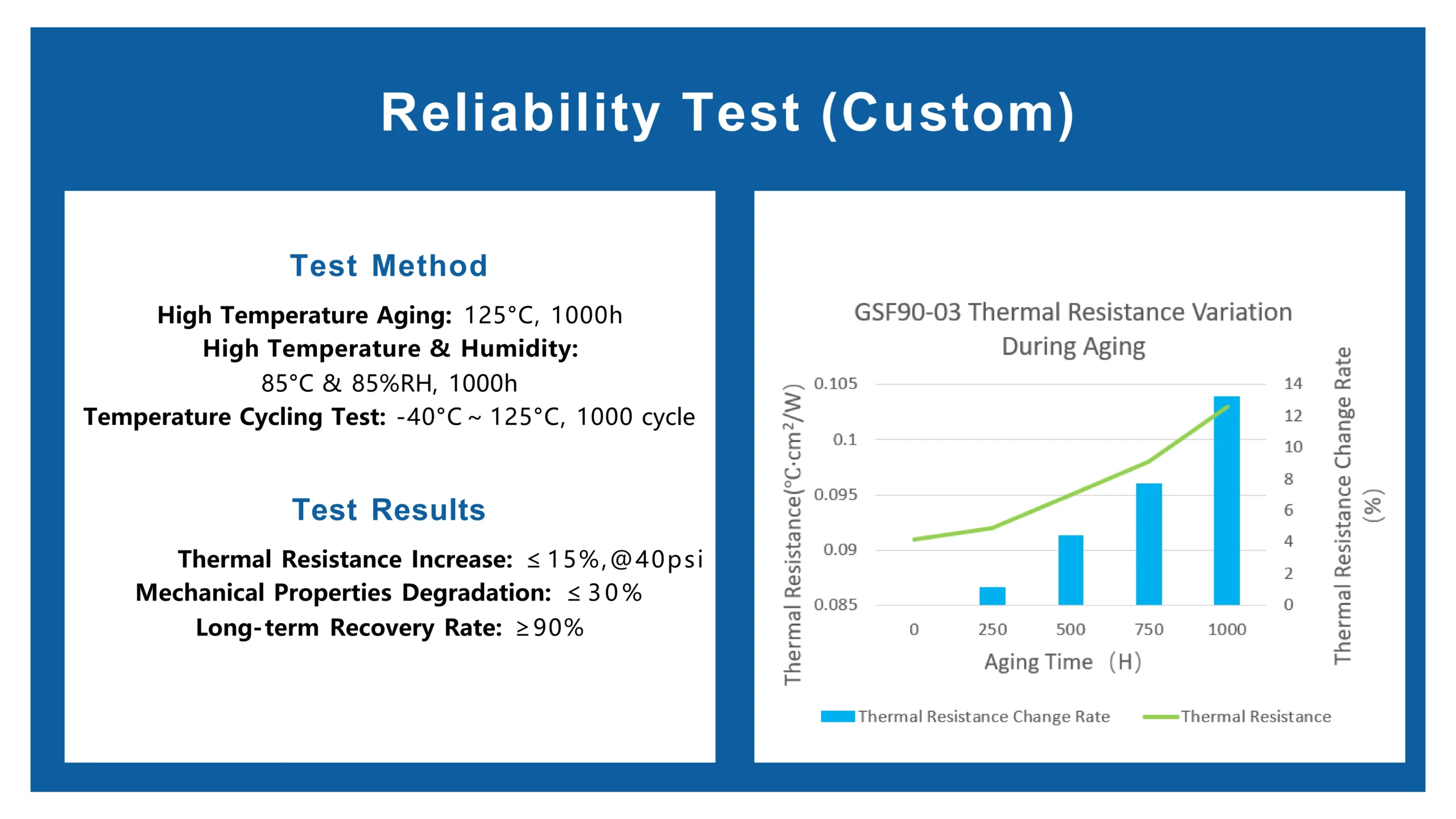
- Evaluate Reliability – Thermal cycling, compression, and long-term aging confirm stable electrical and thermal performance.
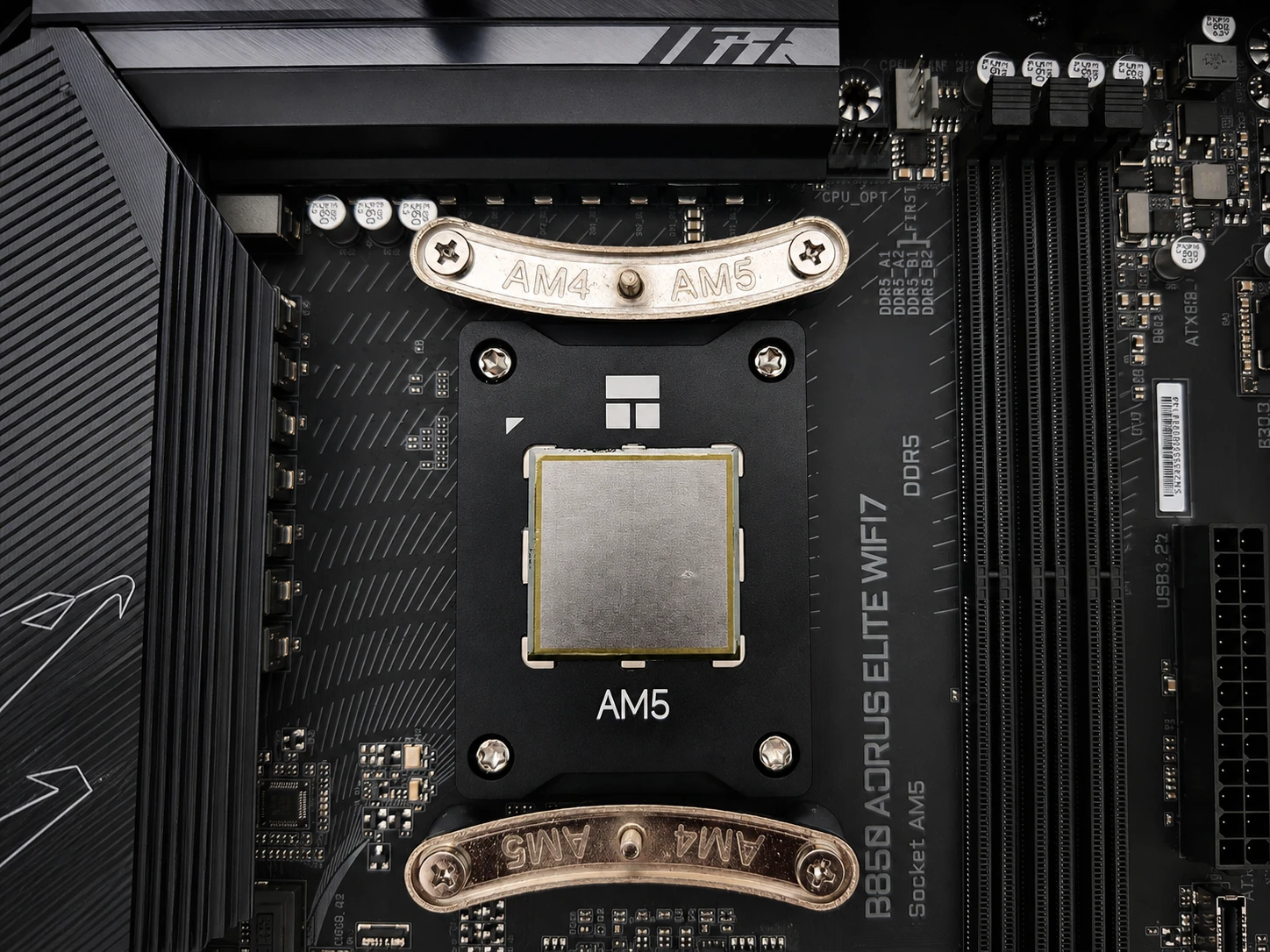
Is Graphene Thermal Pad Electrically Conductive?
Is a Graphene Thermal Pad Electrically Conductive? The answer comes down to formulation, not the name alone. A graphene thermal pad may act as an electrical path or an insulating thermal interface, so checking its electrical ratings before installation really matters.
Role of Graphene Composite Structure in Electrical Conductivity
A Graphene Thermal Pad Electrically Conductive design depends heavily on its Composite structure. Graphène, graphite, or another Filler material sits inside a Matrix material, often silicone or another polymer.
- At low filler loading, particles remain separated.
- Few Conduction pathways exist.
- Le Thermal interface material may retain good insulation.
- Above the electrical percolation point, connected particles create a Percolation network.
- Haut Electron mobility within graphene then helps raise Conductivité électrique.
- In plain terms, current gets a usable route through the pad.
Balancing Surface Resistivity and Volume Resistivity
Pour un Graphene Thermal Pad Electrically Conductive product, Surface resistivity describes resistance along its face, while Résistivité volumique covers current traveling through its body. Those values reveal different isolation risks.
| Design example | Surface resistivity (Ω/□) | Résistivité volumique (Ω-cm) | Épaisseur (mm) |
|---|---|---|---|
| A | 10³ | 10² | 0.5 |
| B | 10⁶ | 10⁵ | 1.0 |
| C | 10⁹ | 10⁸ | 1.5 |
| D | 10¹² | 10¹¹ | 2.0 |
These are illustrative engineering values, not universal graphene-pad specifications. In practice, designers verify Electrical resistance, Insulation properties, Conception matérielle, Thermal performance, et Device reliability using supplier test data.
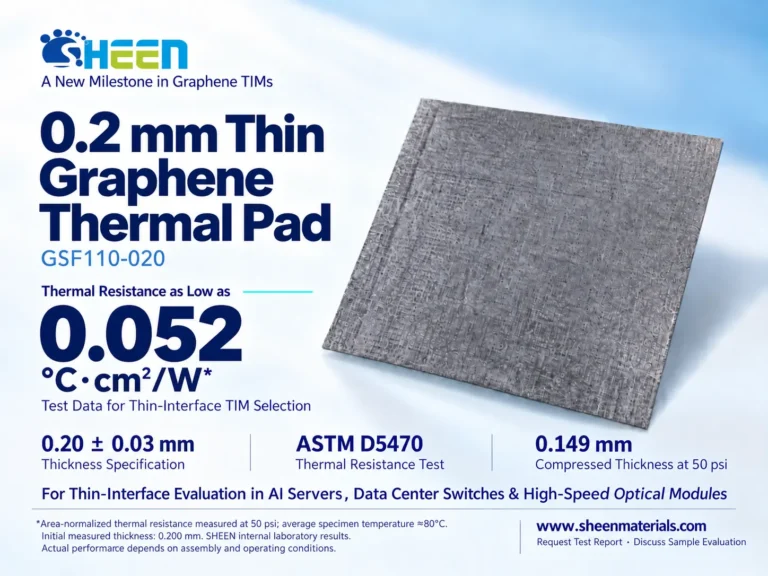
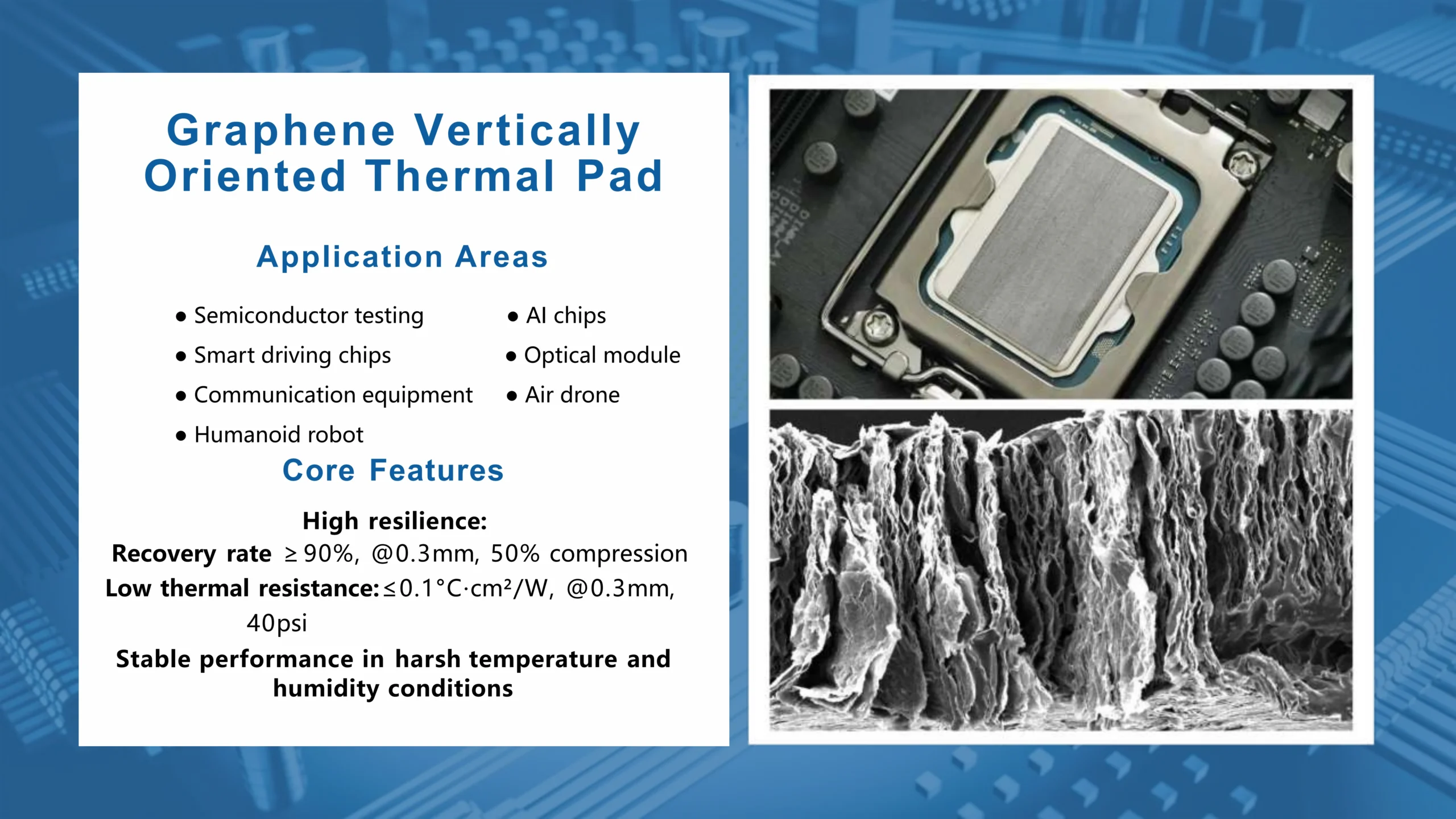
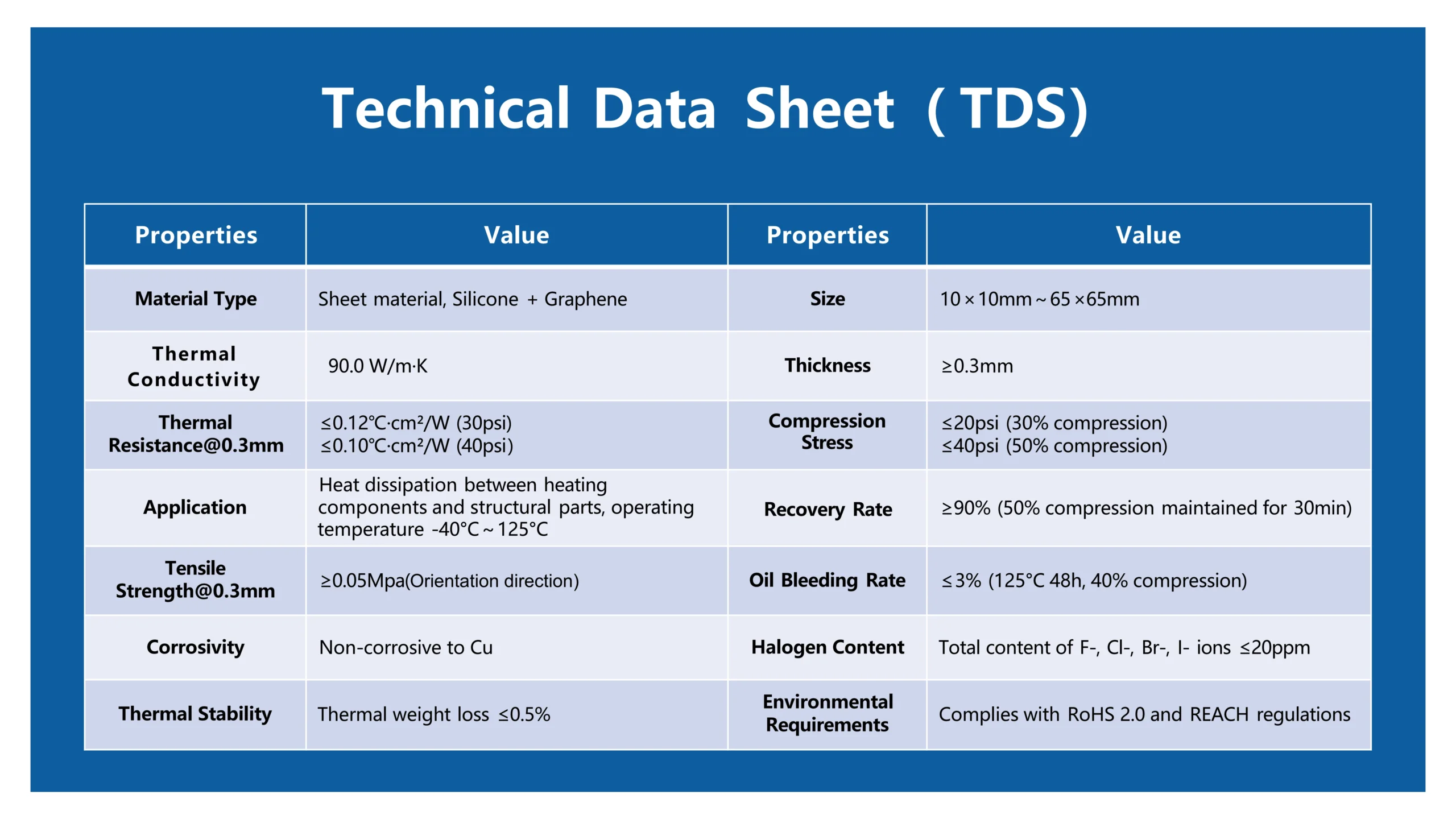
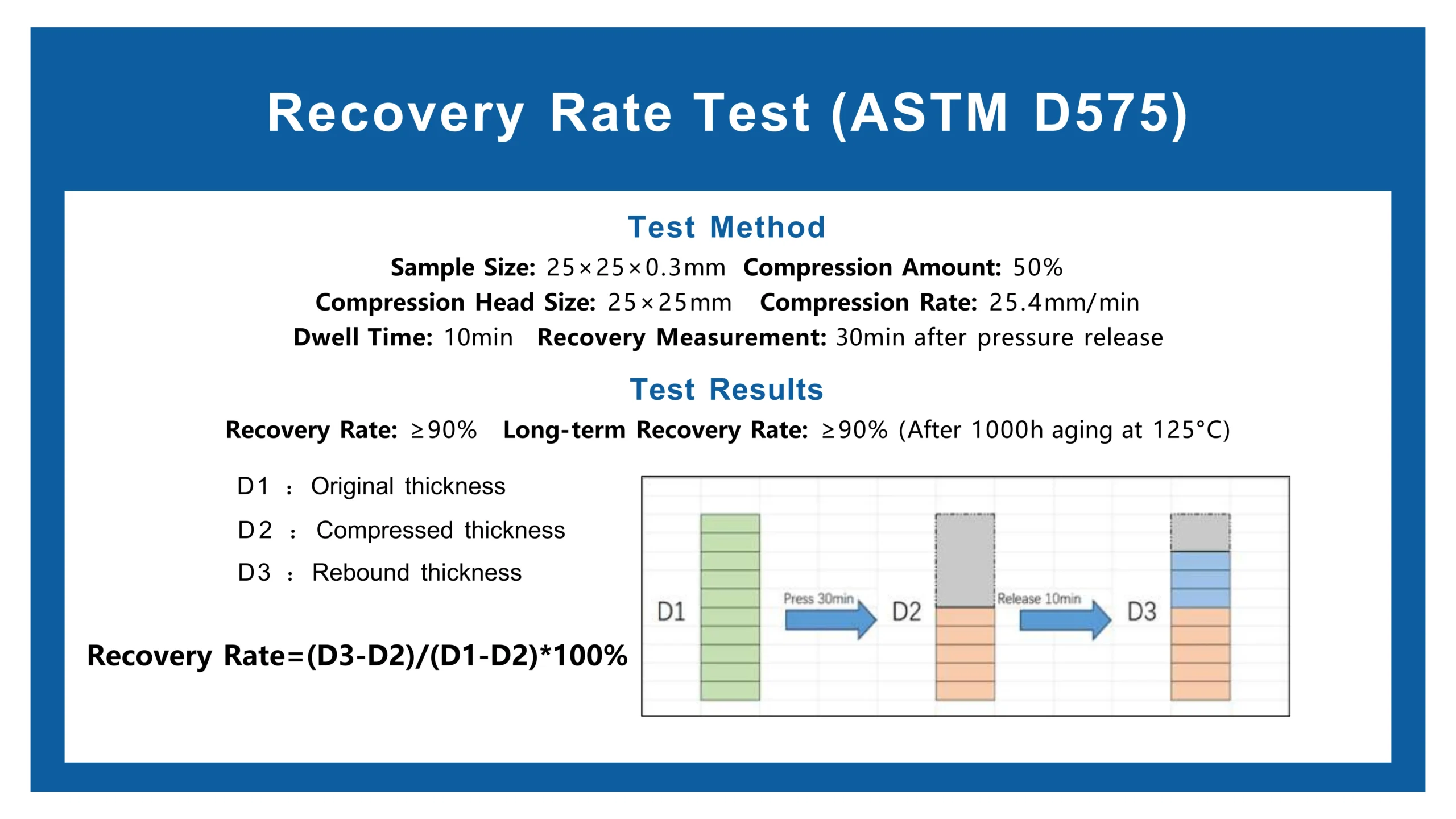
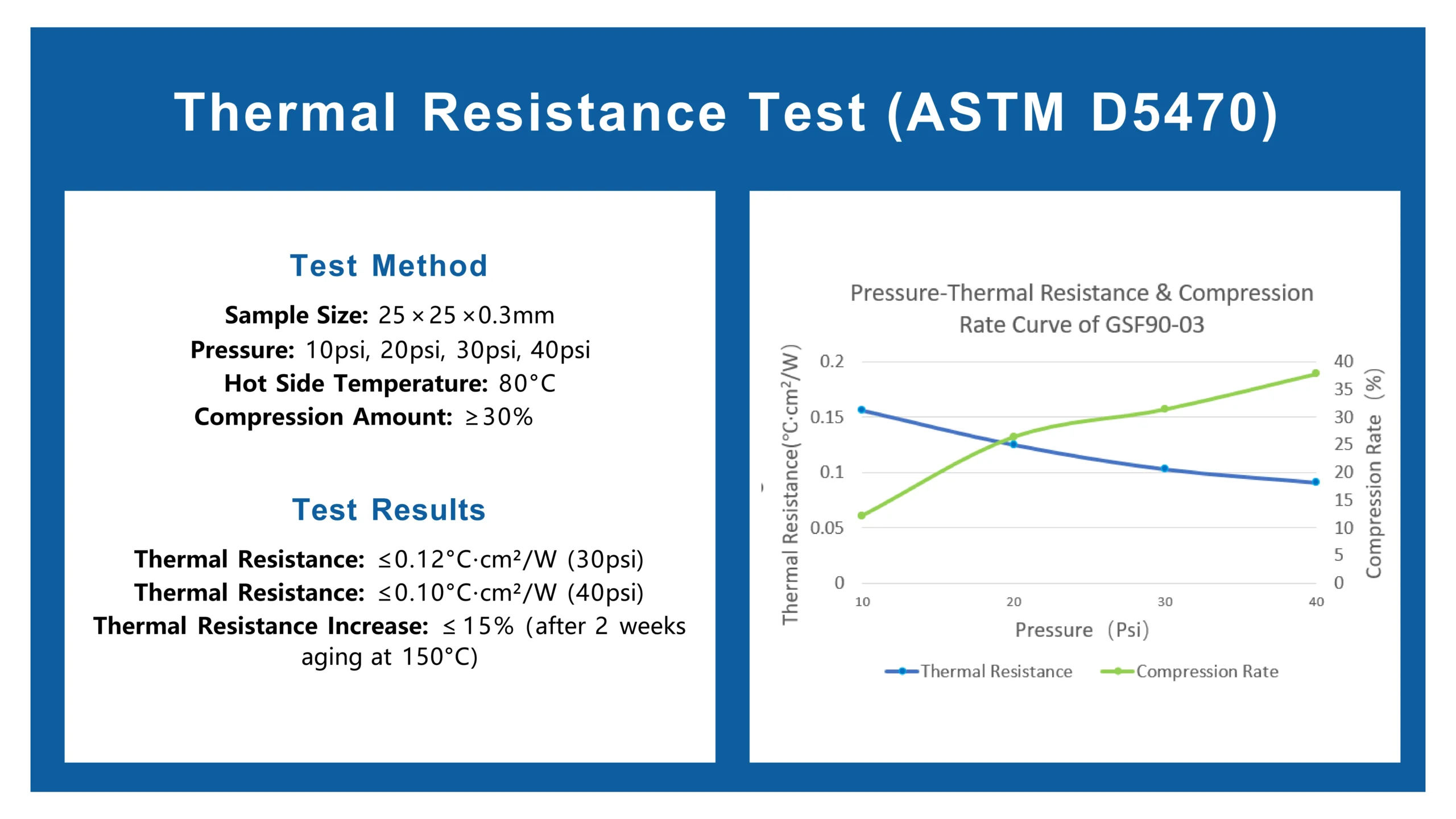
For instance, Sheen Materials will provide specific product test data for GSF75 ou GSF90:
Dielectric Strength versus Grounding Capability
Rigidité diélectrique et Grounding serve different jobs.
- An electrically insulating graphene thermal pad aims for:
- high Isolation électrique;
- adequate Tension de rupture;
- very low Leakage current.
- A conductive pad may instead provide:
- controlled grounding paths;
- Electrostatic discharge control;
- compatibility with defined Safety requirements.
That tradeoff affects the whole Thermal management system. So, yep, “graphene” alone cannot tell you the electrical behavior.
Conductivity Classifications Explained
A Graphene Thermal Pad Electrically Conductive design can move heat well, yet its electrical behavior needs separate checks. For engineers, that’s where things get practical: caractérisation des matériaux, EMI performance, and insulation testing show how a graphene thermal pad may safely fit around powered hardware.
Volume Conductivity versus Surface Conductivity Metrics
A Graphene Thermal Pad Electrically Conductive product can carry current through its body and across its face, so both paths matter.
- Bulk behavior
- Résistivité volumique measures opposition to current through material thickness.
- Its inverse, bulk conductivity, helps classify electrically conductive graphene materials.
- Résistivité volumique measures opposition to current through material thickness.
- Surface behavior
- Surface resistivity tracks lateral current flow.
- Sheet resistance adds useful insight into surface electrical resistance.
- Together, these conductivity measurements help distinguish conductive, dissipative, and insulating behavior.
- Surface resistivity tracks lateral current flow.
Sheen Technology can match these measurements with thermal requirements instead of treating “conductive” as a catch-all label.
EMI Shielding Categories for Thermal Interface Pads
A Graphene Thermal Pad Electrically Conductive composite may also reduce interférences électromagnétiques, but heat transfer alone doesn’t guarantee good shielding.
- For conductive matériaux d'interface thermique, conductive fillers create paths that reflect or absorb RF energy.
- Shielding effectiveness changes with:
- filler level and propriétés des matériaux;
- pad thickness and structure;
- test frequency and resulting RF attenuation.
That’s the key catch: graphene applications need performance checked across the intended frequency range, not guessed from conductivity alone.
Dielectric Strength Classification Standards
Electrical insulation calls for a different test path.
- Safety verification
- Dielectric breakdown
- Measures failure under rising electric stress.
- Tension de rupture records the failure point.
- Voltage withstand
- Checks if the pad survives a specified test voltage.
- Dielectric breakdown
- Qualification
- Insulation resistance evaluates unwanted current leakage.
- Applicable material standards et safety ratings support documented selection near energized parts.
Pour isolation électrique, Sheen Technology can supply relevant test data so designers can compare a conductive thermal pad with electrically insulating alternatives.
4 Factors Affecting Graphene Pad Conductivity
A Graphene Thermal Pad Electrically Conductive design depends on more than graphene alone. Filler networks, flake direction, pressure, and temperature shifts all matter. In day-to-day use, these details decide how reliably a graphene thermal pad moves heat and electricity.
Filler Content and Polymer Matrix Interactions
A Graphene Thermal Pad Electrically Conductive composite gains conductivity once particles form connected routes.
- Réseau de remplissage
- Plus élevé graphene concentration et chargement de la charge can reach the percolation threshold, creating continuous electrical paths.
- Pauvre dispersion, however, leaves isolated particles.
- Matrix effects
- An insulating matrice polymère can interrupt conductivity.
- Fort interfacial adhesion helps the matériau composite stay physically stable. The trick is balancing bonding with conductive contact.
Graphene Alignment within Composite Structure
Graphene orientation changes how easily current and heat travel. With strong flake alignment, a Graphene Thermal Pad Electrically Conductive material may develop clear anisotropy: conductivity along the pad can exceed conductivity through its thickness.
That composite morphology shapes both electrical pathways et thermal pathways. Controlled alignment also supports l'intégrité structurelle, so graphene pad performance is not simply a matter of adding more filler.
Compressibility and Conformability under Load
For a thermal interface, pressure can be a big deal.
- Applied pressure increases compressibilité.
- Mieux conformité supports le comblement des lacunes across rough surfaces.
- Closer contact can lower résistance de contact.
- Excess contrainte mécanique can reshape filler networks.
- Thickness and hardness therefore affect the interface thermique.
- A Graphene Thermal Pad Electrically Conductive product should be evaluated at realistic assembly pressure.
Thermal Cycling Performance at Extreme Temperatures
Temperature swings test stabilité thermique over time. At extreme temperatures, polymer expansion and contraction can shift graphene contacts, while thermal degradation may gradually raise electrical resistance.
- Repeated temperature fluctuations cause thermal fatigue.
- En cours material aging can affect adhesion and conductivity.
- Testing tracks fiabilité et long-term performance.
A conductive graphene thermal pad that remains stable after cycling is better suited to demanding electronics.
Graphene vs. Copper Pads: Conductivity Showdown
Choosing a pad is not just about chasing the highest conductivity number. Heat transfer, electrical behavior, contact pressure, and device layout all matter in real hardware. A Graphene Thermal Pad Electrically Conductive design may fit compact electronics, while copper takes a different route. Here’s the practical comparison engineers need when heat and current are both concerns.
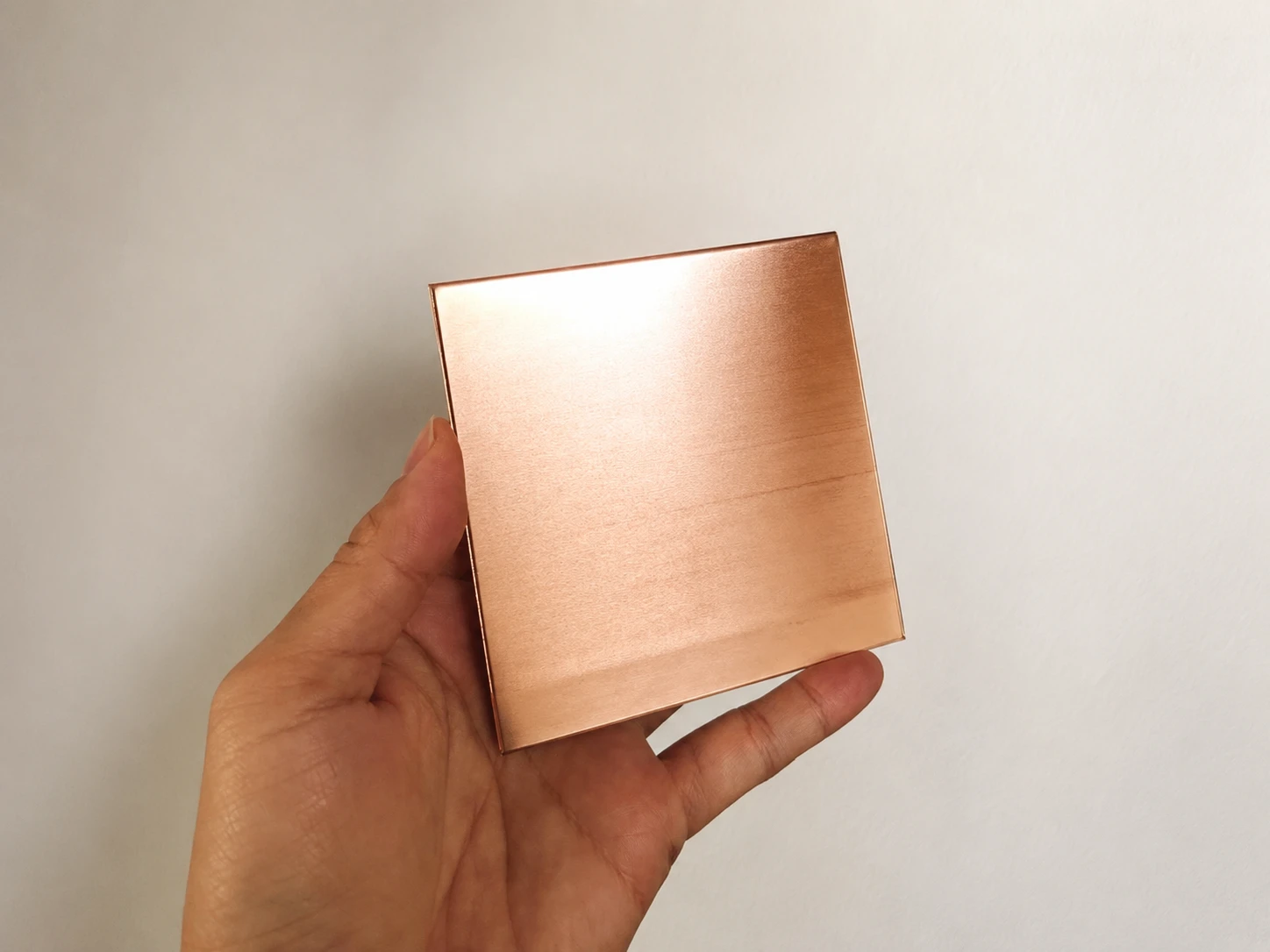
Coussins thermiques en graphène
Graphène can deliver strong conductivité thermique while remaining thin and flexible, making this matériau d'interface thermique useful where surfaces need close contact. Still, there’s a catch: electrical conductivity is not fixed across every graphene pad.
- A Graphene Thermal Pad Electrically Conductive product may carry current because conductive flakes form paths through its matrix.
- Dissipation de la chaleur depends on filler loading, orientation, thickness, pressure, and the polymer holding the material together.
- Pour electronic cooling, check both through-plane and in-plane conductivity. A high value in one direction does not guarantee equal performance in the other.
Sheen Materials can help buyers compare graphene pad specifications with insulation needs before choosing a material. In short, a conductive graphene thermal pad should never be assumed electrically safe around exposed contacts.
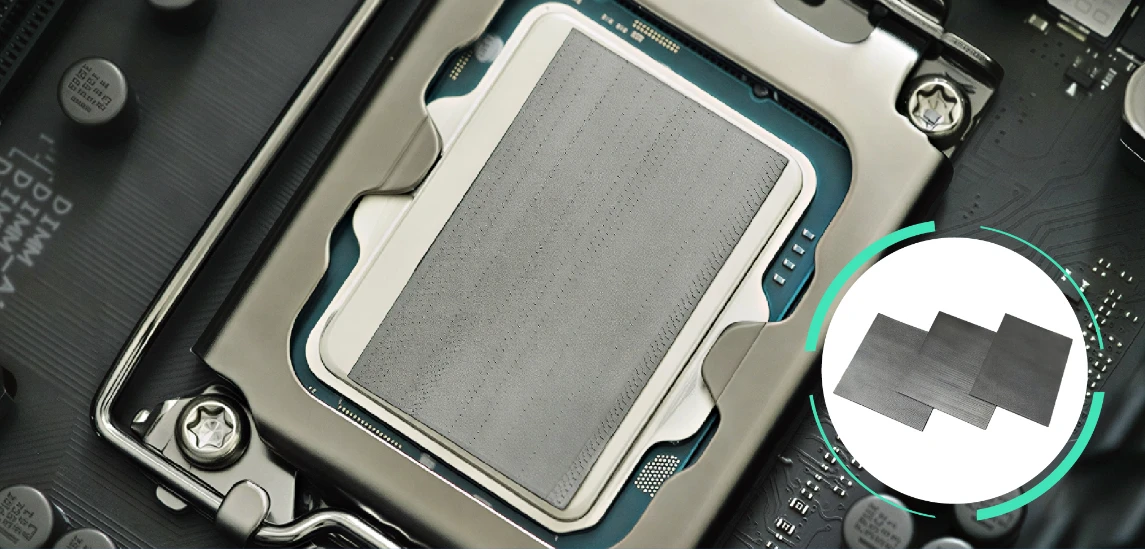
Copper Thermal Pads
Copper behaves more predictably. As a dense matériau d'interface thermique, it offers high conductivité thermique and very high electrical conductivity, so heat spreads quickly through well-fitted metal pads.
- Heat transfer benefits from copper’s bulk conductivity, roughly 400 W/m·K near room temperature.
- Good surface contact supports efficient dissipation de la chaleur.
- Electrical isolation needs extra attention. Bare copper can bridge contacts and cause shorts, so insulating films or coatings may be necessary.
Compared with a Graphene Thermal Pad Electrically Conductive option, copper is rigid but thermally dependable. Sheen Technology can match pad thickness and isolation design to the application, keeping electrical risk from becoming an expensive “oops.”
CPU Cooling: Graphene Pad Conductivity Matters
Modern processors pack serious heat into a small area, so the material between the CPU and heatsink has a big job. A Graphene Thermal Pad Electrically Conductive design can support fast heat movement while keeping electrical behavior predictable. Sheen Materials focuses on balancing contact quality, graphene performance, pressure response, and durability for demanding computing applications.
Reducing Thermal Resistance in High-Performance CPUs
A conformable Graphene Thermal Pad Electrically Conductive interface fills tiny surface gaps that otherwise trap air and raise résistance thermique.
- Contact performance
- Better surface fit improves transfert de chaleur between processor and cooler.
- Lower interface resistance supports quicker dissipation de la chaleur during heavy workloads.
- Cooling design
- A thin interface material can aid CPU cooling without messy paste application.
- Pour high-performance computing, controlled thickness makes gestion thermique easier to design and repeat.
Ensuring Stable Electrical Conductivity under Variable Loads
A graphene pad may experience changing pressure and temperature as processor power rises and falls. Those variable loads can affect contact behavior, so stability matters.
- Le graphene material provides defined electrical conductivity.
- Consistent composition helps its propriétés électriques remain predictable across normal operational conditions.
- Contrôlé current flow is vital where conductivity or grounding is intentional.
Sheen Materials therefore matches Graphene Thermal Pad Electrically Conductive products to the application’s electrical design; a conductive graphene thermal pad must not be treated as an electrical insulator.
Reliability Testing for Long-Term Operation
Good performance on day one isn’t enough. Graphene Thermal Pad Electrically Conductive materials also need proof that repeated use won’t gradually throw cooling off.
- Lifetime checks
- Thermal cycling recreates heating and cooling.
- Compression and environmental stress assess durabilité des matériaux.
- Quality controls
- Defined test protocols track dégradation des performances during essais de fiabilité.
- Batch traceability and certification help Sheen Materials support repeatable long-term operation and expected operational lifespan.