-
ADD: Bâtiment 2, No. 8 Hengzhutang Road, Dongguan
-
Téléphone: +86 135 4224 3751

Boron Nitride Thermal Pad for Solar Inverters: Why Electrical Insulation Matters
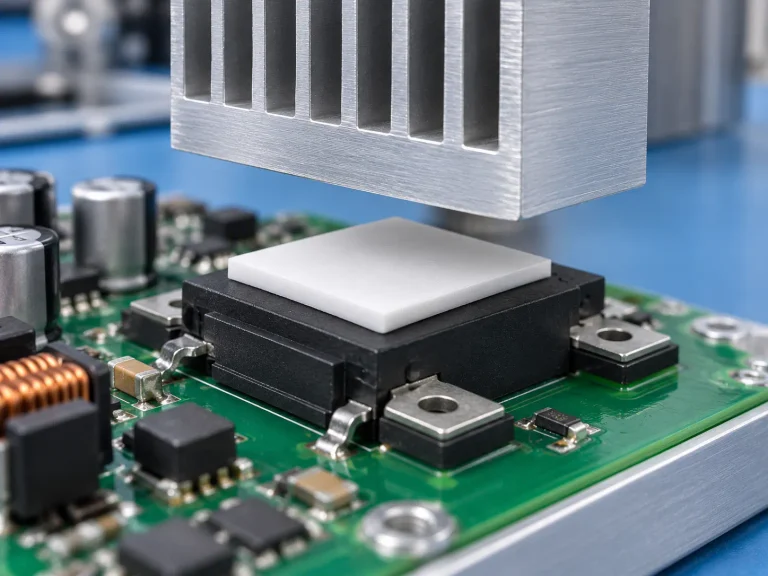
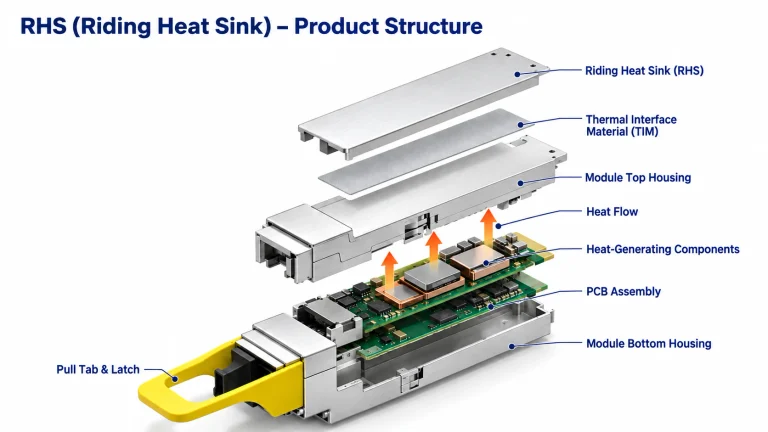
A boron nitride thermal pad for solar inverter duty has a tough gig: move MOSFET or IGBT heat fast while keeping electricity away from conductive heat sinks.
Sheen Materials engineers evaluate dielectric strength alongside thermal conductivity, thickness, hardness, and thermal impedance.
For production buyers, W/m·K isn’t the whole ball game. Qualification comes down to insulation, thermal cycling, tolerances, traceability, and repeatable lots.
Quick Highlights: Boron Nitride Thermal Pad for Solar Inverter
➔ Electrically Isolates Efficiently: High dielectric strength protects MOSFETs and IGBTs from grounded heat sinks while ensuring rapid heat transfer.
➔ Enhances Cycling Reliability: Compliant polymer‐BN composites absorb expansion and contraction stresses, safeguarding PCBs and solder joints.
➔ Minimizes Hotspots: Superior thermal conductivity and low interface resistance spread heat evenly across copper baseplates, reducing localized wear.
➔ Simplifies Selection: Match breakdown voltage, Shore hardness, and CTE with system specs; verify UL compliance, chemical inertness, and traceability for consistent lot performance.
Can Thermal Pads Improve Inverter Lifespan?
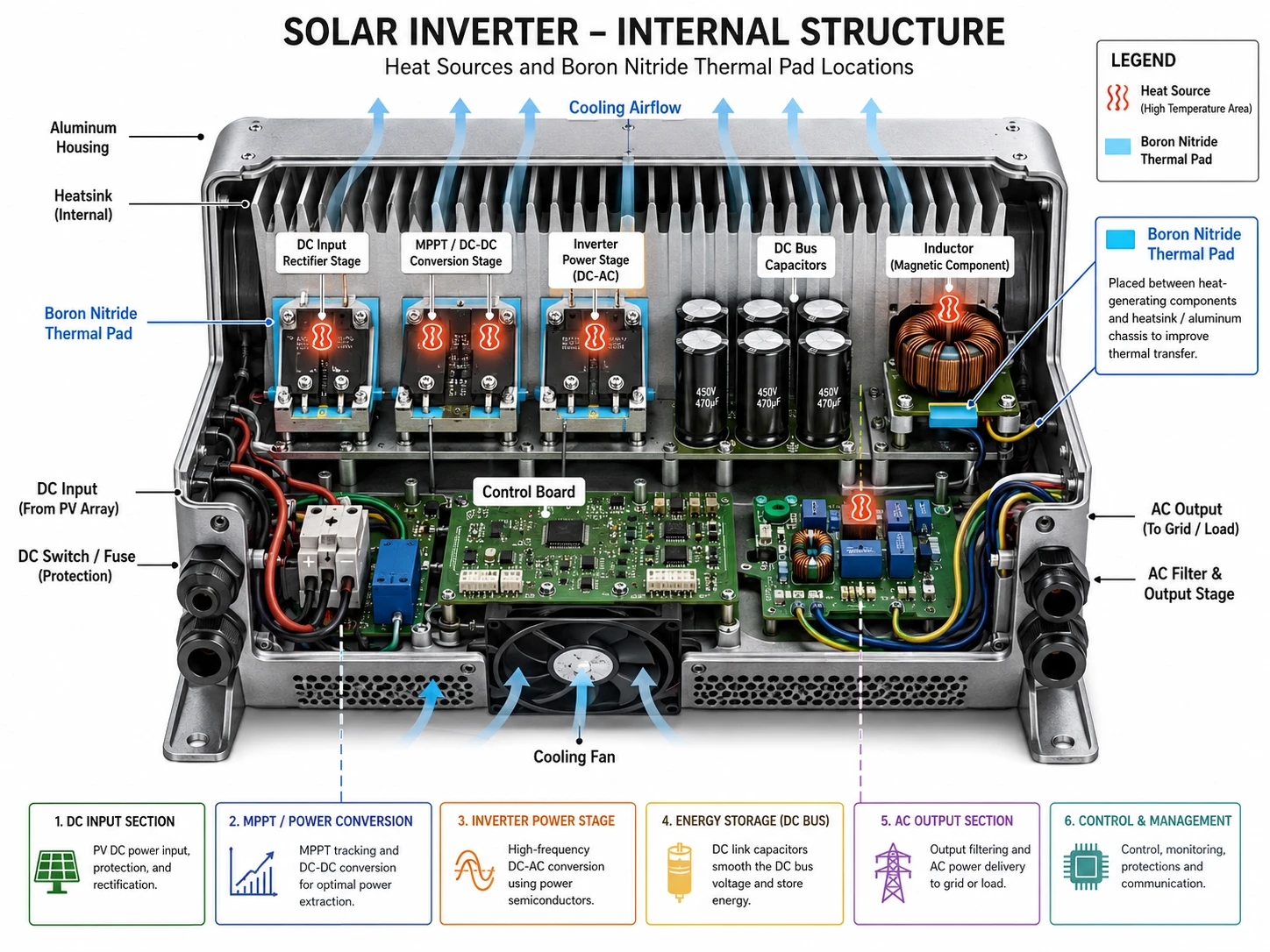
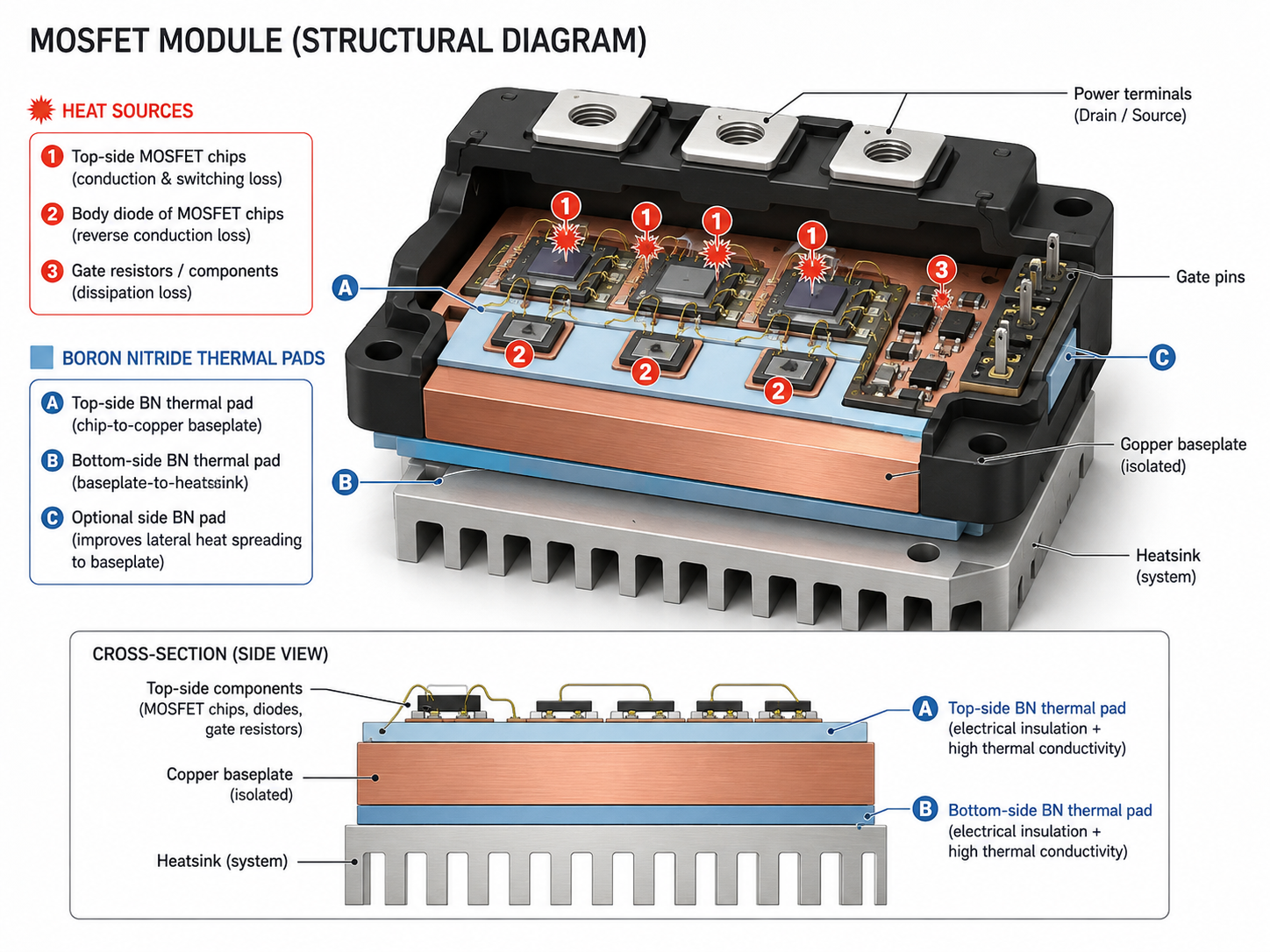
A well-fitted boron nitride thermal pad for solar inverter hardware tackles two headaches at once: heat and electrical isolation. A boron nitride thermal pad moves heat away from power devices while keeping conductive parts apart. In day-to-day operation, that can mean cooler components, less physical strain, and fewer hot spots as inverter loads rise and fall.
How dielectric strength extends MOSFET module service life
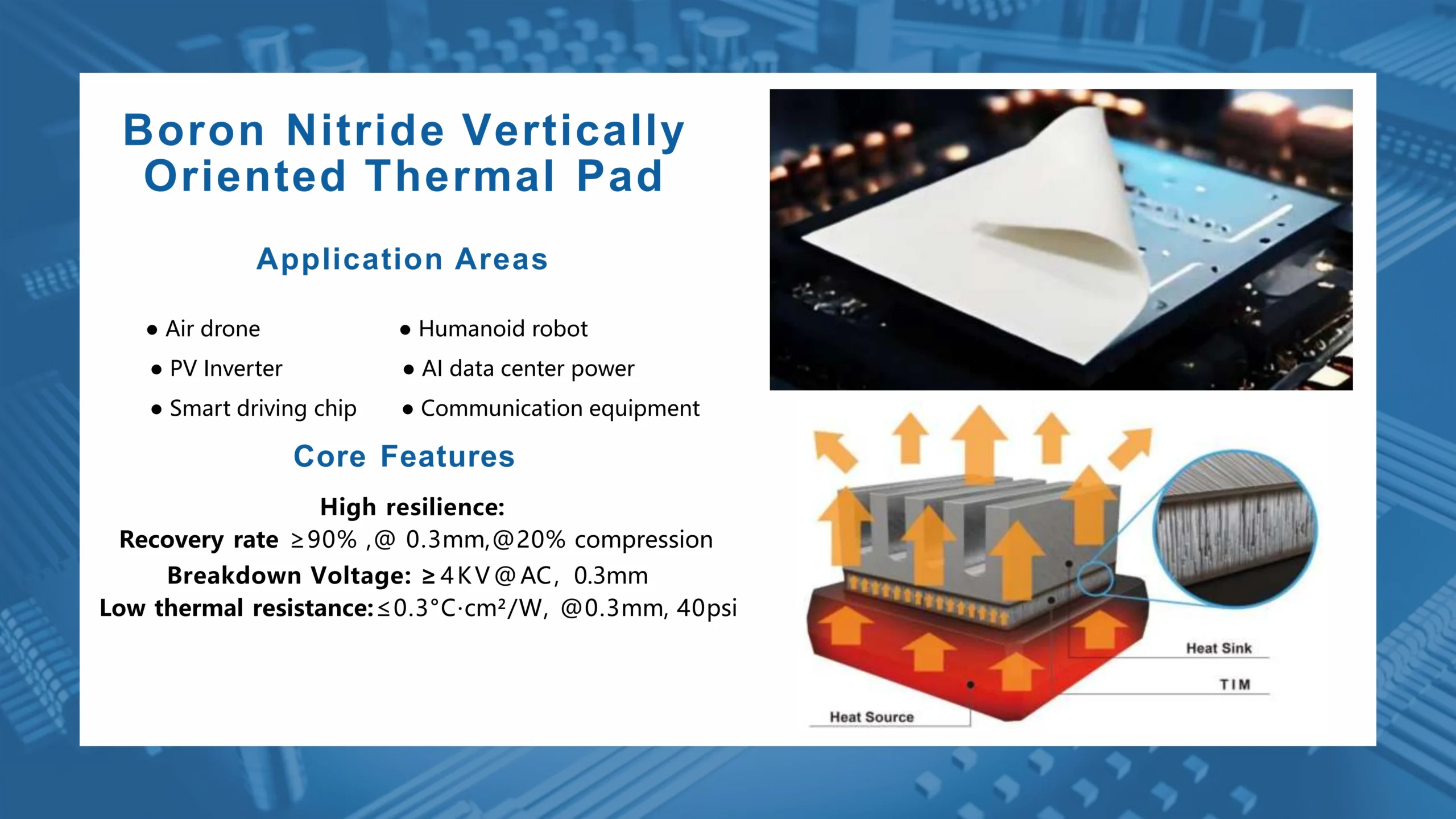
A boron nitride thermal pad for solar inverter assemblies can improve isolation électrique without blocking useful heat flow.
- At the device interface:
- Haut rigidité diélectrique raises resistance to electrical failure as voltage approaches the material’s tension de claquage.
- The pad isolates each MOSFET module from its heat sink.
- Lower operating temperature eases stress on the semiconductor.
- Better isolation and cooling support long-term fiabilité et durée de vie.
It is a practical two-for-one job.
Boosting thermal cycling reliability in printed circuit boards
Repeated cycle thermique makes inverter materials expand and contract. A compliant boron nitride thermal pad for solar inverter designs can take up small dimensional shifts rather than passing all that thermal stress into the printed circuit board.
- Temperature changes create movement because each material has its own coefficient de dilatation thermique.
- A soft thermal gap filler accommodates part of that movement, cutting solder-joint fatigue.
- Reduced strain can lower the risk of board delamination and help preserve fiabilité.
That flexibility matters when daily temperature swings keep coming.
Reducing hotspot formation on copper baseplates
A boron nitride thermal pad for solar inverter equipment also serves as a matériau d'interface thermique between hot components and a copper baseplate.
- Mieux conductivité thermique supports faster dissipation de la chaleur.
- Heat spreads across more baseplate area.
- Plus bas spreading resistance helps prevent a concentrated hotspot.
- Améliorée temperature uniformity reduces extreme local temperatures around IGBT modules.
In plain terms, spreading the heat keeps one small area from taking all the punishment.
4 Key Layers Of Thermal Pad Performance
A boron nitride thermal pad for solar inverter designs has to move heat, maintain insulation, and tolerate tough surroundings. Sheen Materials balances these needs, so inverter hardware can, quite simply, keep its cool.
Layer 1: Thermal conductivity and low thermal resistance
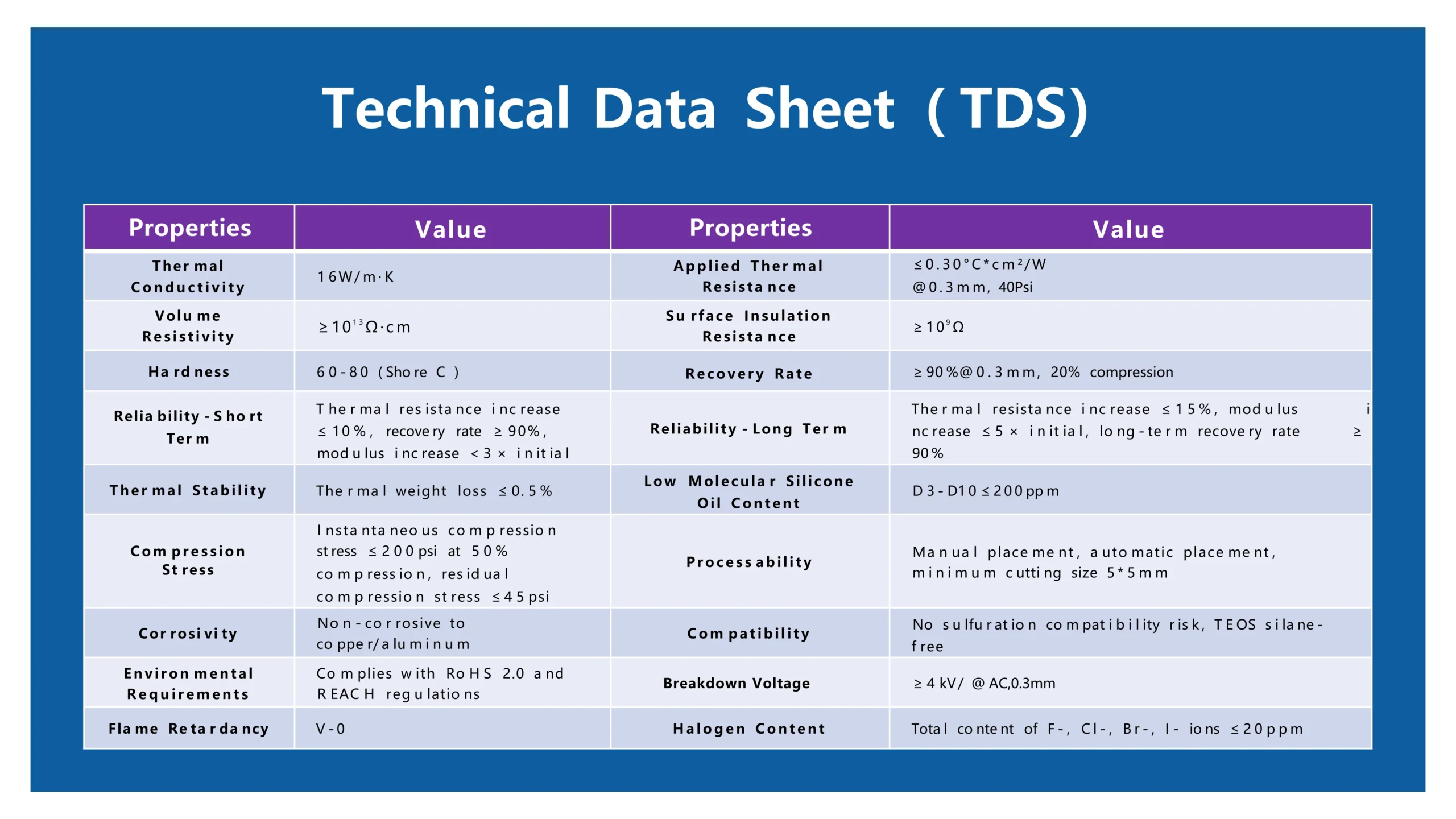
A boron nitride thermal pad for solar inverter assemblies uses conductivité thermique to support fast transfert de chaleur.
- Trajet thermique
- Boron nitride improves polymer conduction et dissipation de la chaleur.
- A conformable interface material fills small gaps, cutting résistance thermique and the gradient de température across semiconductor-to-sink contacts.
Layer 2 Thermal stability under high temperature resistance
A solar inverter thermal pad faces changing loads, so stabilité thermique matters at high temperatures. Repeated cycle thermique can accelerate dégradation des matériaux if the pad is poorly matched.
- Stable properties across the température de fonctionnement range protect cooling performance.
- Better temperature endurance supports inverter fiabilité et performance longevity. Sheen Materials designs pads with these long service demands in mind.
Layer 3 Volume resistivity for electrical insulation
A boron nitride thermal pad for solar inverter hardware must also act as an insulator.
- Protection électrique
- Haut résistivité volumique limites courant de fuite.
- Fort isolation électrique supports sécurité électrique.
- Isolation margin
- Adapté rigidité diélectrique helps resist damaging tension de claquage around energized IGBTs and MOSFETs.
Layer 4: Chemical inertness in renewable energy systems
- Chemical inertness reduces unwanted reactions and corrosion.
- Environmental resistance helps limit oxidation around metals and polymers.
- Bon system compatibility supports stabilité à long terme en renewable energy equipment.
That makes a boron nitride inverter pad from Sheen Materials a practical fit when long service life is the name of the game.
Boron Nitride Thermal Pad For Solar Inverter Vs. Silicone Sheets
Choosing a boron nitride thermal pad for solar inverter hardware comes down to a practical tradeoff: moving heat fast while keeping live electronics isolated. Standard silicone sheets can do the job too, but thickness, filler, pressure, and softness change the result quite a bit.
Boron nitride thermal pad
A boron nitride thermal pad for solar inverter design uses Nitrure de bore as a thermally conductive, electrically insulating filler. That combination helps a Thermal pad transfer heat from switching devices to a heat sink without compromising electrical insulation.
- Pour Solar inverters, key engineering targets include:
- Conductivité thermique for quicker Dissipation de la chaleur.
- A suitable Dielectric material rating for the operating voltage.
- Thickness and compression that keep contact resistance in check.
Typical engineering comparison values illustrate why a boron nitride pad can be worth a look:
Thickness-Specific Data
SF1600-BN Model Comparison
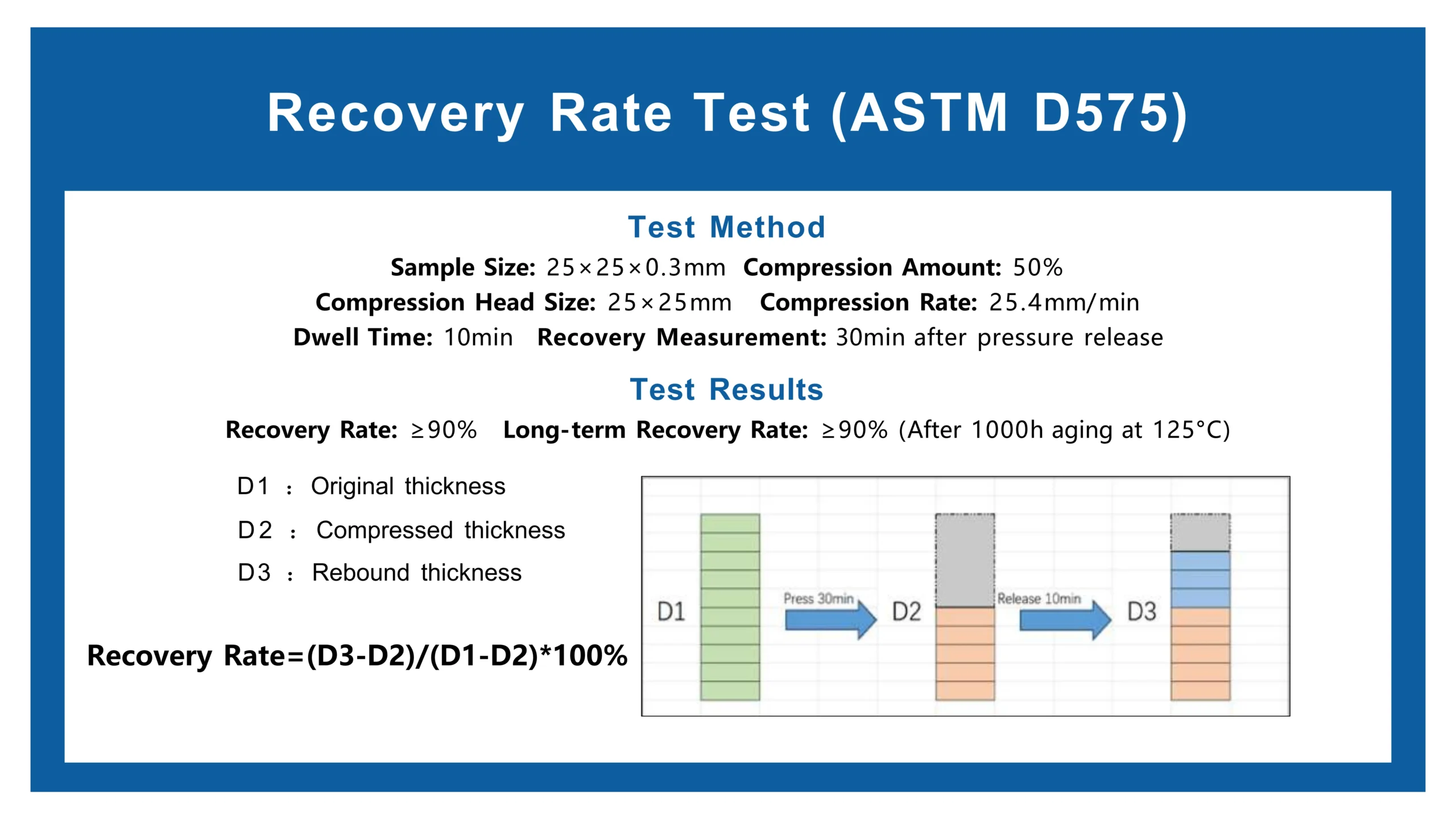
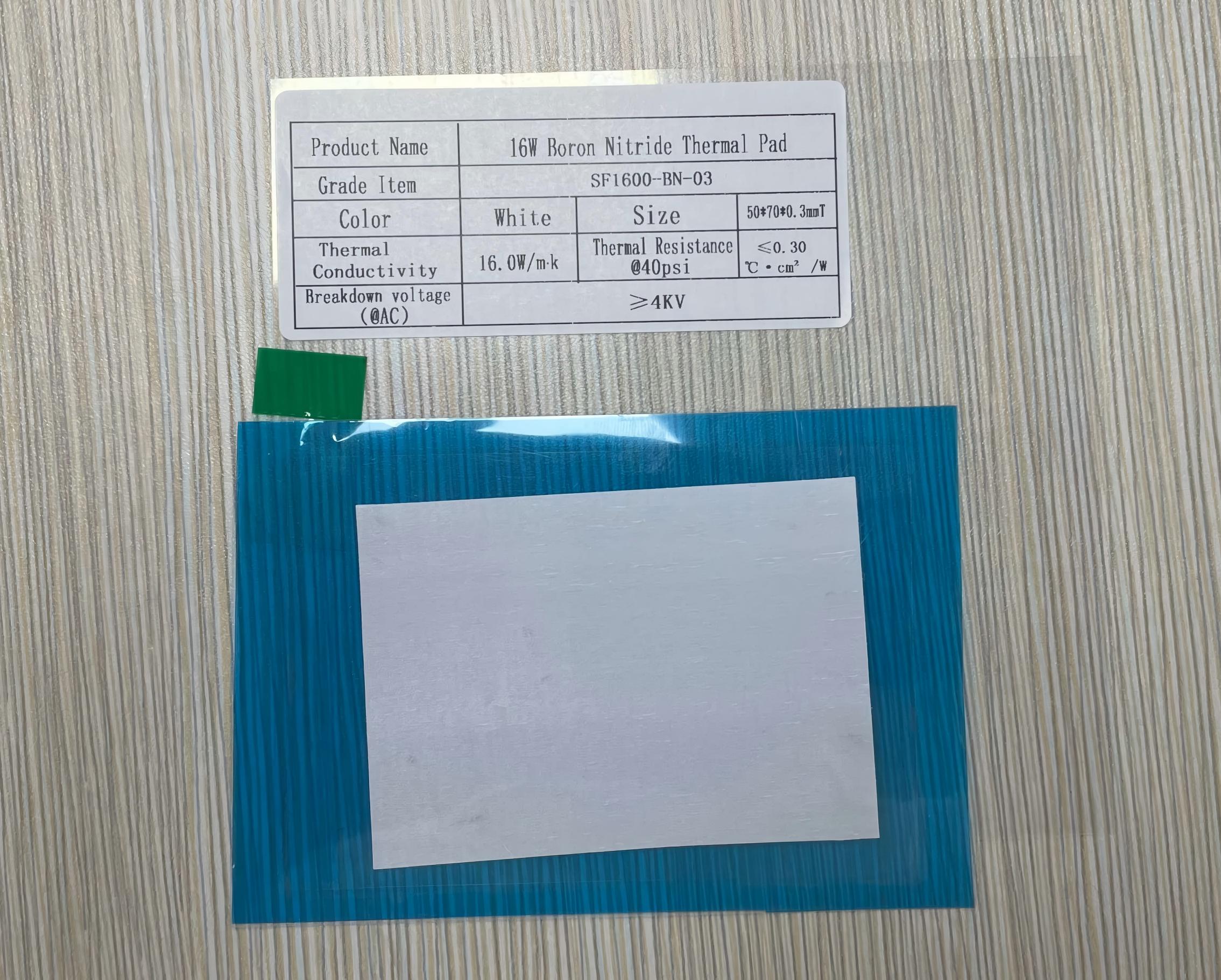
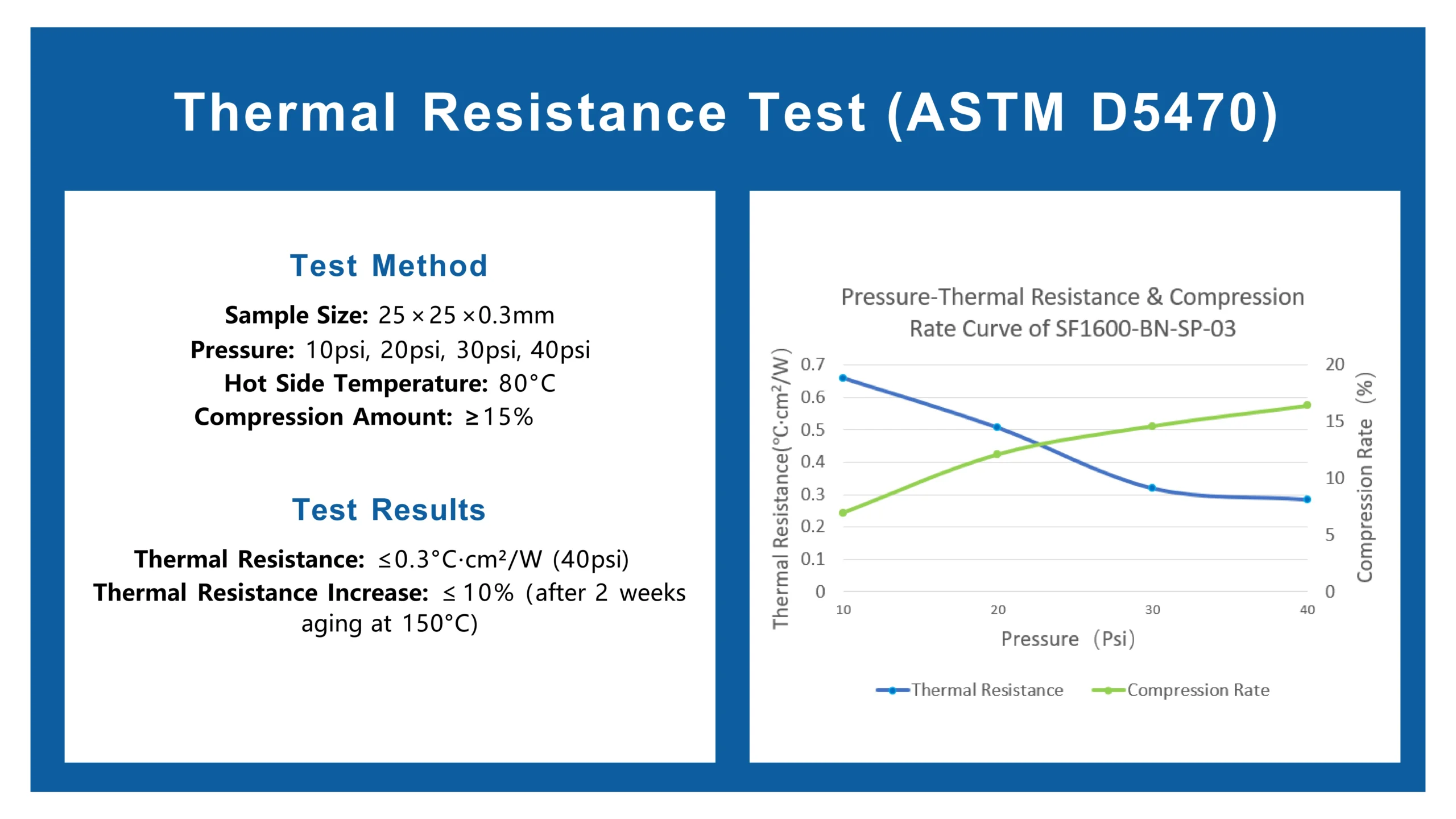
Use this table to compare the seven current standard datasheet models. Thermal resistance is measured at 40 psi according to ASTM D5470.
| Modèle | Nominal Thickness | Résistance thermique °C·cm²/W @ 40 psi | Tension de rupture kV AC | Rebound Rate | Datasheet |
|---|---|---|---|---|---|
| SF1600-BN-03 | 0,3 mm | ≤0.3 | ≥4.0 | ≥90% | |
| SF1600-BN-05 | 0,5 mm | ≤0.5 | ≥5.0 | ≥80% | |
| SF1600-BN-07 | 0,7 mm | ≤0.7 | ≥6.0 | ≥70% | |
| SF1600-BN-10 | 1.0 mm | ≤0.8 | ≥10.0 | ≥70% | |
| SF1600-BN-15 | 1.5 mm | ≤1.1 | ≥12.0 | ≥60% | |
| SF1600-BN-20 | 2.0 mm | ≤1.4 | ≥12.0 | ≥60% | |
| SF1600-BN-30 | 3.0 mm | ≤1.7 | ≥12.0 | ≥60% |
Engineering note: The listed thermal resistance, breakdown voltage, and rebound rate are model-specific. Do not apply the SF1600-BN-03 values to thicker models. Actual performance can vary with contact pressure, surface condition, pad dimensions, and assembly design.
Silicone sheets
Silicone offers Flexibilité et Softness, so a sheet can conform to small gaps without much fuss. As a Thermal interface material, however, its Heat transfer depends heavily on filler loading, pressure, and thickness.
- Compare candidates by:
- Checking Conductivité thermique at the required thickness.
- Confirming Isolation électrique and breakdown voltage.
- Testing thermal resistance under real mounting pressure.
Pour un boron nitride thermal pad for a solar inverter, Sheen Materials can be considered alongside conventional silicone thermal sheets when matching insulation, conductivity, and mechanical fit to the inverter design.
5 Steps To Choose Insulating Thermal Pads
A boron nitride thermal pad for a solar inverter must move heat while preserving safe isolation under real mounting pressure. The trick is balancing electrical limits, mechanical fit, and temperature cycling, so the matériau d'interface thermique keeps doing its job for years.
Identify required breakdown voltage for power converters
Start with converter working voltage and isolation architecture. Specify pad rigidité diélectrique et tension de claquage above the required voltage rating, including an appropriate safety margin and final thickness. A boron nitride thermal pad for a solar inverter should maintain isolation électrique after assembly, not merely pass a material-sheet test.
Match Shore hardness to heat sink surface finish
Shore hardness affects how well a pad follows the dissipateur thermique finition de la surface. Softer material offers greater conformité et le comblement des lacunes, while excessive softness can squeeze out under pression de contact. Check the solar inverter thermal pad at actual clamp load.
Evaluate coefficient of thermal expansion against ceramic substrates
Compare pad CTE avec ceramic substrates and surrounding materials. Repeated heating makes mismatched dilatation thermique create thermal stress, raising delamination risk. A boron nitride thermal pad for a solar inverter needs sound compatibilité des matériaux for long-term fiabilité.
Compare phase change materials, graphite films, and boron nitride sheets
Phase change materials conform well after warming; graphite films offer high in-plane conductivité thermique but are electrically conductive. Boron nitride sheets can combine heat transfer with insulation. That makes insulated thermal pads a safer fit where galvanic isolation is non-negotiable.
Confirm compatibility with IGBT modules and power semiconductors
Match a boron nitride thermal pad for solar inverter to Modules IGBT et power semiconductors using manufacturer limits for thickness, pressure, temperature, and electrical isolation. Confirm thermal resistance and chemical component compatibility too; good dissipation de la chaleur means little if fiabilité des appareils suffers.
Boron Nitride Thermal Pad For Solar Inverter’s 30% Loss Reduction
A boron nitride thermal pad for solar inverter can improve heat flow while preserving isolation, but a 30% loss claim needs measured proof. Here’s how lab, field, and cost data connect.
Case study: Thermal impedance drop in industrial power supplies
- Under the same electrical load, compare standard interfaces with Boron Nitride pads en Industrial power supplies.
- Record Impédance thermique and semiconductor case temperatures after thermal stability.
- Keep mounting pressure and cooling airflow unchanged; small setup differences can skew Performance analysis.
- Mieux Dissipation de la chaleur may improve Thermal management en Électronique de puissance, while Isolation électrique still needs verification.
A boron nitride thermal pad for solar inverter should only support a 30% loss-reduction claim when measured input-output losses show that change, not merely because temperatures fall.
Field data on operating temperature range improvements
Seasonal Field data gives the test some real-world muscle.
- Log température de fonctionnement, junction temperature, case temperature, and ambient conditions in Solar inverters.
- Compare hot and cool periods across equivalent loads.
- Check how Nitrure de bore affects Heat transfer et Thermal performance.
- A wider usable Temperature range matters when lower temperatures raise practical operating margin and System reliability, without weakening insulation.
ROI analysis in renewable energy systems
- Calculate ROI analysis from several buckets:
- higher Solar inverter efficiency and measurable Energy loss reduction;
- lower cooling and maintenance costs;
- longer System lifespan.
- Compare those gains against Boron Nitride pads, installation, and qualification costs.
- Pour Renewable energy systems, the resulting Investment return shows if the thermal pad upgrade pays off.
- Bon Thermal management solutions need application-specific data; a cooler inverter alone doesn’t prove 30% lower energy losses.
Ensuring UL Compliance In 6 Steps
A boron nitride thermal pad for a solar inverter has to manage heat without weakening electrical isolation, so compliance starts well before assembly. From Normes UL to production records, each detail matters. Sheen Materials connects matériaux d'interface thermique, controlled processing, and traceable testing so engineers can keep certification work practical while avoiding nasty surprises near production approval.
Define UL thermal interface materials standards
- Match the inverter design to relevant Normes UL et safety regulations.
- Confirm polymer propriétés des matériaux, flammability, temperature rating, and insulation-system use.
- Vérifier compliance requirements et performance criteria for each boron nitride thermal pad.
Review dielectric materials certification requirements
A boron nitride thermal pad for a solar inverter needs documented certification requirements, not just good thermal data.
- Vérifier dielectric materials certificates and thickness limits.
- Review propriétés électriques, résistance d'isolation, et tension de claquage conditions.
- Compare approvals with applicable normes de sécurité.
Conduct surface treatment and curing processes
- Keep material preparation consistent.
- Control cleaning and surface treatment for reliable adhesion promotion.
- Record thermal curing, chemical treatment, and key process parameters. Small changes can matter.
Test dielectric strength and volume resistivity
For the solar inverter pad, verify rigidité diélectrique et résistivité volumique under relevant environmental conditions.
- Use suitable test methods.
- Include thickness, humidity, aging, and temperature.
- Retain electrical testing results for quality control.
Document lamination and hot pressing procedures
- Record lamination procedures et hot pressing settings.
- Track pressure, cure time, temperature, and material layers.
- Link bonding techniques to lot-level process documentation for easy traceability.
Final audit for semiconductor packaging materials compliance
Sheen Materials can support the final quality audit with traceable thermal-pad documentation.
- Review semiconductor packaging records.
- Confirmer materials compliance, electrical results, thermal data, and inspection records.
- Close gaps before product validation and production release.