Solving Battery Overheating With Graphene-Enhanced Phase Change Material
Overheating isn’t a small glitch—it’s the silent dealbreaker in modern batteries, and graphene-enhanced phase-change material steps in where old-school cooling falls short, moving heat fast enough to keep high-density systems from cooking themselves under pressure.
That means fewer safety scares, longer battery life, and less dependence on bulky cooling hardware, giving engineers and buyers a cleaner, smarter path to performance that actually holds up when demand spikes.
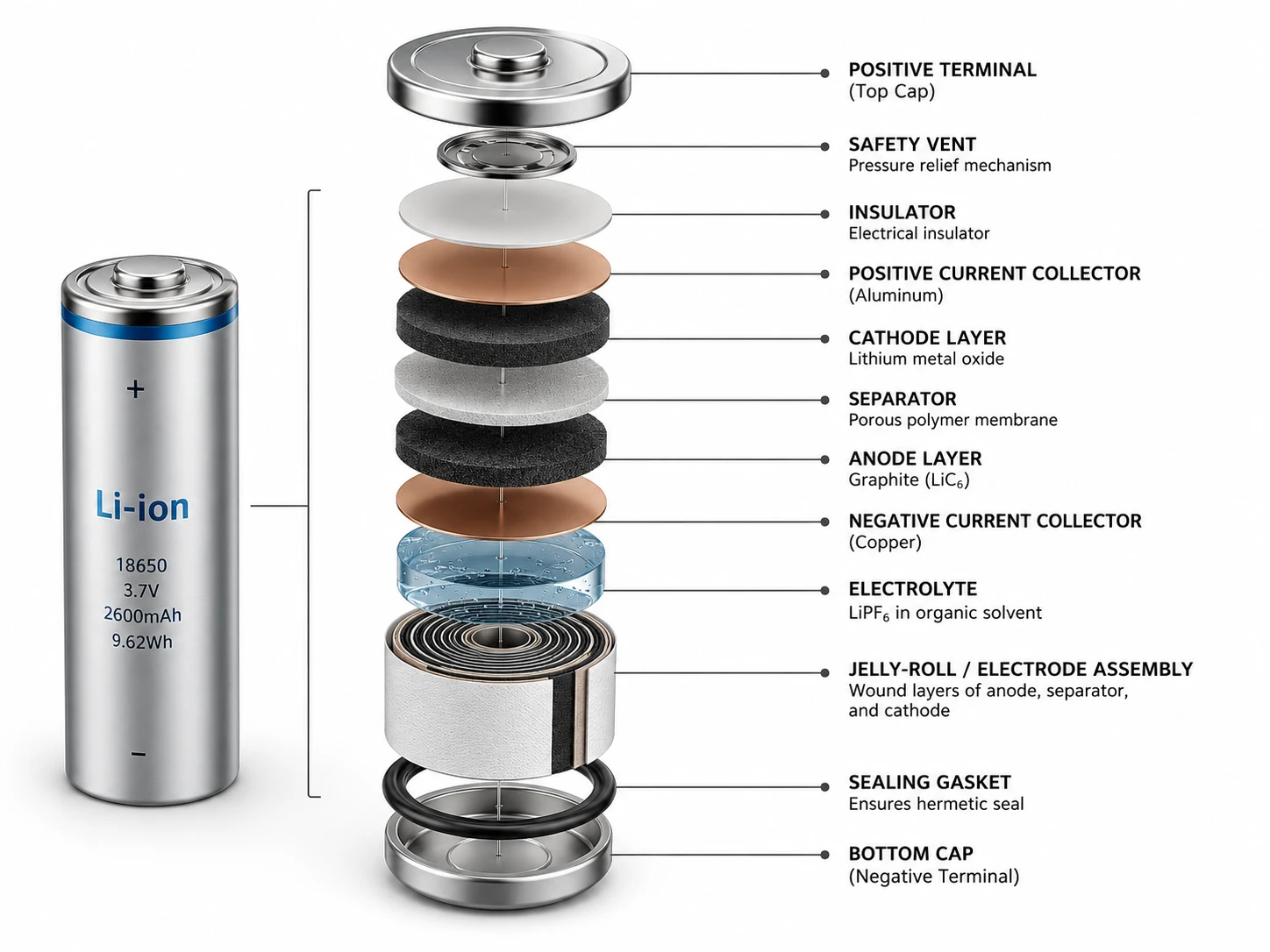
This image was generated using AI. Its content has been reviewed and approved by Sheen Materials; please feel free to save it.
Melodic Key Notes: Graphene-Enhanced Phase Change Material
➔ Thermal Breakthrough: Harnesses high-conductivity graphene flakes to speed up heat transfer and prevent thermal runaway in high-drain cells.
➔ Optimized Transition: Aligns phase change temperature with battery operating range, balancing latent heat capacity for peak charging safety.
➔ Structural Durability: Composite fabrication and encapsulation methods ensure mechanical strength and leak-proof thermal cycling stability.
➔ Passive Cooling Edge: Enables lighter, passive cooling designs in EV packs, boosting charging/discharging rates while extending cycle life.
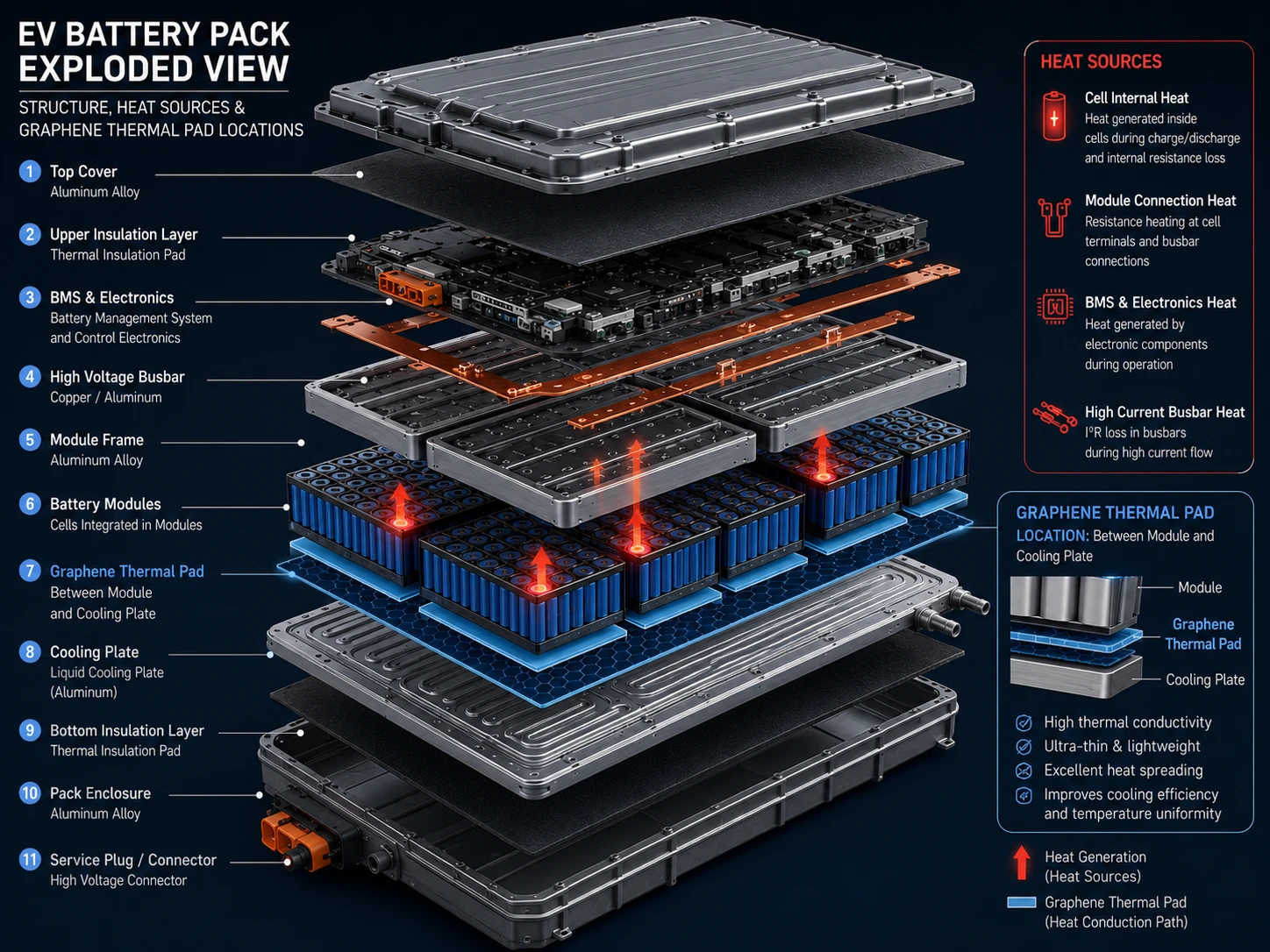
This image was generated using AI. Its content has been reviewed and approved by Sheen Materials; please feel free to save it.
3 Pain Points Battery Makers Face Without PCM
Battery teams feel the heat long before users do. When thermal buffers are missing, small temperature swings snowball into safety scares, slower performance, and fading cells. This cluster breaks down three everyday headaches that battery makers keep running into without proper phase-change support.
Uncontrolled Thermal Runaway in High-Drain Cells
High-drain designs push energy hard and fast. Without 熱管理, heat stacks up, and thermal runaway stops being a theory and starts being a risk.
- Loose heat flow triggers exothermic reaction chains
- Rising core temperature weakens battery safety margins
- Local hot spots end in cell failure or outright fire hazard
The pattern is familiar on production floors. Short bursts of uncontrolled heat grow during peak load, especially in high-drain cells used for EV acceleration or power tools. Add Graphene-enhanced phase change material, and that heat gets buffered instead of trapped. Graphene spreads it. Phase change absorbs it. The material buys time when seconds matter.
BloombergNEF noted in a 2024 EV safety outlook that unmanaged thermal spikes remain “one of the most persistent triggers of cascading cell failure in high-output battery packs.”
Teams working with シーン・マテリアル often point out how graphene-enhanced phase change material smooths these spikes before alarms even think about going off.
Inefficient heat dissipation lowers the charging/discharging rate
Slow charging is rarely about chemistry alone. It’s about 放熱 hitting a ceiling.
- Cells heat during fast charge
- 弱い 熱管理 traps that heat
- Control systems cut the charging rate and the discharging rate
- Battery performance そして power output slide
Here’s how unmanaged heat throttles real systems:
| Heat Load (W) | Core Temp (°C) | Charging Rate (C) | Discharging Rate (C) |
|---|---|---|---|
| 50 | 32 | 1.5 | 2.0 |
| 80 | 38 | 1.2 | 1.6 |
| 110 | 45 | 0.9 | 1.2 |
| 140 | 52 | 0.6 | 0.8 |
| 170 | 60 | 0.4 | 0.5 |
Drop in Graphene-enhanced phase change material, and the table shifts. Enhanced PCM acts like a passive heat sink, keeping energy transfer steady. シーン・マテリアル integrates graphene PCM blends that let systems hold higher rates without flirting with shutdown.
Rapid capacity fade due to poor cycle life
Capacity loss creeps in quietly. One warm cycle here. One cold swing there. Over time, capacity fade becomes unavoidable.
- Temperature swings stress electrodes
- Material degradation raises internal resistance
- Electrochemical stability weakens
- 効果的 cycle life shortens
- Overall, battery degradation speeds up
Now stack that over hundreds of cycles. Lifespan drops. So does usable energy density.
A steady thermal band changes the story. Graphene-enhanced phase change material dampens extremes, keeping reactions calmer. Even simple phase change materials help, but graphene-enhanced PCM spreads heat faster and recovers quicker. Battery makers working with Sheen Materials often see slower fade curves and longer service windows, especially in packs expected to live through rough duty cycles.
Specifications for Graphene-Enhanced Thermal Solutions
良い Graphene-enhanced phase change material is like having a steady hand on the thermostat—quiet, fast, and reliable when batteries get spicy. This cluster lays out what “good” actually means: heat flow through a ポリマーマトリックス, the right phase transition window, real latent heat targets, and durability that survives daily charge-and-discharge life. Sheen Materials frames these specs for buildable, testable designs.
Target thermal conductivity: Graphene flakes in polymer matrix
To make a Graphene-enhanced phase change material pull heat away as it means it, the composite material has to move energy through the ポリマーマトリックス without hitting dead ends.
- Filler choices that actually work
- グラフェン flake geometry: a wide lateral size helps 熱伝導 paths connect
- Surface treatment: improves bonding so the composite material doesn’t act like a bunch of islands
- Dispersion rules (the boring part that decides everything)
- Mixing: high-shear plus de-agglomeration to keep graphene from clumping
- Loading: enough filler to form a network, not so much that the melt turns into paste
- What to measure, not guess
- In-plane vs through-plane 熱伝導率 (battery packs care about both)
- Contact resistance at interfaces, because that’s where performance goes to die
In a graphene phase change material, Sheen Materials typically positions conductivity targets around pack geometry, not lab bragging rights, so the 熱伝導率 spec matches the real bottleneck.
Optimal phase transition temperature for battery thermal management
A Graphene-enhanced phase change material only earns its keep if the phase transition sits inside the battery’s normal operating zone. Too low, and it’s already melted before fast charging. Too high, and you’re late to the party.
- Map the real 動作温度 range across the module, not just one sensor.
- Pick a phase change material with a melting point that starts buffering during peak charge heat.
- チェック solidification point so it resets during a typical cool-down, not only in a lab fridge.
Quick gut-check signs you’re close:
- について thermal regulation feels “flat” during load spikes.
- The pack cools, and the PCM actually re-solidifies between drives.
This is where “enhanced phase change material” stops being a buzzword and starts acting like a safety margin.
Latent heat capacity and energy storage density benchmarks
について Graphene-enhanced phase change material specs, storage is the other half of the deal: you want strong latent heat without sacrificing flow, stability, or manufacturability.
- Core performance targets
- 高い phase change enthalpy so the PCM absorbs real bursts, not crumbs
- Useful energy storage density at the composite level, after adding graphene and shells
- Material selection (what wins in practice)
- Paraffin-based thermal energy storage: clean melt, simple processing
- Salt blends: higher-temperature options, but watch corrosion and cycling behavior
- Bench tests that matter
- DSC for enthalpy そして heat capacity
- After-cycling checks to confirm specific heat and melt range don’t drift
Sheen Materials tunes graphene-enhanced PCM recipes so that added graphene improves heat spread while keeping latent heat high enough to smooth out charging peaks.
Ensuring thermal cycling stability and mechanical strength
If a Graphene-enhanced phase change material leaks, cracks, or slumps, the rest of the specs are just nice paperwork. Long life needs both material stability and toughness.
- What usually goes wrong
- Thermal cycling causes volume change, and then fatigue shows up as microcracks
- Shell failure leads to seepage and slower 熱伝導 経時的
- Practical fixes you can verify: 1. Encapsulate the phase change material to limit shape change and prevent bleed. 2. Reinforce the polymer matrix so that mechanical strength holds after repeated melts. 3. Track 耐久性 with cycling plus bend/compression tests, not just thermal curves
- Red flags to fail fast
- Loss of structural integrity, sticky residue, or rising thermal resistance
With Sheen Materials, the goal is simple: an enhanced phase change material that stays boring—no leaks, no drift, no drama—after thousands of cycles.
Standard PCM vs. Graphene-Enhanced PCM
This cluster lays out how everyday phase change material choices shape real-world cooling results. From classic wax-based solutions to graphene-infused upgrades, the contrast feels practical, not academic. The tone stays grounded, touching battery cooling, heat flow limits, and why newer mixes are gaining traction with engineers and buyers who want fewer thermal headaches.
Standard PCM
- 共通 phase change material options, like paraffin wax, still show up everywhere.
- The appeal rests on latent heat and a predictable melting point.
- The downside? Weak 熱伝導率 slows heat absorption.
Dig a bit deeper, and patterns start to show:
- Thermal behavior
- Heat storage works well during phase change.
- Release speed lags once temperatures climb.
- System impact
- で 熱管理 setups, heat bottlenecks appear.
- Battery cooling stays uneven under fast charging.
- Practical trade-offs
- Low cost helps adoption.
- Long-term performance drifts during repeated cycles.
In real use, the workflow looks like this:
- Heat builds inside the pack.
- PCM melts and stores energy.
- Slow conduction delays heat exit.
- Local hotspots stick around longer than anyone likes.
Short bursts of reliability. Then limits show up.
Graphene-Enhanced PCM
Now the mix changes. グラフェン turns ordinary wax into a conductive network, pushing enhanced thermal conductivity where it counts. This is where Graphene-enhanced phase change material earns attention, especially in tight battery spaces.
- マテリアルデザイン
- Graphene flakes bridge thermal gaps.
- A stable nanocomposite forms.
- Performance gains
- Improved heat dissipation speeds response.
- Overheating prevention becomes realistic.
- System-level effects
- より強く 熱安定性 over many cycles.
- Smarter battery thermal management.
Nested comparisons help clarify:
- Standard PCM
- Low conduction
- Slower recovery
- Graphene-enhanced phase change material
- Faster heat paths
- Consistent output
| 素材タイプ | 熱伝導率 (W/m-K) | Cycle Stability (%) |
|---|---|---|
| Paraffin PCM | 0.2 | 82 |
| PCM + 1% Graphene | 1.5 | 91 |
| PCM + 3% Graphene | 3.8 | 95 |
| PCM + Carbon Fillers | 2.6 | 89 |
| Hybrid Graphene PCM | 4.2 | 97 |
In practice, Graphene-enhanced phase change material blends into systems smoothly. Brands like Sheen Materials tune graphene loading so gains feel steady, not flashy. For teams tired of thermal guesswork, this graphene-enhanced PCM approach just works.
How Does Graphene Improve Heat Storage?
Heat storage is rarely about one “magic” trick; it’s a stack of small wins. With Graphene-enhanced phase change material, you get quicker heat flow, steadier storage, and fewer messy leaks—stuff battery designers actually care about.
Boosting heat transfer with high-conductivity graphene flakes
Graphene-enhanced phase change material works faster when graphene flakes stop acting like random sprinkles and start acting like a street grid for heat.
- Conductive path building inside the material
- Contact and overlap
- flakes bridge gaps, turning isolated hot spots into shared pathways
- higher overlap means a higher effective 熱伝導率
- Network stability
- fewer “dead zones,” so 熱伝導 stays consistent during cycling
- Contact and overlap
- Practical heat-routing outcomes
- In-pack heat handling
- quicker dissipation away from cells, easing peak temperatures
- Composite tuning knobs (what teams actually tweak)
- flake loading, alignment, and interface treatment for enhancement without turning the mix into sludge
- In-pack heat handling
This is where Sheen Materials tends to focus: getting the graphene geometry and dispersion right so Graphene-enhanced phase change material doesn’t just test well once—it keeps performing.
Elevating latent heat capacity through graphite–paraffin composites
について Graphene-enhanced phase change material, the “storage” part comes from latent heat; the “usable” part comes from not bottling that heat in one corner.
- Start with paraffin as the PCM: it stores a lot of energy as capacity during melting.
- Add graphite to form composites that conduct heat, so charging/discharging doesn’t crawl.
- Keep the blend honest:
- too little conductive filler, and the heat flow stays sluggish
- too much, and you pinch latent heat and lose energy storage density
Quick checklist people use in labs and pilot lines:
- Does the melt front move evenly?
- Does the PCM hold shape without oozing?
- Does the final Graphene-enhanced phase-change material still meet the target capacity?
Sheen Materials typically positions graphite/graphene choices as a dial: tune conduction without gutting the latent heat payoff.
Enhancing thermal reliability and stability via encapsulation methods
Encapsulation is the “don’t let it ruin your day later” part of graphene-enhanced phase-change material—it’s about thermal reliability and long-haul stability, not flashy specs.
- What encapsulation is protecting
- Leakage control
- shells keep softened PCM from migrating under vibration and heat
- Property retention
- maintain 耐久性, dielectric behavior, and shape after repeated cycling
- Leakage control
- How methods are commonly layered
- Core–shell approach
- a protective skin around the active PCM, built for temperature swings
- Composite-within-a-shell approach
- conductive fillers inside, shell outside, so performance and protection cooperate instead of fighting
- Core–shell approach
- What “good” looks like after cycling
- no seepage, no cracking, no sudden drop in thermal response
- stable performance of the Graphene-enhanced phase change material, cycle after cycle
If you’re buying time for batteries, this is the boring stuff that saves programs. Sheen Materials leans into that boring—in a good way—so the Graphene-enhanced phase change material keeps its cool when the schedule gets hot.
EV Packs: Graphene PCM for Consistent Cooling
Battery packs hate surprises. Heat spikes shorten life and kill confidence. This cluster walks through how Graphene‑enhanced phase change material keeps EV packs calm under pressure, how graphene, phase change, そして material science slide into real battery builds, and how cooling gains get checked in the real world. The tone stays practical, a little shop‑floor, and grounded in how packs actually behave on the road.
Integrating encapsulated particles into battery module design
Design teams don’t just sprinkle encapsulation into a battery module and hope for magic. The particles sit inside composite layers, shaped around busbars and cells, so integration feels natural rather than forced.
- Key design moves show up early
- Shell selection that survives cycling
- Particle sizing tuned for 熱管理
- Placement near hotspots, not everywhere
- Cell grouping defines where phase change material earns its keep
- Module frames adapt without retooling chaos
- Validation loops catch stress before packs ship
Under the hood, the real work looks layered:
- Mechanical fit
- vibration tolerance
- expansion control
- Thermal logic
- melt range alignment
- heat spread paths
Short bursts of testing follow. Adjust. Lock it in. That’s how Graphene‑enhanced phase change material stops being lab gear and becomes production‑ready, a path シーン・マテリアル often supports during early module trials.
Passive cooling strategies enabled by graphene-enhanced composites
Passive cooling sounds lazy. It isn’t. グラフェン inside composites moves heat fast enough that fans stay quiet.
Common strategies stack together:
- Passive cooling through conduction
- Local buffering with phase change material
- Smarter pack geometry inside EV packs
✓ No pumps
✓ Fewer failure points
✓ Lower parasitic loss
Behind the scenes, strategy breaks down into layers:
- Material layer
- graphene pathways
- stable PCM shells
- Pack behavior
- smoother temperature curves
- reduced peak loads
A 2024 BloombergNEF brief noted:
“Passive thermal solutions are gaining ground as material conductivity improves, especially in next‑gen battery enclosures.”
That’s where Graphene‑enhanced phase change material earns respect, doing quiet work mile after mile.
Measuring heat dissipation rate improvements in EV thermal packs
Cooling claims mean nothing without measurement. Engineers watch 放熱, track the rate, and log improvements across cycles.
Evaluation usually runs in stages:
1) Baseline pack without PCM
2) Pack with graphene PCM added
3) Long cycling inside EV thermal packs
Results get grouped:
- Performance
- cooling efficiency
- temperature spread
- 耐久性
- cycle stability
- shell integrity
Short notes tell the story. Packs stay cooler. Degradation slows. Graphene‑enhanced phase change material shows repeatable gains, especially when paired with clean graphene networks. That’s why teams focused on real‑world パフォーマンス keep it on the table, and why partners like シーン・マテリアル see rising demand from EV builders who hate thermal drama.