Thermal Management Challenges in AI Network Switches
AI network switch thermal management is now a heat-and-materials puzzle: tiny hotspots can become big headaches. High-power ASICs, dense optics, and crowded boards force engineers and buyers to scrutinize every thermal path.
シーン・マテリアル identifies thermal interface materials as critical links between heat-generating components and cooling hardware, where material properties and contact conditions shape heat transfer.
That makes procurement part of the engineering equation. Graphite thermal pads, phase-change materials, vapor chambers, cold plates, and cooling fluids must play nicely together. Next comes the tricky part: matching those materials to real switch architectures.
Key Points & Quick Answers: AI Network Switch Thermal Management
➔ Identify hotspots from uneven power density on metal-core PCBs
➔ Optimize thermal interfaces: ensure graphite sheets and PCM sheets conform under compression
➔ Enhance heat spreading via vapor chambers, copper cold plates, and graphite pads
➔ Balance enclosure materials: anodized aluminum vs. carbon-fiber panels for rigidity and conductivity
➔ Select cooling methods: pin-fin heatsinks, microchannel liquid plates, or immersion fluids
Why Thermal Hotspots Plague AI Network Switch Designs
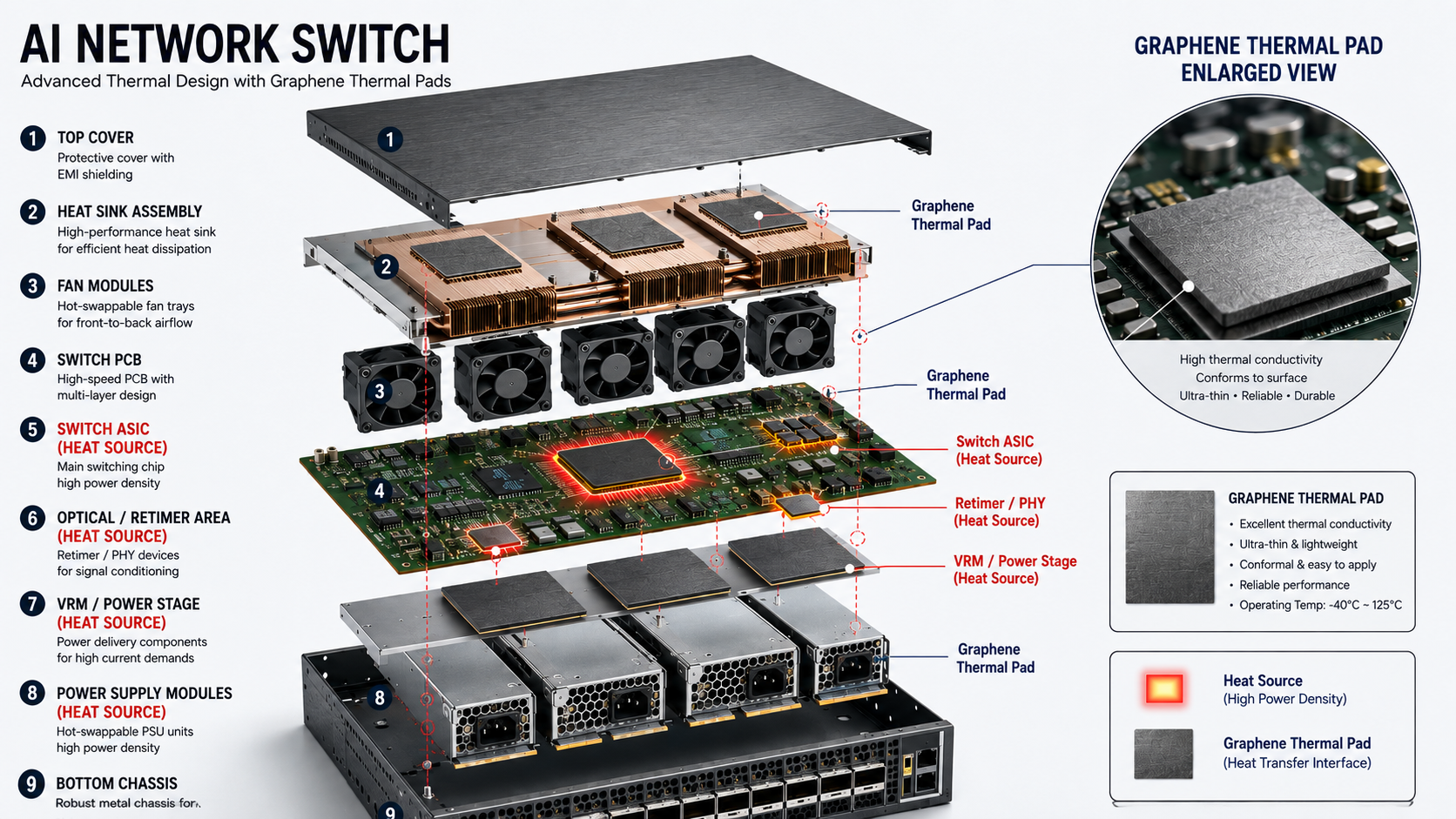
AI network switch thermal management gets tricky when dense hardware packs heat into a small box. Good thermal distribution depends on the board, interfaces, and enclosure working together without weak links.
Uneven Power Density on Metal Core Printed Circuit Boards
A metal core PCB helps spread ASIC heat, but high 電力密度 around processors and optics can still create a steep 温度勾配.
- Hotspot control starts at board level:
- Component placement
- Separating major heat sources improves 放熱 を越えて circuit board.
- Dense clusters raise local thermal stress, so AI network switch thermal management needs realistic workload maps.
- Dielectric design
- Thin, thermally conductive insulation cuts resistance between components and the metal core.
- Component placement
Inadequate Thermal Interface with Graphite Thermal Pads
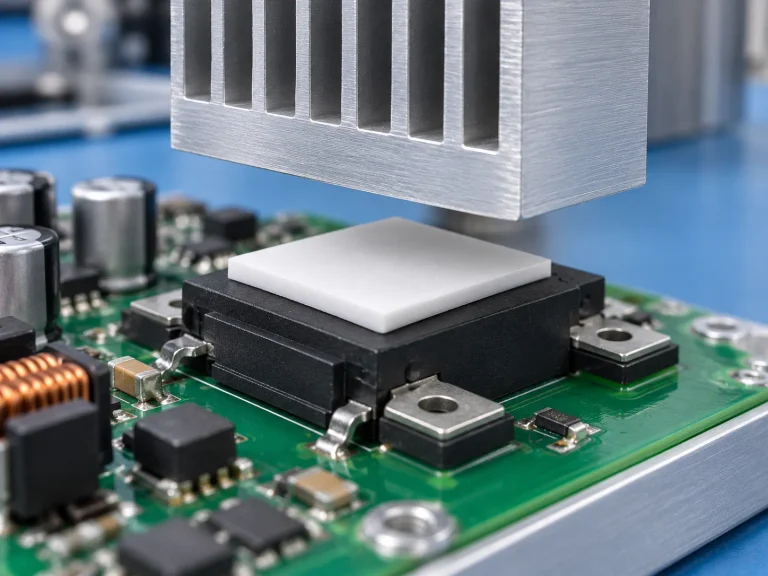
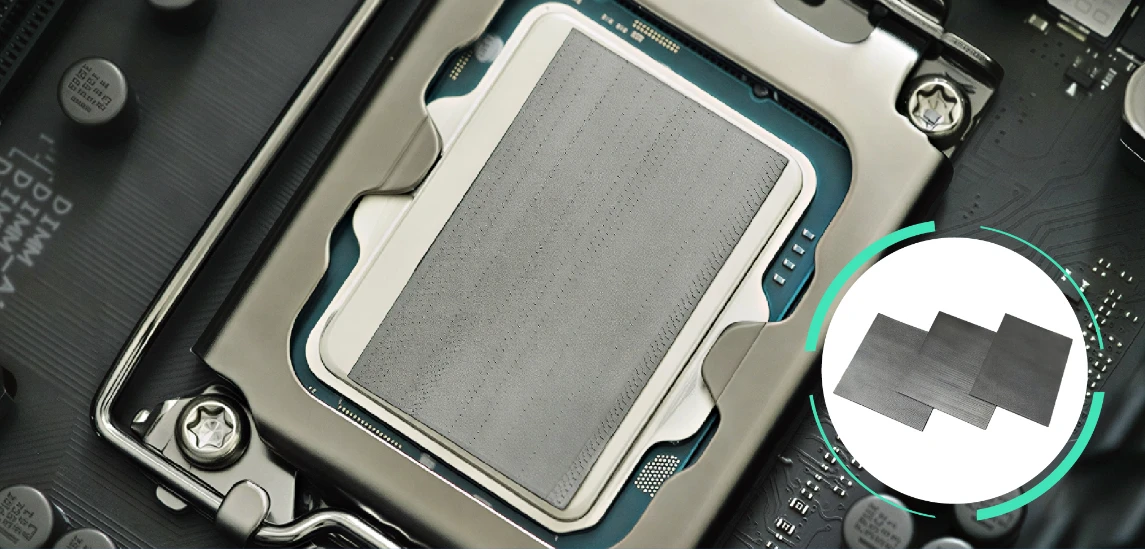
A graphite thermal pad offers high in-plane 熱伝導率, yet tiny air gaps are a real pain: poor contact quickly increases 接触抵抗.
- チェック サーマルインターフェース for flatness and alignment.
- Apply controlled compression so 熱伝導 stays consistent.
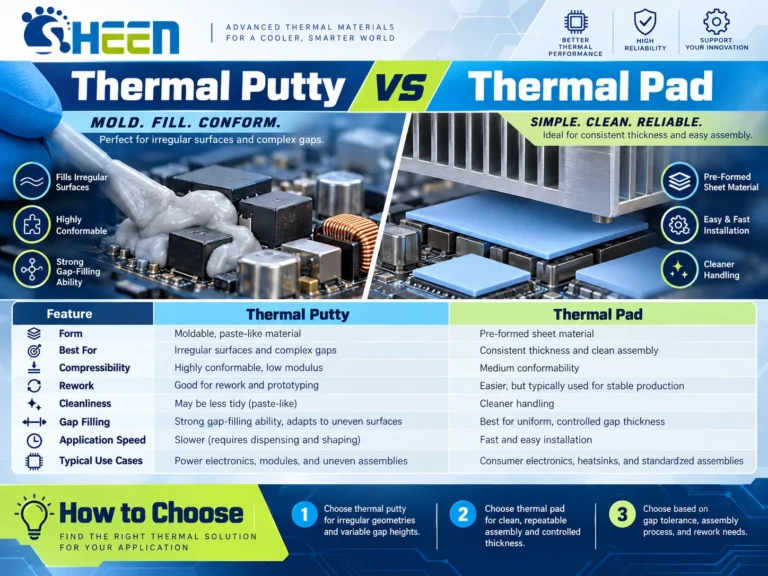
- Where surfaces vary, use suitable interface material such as gap pads or grease rather than leaving air as thermal insulation.
These details make AI network switch thermal management more predictable.
Constrained Heat Spreading in Anodized Aluminum Chassis Alloy
An anodized aluminum chassis alloy can carry ASIC heat toward cooler enclosure areas, but geometry matters.
- Heat spreading improves with short, broad conduction paths.
- 高い 熱抵抗 can develop at joints and anodized contact faces.
- より良い enclosure design connects internal conduction with ambient airflow, raising cooling efficiency.
In short, effective AI network switch thermal management needs board-level spreading, low-resistance interfaces, and a chassis that gives heat somewhere useful to go.
AI Network Switch Thermal Management: Core Challenges
AI network switch thermal management has to handle dense electronics, fast links, and changing loads without making cooling hardware bulky. That gets tricky when interface contact, circuit losses, and frame materials affect one another. Good AI switch thermal design connects these details rather than treating heat as an afterthought, helping hardware run steadily when traffic really gets cooking.
Ensuring Reliable Contact with Phase Change Material Sheet
For AI network switch thermal management, a Phase change material must soften at its intended temperature while maintaining low Contact resistance.
- Contact control
- Spring-loaded screws sustain Interface pressure through repeated heating and cooling.
- Compression-limit washers prevent over-squeezing the Thermal interface material.
- Surface control
- グッド Surface wettability improves contact, while suitable 熱伝導率 supports steady 放熱.
シーン・マテリアル can support material selection around these practical interface needs.
Mitigating PCB Dielectric Loss in Low-Temperature Co-Fired Ceramic
- Manage the electrical source.
- Dielectric loss で low-temperature co-fired ceramic converts some high-frequency energy into heat.
- Tune the physical design.
- The printed circuit board, conductor geometry, and Substrate material should protect each High-frequency signal and preserve Signal integrity.
- Give heat somewhere to go.
- Short thermal paths improve Thermal stability, a key part of AI network switch thermal management.
Balancing Structural Rigidity and Heat Flow through Carbon Fiber Reinforcement Panel
A Carbon fiber Reinforcement panel can deliver excellent Structural rigidity そして Mechanical strength, but heat does not travel equally in every direction.
- Fiber planning
- Align the Composite material with important Heat flow paths.
- Check directional 熱伝導率 near major switch heat sources.
- Interface planning
- Add conductive links where fiber orientation creates a thermal choke point.
That balance keeps AI network switch thermal management practical without sacrificing a stiff, lightweight chassis.
4 Key Cooling Methods For AI Switch Heat
AI network switch thermal management gets tougher as switch chips pack more power into tighter spaces. The right cooling path keeps junction temperatures under control without wasting rack energy. Sheen Materials supports practical thermal materials for AI network switch thermal management, from air-cooled hardware to liquid systems.
Airflow Enhancement via Pin Fin Heatsink Array
- A pin fin heatsink tackles switch heat by adding surface area around the package.
- 高い 熱伝導率 moves heat into the fins quickly.
- Forced air cooling then carries it away.
- バランス fan speed and fin spacing cut aerodynamic resistance, keeping AI network switch thermal management efficient without pushing fans flat out.
Vapor Phase Transfer with Copper Vapor Chamber
A copper vapor chamber spreads concentrated ASIC heat using phase change そして latent heat. Inside, fluid evaporates near the chip and condenses at the condenser zone.
- The internal wick structure returns liquid.
- Wider heat spreading lowers local 熱抵抗, giving AI switch cooling a more even temperature profile.
Liquid Cooling through Microchannel Liquid Cold Plate
- A microchannel liquid cold plate brings moving liquid close to high-heat-flux devices.
- コントロール coolant flow enters through a manifold.
- A thin 熱界面材料 reduces contact resistance.
- Water-glycol coolant transports heat toward rack-level rejection, making AI network switch thermal management practical at higher power densities.
- コントロール coolant flow enters through a manifold.
High-Resilience Graphene Thermal Conductive Pad
Advantages
Accommodating high power consumption and high heat flux density:
- The ASIC chips and CPUs in modern switches (such as 400G/800G models) operate at extremely high power levels (up to 500W–1500W) and generate high heat flux densities.
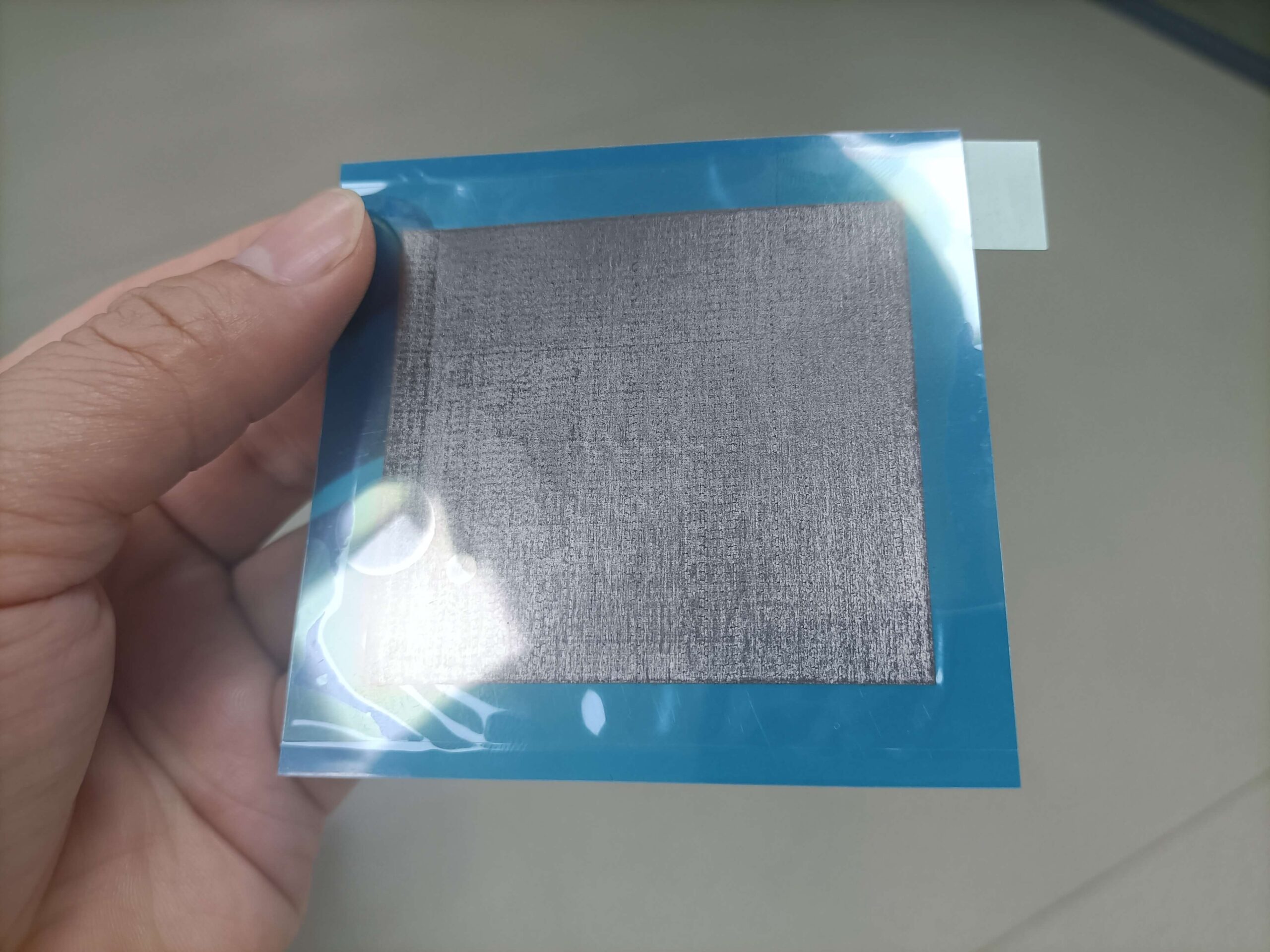
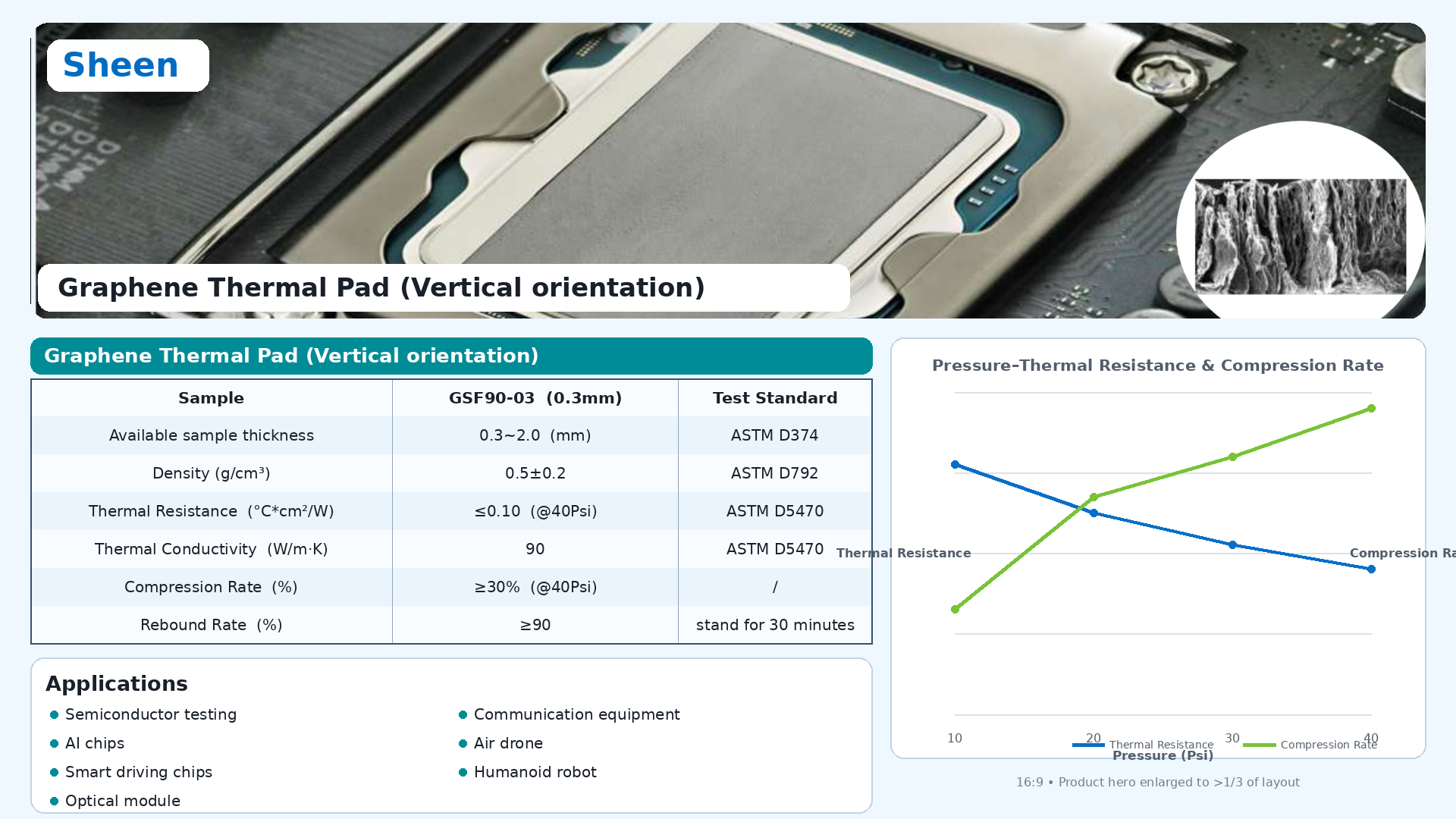
- Sheen Materials’ graphene thermal pads feature high thermal conductivity (up to 75–90 W/m·K), enabling rapid heat dissipation from core components; this effectively prevents localized overheating and avoids chip throttling or system crashes caused by excessive temperatures.
Adapting to compact spaces and chip warpage:
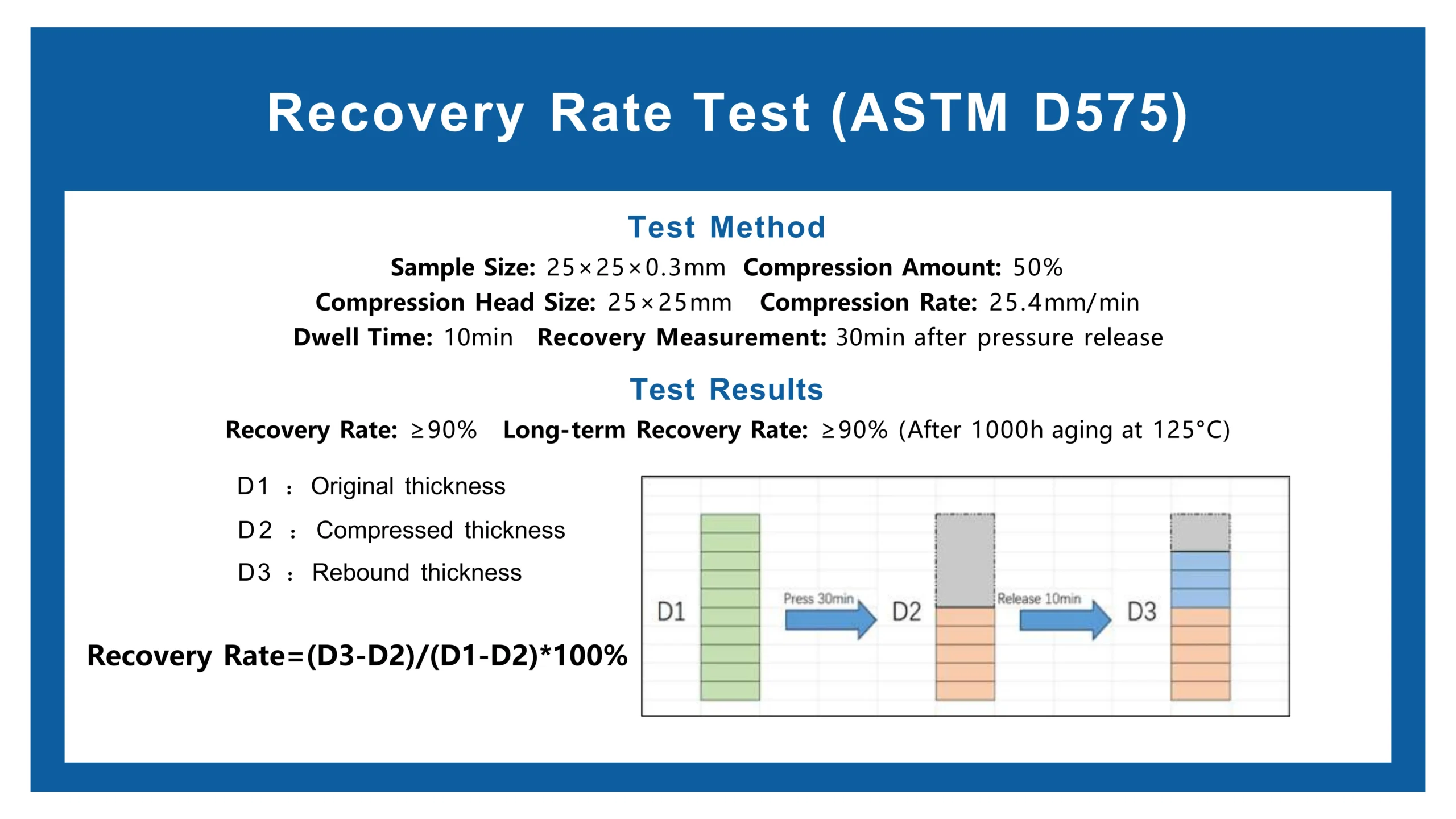
- Switch interiors are tightly packed, and large chips are prone to warpage at high temperatures. Shenn Materials’ graphene thermal pads feature high resilience (>90%), allowing them to adapt to minute deformations and conform closely to the microscopic gaps between the chip and the heatsink.
- This maintains low contact thermal resistance while absorbing displacement caused by warpage, thereby protecting precision components (such as BGA solder balls) from stress-induced damage.
Suitable for harsh operating conditions with a long service life:
- Network switches typically require continuous 24/7 operation, placing high demands on material reliability over time. Graphene thermal pads are solid, pre-formed materials that do not suffer from silicone oil bleed-out or the risks of drying out and pump-out.
- They offer excellent resistance to extreme temperatures (-40°C to 150°C) and exhibit minimal thermal resistance degradation over the long term, ensuring the switch operates stably under harsh conditions.
Adaptable to complex thermal management structures:
- Graphene thermal sheets are lightweight, thin, and customizable, allowing them to flexibly fit the complex, irregular geometries and confined spaces within switches.
- They are easy to install and rework, effectively filling air gaps to enhance overall heat dissipation efficiency.
Selection and Usage Precautions for Graphene Thermal Pads:
Ensure proper electrical insulation and short-circuit protection:
- Graphene materials are inherently electrically conductive. For high-voltage, precision electronic equipment such as network switches, it is essential to select graphene thermal pads featuring insulation protection (e.g., fully sealed edges or composite insulating foam) to prevent edge debris from causing circuit board short circuits.
Optimize contact pressure:
- Selection must be based on the actual internal assembly pressure and gap dimensions of the switch to ensure the thermal pad delivers optimal thermal conductivity and resilience under contact pressure.