-
الإضافة : المبنى 2، رقم 8 طريق هينغزوتانغ 8، دونغقوان
-
الهاتف : الهاتف +86 135 4224 3751

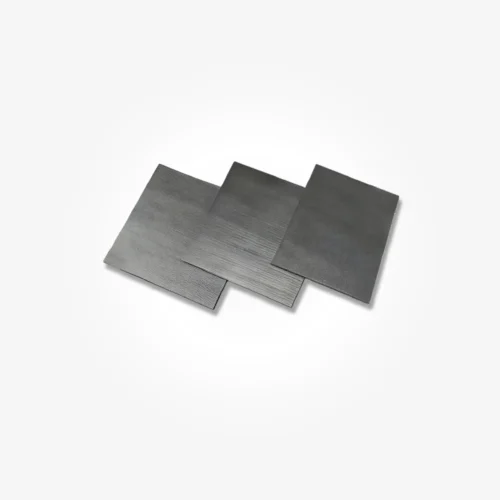
Graphene Thermal Pad GSF110-030
المزايا الرئيسية
- 110 W/m·K thermal conductivity with oriented
graphene pathways for efficient heat transfer. - Thermal resistance ≤0.08 °C·cm²/W at 50 psi
for the 0.3 mm GSF110-030 model. - Rebound rate ≥90% with a soft, conformable
structure for improved interface contact. - No pump-out and an oil bleeding rate ≤3%,
as specified in the datasheet. - -40 to 150°C operating range و
UL94 V-0 flammability rating. - Designed for evaluation in AI chips, optical modules,
automotive domain controllers and communication equipment.
GRAPHENE THERMAL INTERFACE MATERIAL
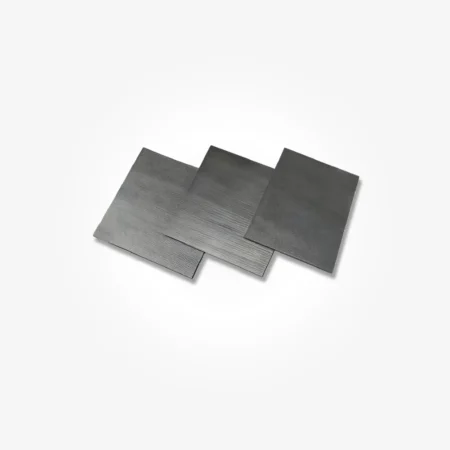
Graphene Thermal Pad GSF110-030
110 W/m·K conductivity. A 0.3 mm interface for high-power electronics.
SHEEN GSF110-030 uses oriented graphene and lamination-composite processing to create vertical heat-transfer pathways. Its soft, conformable structure is designed for thermal interfaces in AI chips, optical modules, automotive domain controllers, and communication equipment.
110 واط/م/ك
Thermal conductivity · ASTM E1461
≤0.08 °C·cm²/W
Thermal resistance · at 50 psi
0.3 مم
GSF110-030 nominal thickness
≥90%
Rebound rate
Q1. What is GSF110-030 designed for?
GSF110-030 is developed for compact, high-power thermal interfaces where heat transfer, surface contact, and assembly pressure must be considered together. The oriented graphene structure establishes conduction pathways through the pad thickness.
- High conductivity: 110 W/m·K is specified in the datasheet.
- Thin interface: the 0.3 mm model can be evaluated against the actual gap and compressed thickness.
- Conformable contact: a soft structure helps accommodate mating surfaces; validate the required pressure and component load.
Q2. What are the technical specifications?
| الممتلكات | GSF110-030 | Test method |
|---|---|---|
| التوصيل الحراري | 110 W/m·K | ASTM E1461 |
| Thermal resistance at 50 psi | ≤0.08 °C·cm²/W | ASTM D5470 |
| Application temperature | -40 to 150°C | Not specified |
| Rebound rate | ≥90% | Not specified |
| Tensile strength, oriented direction | ≥0.05 MPa | ASTM D412 |
| اللون | Black | مرئي |
| Model nominal thickness | 0.3 مم | ASTM D374 |
| Thickness range listed in TDS | 0.2–2.0 mm | ASTM D374 |
| الكثافة | 0.3–0.7 g/cm³ | ASTM D792 |
| Oil bleeding rate | ≤3% | Not specified |
| القابلية للاشتعال | V-0 | UL94 |
Engineering note: The thermal resistance value applies to the 0.3 mm model at 50 psi. Confirm model-specific data for other thicknesses and compare materials under equivalent conditions.
Contact SHEEN to request RoHS 2.0, REACH, and halogen compliance documentation for your project.
Q3. How does the pad support interface performance?
Low resistance and conformability
A soft contact surface helps reduce interface gaps. Thermal resistance depends on mounting pressure, surface condition, and assembly geometry; the TDS includes a pressure–resistance and compression curve for selection.
Rebound and reliability
The TDS specifies ≥90% rebound and ≤3% oil bleeding, and describes no pump-out, low outgassing, and aging resistance. Request supporting test conditions for your reliability qualification.
Q4. How should GSF110-030 be stored and supplied?
- Storage: a cool place at ≤30°C and ≤75% relative humidity.
- Shelf life: 12 months under the recommended conditions.
- Packaging: customizable according to customer requirements.
- Before production: verify gap, dimensions, allowable compression, and process compatibility.
Q5. Which applications should be evaluated?
The datasheet lists the following application areas. Validate thermal, mechanical, and electrical suitability in the intended assembly.
AI chips & high-performance computing
Evaluate thin chip-to-cooling-surface interfaces against the required heat load and mounting pressure.
Optical modules
Check interface dimensions, compression and contamination limits, plus insertion cycles where applicable.
Automotive domain controllers
Assess intelligent-driving processor interfaces against thermal cycling and project-specific reliability requirements.
Base stations & communication equipment
Consider compact, high-power assemblies with limited thermal interface space.
Drones & humanoid robots
Review contact retention, vibration, and allowable loading in compact electronic assemblies.
Semiconductor testing
Confirm compatibility with fixture pressure, mating surfaces, and repeated operating cycles.
Datasheet & sample evaluation
Review the specifications and pressure–compression curve before selecting your interface thickness and mounting conditions.
Download GSF110-030 Datasheet (PDF)
For sample support, submit the gap, contact dimensions, heat load, allowable pressure and operating temperature through the product inquiry form.
Frequently asked questions
Does ≤0.08 °C·cm²/W apply at every pressure?
No. This specification is for the 0.3 mm model at 50 psi using ASTM D5470. Other pressures and thicknesses require separate evaluation.
Is GSF110-030 the 0.2 mm version?
No. This model is identified as 0.3 mm. The TDS lists a 0.2–2.0 mm thickness range; confirm the model and specifications for the thickness you need.
Can it be used for electrical insulation?
The TDS provides no dielectric strength or volume resistivity data. If isolation is required, ask SHEEN to confirm suitability or recommend an insulating thermal material.