-
الإضافة : المبنى 2، رقم 8 طريق هينغزوتانغ 8، دونغقوان
-
الهاتف : الهاتف +86 135 4224 3751

Maximize Heat Dissipation: A Graphene Thermal Gasket Selection Guide
Heat is eating your margins and your uptime, and this Graphene thermal gasket selection guide cuts straight to what actually fixes it.
Power-dense hardware runs hot, silicon starts to tap out, and misses snowball into failures wants to own. Graphene options promise heat flow, but formats, impedance, and fit can trip you up fast. This intro shows how to pick the right form, keep lines moving, and stop heat from calling the shots.
Key Insights for the Graphene Thermal Gasket Selection Guide
- Match Material Forms to Applications: choose films, pads, die-cuts or rolls based on component geometry and production volume.
- Optimize Thermal Impedance: track contact resistance and junction temperature to ensure reliable heat flow in power modules and processors.
- Balance Flexibility and Conductivity: composite pads excel on uneven surfaces; graphene films win in high-performance computing.
- Streamline High-Volume Workflow: integrate dispensing, die-cutting, lamination, and quality checks for consistent performance in data centers and automotive electronics.
Types Of Thermal Gasket Materials
Choosing the right material is not guesswork. This Graphene thermal gasket selection guide breaks down how مواد الواجهة الحرارية, elastomers, polymers, ceramics, metals, phase change materials, greases, و pads stack up in real devices. If heat is your headache, this guide keeps it simple and practical.
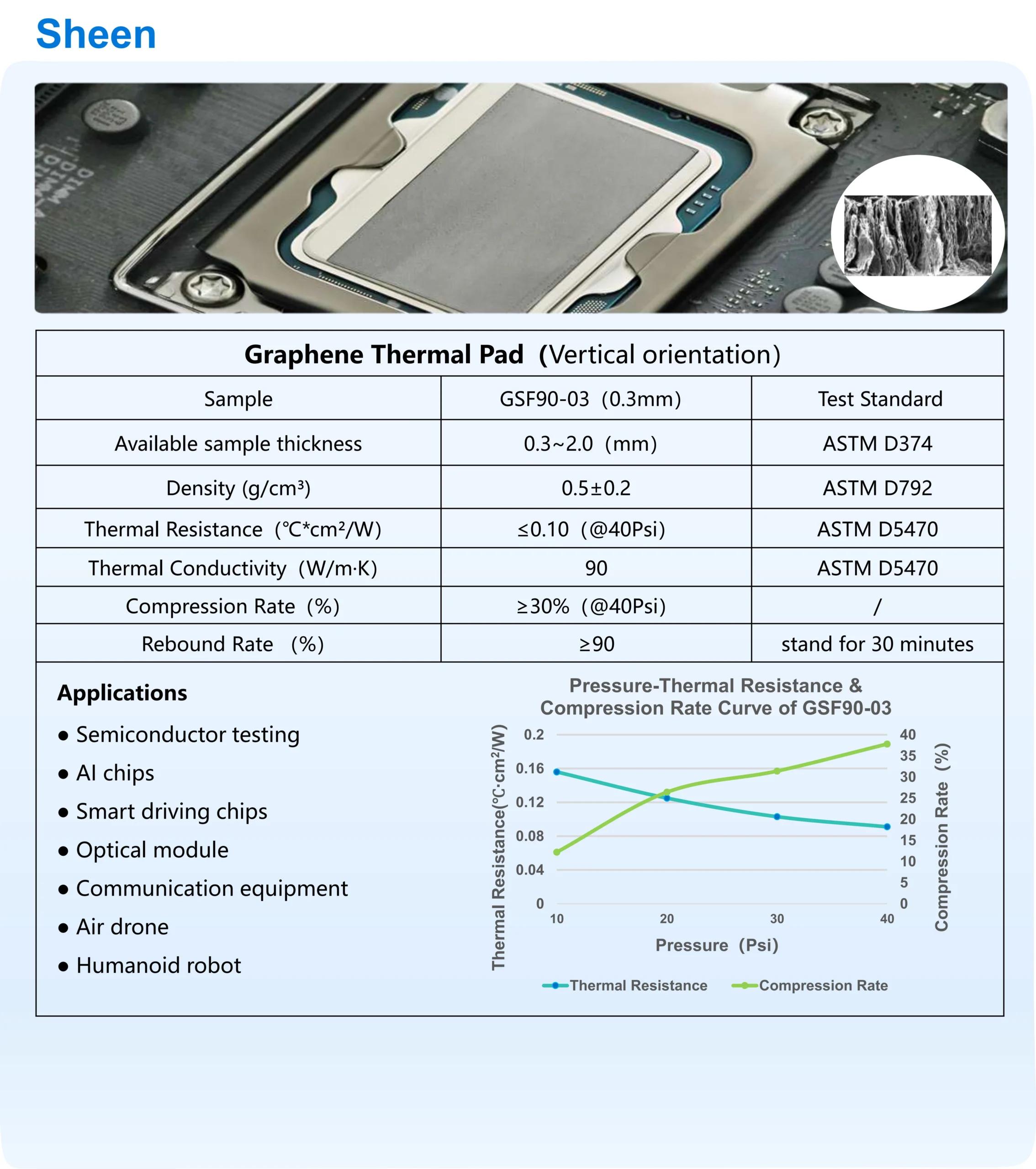
Graphene Films and Their Thermal Conductivity
When reviewing a graphene thermal gasket selection guide, performance starts with conductivity.
- Core Material Properties
- الجرافين films و الملاءات
- High in-plane التوصيل الحراري
- Ultra-thin nanomaterials structure
- Heat Flow Characteristics
- Anisotropic vs. isotropic نقل الحرارة
- Lateral spreading efficiency
- Thickness-to-performance ratio
- Typical Performance Data
| نوع المادة | In-Plane W/m·K | Through-Plane W/m·K | Density (g/cm³) |
|---|---|---|---|
| Graphene film | 1200–1800 | 10–25 | 1.9–2.2 |
| Copper foil | 380–400 | 380–400 | 8.9 |
| Ceramic pad | 20–40 | 20–40 | 3.2–3.8 |
| وسادة سيليكون | 3-12 | 3-12 | 2.0–3.0 |
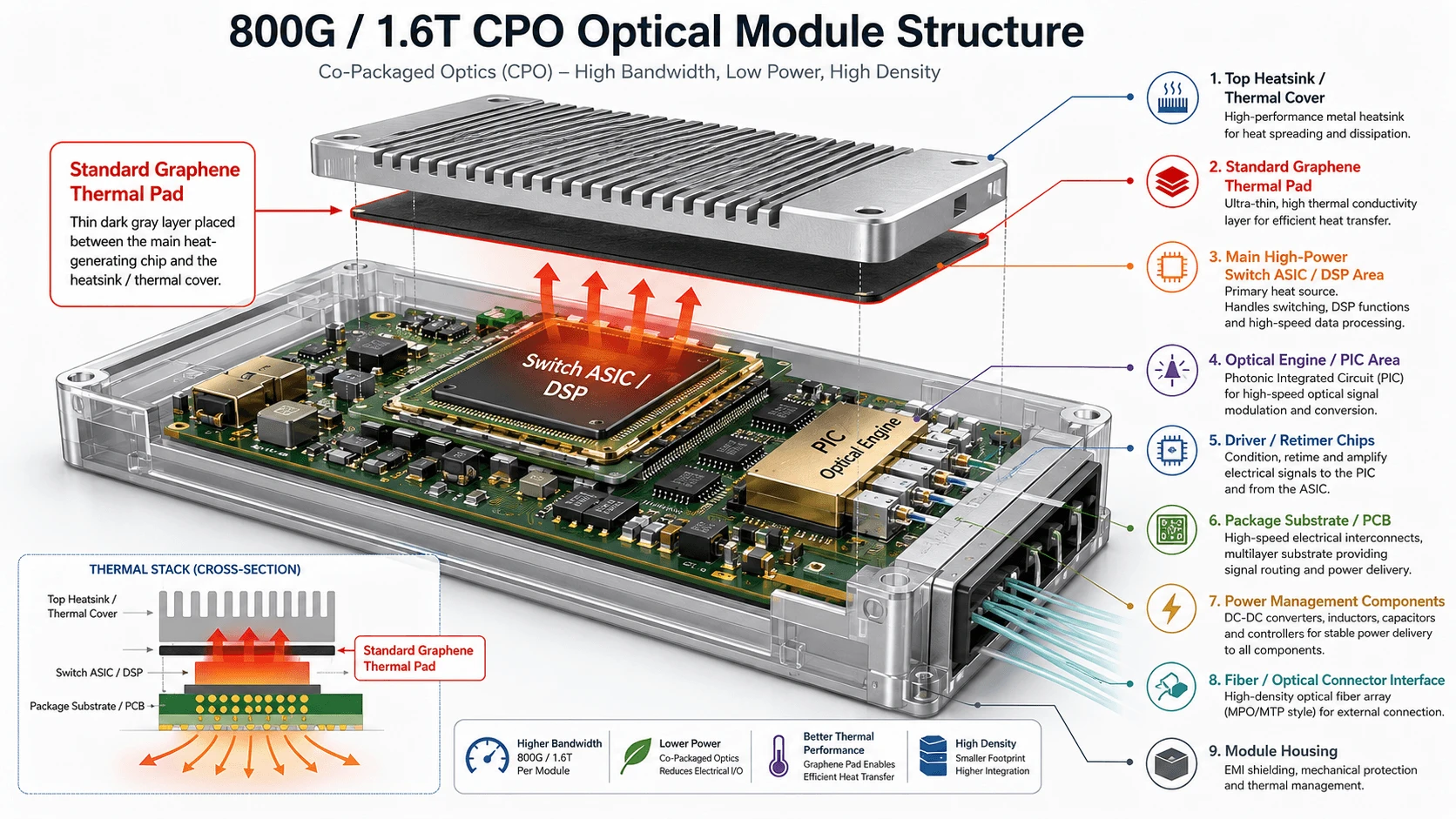
For processors and AI accelerators, lateral spreading matters more than bulk mass. That’s why مواد اللمعان focuses on engineered graphene layers tuned for stable, repeatable output.
If you’re building a thermal gasket guide for compact electronics, graphene simply moves heat faster.
Composite Pads Combining Flexibility and Adhesion
متينة gasket selection guide must address surface gaps. Composite materials blend polymers with ceramic or metallic fillers, forming وسادات حرارية that compress under pressure.
Key traits:
- المرونة for uneven substrates
- موثوقة adhesion without pump-out
- قوي المطابقة تحت الاهتزاز
In automotive modules:
- Step 1: Apply the pad between the heat source and the sink.
- Step 2: Controlled compression activates bonding.
- Step 3: Fillers create thermal pathways.
Short take? Soft feel. Tough performance. Stable over cycles.
Die-cut Shapes for Integrated Circuits
Precision matters in IC packaging.
- Design Level: 1.1 Custom die-cut geometries. 1.2 Tight tolerance for integrated circuits (ICs). 1.3 Electrical insulation for dense المكونات الإلكترونية.
- Manufacturing Flow
- CAD mapping
- Tooling calibration
- Volume manufacturing
For a reliable Graphene thermal gasket selection guide, shape control reduces contact resistance. Custom cuts minimize assembly stress while protecting micro-solder joints.
مواد اللمعان supplies precision-cut graphene gasket selection formats that fit high-density memory layouts without rework.
Preforms and Rolls for High-Volume Applications
Large-scale production needs rhythm and repeatability.
• Preforms for automated placement.
• Continuous rolls for lamination.
• Bulk materials feeding robotic التجميع.
In high-volume manufacturing:
- Material unwinds in continuous supply.
- Automated cutting ensures dimensional precision.
- Inline inspection confirms thickness stability.
Data centers and telecom racks rely on consistent مواد الواجهة الحرارية across thousands of units. A dependable Graphene thermal gasket selection guide always considers supply format, not just chemistry.
For scalable programs, مواد اللمعان supports roll-to-roll graphene thermal gasket production so heat control keeps up with demand.
4 Performance Metrics You Must Track
Choosing the right material from a Graphene thermal gasket selection guide is not guesswork. It comes down to tracking the right مقاييس الأداء so your thermal design stays cool, stable, and built to last.
Thermal Impedance and Contact Resistance Insights
When using a Graphene thermal gasket selection guide, start with heat flow basics. The relationship between المعاوقة الحرارية و مقاومة التلامس defines how efficiently heat travels across the heat flow path.
- المعاوقة الحرارية reflects total resistance from chip to sink.
- Contact resistance depends on surface roughness و تطبيق الضغط.
- Thermal interface material quality changes everything.
- Measure interface flatness.
- Adjust interface pressure to reduce micro-gaps.
- تحقق gasket thickness against compression limits.
▪ Lower impedance = smoother transfer.
▪ Poor contact = trapped heat.
For advanced builds:
- Material factors
- التوصيل الحراري
- Mechanical compliance
- Assembly factors
- Torque control
- Surface prep
A reliable graphene gasket selection guide highlights how these variables interact, not just material specs.
Monitoring Junction Temperature for Reliability
If درجة حرارة الوصلة climbs, موثوقية الجهاز drops fast. That’s the reality in semiconductor devices.
Keep it simple:
- Track peak درجة حرارة التشغيل.
- Watch for abnormal rise during load spikes.
- Log trends over time.
Step-by-step control:
- Install real-time temperature monitoring sensors.
- Compare readings against rated limits.
- Adjust cooling or upgrade gasket material.
Nested reliability check:
- Thermal behavior
- Stable under idle
- Stable under peak load
- Failure risks
- Thermal runaway
- Solder fatigue
متينة Graphene thermal gasket selection guide ties الإدارة الحرارية decisions directly to long-term stability. That’s how مواد اللمعان approaches reliability testing—practical, data-driven, and grounded in real workloads.
Assessing Power Dissipation under Heat Flux
عالية heat flux means serious power dissipation demands. No shortcuts here.
Quick checklist:
- Confirm total thermal load.
- Match gasket خواص المواد to heat generation.
- Validate the cooling capacity of the المشتت الحراري.
Evaluation path:
- Calculate expected watt density.
- Compare against the rated heat transfer coefficient.
- Stress-test under peak cycling.
Deeper breakdown:
- مستوى النظام
- Airflow efficiency
- Heat sink geometry
- Interface level
- Compression uniformity
- Graphene gasket thermal resistance
A proper graphene gasket selection guide ensures your التصميم الحراري holds steady in data centers, EV modules, and power converters.
Evaluating Thermal Cycling and Lifetime Effects
Repeated expansion and contraction cause thermal stress. Over time, that leads to تدهور المواد و fatigue.
Monitor lifecycle in layers:
- Lab validation
- Thermal cycling tests
- Accelerated aging
- Field simulation
- Vibration + heat
- Load switching
Sequence for lifetime prediction:
- Define expected cycle range.
- Measure resistance drift after cycles.
- Correlate with استقرار طويل الأجل targets.
Key durability factors:
- Mechanical strength retention
- Interface adhesion
- Change in المقاومة الحرارية
A well-structured Graphene thermal gasket selection guide connects cycling data with real-world reliability. For engineers who want dependable results without trial and error, مواد اللمعان builds solutions that stand up to harsh automotive and industrial demands.
Graphene Vs. Silicone: Heat Dissipation Showdown
Choosing between الجرافين و سيليكون for thermal management can feel tricky. This practical Graphene thermal gasket selection guide breaks it down in plain terms, comparing التوصيل الحراري, نقل الحرارة, and real-world dissipation performance so you can pick the right thermal management solution without overthinking it.
الجرافين
When working through a Graphene thermal gasket selection guide, most engineers focus on three layers of evaluation:
- Material Core – Graphene material
- Carbon-based nanomaterial
- Ultra‑high التوصيل الحراري
- مستقر carbon structure
- Performance Metrics – Heat Dissipation
- ▸ Low thermal impedance
- ▸ Rapid انتشار الحرارة
- ▸ Strong reliability under cycling loads
- Application Matching – Interface Materials
- a. High-performance computing
- GPU/CPU modules
- AI accelerators
- b. Power electronics
- وحدات IGBT
- EV inverters
- c. Compact designs
- Thin thermal interface gasket formats
- a. High-performance computing
Below is a simplified comparison often referenced in any serious graphene gasket guide:
| نوع المادة | الموصلية الحرارية (وات/م كلفن) | قابلية الانضغاط | العزل الكهربائي |
|---|---|---|---|
| Graphene material | 800–1500 | منخفضة | معتدل |
| Graphite sheet | 300–600 | منخفضة | معتدل |
| Silicone material pad | 3-12 | عالية | Excellent |
| شحم حراري | 2–8 | غير متاح | معتدل |
In real deployments, مواد اللمعان tunes its advanced thermal solution designs to balance thickness, pressure, and contact resistance. That’s why many buyers searching for a Graphene thermal gasket selection guide end up prioritizing graphene thermal interface selection for tight, high-flux systems.
Short version? If the speed of نقل الحرارة is the top concern, graphene usually wins.
سيليكون
Silicone tells a different story. It’s softer. More forgiving. Easier to mount.
A quick thermal gasket selection checklist often looks like this:
- Surface uneven? Choose a وسادة حرارية.
- Need electrical safety? Pick a polymer-based insulator.
- Tight budget? Consider thermal grease or standard thermal paste.
Silicone-based options, built from elastomeric compound chemistry, shine in:
- الإلكترونيات الاستهلاكية
- إضاءة LED
- Low-pressure assemblies
Key traits of Silicone material as a heat transfer medium:
- High compressibility
- Excellent electrical insulation
- Stable across wide temperature swings
In practical use, teams comparing silicone vs. graphene in a Graphene thermal gasket selection guide often decide based on mechanical tolerance rather than raw numbers. مواد اللمعان supplies both graphene thermal gasket and silicone وسادة حرارية formats, helping designers align dissipation performance with assembly needs.
So here’s the bottom line.
For peak التوصيل الحراري and aggressive انتشار الحرارة, graphene leads.
For flexibility, gap filling, and cost control, silicone remains a reliable player in modern thermal management solutions.
How To Test Gasket Thermal Performance?
Choosing the right approach from a Graphene thermal gasket selection guide isn’t just lab talk—it’s about keeping devices cool and reliable in real life. From التوصيل الحراري الشيكات إلى temperature measurement, solid testing keeps نقل الحرارة under control and performance predictable.
Which Methods Measure Thermal Impedance Accurately?
Accurate المعاوقة الحرارية testing starts with method selection. A practical Graphene thermal gasket selection guide usually compares two paths:
- Steady-State Methods
- متحكم فيه التدفق الحراري
- Fixed temperature gradient
- Direct calculation of المقاومة الحرارية
- Transient Analysis
- Short heat pulse
- Time-based response tracking
- Curve fitting for dynamic measurement techniques
Typical Lab Comparison Data
| الطريقة | نطاق درجة الحرارة (درجة مئوية) | Accuracy (±%) | Best For |
|---|---|---|---|
| Laser Flash | 25–500 | 3 | Thin films |
| Guarded Hot Plate | 25–300 | 2 | Pads & sheets |
| Transient Plane | 0–250 | 5 | Composites |
| ASTM D5470 Fixture | 25–200 | 4 | Thermal interface layers |
When using a graphene gasket selection guide, match thickness and interface pressure to your real assembly load. Labs often fine-tune preload because compression shifts material characterization results. Small tweak, big data swing.
How Do You Monitor Operating Temperature in Power Modules?
In working وحدات الطاقة, درجة حرارة التشغيل isn’t guessed—it’s tracked.
- Embedded temperature sensors near the die
- Infrared scans for surface mapping
- Real-time thermal monitoring software tied to load cycles
Inside a module, heat moves fast. Good الإدارة الحرارية means:
- Sensor placement near hotspots
- Logging peak and average readings
- Comparing data to expected تبديد الحرارة models
“Power electronics thermal constraints remain a top reliability limiter in 2025 designs,” notes the International Energy Agency’s 2025 power systems outlook, highlighting tighter thermal margins in high-density modules.
That’s why any serious Graphene thermal gasket selection guide stresses validation under actual load, not just bench conditions.
Brands like Sheen Materials design test-backed materials aligned with these reliability expectations.
What’s the Best Way to Track Contact Resistance?
Tracking مقاومة التلامس is about pressure and surface reality.
Test Flow
- Set calibrated interface pressure.
- Measure baseline التوصيل الحراري.
- Record the delta across the joint.
- Repeat under varying torque.
Key influences:
- Surface finish roughness
- Gasket قابلية الانضغاط
- استقرار مواد الواجهة الحرارية
Advanced rigs simulate bolt torque cycles, revealing drift in نقل الحرارة performance. Sheen Materials recommends periodic retesting after environmental aging to confirm stability.
For engineers using a graphene gasket selection guide, the rule is simple: measure under real clamp force, verify after stress, and trust data—not assumptions.
High-Volume Production: Graphene Gasket Workflow
High-volume output of graphene gaskets is not just about speed; it is about control, repeatability, and smart choices guided by a solid Graphene thermal gasket selection guide. From coating to inspection, every move affects heat flow, fit, and long-term reliability.
Dispensing and Coating for Automotive Electronics
When applying graphene layers for automotive boards, consistency is king. A practical Graphene thermal gasket selection guide often starts here, at the عملية التصنيع level.
- Core production flow
- Material handling
- Incoming مادة الواجهة الحرارية stored under humidity control
- Automated feed into dispenser systems
- Coating execution
- Robotics manages path accuracy
- Real-time sensors monitor coating thickness (±5 μm typical)
- Adhesion validation
- Cross-hatch testing on each substrate
- Pull-off strength logged for quality control
- Material handling
In automotive components exposed to shock and heat swings, even small coating gaps can spike thermal resistance. That is why automated production line calibration is checked daily. A solid graphene gasket guide keeps specs tight and waste low.
Precision Die Cutting of Composite Sheets
Cutting graphene مادة مركبة sounds simple. It is not.
- Tool preparation: 1.1 Tooling alignment within ±0.02 mm. 1.2 Blade wear inspection.
- Sheet processing: 2.1 Vacuum-assisted sheet handling. 2.2 Optical verification of tolerances.
- Output control: 3.1 Scrap rate tracking for الحد من النفايات. 3.2 Batch coding for traceability.
- Key checkpoints:
- Die cutter pressure.
- Edge burr inspection.
- Dimensional accuracy logs.
موثوق Graphene thermal gasket selection guide connects design drawings to die specs, helping teams avoid over-compression or misfit in battery and IC assemblies.
Curing and Lamination in Data Center Modules
Data center hardware runs hot, nonstop. Curing locks in performance.
- Thermal bonding workflow
- Preheat in curing oven (120–180°C range)
- Pressure cycle in the lamination press
- Controlled cooldown to prevent warping
Multi-level control looks like this:
- Process parameters setup
- Temperature ramp rate
- Dwell time
- Bond integrity
- Adhesive flow uniformity
- Peel strength testing
- التكامل
- Fit into data center components
- Alignment during تجميع الوحدة
Done right, mechanical strength and thermal resistance both climb. Many engineers rely on Sheen Materials for stable lamination performance at scale.
Final Assembly and Quality Checks for Reliability
At the end of the assembly line, numbers tell the story.
- Inspection matrix
- Thermal impedance (°C·cm²/W)
- Electrical contact resistance (mΩ)
- Adhesion rating
- مرئي defect detection
Nested reliability control:
- Performance validation1.1 Burn-in at elevated temperature1.2 Cycling tests for vibration
- Documentation2.1 Serial-level traceability2.2 Archived testing reports
- Release decision3.1 Pass/fail criteria3.2 Feedback to upstream automation
A practical graphene gasket guide ties all these checkpoints together, turning high throughput into dependable field life. That is where Sheen Materials keeps things steady—less guesswork, more predictable heat control.