-
الإضافة : المبنى 2، رقم 8 طريق هينغزوتانغ 8، دونغقوان
-
الهاتف : الهاتف +86 135 4224 3751

Advancing Energy Storage Systems With Boron Nitride Thermal Management
Heat is the quiet troublemaker inside modern batteries, and Boron Nitride Thermal management for energy storage systems steps in before things go sideways. Pack more power into tighter spaces, and temperatures creep up, stressing components and cutting lifespan faster than anyone budgets for.
That gap between heat and control costs money and sleep. Smart materials that move heat without shorting systems keep performance steady and risks in check.
Key Insights into Boron Nitride Thermal Management for Energy Storage Systems
➔ Overheat Origins: Internal resistance and poor dissipation trap heat in tight cell arrays, triggering thermal runaway.
➔ Filler Selection: Boron nitride outperforms polymers, metals, and ceramics by combining high conductivity, insulation, and light weight.
➔ Safety Boosts: Uniform heat spread, rapid extraction, electrical insulation, and flame retardance minimize hotspots and cascade failures.
➔ Efficiency Gains: Integrated BN networks cut thermal resistance, improve temperature stability, extend cycle life, and unlock up to 25% better performance.
Why Do Storage Cells Overheat So Easily?
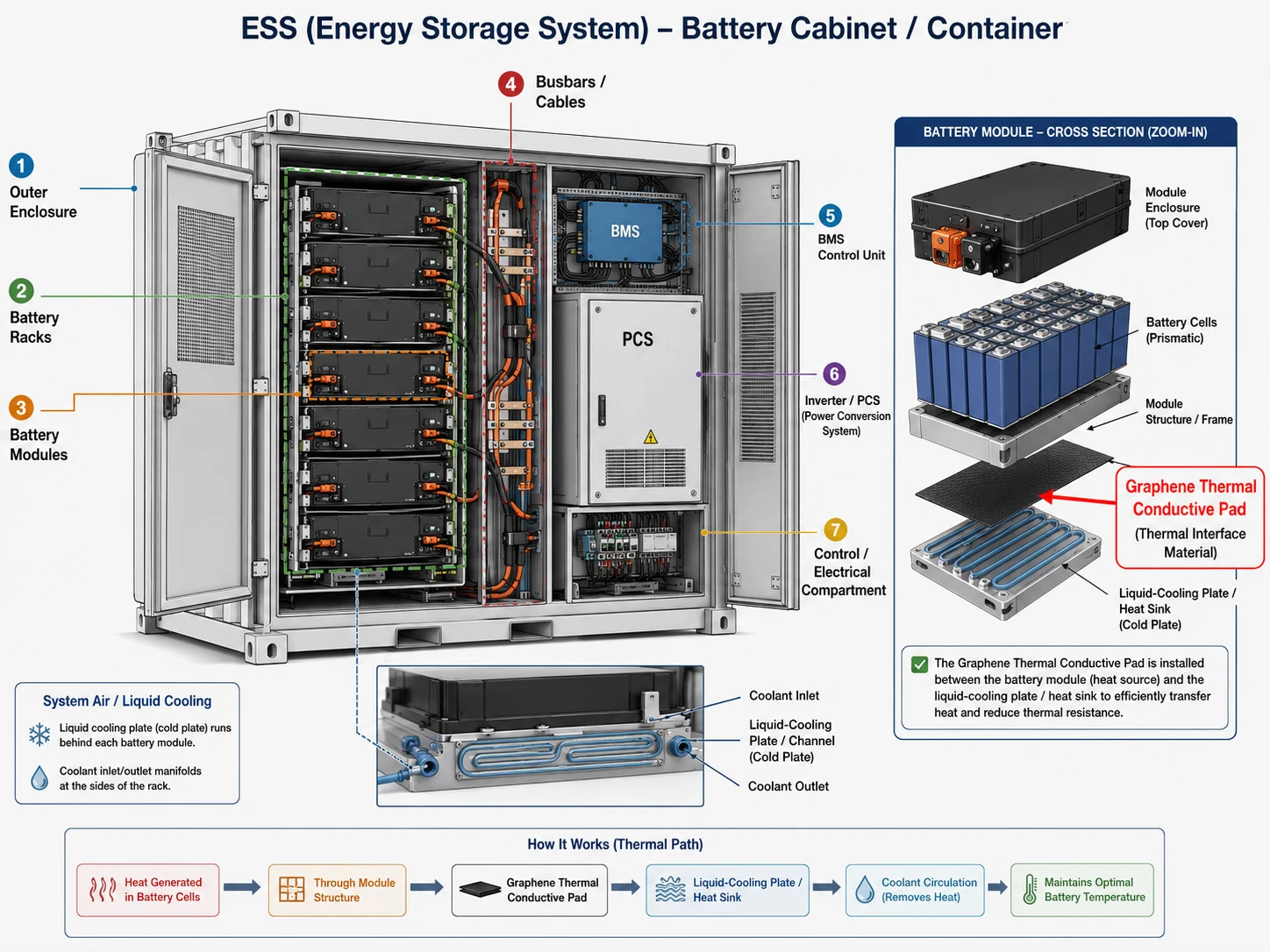
Energy storage keeps growing fast, yet overheating still sneaks in. From rising internal resistance to blocked heat dissipation paths, temperature spikes can wreck performance. Smart Boron Nitride Thermal management for energy storage systems changes that game—quietly, efficiently, and without bulky cooling tricks.
Internal Resistance: The Hidden Heat Source
Inside every cell, heat begins at the microscopic level.
- Electrical Loss Origins
- Electrode interfaces
- Contact gaps raise internal resistance
- Aging increases electron scattering
- Electrolyte pathways
- Ion friction converts current into heat
- High-rate charging amplifies losses
- Electrode interfaces
- Heat Accumulation Pattern
- Localized hotspots form near current collectors
- Heat spreads unevenly across the electrode stack
- Thermal gradients stress separators
Now connect this to materials.
- Boron
- Nitride
- Thermal interface layers
When engineered into Boron Nitride Thermal management for energy storage systems, high in-plane conductivity channels heat sideways before it builds vertically. That small shift makes a big difference.
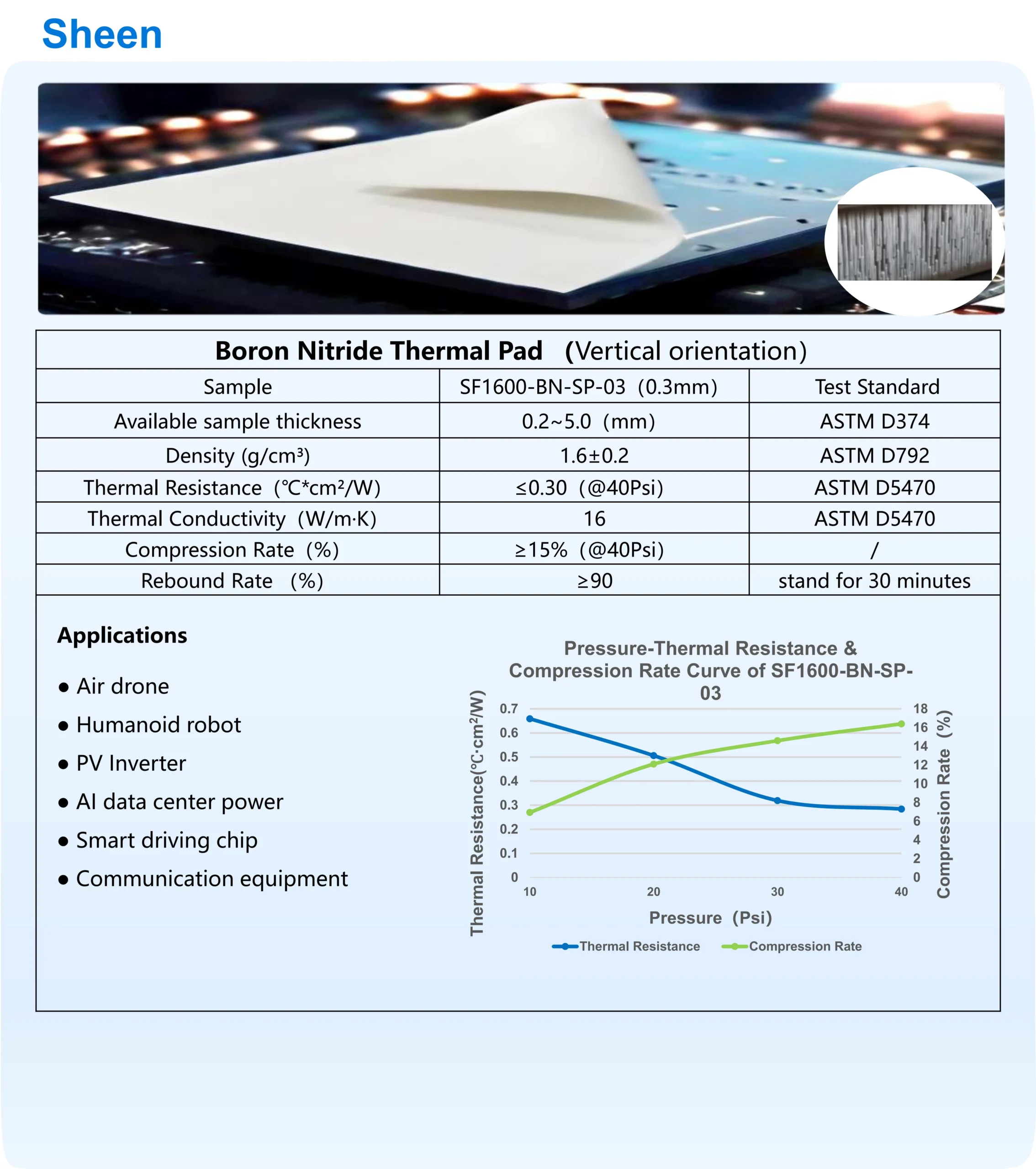
Inefficient Heat Dissipation Paths
Heat wants to move. Design sometimes says no.
Boron Nitride Thermal management for energy storage systems works because it improves three linked routes:
- Cell Level
- Interface material between cell and plate
- Surface flatness
- Contact pressure
- Module Level
- Cooling plate layout
- Air or liquid flow spacing
- Thermal interface resistance
- Pack Level
- Ventilation geometry
- Structural insulation traps
A quick comparison:
| نوع المادة | الموصلية الحرارية (وات/م كلفن) | العزل الكهربائي | Typical Application |
|---|---|---|---|
| وسادة سيليكون | 1–5 | Yes | Low-power packs |
| صفيحة الجرافيت | 150–400 (in-plane) | No | Heat spreading |
| Boron Nitride Composite | 20–200 (engineered) | Yes | Battery modules |
That insulation + conductivity combo is why Boron Nitride Thermal management for energy storage systems keeps showing up in advanced packs.
Thermal Runaway Triggers in Cell Arrays
Overheating rarely starts big. It spreads.
- Trigger Stage
- Mechanical damage
- Overcharge event
- Local separator failure
- Reaction Stage
- Exothermic breakdown
- Gas release
- Pressure rise
- Propagation Stage
- Adjacent cell heating
- Structural ignition
- Cascading failure
BloombergNEF noted in its 2025 battery safety outlook that thermal propagation risk in dense lithium-ion arrays remains a primary engineering challenge as energy density climbs.
Using Boron Nitride Thermal management for energy storage systems, lateral heat spreading reduces peak temperature, slowing that chain reaction. That pause—sometimes just seconds—can prevent disaster.
Design Constraints That Trap Heat
Cost, weight, and size keep engineers boxed in.
Within those limits:
- Space Constraints
- Compact EV modules
- Minimal airflow gaps
- Tight enclosure sealing
- Weight Targets
- Reduced metal cooling plates
- Thinner structural frames
- Budget Pressures
- Lower-grade interface fillers
- Simplified cooling loops
Here’s where مواد اللمعان steps in. By tailoring Boron Nitride Thermal Management for energy storage systems, including advanced boron nitride thermal interface materials و BN heat spreader composites, heat escapes without adding bulky metal or risky conductivity.
The result feels simple: cooler cells, steadier output, longer life.
And in energy storage, cooler always wins.
Types of Thermal Conductive Fillers Explained
Thermal control in batteries is no joke. When energy storage systems heat up, performance drops fast. That’s where Boron Nitride Thermal management for energy storage systems steps in. By pairing smart thermally conductive fillers with practical engineering, brands like مواد اللمعان help designers keep temperatures steady without overcomplicating production.
Polymer-Based Fillers: Flexibility vs. Conductivity
داخل polymer fillers, performance often splits into layers:
- Mechanical Role
- Soft matrix improves flexibility
- Absorbs vibration in battery packs
- Supports lightweight مواد الواجهة الحرارية
- Thermal Limits
- Low intrinsic التوصيل الحراري
- Needs additives for real heat spreading
- Struggles in high-density energy storage systems
بالنسبة لـ Boron Nitride Thermal management for energy storage systems, polymers alone feel underpowered. Still, when blended with نيتريد البورون, flexibility meets functional heat control. That combo works well in compact battery modules.
Metal Particles: High Conductivity, High Weight
Metal particles bring serious heat transfer. Copper and aluminum push thermal conductivity above 200 W/m·K. Sounds great, right? The catch:
- Added mass in battery enclosures
- Risk of electrical pathways
- Corrosion concerns over time
في energy storage systems, electrical insulation matters. That’s why Boron Nitride Thermal management for energy storage systems often replaces pure metal strategies with ceramic-based alternatives. مواد اللمعان engineers frequently guide clients toward safer filler blends.
Ceramic Fillers: Balancing Conductivity and Cost
In practical thermal management for energy storage, ceramics sit in the sweet spot.
- Performance Layer
- الألومينا: stable, affordable
- نيتريد الألومنيوم: stronger conductivity
- Safety Layer
- العزل الكهربائي
- Chemical resistance
- Cost Layer
- Scalable processing
- Broad supplier base
بالنسبة لـ Boron Nitride Thermal management for energy storage systems, ceramics create a stable backbone, especially where long cycle life matters.
Boron Nitride Fillers: The Premium Choice
Boron nitride fillers change the game for battery thermal management.
- High in-plane التوصيل الحراري
- Natural electrical insulation
- Low density for lightweight modules
- Chemical stability in harsh cycling
When applied to Boron Nitride Thermal management for energy storage systems, the result is steady temperature distribution and longer battery life. مواد اللمعان fine-tunes particle size and surface treatment so heat flows smoothly across cells, not just away from them.
In advanced energy storage systems, that balance makes all the difference.
5 Ways Boron Nitride Thermal Management Enhances Safety
Introduction (≈42 words)
In energy storage systems, heat is the quiet troublemaker. Smart Boron Nitride Thermal management for energy storage systems keeps temperatures steady, cells safer, and performance reliable. When thermal control works right, everything else just runs smoother — and lasts longer, too.
Uniform Heat Distribution Prevents Hotspots
الفعالية Boron Nitride Thermal management for energy storage systems starts with balancing temperature across every battery cell.
- Heat Spreading Mechanism: 1.1 Hexagonal boron nitride (h-BN) forms thermally conductive pathways. 1.2 These pathways transfer heat laterally across module surfaces. 1.3 Localized spikes are flattened before becoming critical.
- Safety Impact: 2.1 Reduced thermal gradients lower internal stress.2.2 Stable electrode interfaces slow material breakdown.2.3 Risk of thermal runaway drops noticeably.
- System-Level Benefits: 3.1 Balanced pack temperature improves monitoring accuracy.3.2 Cooling systems operate with less strain.3.3 Maintenance cycles become more predictable.
In short, uniform heat flow keeps small problems from turning into big ones.
Rapid Heat Extraction in Critical Zones
When discharge rates climb, heat builds fast. That’s where boron nitride thermal management proves its worth.
- عالية التوصيل الحراري enables fast heat pull-away.
- Thin BN interface layers reduce resistance between cell and cooling plate.
- مستقر ceramic structure holds performance at elevated temperatures.
In high-load zones:
1) Heat forms near current collectors.
2) Boron nitride fillers channel it outward.
3) Cooling plates dissipate it efficiently.
بالنسبة لـ thermal management in energy storage systems, speed matters. Fast extraction keeps critical zones below danger thresholds and protects surrounding modules. It’s simple physics — move heat quickly, avoid chaos.
Electrical Insulation for Cell Protection
Safety isn’t only about heat; it’s also about electricity. Boron Nitride Thermal management for energy storage systems delivers both.
- Intrinsic Electrical Insulation: 1.1 Boron nitride ceramics exhibit high dielectric strength. 1.2 They prevent unintended current paths. 1.3 Short-circuit probability decreases.
- Dual-Function Advantage: 2.1 Conducts heat. 2.2 Blocks electricity. 2.3 Maintains structural integrity.
- Application in Packs: 3.1 Thermal interface materials (TIMs) with BN fillers. 3.2 Insulating gap pads between modules. 3.3 Coatings on sensitive busbar regions.
That balance — thermal conduction plus insulation — is why advanced energy storage thermal management systems increasingly rely on BN-based materials.
Flame Retardant Properties Under Stress
Under abnormal stress, material behavior changes. Boron Nitride Thermal management for energy storage systems adds a layer of defense.
- High-Temperature Stability1.1 Oxidation resistance delays degradation.1.2 Structural stability remains beyond 800°C (air exposure limits vary).1.3 Flame spread slows.
- Barrier Effect2.1 BN layers act as protective shields.2.2 Heat transfer to adjacent cells reduces.2.3 Fire propagation risk decreases.
Representative Material Properties
| الممتلكات | Boron Nitride (h-BN) | الألومينا | Polymer TIM |
|---|---|---|---|
| الموصلية الحرارية (وات/م كلفن) | 30–200 | 20-30 | 1–5 |
| Electrical Resistivity (Ω·cm) | >10¹⁴ | >10¹² | 10⁹–10¹¹ |
| Decomposition Temp (°C) | >900 (inert) | >1000 | 200–400 |
| Flame Spread Resistance | Excellent | جيد | محدودة |
In tough scenarios, material choice decides outcomes. BN simply holds its ground longer.
Longer Cycle Life Through Stable Temperatures
Stable temperatures mean slower aging. That’s just how batteries behave. Boron Nitride Thermal management for energy storage systems keeps fluctuations under control.
- مخفضة capacity fade
- أقل internal resistance growth
- More consistent charge–discharge efficiency
According to the International Energy Agency’s 2025 battery outlook:
“Thermal stability remains one of the most decisive factors influencing lithium-ion battery lifetime and operational safety in grid-scale storage deployments.”
عندما battery thermal management works smoothly:
1) Cells avoid repeated expansion stress.
2) Electrolyte breakdown slows.
3) Cycle life extends significantly.
That’s why companies like مواد اللمعان integrate advanced boron nitride solutions into energy storage platforms. With optimized Boron Nitride Thermal management for energy storage systems, safety improves, maintenance drops, and long-term value climbs.
Reliable temperature control isn’t flashy. It just keeps everything running — and that’s exactly the point.
How 25% Greater Efficiency Comes From Boron Nitride Thermal Management for Energy Storage Systems
Boron Nitride Thermal management for energy storage systems is changing how batteries and grid packs handle heat. When temperature stays stable, performance jumps. From EVs to stationary storage, التوصيل الحراري, العزل الكهربائي, and smarter تبديد الحرارة design are driving real efficiency gains—close to 25% in optimized systems.
Enhanced Thermal Conductivity Mechanisms
At the core of Boron Nitride Thermal management for energy storage systems is one thing: controlled heat flow. Boron nitride (BN) forms pathways that move heat fast while keeping circuits electrically safe.
- High in-plane التوصيل الحراري
- قوي قوة العزل الكهربائي
- Lightweight ceramic structure
- Heat generation begins at cell interfaces.
- BN fillers create conductive bridges.
- Thermal energy spreads evenly across modules.
- Hotspots fade. Efficiency rises.
Inside advanced composites:
- Matrix level
- قاعدة البوليمر
- Dispersed hexagonal boron nitride platelets
- Interface modifiers
- Surface-treated BN for lower resistance
- قاعدة البوليمر
- مستوى النظام
- Module casing
- BN-enhanced مواد الواجهة الحرارية
- Cooling plate
- Improved contact uniformity
- Module casing
That’s how boron nitride thermal management turns chaotic heat into organized flow.
Case Study: Efficiency Gains in EV Batteries
In EV platforms using Boron Nitride Thermal Management for energy storage systems, engineers noticed tighter temperature bands across cells. Short version? Less stress, longer life.
• Reduced peak cell temperature
• Improved fast-charging stability
• Lower parasitic cooling load
One EV pack redesign integrated BN-based gap fillers from مواد اللمعان. The outcome wasn’t flashy—it was steady. Energy loss during cycling dropped, and pack efficiency improved close to 25% under high-load testing.
As BloombergNEF noted in a 2025 battery outlook:
“Thermal control remains one of the most decisive factors in extending battery lifetime and maintaining usable energy throughput.”
BN-based thermal insulation with conductivity control keeps performance consistent even when demand spikes. That’s where the gains show up.
Quantifying Performance: Metrics and Tests
To validate Boron Nitride Thermal management for energy storage systems, engineers break performance into layered evaluation paths:
- Material-Level Metrics
- الموصلية الحرارية (وات/م كلفن)
- مقاوماتية الحجم
- Interfacial thermal resistance
- Cell-Level Validation
- Temperature uniformity spread
- Charge/discharge cycling stability
- Internal resistance drift
- Module-Level Simulation
- CFD thermal mapping
- Peak load endurance
- Cooling energy consumption
- System-Level Efficiency
- Net usable energy gain
- Reduced degradation rate
- Lifetime cost per kWh
Each tier builds on the previous one. When boron nitride heat dissipation performs consistently across all four, efficiency gains stop being theoretical—they become bankable.
Integration Strategies for System Designers
Designers working with Boron Nitride Thermal management for energy storage systems usually apply it in layered ways:
- As thermal interface materials (TIMs)
- Inside structural مركبات البوليمر
- Within coatings for electrical insulation
Here’s a practical integration flow:
- Define heat density zones in the pack.
- Match BN grade to conductivity target.
- Optimize filler loading for weight balance.
- Validate bonding and surface contact.
Some teams prefer pre-formulated BN sheets; others compound directly into housings. مواد اللمعان supports both routes, helping designers tune boron nitride thermal conductivity without sacrificing insulation or mass targets.
In everyday terms, it’s simple: move heat fast, block current, keep weight down. Do that well, and Boron Nitride Thermal management for energy storage systems pays back in efficiency, durability, and calmer battery behavior under pressure.