-
АДД: Здание 2, № 8 Хэнчжутан Роуд, Дунгуань
-
Телефон: +86 135 4224 3751

How Phase Change Thermal Sheets Optimize 5G Base Station Cooling
Heat cooks 5G gear, and a Phase change thermal conductive sheet for 5G base stations acts as a fixer when grease fails.
Old pads dry out, paste pumps away, and service visits burn cash while towers bake under brutal summer load swings.
Reports from GSMA and Omdia highlight 5G energy density and maintenance costs, pushing operators toward stable, low-maintenance interface materials.
Quick Answers: Phase change thermal conductive sheet for 5G base stations
➔ Reduced Thermal Impedance: Eutectic alloys melt uniformly to fill micro-gaps, outperforming grease and pads.
➔ Enhanced Heat Storage: Polyethylene glycol absorbs transient spikes from PAs and RF modules, stabilizing peak loads.
➔ Consistent Bond Line Thickness: Fiberglass mesh prevents pump-out and ensures repeatable thermal resistance.
➔ Weatherproof Durability: Polyimide film protects PCM sheets from UV, moisture, and cyclic thermal stress in outdoor towers.
3 Key Benefits Of PCM Sheets
Phase change thermal conductive sheet for 5G base stations is no longer a niche pick. With rising power density in 5G base station cooling hardware, stable теплопередача и контролируемый тепловое сопротивление matter more than ever. Below breaks down why this material keeps getting traction in modern терморегулирование setups.
Reduced Thermal Impedance with Eutectic Alloys
A phase-change thermal conductive sheet for 5G base stations often relies on eutectic alloys to stabilize the тепловой интерфейс between chips and sinks.
- Material Behavior: 1.1 Uniform melting point; 1.2 Consistent surface wetting; 1.3 Reduced micro‑void formation.
- Thermal Path Optimization: 2.1 Lower thermal impedance than pads; 2.2 Improved metal-to-metal теплопередача; 2.3 Enhanced cooling optimization in dense RF stacks.
- Application in 5G base station: Modules 3.1 Power amplifier mounting; 3.2 Massive MIMO boards; 3.3 Outdoor cabinet upgrades.
Performance Snapshot
| Interface Type | Thermal Impedance (°C·cm²/W) | Operating Temp (°C) | Cycle Stability (cycles) | Application Fit |
|---|---|---|---|---|
| Термическая смазка | 0.25–0.35 | -40–120 | 500 | Short-term |
| Тепловая подушка | 0.30–0.45 | -40–150 | 800 | Medium load |
| PCM Sheet (Eutectic) | 0.12–0.18 | -40–130 | 1500 | High load |
| Gap Filler | 0.40–0.60 | -40–200 | 700 | Irregular gaps |
| Solder TIM | 0.05–0.10 | 0–150 | 2000 | Permanent bond |
The numbers make it clear: a phase-change thermal-conductive sheet for 5G base stations bridges performance and flexibility without permanent bonding.
Boosted Heat Storage via Polyethylene Glycol
Short bursts of heat can wreck signal stability. That’s where polyethylene glycol внутри phase change material plays its part.
- Выше heat storage capacity
- Increased latent heat
- Лучше thermal energy storage
When traffic spikes hit, the material absorbs excess heat before it spreads. In real deployments of 5G base station cooling, that buffering effect keeps temperature swings smooth instead of wild.
A phase-change thermal-conductive sheet for 5G base stations made with PEG doesn’t just move heat—it holds it briefly, then releases it in a controlled way. That small delay protects solder joints and improves long-term терморегулирование reliability.
For operators upgrading to high-power AAU systems, this detail matters more than it sounds.
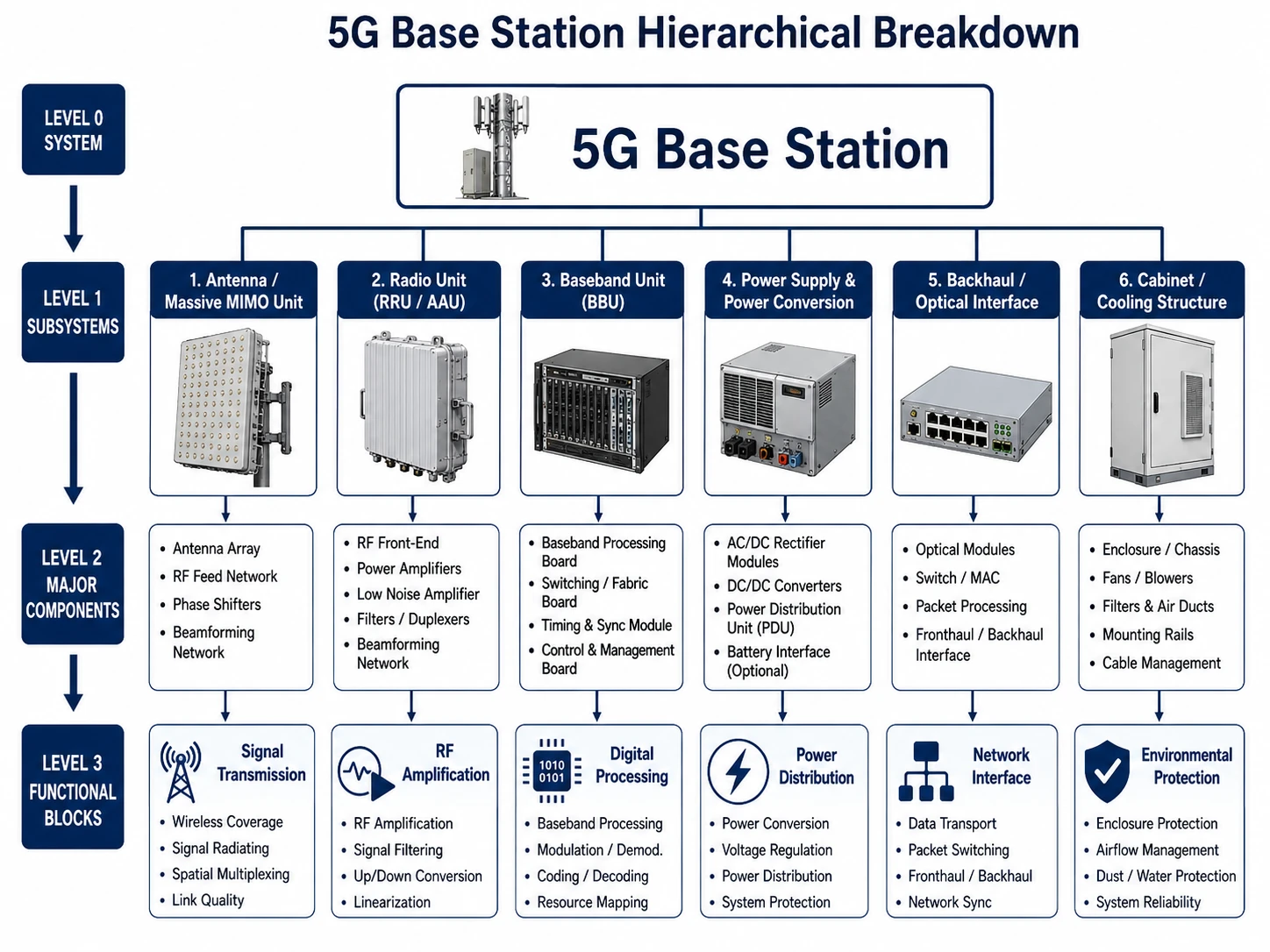
Optimal Bond Line Thickness Using Fiberglass Mesh
Bond line thickness decides real-world термическое сопротивление. Too thin? Dry spots. Too thick? Poor тепловой контакт.
A fiberglass mesh inside the PCM sheets quietly fixes that.
• Controls spread during melting
• Maintains mechanical stability
• Prevents pump-out under vibration
In outdoor towers, temperature swings are brutal. A phase change thermal conductive sheet for 5G base stations reinforced with mesh keeps a stable gap even after repeated thermal cycling.
That means steady рассеивание тепла, predictable толщина линии сцепления, and fewer maintenance calls.
Manufacturers like Материалы для отделки tune mesh density to match enclosure pressure levels, which helps integrators avoid guesswork. For telecom OEM projects, Материалы для отделки also supports custom sizing so the phase change thermal conductive sheet for 5G base stations drops straight into existing layouts without redesign headaches.
Simple upgrade. Noticeable payoff.
PCM Sheets Vs. Thermal Pads
5G base stations run hot, and cooling choices matter more than ever. This comparison breaks down how a phase-change thermal conductive sheet for 5G base stations stacks up against traditional pads in real-world electronic cooling.
PCM Sheets
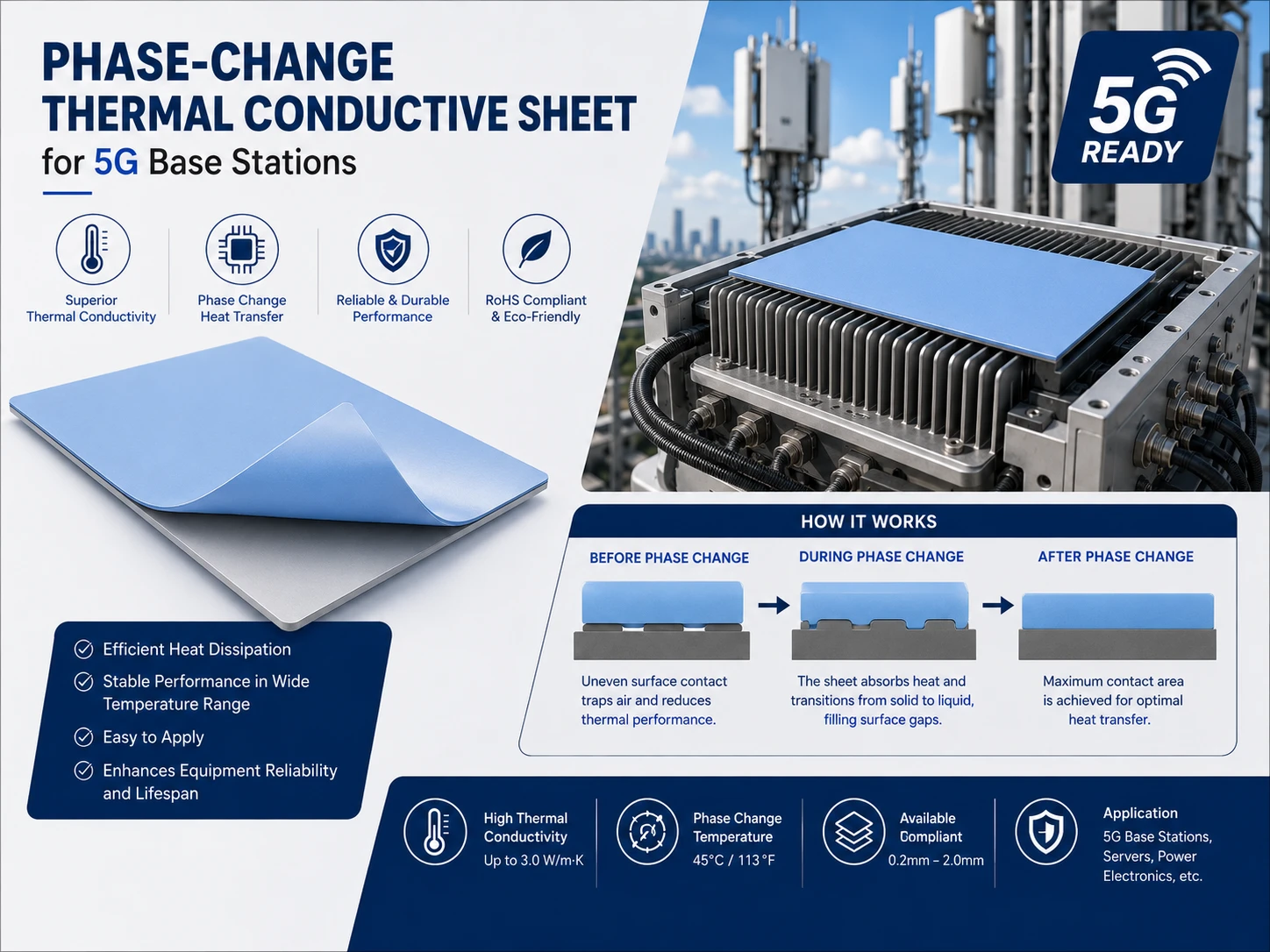
A Phase change thermal conductive sheet for 5G base stations is engineered around Phase Change Material, and that single shift in physics changes the game.
- Core working logic
- 1) Temperature rises inside a 5G cabinet.
- 2) The sheet reaches its phase transition point.
- 3) Latent heat absorption begins.
- 4) Material softens and fills microscopic gaps.
- 5) Термическое сопротивление drops fast.
- Material science breakdown
- ▪ Heat absorption occurs during the solid-to-soft transition.
- ▪ Surface wetting improves contact with heat sinks.
- ▪ Repeated термоциклирование maintains температурная стабильность.
- Functional value in telecom hardware
- 5G AAU modules
- Усилители мощности
- Улучшенный thermal regulation
- Reduced hotspot formation
- Baseband DSP chips
- Расширенный energy storage through latent heat buffering
- Outdoor cabinets
- Stable performance under rapid day-night shifts
- 5G AAU modules
A 5G phase change thermal sheet doesn’t just sit there as a тепловой интерфейс. It adapts. It reacts. It seals gaps that standard gap fillers simply can’t.
For dense deployments, a phase-change thermal conductive sheet for 5G base stations from Sheen Materials is often chosen, where long-term cycling reliability is critical.
Термопрокладки
Thermal pads rely on conduction alone. No transition. No latent heat buffer.
- Structural characteristics
- Fixed thickness заполнитель зазоров
- Silicone-based heat conduction matrix
- Predictable compression set
- Performance hierarchy
- Entry-level electronic modules
- Mid-power radio units
- Rarely ideal for high-load FPGA clusters
- Heat travels from chip to pad.
- Pad transfers energy to the радиатор.
- Efficiency depends on contact pressure.
No phase shift means no dynamic surface adaptation. Under continuous 5G traffic loads, rising junction temperatures expose higher термическое сопротивление compared with a 5G phase change thermal sheet.
Still, pads offer:
- Stable geometry
- Simple installation
- Basic защита компонентов
For compact radios pushing heavy data streams, engineers often upgrade to a phase-change thermal conductive sheet for 5G base stations instead of sticking with conventional pads. Sheen Materials supports both paths, though high-power systems typically lean toward phase change solutions for smarter electronic cooling.
Outdoor Towers: PCM Sheets For Peak Summer Loads
Outdoor 5G towers face brutal noon heat, and that’s where a Phase change thermal conductive sheet for 5G base stations earns its keep. By blending phase change material science with smart substrates, operators can keep radios steady, even when the sun feels relentless.
Cooling During Midday Peaks with Paraffin Waxes
At the core of every phase-change thermal conductive sheet for 5G base stations sits Paraffin wax engineered for controlled melting. This phase change material relies on latent heat storage to smooth out sharp midday temperature spikes and maintain real thermal regulation.
- Heat absorption rises as wax transitions state
- Стабильный 5G cooling protects antenna modules
- Reduced thermal shock on transceivers
Implementation typically unfolds like this:
- Select the melting range aligned with the site climate.
- Pair the PCM layer with conductive backing.
- Install between the RF module and the heatsink.
For remote towers:
- Core layer
- Paraffin wax matrix
- tuned for midday temperature thresholds
- Paraffin wax matrix
- Interface layer
- graphite or copper spreader
- boosts heat absorption
- graphite or copper spreader
- Outer seal
- moisture barrier
- shields phase change material
- moisture barrier
A phase-change thermal conductive sheet for 5G base stations keeps things cool without fans or power draw. It just works.
Weatherproof Reinforcement by Polyimide Film
Outdoor towers need muscle. Полиимидная пленка adds weather protection, strong moisture resistance, and defense against UV radiation.
- Thin yet tough
- Высокий material strength
- Надежный environmental sealing
In a layered stack:
- PCM core
- Полиимидная пленка top shield
- Adhesive interface
- Protective stack
- Outer barrier
- UV block
- Middle PCM
- thermal buffer
- Bottom substrate
- bonding layer
- Outer barrier
According to a 2025 GSMA infrastructure outlook:
“Thermal management consistency is now a decisive factor in 5G outdoor network uptime, particularly in high-irradiance regions.”
A phase-change thermal conductive sheet for 5G base stations with polyimide backing answers that call. Материалы для отделки integrates this protection directly into each phase change thermal conductive sheet, giving outdoor durability without bulky housings.
Sustaining Thermal Resistance Over Daily Cycles
Daily heat swings test термическое сопротивление и долгосрочный PCM performance. Хорошо продуманный Phase change thermal conductive sheet for 5G base stations сохраняет тепловой поток predictable across repeated melt-freeze cycles.
- Стабильный долгосрочная стабильность
- Низкий thermal degradation
- Высокий operational reliability
Cycle behavior:
- Morning solid state stores margin.
- Noon melting absorbs the surge heat.
- Night solidification resets capacity.
Layered durability:
- PCM core
- maintains термическое сопротивление
- Encapsulation
- limits oxidation
- Bond line
- preserves interface pressure
Compared with grease, this approach avoids pump-out and dry-out headaches. The phase change thermal conductive sheet simply resets every night, ready for another hot day.
Integrating Copper Foil Substrates in Remote Sites
In off-grid hills or desert installs, passive design rules. Copper foil as a thermal substrate boosts распространение тепла and overall рассеивание тепла across metal cores.
- Faster lateral conduction
- Strong bond to PCB
- Ideal for remote base station builds
Integration path:
- Bond PCM to copper foil.
- Laminate onto an aluminum plate.
- Secure within the 5G network radio housing.
System stack:
- Radio module
- PCM interface
- Copper foil spreader
- chassis plate
- PCM interface
- External shell
- weather shield
A phase-change thermal conductive sheet for 5G base stations paired with copper keeps passive towers steady. Sheen Materials refines this material integration so that even isolated sites get dependable cooling without extra maintenance.
High Maintenance Costs? Switch To Phase Change Sheets
5G rollouts are fast, but maintenance bills creep up just as quickly. A smarter Phase change thermal conductive sheet for 5G base stations can calm the heat—and the budget—at the same time.
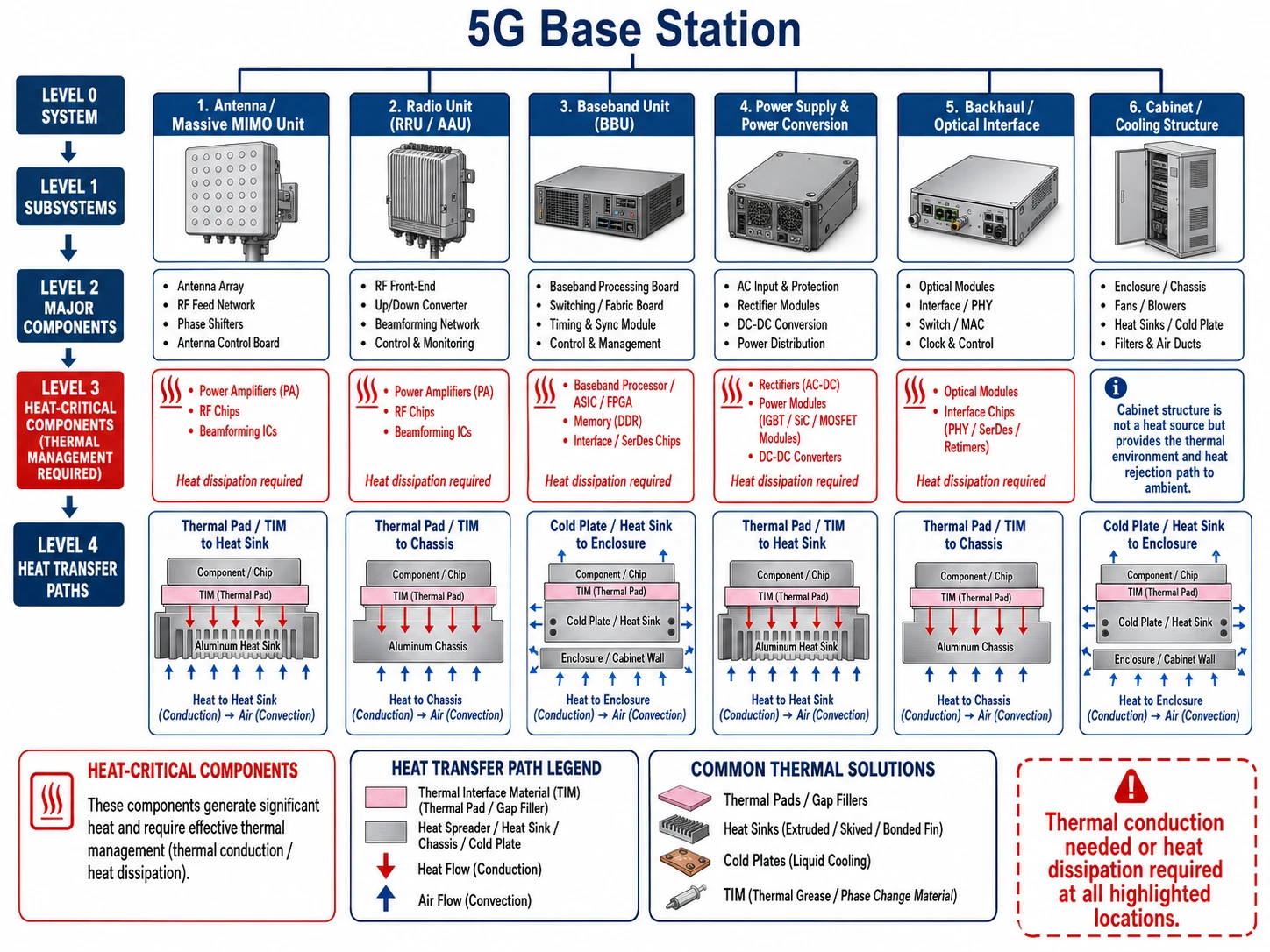
Slashing Replacement Intervals with Organic PCMs
In telecom cabinets running day and night, Organic PCMs outperform grease because Phase Change Materials resist Material degradation and keep Long-term stability. That means longer Service life and fewer Replacement intervals in harsh outdoor Thermal management scenarios.
- Stable melt–solid cycles
- Reduced cracking under vibration
- Cleaner removal during upgrades
Performance snapshot for a Phase change thermal conductive sheet for 5G base stations:
| Тип материала | Теплопроводность (Вт/м-К) | Typical Service Life (Years) | Replacement Interval (Months) |
|---|---|---|---|
| Thermal paste | 3.5–8.0 | 1-2 | 12 |
| Paraffin PCM | 2.0–4.0 | 3-5 | 36 |
| Organic PCM | 3.0–6.5 | 5-8 | 60 |
| Graphite pad | 5.0–12.0 | 4–6 | 48 |
| PCM composite | 4.0–8.5 | 6–8 | 72 |
When telecom operators switch to a phase change thermal sheet, or PCM sheet for 5G base station cabinets, maintenance cycles stretch out. Fewer site visits. Fewer shutdown windows. Материалы для отделки offers organic PCM options tuned for wide temperature swings common in 5G base stations.
Eliminating Thermal Paste Reapplication Hassles
Messy Thermal paste often suffers from dry-out и Pump-out, which hurts Теплопроводность и долгосрочный Reliability. A Thermal interface material in sheet form keeps thickness controlled and the Application process simple.
- Remove old residue.
- Place the thermal conductive sheet for 5G base stations directly on the heat spreader.
- Apply mounting pressure to activate phase change flow.
- Seal and run.
No re-spreading. No guesswork. Just steady contact resistance over time. That’s why many engineers now prefer a phase change TIM for 5G base stations instead of reapplying grease every year.
Cutting Labor Expenses via Self-Adhesive Thermal Adhesives
Labor adds up fast in tower deployments. With Self-adhesive Thermal adhesives, installation becomes straightforward and repeatable.
- Shorter Installation time
- Выше Application efficiency
- Нижний Skill requirements
- Прямой Cost Savings
Here’s how cost control stacks up:
- Material choice
- Phase change thermal conductive sheet for 5G base stations
- Built-in adhesion
- Controlled thickness
- Phase change thermal conductive sheet for 5G base stations
- Assembly process
- Peel the liner
- Align once
- Compress and lock
- Financial impact
- Снижение Labor expenses
- Fewer alignment errors
- Less rework in mass production
For high-volume 5G radio units, that efficiency compounds. Материалы для отделки integrates self-adhesive PCM layers tailored for base station heat sinks, helping teams cut downtime without cutting corners.