

Silicone-Free Thermal Pad
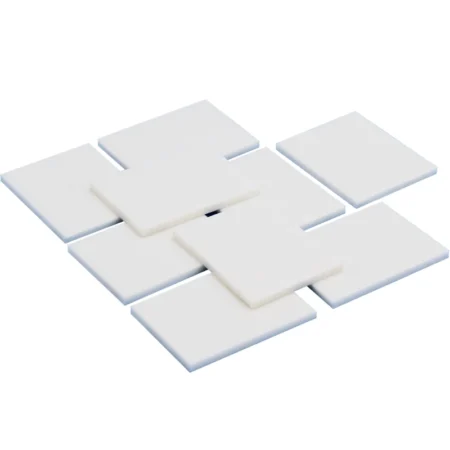
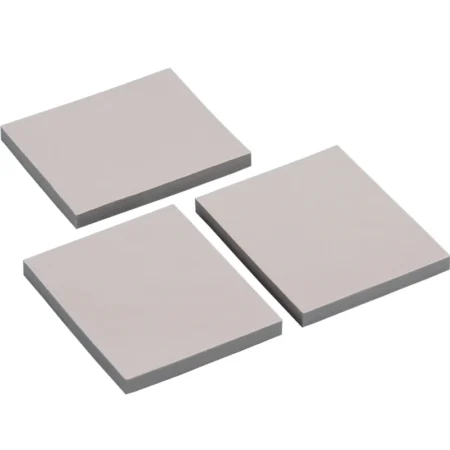
SHEEN’s AF Series Silicone-Free Thermal Pads are designed for silicone-sensitive thermal interface assemblies. These pads are free of siloxane and help eliminate the risk of silicone oil bleed, reducing issues such as optical lens fogging and electrical malfunctions. With current public series coverage from 1.0 to 8.0 W/m·K, electrical insulation, UL94 V-0 flame resistance, sheet supply and die-cut support, the AF Series is suitable for sensors, AI data centers, security cameras, optical communication systems, hard drives, industrial controls, automotive sensors, and medical devices.
シリコンフリー放熱パッドシリーズ
SHEEN’s AF Series Silicone-Free Thermal Pads are designed for silicone-sensitive thermal interface assemblies. These pads are free of siloxane and help eliminate the risk of silicone oil bleed, reducing issues such as optical lens fogging and electrical malfunctions. With current public series coverage from 1.0 to 8.0 W/m·K, electrical insulation, UL94 V-0 flame resistance, sheet supply and die-cut support, the AF Series is suitable for sensors, AI data centers, security cameras, optical communication systems, hard drives, industrial controls, automotive sensors, and medical devices.
Silicone-Free / Siloxane-Free
1.0–8.0 W/m·K
0.25–5.0 mm
UL94 V-0
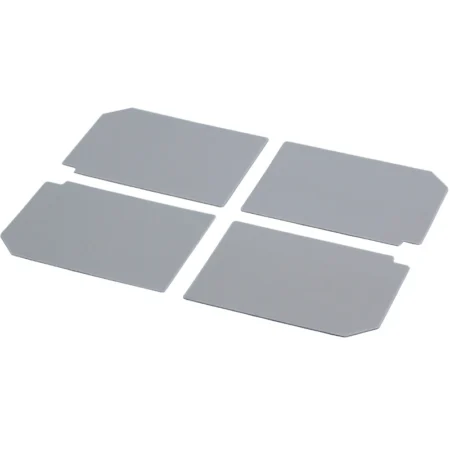
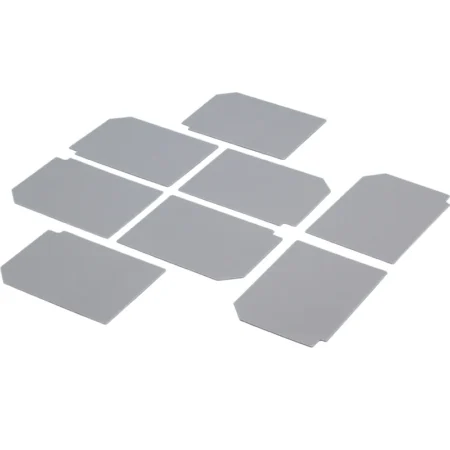
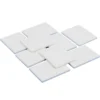
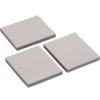
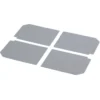
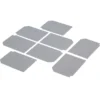
Sheet or Die-Cut
1.0–8.0 W/m·K
0.25–5.0 mm
UL94 V-0
Sheet or Die-Cut
主なメリット
- Free of siloxane, helping eliminate the risk of silicone oil bleed
- Suitable for contamination-sensitive thermal interface applications
- Helps reduce risks such as optical lens fogging and electrical malfunction
- Current public AF Series covers 1.0 to 8.0 W/m·K
- 優れた電気絶縁性能
- UL94 V-0 flame resistance
- Self-adhesive design for easier installation and rework
- Available in standard sheets and customized die-cut parts
技術情報
Review the key series advantages, model comparison data, thickness and hardness considerations, application fit, and downloadable resources for the Silicone-Free Thermal Pad Series.
Decision Question 1: Will it reduce contamination risk in silicone-sensitive assemblies?
For many optical, sensing, precision, and high-reliability programs, the first concern is not only thermal conductivity. Buyers often first confirm whether the material direction is appropriate for silicone-sensitive assemblies.
Silicone-Free Direction
The AF Series is explicitly positioned as a silicone-free / non-silicone thermal pad family for assemblies that are sensitive to silicone-related contamination.
No Siloxane
The current public series page states that AF pads are free of siloxane.
Reduced Oil-Bleed Risk
The series is presented as helping eliminate silicone oil bleed, a key concern in contamination-conscious device design.
Typical Sensitive Uses
Sensors, optical communication systems, security cameras, and medical equipment are strong-fit scenarios.
Why this matters
- Precision assemblies often screen contamination risk before ranking materials by W/m·K alone.
- Oil bleed can affect optics, sensors, and other sensitive electronic subsystems.
- AF Series is structured to address this first-stage selection concern.
What to confirm in sampling
- Whether the project is silicone-sensitive or contamination-sensitive
- Whether the end-use includes optics, sensing, cameras, or medical electronics
- Whether electrical insulation and non-silicone direction are both required
Decision Question 2: Does conductivity translate into real thermal performance in the actual structure?
Model comparison should not rely on conductivity alone. Thickness window, thermal impedance, and target assembly design should be reviewed together.
Conductivity Range
The current public AF Series spans 1.0 to 8.0 W/m·K.
Thermal Impedance Matters
Published model data includes thermal impedance at 1 mm under stated pressure conditions.
Compare by Structure
Actual performance depends on model, thickness, compression, contact quality, and thermal path—not on W/m·K alone.
| モデル | カラー | 熱伝導率 | Thermal Impedance (1 mm, @30 psi) | 厚さ | 標準硬度 | Selection Note |
|---|---|---|---|---|---|---|
| AF100 | ホワイト | 1.0 W/m·K | 1.1 ℃·in²/W | 0.25 ~ 5.0 mm | 50 / 70 ± 5 Shore 00 | Entry-grade option for general low thermal loading and silicone-sensitive assemblies. |
| AF300 | ホワイト | 2.0 W/m-K | 0.8 ℃·in²/W | 0.25 ~ 5.0 mm | 50 / 70 ± 5 Shore 00 | Moderate step-up for more demanding insulated gap-filling applications. |
| AF500 | ホワイト | 3.0 W/m·K | 0.6 ℃·in²/W | 0.25 ~ 5.0 mm | 50 / 70 ± 5 Shore 00 | Balanced choice for broader use across industrial, storage, and communication equipment. |
| AF600 | ホワイト | 5.0 W/m-K | 0.3 ℃·in²/W | 0.5 ~ 5.0 mm | 50 / 70 ± 5 Shore 00 | Higher-performance option for tighter thermal targets with insulation requirements. |
| AF600G | ホワイト | 6.0 W/m·K | 0.25 ℃·in²/W | 0.5 ~ 5.0 mm | 50 / 70 ± 5 Shore 00 | High-performance series member for more demanding communication and AI hardware. |
| AF800 | ホワイト | 8.0 W/m·K | 0.2 ℃·in²/W | 0.5 ~ 5.0 mm | 50 / 70 ± 5 Shore 00 | Top public-performance grade on the current series page for advanced thermal interface requirements. |
Selection logic: compare conductivity, thermal impedance, thickness, and actual compression condition together. Do not select by W/m·K only.
Decision Question 3: Will softness and thickness work with the assembly instead of increasing stress?
For gap-filling pads, actual fit depends on thickness range, interface conformity, compression behavior, and assembly pressure—not only on thermal conductivity.
Thickness Range
Current public AF models cover 0.25–5.0 mm or 0.5–5.0 mm depending on the specific grade.
Hardness Reference
The current series table publishes standard hardness as 50 / 70 ± 5 Shore 00.
Installation & Rework
The product description highlights self-adhesive behavior for easier installation and rework in production.
Why softness matters
- Appropriate softness helps improve surface conformity and reduce trapped interface air.
- Thickness window affects whether the pad can bridge the real gap without excessive compression.
- Compression behavior should be reviewed together with allowable assembly force and component fragility.
Suggested selection sequence
- Start with actual gap, tolerance stack-up, and allowable assembly force
- Then confirm model thickness window and target hardness preference
- Finally compare conductivity and thermal impedance among candidate AF grades
Decision Question 4: Is it suitable for long-term use and easy to integrate into production?
Before moving from samples to qualification, buyers typically confirm supply format, handling convenience, storage requirements, packaging flexibility, compliance, and shelf life.
Supply Format
Current public specifications list 200 × 300 mm sheet supply or die-cut parts.
Handling
The product description highlights a self-adhesive design for easier application and rework.
Storage & Transportation
Store in a cool, dry, well-ventilated place away from open flames; current public page states the material is non-toxic and non-hazardous for storage and transportation.
賞味期限
The current public series page lists a 12-month shelf life.
Compliance & integration points
- Excellent electrical insulation properties
- UL94 V-0 flame resistance
- RoHS, Halogen-Free, and REACH compliance statements
- Custom die-cut capability for project-specific assembly integration
What to lock before volume use
- Target model, thickness, and compression condition
- Sheet format or die-cut format
- Required thermal level versus allowable assembly force
- Whether the application is optics-, sensor-, or contamination-sensitive
Decision Question 5: Which AF grade fits the target application and program objective?
Final model choice should connect contamination sensitivity, insulation need, thickness window, and actual end-use scenario to the right conductivity class.
AI Data Center & Communication Equipment
The public series page explicitly lists AI devices, data centers, and fiber optic communication systems as key application directions. For higher thermal demand, AF600, AF600G, and AF800 are strong evaluation priorities.
AI Devices
Data Center
Fiber Optic Communication
Higher Thermal Load
Data Center
Fiber Optic Communication
Higher Thermal Load
Sensors, Cameras & Medical Devices
The series page also calls out sensors, security cameras, and medical devices, making AF Series a strong fit where insulation and silicone-free direction are both important.
Sensors
Security Cameras
医療機器
Contamination-Sensitive
Security Cameras
医療機器
Contamination-Sensitive
光通信
Suitable for programs that need a silicone-free thermal interface direction with higher thermal capability.
Evaluate AF600 / AF600G / AF800
Automotive Sensors
Relevant where electrical insulation, silicone-free material direction, and stable assembly fit are required.
AF300–AF600G Range
医療機器
Useful for precision electronics that prioritize silicone-free direction and insulation.
AF300–AF600G Range
Hard Disk Drives
Explicitly listed on the public series page and suitable for storage-oriented thermal interface needs.
AF500 / AF600 / AF600G
Industrial Control
Appropriate where insulation, reworkability, and broader thickness flexibility are needed.
AF100–AF600 Range
General Electronic Assemblies
AF100 through AF500 are practical entry points when broader thickness availability and balanced cost-performance are required.
0.25–5.0 mm Class
ダウンロードとFAQ
Technical Datasheet – AF100
Technical Datasheet – AF300
Technical Datasheet – AF500
Technical Datasheet – AF600
Technical Datasheet – AF600G
View All Datasheets
View Current Series Page
Contact Sales for AF800 Datasheet
Q1. Why is contamination risk discussed first?
Because the AF Series is explicitly positioned as a silicone-free thermal pad family that is free of siloxane and intended to help eliminate silicone oil bleed in sensitive assemblies.
Q2. Why compare thermal impedance instead of only conductivity?
Because actual thermal performance depends on conductivity, thermal impedance, thickness, compression, and real assembly structure. W/m·K alone is not enough for model selection.
Q3. Why is thickness discussed separately from conductivity?
Because thickness determines whether the pad can properly bridge the actual gap without excessive stress. A higher-conductivity model is not automatically the best fit if the thickness and compression window do not match the assembly.
Q4. Which AF models are better starting points for higher thermal demand?
Based on the current public series page, AF600, AF600G, and AF800 are the stronger starting points when higher thermal performance is required.
Q5. What production forms are available?
The current public page lists 200 × 300 mm sheet supply and die-cut parts, with customized packaging according to customer requirements.
Q6. What applications are explicitly listed on the current public page?
The current series page explicitly lists data centers, automotive sensors, AI devices, fiber optic communication systems, industrial control equipment, hard disk drives, and medical devices.