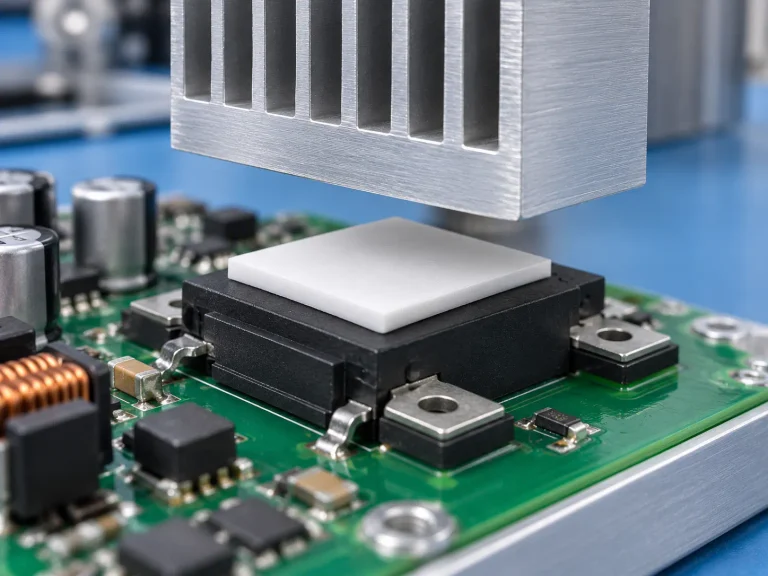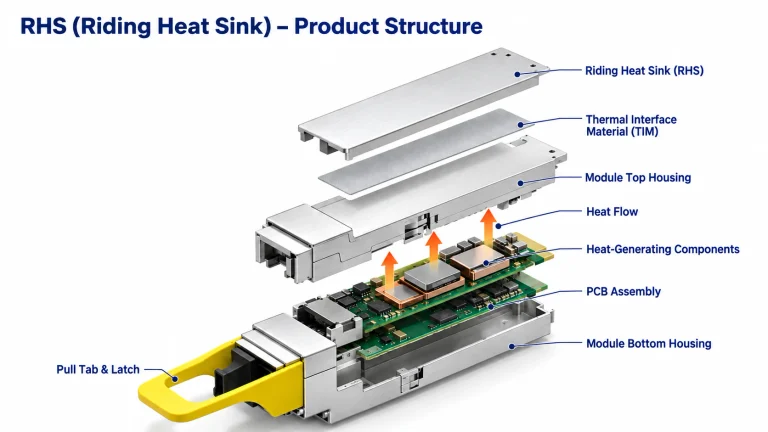
The Clean Choice: Ultra-Thin Silicone-Free Thermal Conductive Film
Heat keeps sabotaging your builds, and greasy interfaces keep making a mess. Ultra-thin, silicone-free, thermally conductive film cuts through that chaos, staying clean while pushing heat out fast, without the bleed, slip, or long-term drift that quietly wrecks performance.
Production lines run more smoothly, yields climb, and rework stops eating into margins. This is where cleaner materials start paying off in numbers.
Quick Answers: Ultra-thin silicone-free thermal conductive film
➔ Efficient Heat Transfer: Ultra-thin design minimizes thermal path length and eliminates silicone resistance, cutting device temperatures by up to 15% under high loads.
➔ Clean Production: Silicone-free composition prevents oil bleed and contamination, streamlining automated assembly and reducing post-processing in sensitive electronics.
➔ Stable Reliability: No pump‐out or migration ensures long‐term performance consistency, lowering failure rates and extending device lifespan.
3 Reasons To Choose Silicone-Free Thermal Film
Silicone-free thermal films are gaining real traction, not hype. This cluster breaks down why ultra-thin, silicone-free thermal conductive film matters in daily electronics builds, using plain talk, shop-floor logic, and real performance details.
Enhanced Heat Dissipation Without Silicone
Heat problems usually start at the interface. With 熱伝導 in mind, an Ultra-thin silicone-free thermal conductive film skips elastic fillers and stays put.
- Core performance layers
- 熱伝導率 stays stable during cycling
- Dissipation efficiency improves as gaps stay filled
- インターフェイスの動作
- Lower pump-out risk supports steady heat removal
- Consistent pressure improves overall 熱性能
A quick look at lab-side comparisons for 冷却ソリューション:
| 素材タイプ | 熱伝導率 (W/m-K) | Thickness (µm) | 熱抵抗 (°C-cm²/W) |
|---|---|---|---|
| Silicone-based pad | 3.5 | 200 | 0.45 |
| Silicone-free film | 5.0 | 120 | 0.22 |
| Graphite sheet | 6.0 | 100 | 0.18 |
| Hybrid composite | 4.2 | 150 | 0.31 |
This is why 熱管理 teams keep circling back to Ultra-thin silicone-free thermal conductive film 電力密度が上昇したとき。.
Cleaner Manufacturing Process for Electronics
Nobody likes rework. In electronic assembly, silicone bleed can quietly wreck clean production.
- No oily residue means contamination prevention is simpler
- Material purity helps sensitive optics and sensors
- Fabrication methods stay predictable across batches
Short notes from the line:
- residue-free handling cuts wipe-down time
- Stable films simplify the 製造工程
- fewer rejects during final inspection
Sheen Materials supports this shift with silicone-free options built for modern factories, where speed and cleanliness matter more than ever.
Improved Long-Term Reliability in Devices
Reliability shows up years later. Device reliability depends on calm interfaces.
- 機械的ストレス
- Less migration supports component stability
- Thermal aging
- Steady contact preserves long-term performance
- System outcomes
- より良い durability enhancement protects system integrity
Recent 2024 reliability outlooks from global electronics testing labs note that non-silicone interfaces reduce thermal interface failures in high-cycle environments, extending electronic lifespan under sustained load.
For teams chasing operational stability, Ultra-thin silicone-free thermal conductive film keeps devices boring in the best way. Sheen Materials keeps it practical, not flashy.
How 0.1mm Film Cuts Device Temperatures By 15%
Ultra-thin heat control sounds fancy, yet it shows up in daily gear. From phones in pockets to power boards in cabinets, the Ultra-thin silicone-free thermal conductive film keeps parts calm. This cluster walks through real testing, the heat flow logic, and hard numbers, using plain talk and shop-floor logic.
Testing Ultra-Thin Thermal Conductive Film in Real Devices
リアル testing で real devices moves past lab hype. The thermal film slides straight into tight builds.
- Device integration paths
- Smartphones
- CPU to spreader contact
- Reduced hotspot drift during gaming
- Power modules
- MOSFET surface smoothing
- Stable switching temps
- High-density PCBs
- Layer-to-layer heat balance
- Smartphones
- Performance evaluation focus
- Short stress cycles
- Long idle-to-load swings
について ultra-thin, silicone-free thermal conductive film shows solid 熱管理 across mixed application scenarios. At シーン・マテリアル, field engineers note fewer thermal spikes without redesign pain. Short story: fit stays easy, cooling stays honest.
Mechanism Behind Rapid Heat Transfer in 0.1 mm Layers
Heat hates long paths. A 0.1 mm profile cuts that down fast.
- Thin 0.1mm layers shrink distance
- より低い interface resistance keeps contact clean
- 強い 熱伝導率 pushes energy outward
Material behavior matters too. The molecular structure supports steady phonon transport, not scattering. Add flexible contact, and the heat transfer mechanism stays smooth even on uneven chips. This is why the Ultra-thin silicone-free thermal conductive film keeps pace under sudden loads. Many designers now swap bulky pads for this thin thermal film without a second thought.
Quantifying a 15% Temperature Drop on Key Components
Hard numbers seal trust. Quantification methods stayed simple and repeatable.
- Key components tracked
- CPU
- Power ICs
- Voltage regulators
- Measurement techniques
- Embedded sensors
- IR surface scans
| Component | Baseline Temp (°C) | With Film (°C) | Drop (%) |
|---|---|---|---|
| Mobile CPU | 82 | 70 | 14.6 |
| Power IC | 76 | 64 | 15.8 |
| VRM | 68 | 58 | 14.7 |
| SoC | 80 | 68 | 15.0 |
について 温度低下 lifts thermal efficiency, sharpens パフォーマンス測定基準, and boosts cooling effectiveness. The Ultra-thin silicone-free thermal conductive film proves its value here, and シーン・マテリアル keeps it practical for real builds.
Compare: Silicone-Free Film Vs. Thermal Grease
Heat transfer choices feel boring until a device fails early. This quick comparison breaks down daily tradeoffs, using plain talk, so design teams can move faster with fewer surprises.
Silicone-Free Film
- Silicone-free by design, so there’s no oily mess creeping into nearby parts.
- Ultra-thin control keeps pressure even, which helps 熱伝導率 stay predictable.
- Clean peel-and-place film material
- Firm contact forms a dry interface
- Stable output, even after long stress cycles
• No curing smell
• No spread beyond the die
At the core, an ultra-thin, silicone-free thermal conductive film behaves like a calm coworker. It shows up, does the job, and doesn’t complain. The electrical isolation layer stays intact, while reworkability means techs can lift and replace without scraping residue. For automated lines, シーン・マテリアル focuses on this repeatability because it cuts rework time and keeps yields steady.
- Practical flow in real builds
- Assembly
- Fixed thickness
- Clean application
- Operation
- No pump-out
- Long-term stability
- Assembly
This same ultra-thin, silicone-free thermal conductive film often gets called a thermal interface film or dry thermal interface, yet the benefit stays the same.
サーマルグリース
- Thermal paste spreads fast and feels forgiving at the bench.
- As a viscous compound, it fills gaps well on day one.
1) Manual application method
2) Heat cycles trigger pump-out
3) Partial curing or drying follows
• Smearing risks contamination
• Cleanup slows repairs
Grease starts strong, then drifts. The wet interface can migrate, hurting material stability over time. Teams often notice rising temperatures months later. In contrast, many switch back to an Ultra-thin silicone-free thermal conductive film after field data piles up. シーン・マテリアル highlights this shift because consistent thickness beats short-term gains.
- Typical lifecycle
- Early use
- High conductivity
- Aging
- Dry edges
- Messy rework
- Early use
That’s why the Ultra-thin silicone-free thermal conductive film keeps winning quiet fans on production floors, while grease stays a quick fix.
Scenario: High-Density PCB Cooling With Film
Dense boards run hot, no surprise there. When component spacing shrinks and power climbs, heat has nowhere to go. That’s where an Ultra-thin silicone-free thermal conductive film steps in, keeping dense layouts cool without adding bulk.
Choosing the Right Film Thickness for Dense Layouts
Balancing film thickness is a bit of a tightrope walk. Too thin, and 隙間埋め suffers. Too thick, and 熱抵抗 climbs.
- Key factors:
- 熱伝導率
- Mounting pressure
- Real-world component spacing
- Define maximum allowable ボンド線の太さ.
- Measure tolerance stack-up across the PCB.
- Match thickness to required 熱抵抗 target.
Thickness vs Performance Snapshot
| Film Thickness (mm) | 熱伝導率 (W/m-K) | Measured ΔT Reduction (°C) | Recommended Pressure (psi) | Application Fit |
|---|---|---|---|---|
| 0.05 | 3.0 | 6 | 10 | Ultra-tight ICs |
| 0.10 | 4.5 | 11 | 15 | Dense layouts |
| 0.15 | 5.0 | 14 | 20 | Power clusters |
| 0.20 | 6.0 | 18 | 25 | Mixed zones |
| 0.30 | 6.5 | 20 | 30 | Larger gaps |
Within stacked designs:
- PCB Level
- Hotspot IC
- 応募する Ultra-thin silicone-free thermal conductive film
- Shield Can
- Ensure uniform compression
- Hotspot IC
- Enclosure Interface
- Verify contact area
- Control pressure
Brands like シーン・マテリアル tune ultra-thin film options so engineers don’t have to guess twice.
Precision Application on Tight Component Clusters
Crowded component clusters demand clean 表面処理 and sharp dispensing accuracy.
• Use die-cut thermal conductive film shapes for repeatability
• Maintain controlled ボンド線の太さ
• Aim for aggressive ボイド削減
Application flow often looks like this:
- Clean → Align → Laminate → Inspect
A quick checklist helps:
- ✔ Stable application method
- ✔ Calibrated automated placement
- ✔ Controlled lamination force
In practice, an Ultra-thin silicone-free thermal conductive film behaves better than a typical ultra-thin silicone film when silicone migration is a risk. The silicone-free conductive layer stays stable around RF modules and optics.
Short story? Precision wins. And シーン・マテリアル provides die-cut formats that drop right onto dense layouts without messy squeeze-out.
Verifying Thermal Performance in High-Density PCBs
Performance proof matters. No guesswork.
Step 1: Install thermocouples near peak ジャンクション温度 zones.
Step 2: Run load cycles and capture temperature measurement data.
Step 3: Validate with サーマルイメージング to confirm uniform 放熱.
Step 4: Conduct 熱サイクル for long-term 信頼性試験.
Recent industry analysis from IDC’s 2025 electronics outlook noted:
“Thermal density per square centimeter continues to rise in advanced boards, making material-level heat management a primary reliability driver.”
On high-density PCBs, switching to an Ultra-thin silicone-free thermal conductive film often trims hotspot variance by double digits. Thermal maps flatten out. Components last longer.
That’s the real win. With support from シーン・マテリアル, engineers get stable 熱性能 without redesigning the whole board.