-
الإضافة : المبنى 2، رقم 8 طريق هينغزوتانغ 8، دونغقوان
-
الهاتف : الهاتف +86 135 4224 3751

BSF1600 Boron Nitride Thermal Pad: Test Report and Application Cases
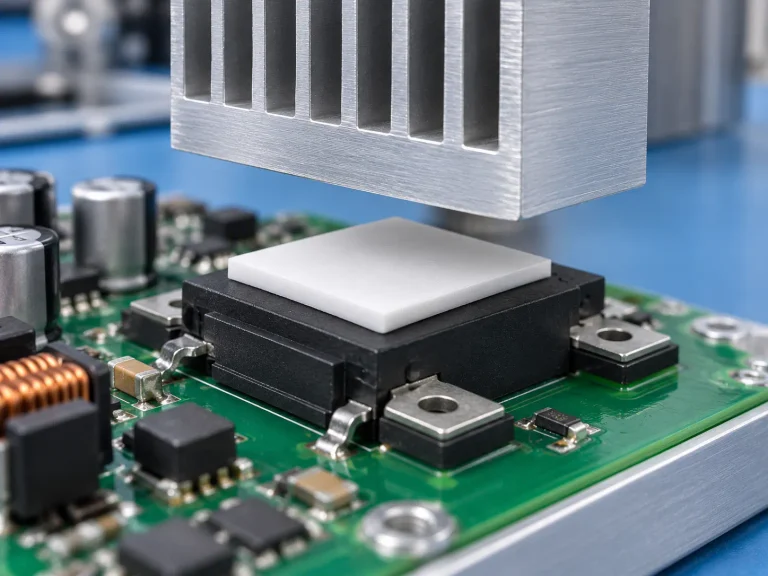
Amid the current trend toward increasingly sophisticated, high-performance electronic devices, thermal management has emerged as a critical bottleneck limiting both product performance and longevity.
As a leading enterprise in the field of thermal interface materials—backed by nearly two decades of accumulated technical expertise—مواد اللمعان proudly introduces the revolutionary SHEEN BSF1600 series of boron nitride thermal pads. With its exceptional thermal conductivity, outstanding reliability, superior compression resilience, and consistent quality, the BSF1600 redefines the new standard for the thermal management industry.
This article presents a detailed overview of the test data for the SHEEN BSF1600 thermal pads, serving as a comprehensive reference for engineers, technology enthusiasts, and industry professionals alike.
Driven by the rapid advancement of technologies such as 5G communications, new energy vehicles, artificial intelligence, optical modules, servers, and the Internet of Things (IoT), the power density of electronic devices is continuously increasing, making thermal management an increasingly critical issue.
Traditional thermal interface materials have exposed numerous shortcomings when confronted with these high heat flux densities, including:
- Low Thermal Conductivity—typically falling below 10 W/(m·K), making it difficult to meet the thermal dissipation requirements of high-performance chips;
- Risk of Bleed-out—certain thermal materials are prone to bleed-out issues, which can potentially damage precision electronic components.
Leveraging its profound insights into market demands and robust capabilities in technological innovation, مواد اللمعان has invested substantial resources in tackling key technical challenges. The company has achieved groundbreaking results in R&D and production of boron nitride thermal pads, launching the BSF1600 series to deliver high-performance thermal design solutions to the industry.
The Exceptional Performance of the BSF1600 Series (Excerpts from Test Reports)
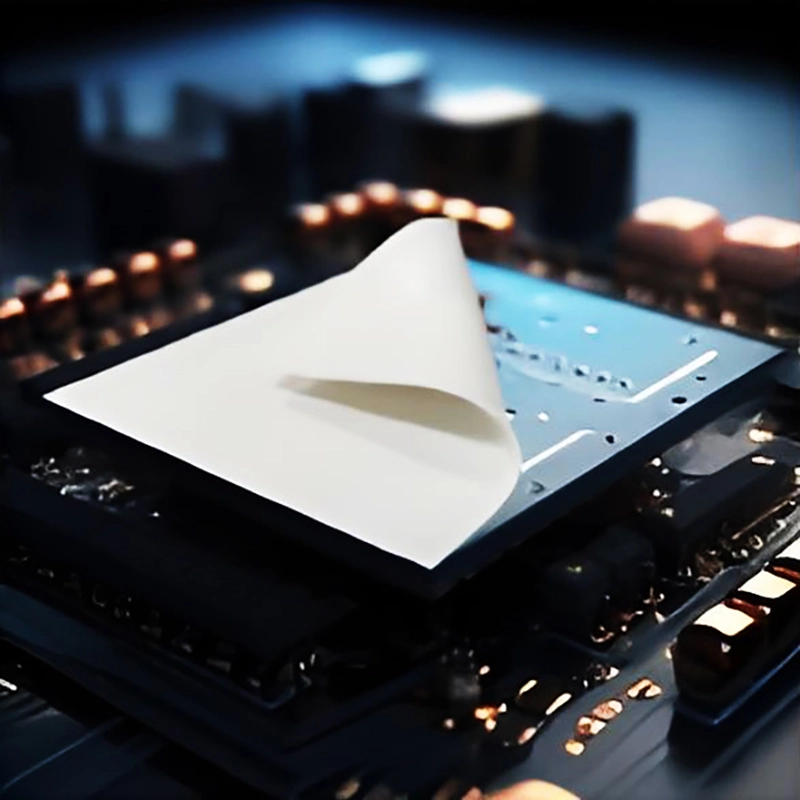
Boron Nitride Thermal Conductive Gasket
High Thermal Conductivity: 8~20 W/(m
·K)
·K)
Thickness: 0.3~10.0mm
Features And Benefits
1. Excellent flame retardant
2. High thermal conductivity, high compression ratio
3. Good flexibility, low thermal
2. High thermal conductivity, high compression ratio
3. Good flexibility, low thermal
التطبيقات
1. Semiconductor heat sink;
2. Vehicle navigator;
3. Communication & power equipment;
4. Graphics card, memory module;
5. lighting equipment.
2. Vehicle navigator;
3. Communication & power equipment;
4. Graphics card, memory module;
5. lighting equipment.
Sheen Materials’ BSF 1600 series products are manufactured using a patented formula and advanced processes. Through a proprietary technique, the boron nitride filler layers are vertically oriented to create highly efficient thermal conduction pathways, thereby significantly enhancing the material’s overall thermal conductivity. As a result, the BSF series maintains an extremely low effective thermal resistance—reaching as low as 0.047 °C·in²/W—even under low-pressure conditions.
Furthermore, the BSF1600 series products demonstrate excellent resilience, retaining their superior rebound properties even after prolonged periods of compression.
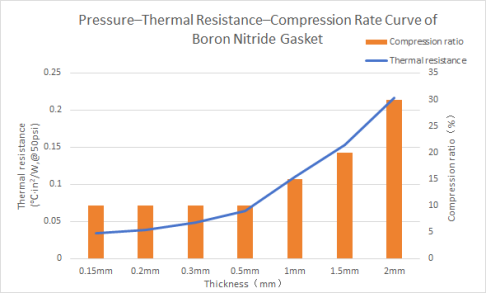
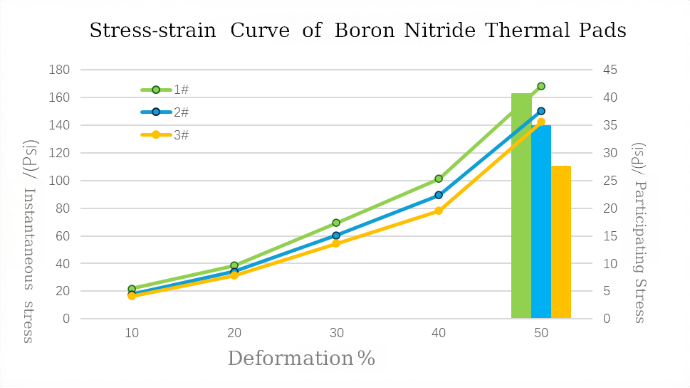
Regarding the Aging Test for the BSF1600
High-Temperature Aging
Sheen’s engineers have designed a set of reliability testing procedures for thermal interface materials, aimed at characterizing their long-term performance under high-temperature aging conditions.
Test Method :
Place the specimen (50 mm × 40 mm × 1.5 mm) into a high-temperature oven set to 125°C, and set the test duration to 1,000 hours. Upon completion of the test period, remove the specimen, measure, and record its thermal resistance value.
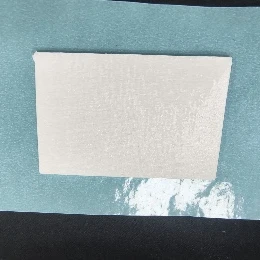
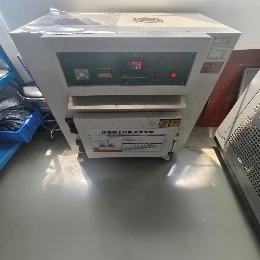
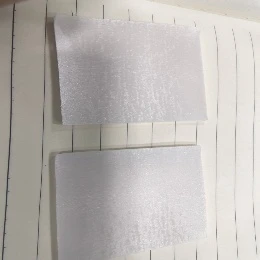
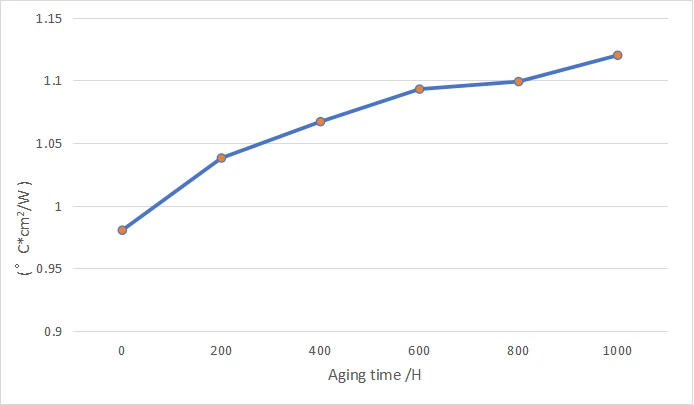
Conclusion: As shown in the figure and the data above, the boron nitride thermal pad exhibits stable thermal resistance during the short-term aging test. After 1000 hours, the thermal resistance increases by 14.2%, which is within the range of variation.
Due to the extensive length of the BSF1600 test report, it is not feasible to present its entire content here. If you require the specific BSF1600 Series Boron Nitride Thermal Pads Performance Test Report, please click the link to access it.
Boron Nitride Thermal Pads vs. Traditional Thermal Pads
The pain points associated with traditional heat dissipation materials—such as graphite, copper sheets, and thermal silicone—are readily apparent: they either offer only mediocre thermal conductivity, pose a short-circuit risk due to electrical conductivity, or are simply incapable of adapting to complex application scenarios.
Boron nitride, however, addresses these very pain points through its “all-around versatility,” with its core advantages centering on three key aspects:
“Crushing-level” thermal conductivity—shattering the limits of traditional heat dissipation.
The thermal conduction of traditional heat dissipation materials relies primarily on “phonons”—generated by lattice vibrations—to transport heat. However, phonons are prone to being “blocked” by obstacles during propagation (phonon scattering); furthermore, when different materials come into contact, a mismatch in vibrational modes reduces the efficiency of heat transfer (interfacial phonon mismatch). These two major issues directly constrain the effectiveness of heat dissipation.
Boron nitride, however, perfectly circumvents these two limitations. In the mid-infrared spectrum, it exhibits unique hyperbolic dispersion characteristics that support “hyperbolic phonon polariton” modes—hybrid entities formed by the coupling of light and lattice vibrations. These modes are capable of propagating rapidly across the material surface, much like near-field electromagnetic waves, undergoing virtually no scattering, and can even traverse material interfaces, thereby significantly reducing interfacial thermal resistance.
Thermal Conductivity + Electrical Insulation: A “Dual Buff” Addressing the Industry’s Core Pain Points
This constitutes boron nitride’s most critical “killer feature.” While traditional thermal materials—such as graphite and copper sheets—offer excellent thermal conductivity, they are also electrically conductive; consequently, when used in precision electronic components like chips and circuit boards, they can easily trigger short circuits, thereby posing significant safety hazards.
In contrast, boron nitride possesses a wide bandgap of 5.9–6.2 eV and a volume resistivity exceeding 10¹³ Ω·cm, making it an exceptional electrical insulator. With a dielectric constant of just 4.0 and extremely low high-frequency loss, it effectively isolates electrical currents—thereby eliminating the risk of short circuits—while simultaneously facilitating highly efficient heat dissipation.
This characteristic—being thermally conductive yet electrically insulating—renders it indispensable in high-voltage and high-frequency electronic devices. In applications such as 5G chips, IGBT modules, and high-voltage inverters—which demand both rapid heat dissipation and guaranteed electrical isolation—boron nitride emerges as the sole optimal solution.
Highly adaptable, meeting cooling requirements across all scenarios.
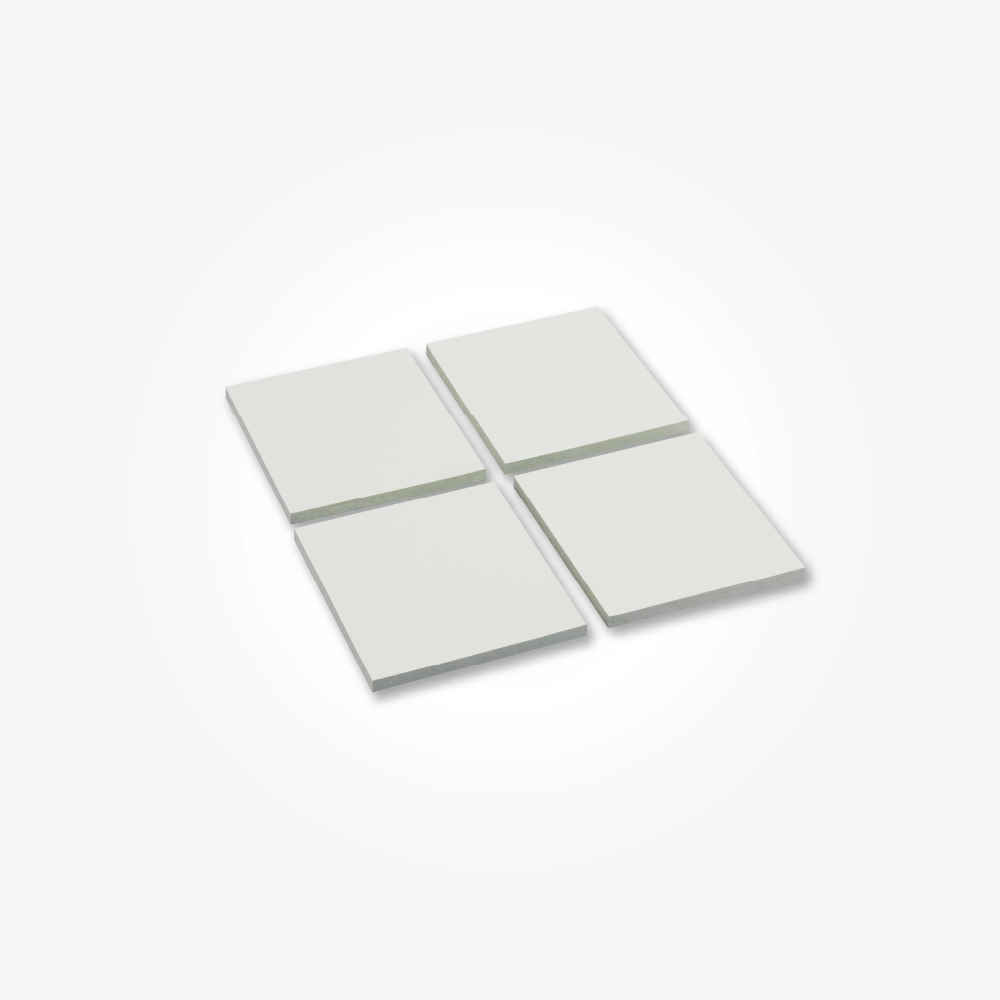
The morphology of boron nitride can be flexibly customized; it can be produced as powders or flakes, or compounded with polymers (such as silicone or epoxy resin) to create a diverse range of products—including thermal gels, thermal films, and thermal substrates—thereby meeting the requirements of various application scenarios. For instance, Sheen Materials’ BSF1600 series is manufactured and processed in the form of thermal pads.
Specific Applications of Boron Nitride Thermal Pads in Daily Production
Do not assume that boron nitride remains merely a piece of “cutting-edge lab technology”; in reality, it has long since emerged from the laboratory to find widespread application across diverse fields—including consumer electronics, new energy, and aerospace—quietly transforming our lives.
Consumer Electronics: Bidding Farewell to “Overheating” Woes
For devices such as smartphones, laptops, and tablets, the power output of core chips is steadily increasing, placing ever-greater demands on thermal management. In 5G smartphones, the gaps within RF modules typically range from 30 to 80 microns; to prevent electromagnetic interference, a boron nitride-based thermal interface material—ranging from 30 to 60 microns in thickness—is embedded between the mainboard and the metal mid-frame. With a density of 1.75 ± 10% g/cm³, this material adds negligible weight to the device, thereby enhancing the overall ergonomic feel and user handling experience.
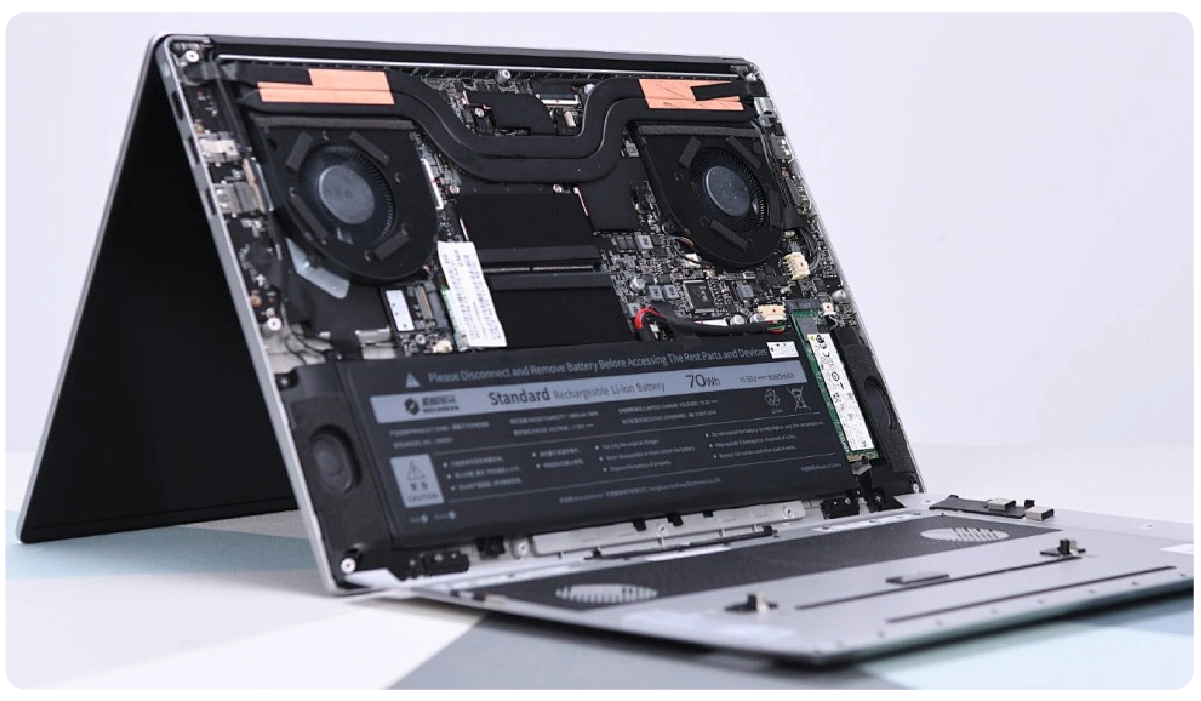
Boron nitride thermal films and thermal gels have become “standard equipment” for high-end devices—for instance, the thermal dissipation film in the Mate 50 smartphone series utilizes boron nitride composite materials, demonstrating a thermal conductivity degradation of less than 5% following rigorous testing. Furthermore, a polycarbonate heat sink doped with 10 wt% boron nitride can lower the junction temperature of LED beads from 125°C to 85°C, thereby slowing the rate of light decay by 60%.
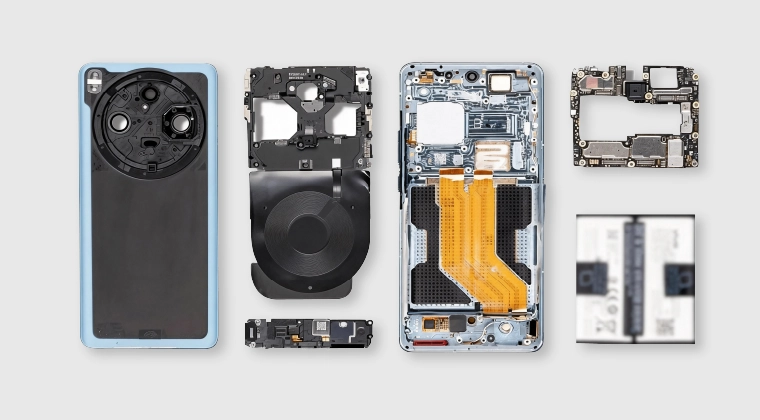
Even the transparent conductive films used in foldable smartphones can incorporate boron nitride; when composited with silver nanowires, it maintains an in-plane thermal conductivity of 12 W/(m·K) at a light transmittance of 85%, thereby facilitating rapid heat dissipation without compromising display performance.
New Energy Vehicle Thermal Management

The batteries, electric motors, and IGBT modules in new energy vehicles generate substantial heat during operation, directly impacting driving range and safety.
Boron nitride is perfectly suited for these applications: the motor controller in the Tesla Model S, for instance, utilizes a thermally conductive gel—a composite of boron nitride nanosheets and polydimethylsiloxane—that boasts a thermal impedance as low as 0.8 ℃·cm²/W, enabling the rapid dissipation of heat generated by the motor.
Boron nitride/epoxy composites are employed for bottom-side heat dissipation in IGBTs, SiC modules, and in-vehicle T-BOX units; this application significantly enhances the reliability of the system’s thermal management, thereby preventing failures caused by overheating.
Heat Dissipation in Optical Modules

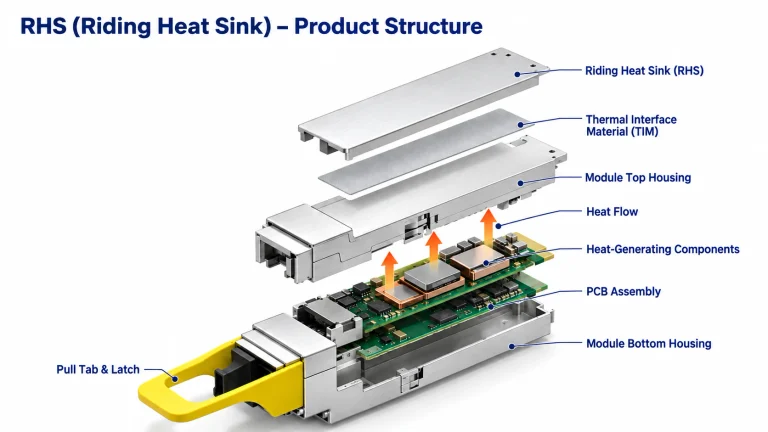
The demand for thermal management in optical modules is becoming increasingly urgent; the shift toward higher speeds has triggered a surge in power consumption, with 800G modules consuming 18–20W and 1.6T modules exceeding 24W—resulting in localized heat flux densities that breach the 100W/cm² threshold.
Elevated temperatures can lead to optical power degradation, increased bit error rates, and accelerated device aging; in extreme cases, they may even trigger an uncontrolled APC (Automatic Power Control) runaway event that burns out the chip. Consequently, thermal management solutions must satisfy four core requirements: highly efficient heat conduction, electrical insulation safety, minimal signal interference, and compatibility with ultra-thin packaging spaces—all while ensuring robust thermal adaptability in extreme operating environments.
GaN Fast Charging Module Heat Dissipation
GaN fast-charging modules feature high power density, necessitating precise thermal management and electrical insulation. Boron nitride material facilitates rapid heat dissipation—maintaining safe operating temperatures—thereby enhancing charging efficiency.
With its specific resistivity and dielectric strength, this material serves as a viable substitute for traditional insulating gaskets; this reduces component count, minimizes device volume, ensures circuit safety, and boosts overall integration density.
Aerospace and High-End Manufacturing: Adapted for Extreme Environments
Structural components for aerospace equipment require a balance of lightweight properties, high thermal conductivity, and high-temperature resistance.
Boron nitride fibers or boron nitride composites have emerged as an ideal choice; under an inert atmosphere, they can withstand temperatures as high as 2800°C, possess low density, and effectively combine structural strength with heat dissipation capabilities.
In the context of semiconductor wafer polishing, boron nitride particles serve as a thermally conductive filler, protecting the wafer surface while simultaneously enhancing polishing efficiency.
The Application Prospects of Boron Nitride Thermal Materials
Currently, the application of boron nitride thermal management materials has entered a phase of large-scale deployment; however, several technical bottlenecks remain to be overcome. For instance, their thermal conductivity in the vertical direction is relatively low—an attribute that requires further enhancement through structural design and interface optimization. Furthermore, the high cost associated with the large-scale synthesis of large-sized boron nitride nanosheets currently limits their widespread adoption in certain civilian sectors.
Additionally, the interfacial compatibility between boron nitride and various other materials requires further research and optimization.
Nevertheless, as technology continues to evolve and iterate, we are confident that this “white graphite” will unlock an even broader spectrum of application scenarios—rendering our electronic devices more durable and safer, while simultaneously fueling the growth potential of emerging fields such as new energy and 5G technology.
In the future, as fields such as artificial intelligence, third-generation semiconductors, quantum computing, and solid-state batteries continue to advance, the demands placed on thermal management materials will become increasingly rigorous.
Leveraging its comprehensive advantages—combining thermal conductivity, electrical insulation, lightweight properties, and high-temperature resistance—boron nitride is poised to emerge as a “core material” in the realm of thermal management, driving the realization of a wider range of cutting-edge technological products.