-
АДД: Здание 2, № 8 Хэнчжутан Роуд, Дунгуань
-
Телефон: +86 135 4224 3751

The Critical Role of Graphene Heat Dissipation for 5G Base Stations
Graphene heat dissipation for 5G base stations isn’t a luxury anymore—it’s what keeps radios from cooking themselves in cramped enclosures.
GSMA and Omdia report that 5G densification is driving higher thermal loads and operating costs, pushing operators toward advanced materials to maintain reliability.
Graphene spreads heat fast, trims hotspots, and fits existing builds, turning cooling from a patch job into a long-term cost play.
Key Highlights on Graphene heat dissipation for 5G base stations
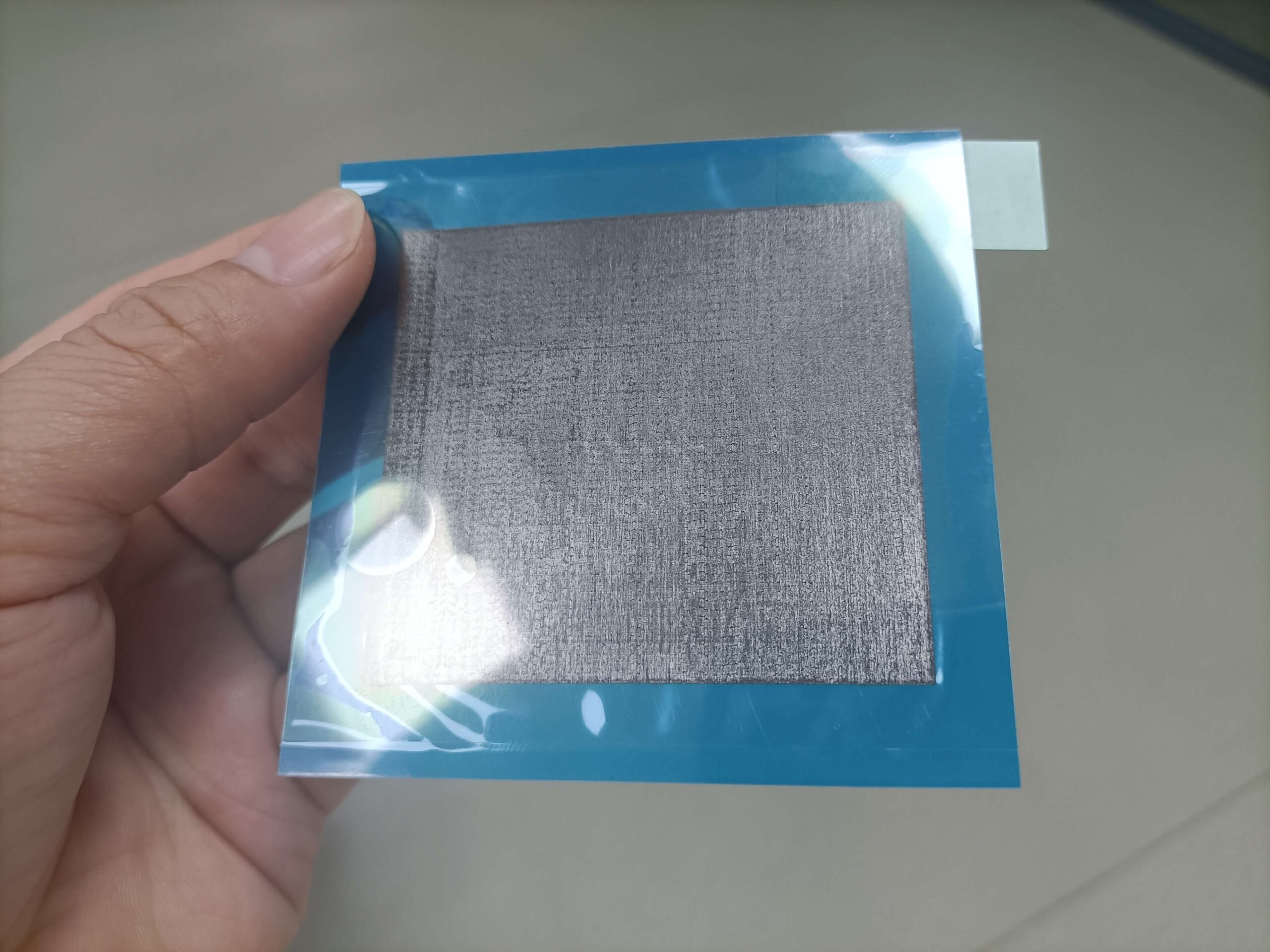
➔ Superior Conductivity: Graphene sheets and composites offer unmatched in-plane heat transfer, reducing hotspots in compact radio modules.
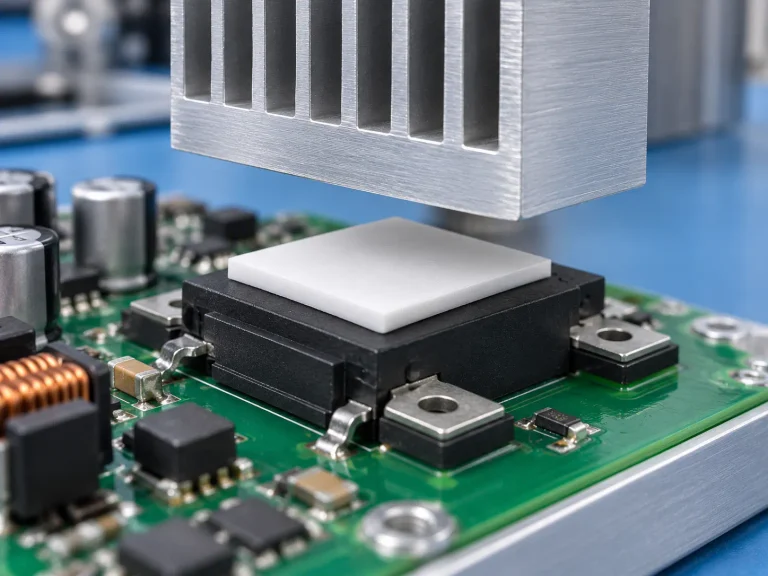
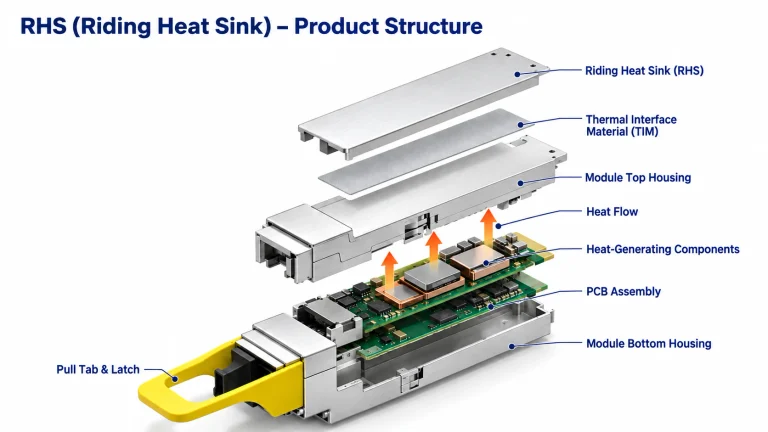
➔ Enhanced Interfaces: Integrating graphene films with thermal grease or conductive adhesives lowers interfacial resistance between semiconductors (SiC, GaN) and copper or vapor chambers.
➔ Durability Boost: Graphene nanoplatelets in epoxy or polymer encapsulants improve thermal cycling stability and corrosion resistance on aluminum alloys and vapor chambers.
➔ Cost-Performance Balance: While pricier than conventional graphite or aluminum, scalable production of graphene pads and foams yields long-term OPEX savings through higher reliability and reduced cooling demands.
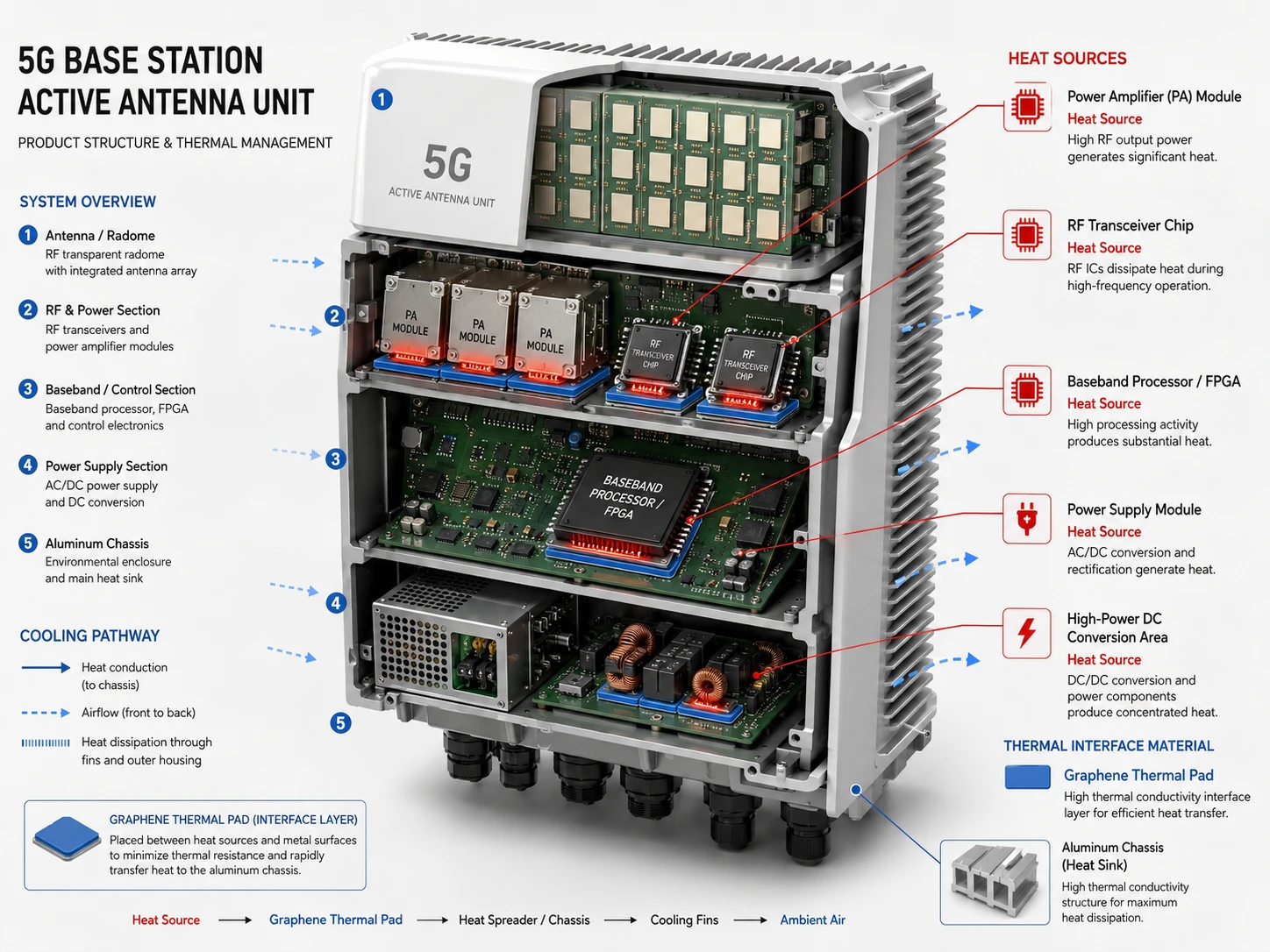
78% Improvement in Thermal Management with Graphene Sheets
Graphene heat dissipation for 5G base stations is no longer lab talk; it’s a daily engineering fix. As 5G base stations push higher frequencies and tighter layouts, heat stacks up fast. From graphene heat spreaders to coated vapor chambers, practical upgrades now show up to 78% gains in thermal management for base stations.
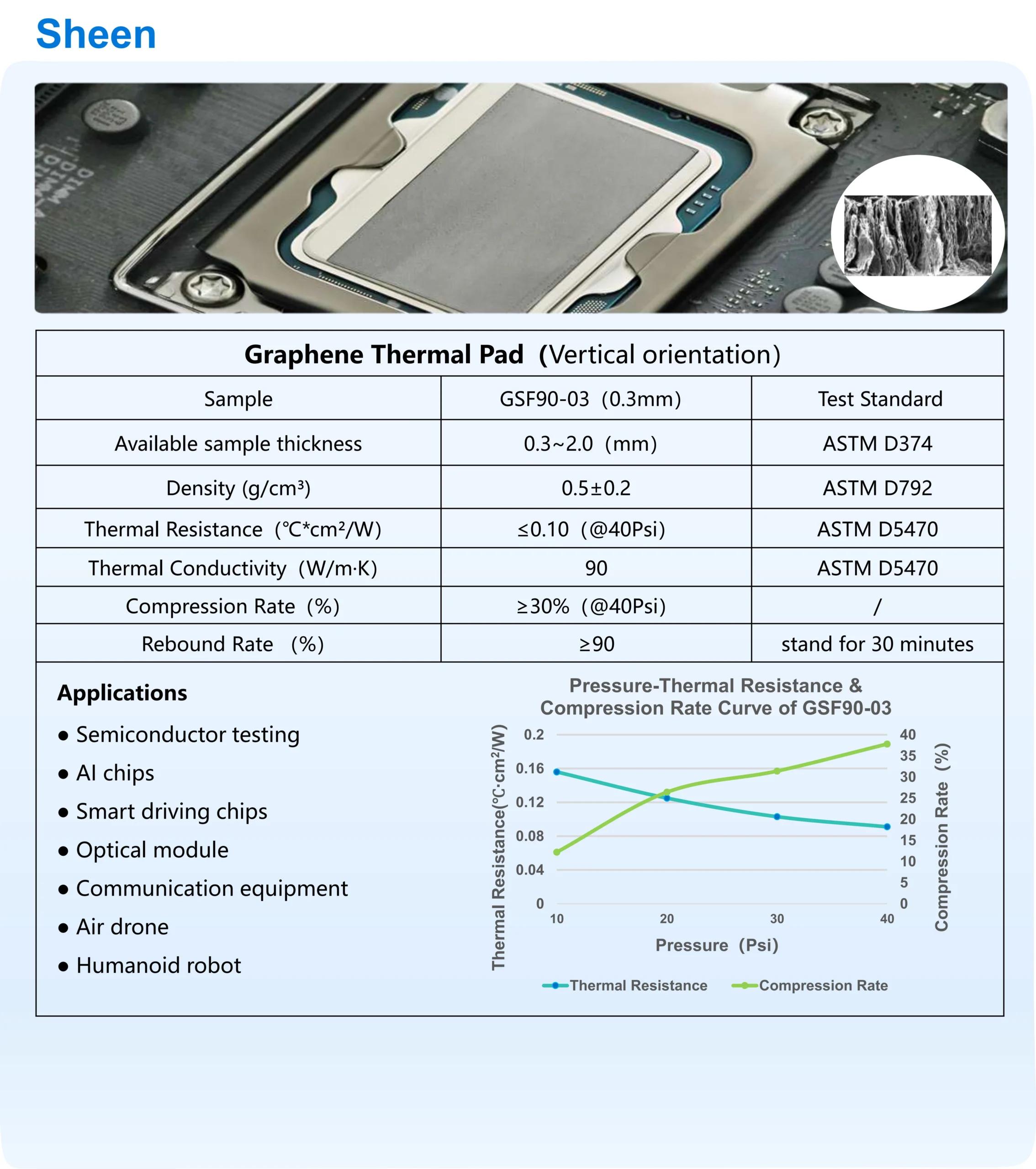
Comparing Graphene Sheets and Nanoplatelets in Heat Transfer
When discussing Graphene sheets and nanoplatelets in heat transfer, performance splits along structural lines.
- Graphene sheets: ultra-high in-plane теплопроводность
- Nanoplatelets: easier blending with composite materials
- Comparison focus: conductivity vs. process stability
- Crystal alignment drives lateral heat flow.
- Flake dispersion improves epoxy bonding.
- Interface pressure affects real-world heat dissipation.
| Тип материала | In-Plane Thermal Conductivity (W/m·K) | Composite Compatibility | Typical Use in 5G |
|---|---|---|---|
| Graphene Sheets | 1500–3000 | Средний | Heat spreaders |
| Graphene Nanoplatelets | 300–800 | Высокий | Filled TIMs |
| Aluminum Nitride Substrate | 140–180 | Высокий | PCB base |
| Copper Plate | 380–400 | Low (oxidation risk) | Base stations chassis |
For Graphene heat dissipation for 5G base stations, sheets dominate in peak spreading, while nanoplatelets balance cost and manufacturability. Sheen Materials fine-tunes both forms for graphene heat dissipation across RF modules.
Graphene Films Combined with Thermal Grease and Pads
На сайте Graphene films, pairing with thermal grease и термопрокладки cuts interface gaps.
- Apply film to the chip lid.
- Add grease to fill micro-voids.
- Compress with pad toward heat sink.
Result? Lower contact resistance and smoother heat dissipation for 5G radios.
Graphene heat dissipation for 5G base stations improves most when films sit between silicon carbide and copper. Thermal interface materials stop acting like bottlenecks. Sheen Materials integrates graphene for 5G base stations with ready-to-mount TIM stacks.
Reduced Graphene Oxide on Aluminum Alloys and Vapor Chambers
Reduced graphene oxide coatings on aluminum alloys и vapor chambers увеличить терморегулирование without heavy redesign.
Step-by-step flow inside a base station unit:
- Heat source: GaN amplifier
- Transfers to a coated aluminum plate
- Spreads laterally through the rGO layer
- Moves into the vapor chamber
- Condenses and cycles back
- Transfers to a coated aluminum plate
This layered coating enhances heat dissipation, slows corrosion, and keeps weight down. For Graphene heat dissipation for 5G base stations, rGO adds both spreading power and durability. Sheen Materials applies precision coatings tailored for outdoor telecom cabinets, where thermal swings hit hard and fast.
5 Key Benefits Of Graphene Cooling For 5G
Graphene heat dissipation for 5G base stations is getting real attention as networks grow denser and hotter. From chipsets to outdoor cabinets, better thermal control keeps signals stable and maintenance costs low.
Enhanced Conductivity using Graphene Composites and Liquid Metal Alloys
When engineers talk about Графен, Composites, и Liquid Metal Alloys, the goal is simple: higher Conductivity and stronger Thermal Enhancement for graphene heat dissipation for 5G base stations.
- Material Synergy1.1 Graphene Composites
- Blend graphene flakes with polymer matrices
- Improve in-plane heat flow
1.2 "Liquid Metal Alloys"

*   Fill micro-voids

*   Cut contact resistance
- Device-Level Impact2.1 High-frequency chips
- Indium phosphide
- Silicon germanium
2.2 Result

*   Faster heat transfer

*   Lower junction temperature
Typical thermal conductivity comparison:
| Material System | Теплопроводность (Вт/м-К) | Temp Drop in PA Module (°C) |
|---|---|---|
| Standard Thermal Grease | 5-8 | 3-5 |
| Graphene Composite | 15–25 | 8–12 |
| Liquid Metal Alloy | 30-70 | 12–18 |
| Hybrid Graphene + Liquid Metal | 40–90 | 15–22 |
| Copper Plate Only | 380 (bulk) | 6-9 |
That jump directly strengthens 5G base station cooling under peak loads.
Uniform Heat Spreading via Graphene Foams on Copper Sheets
Hotspots kill efficiency. Graphene Foams bonded to Copper Sheets spread Heat Spreading loads evenly, boosting Uniformity в Термо контроль.
- Foam microstructure channels heat sideways.
- Copper backbone supports bulk transfer.
- Together, they stabilize power amplifier substrates.
For graphene heat dissipation for 5G base stations, this combo keeps outdoor units steady even during traffic spikes. Less thermal stress, fewer surprise shutdowns. It’s practical, not flashy.
Superior Interface Bonding with Conductive Adhesives and Graphene Films
Interface gaps quietly raise resistance. Here’s how Graphene Films, Conductive Adhesives, and tighter Interface Bonding raise Thermal Superiority:
- Surface Preparation1.1 Clean ceramic substrates
- Глинозем
- Silicon nitride
- Film Integration2.1 Apply thin Графен layer2.2 Add silver-filled adhesive
- Итоги работы
- Lower interfacial resistance
- Stronger mechanical hold
- Better thermal management for 5G base stations
It’s a small layer with a big effect.
Extended Device Lifespan through Graphene Nanoplatelets and Epoxy Resins
Long uptime matters. Graphene Nanoplatelets mixed into Epoxy Resins improve Reliability и Device Lifespan Extension.
- Material Reinforcement1.1 Nanoplatelets bridge micro-cracks1.2 Epoxy gains thermal conductivity
- Thermal Cycling Stability
- Reduced expansion mismatch
- Lower solder fatigue
- Field Impact
- Metal core PCBs stay flatter
- Polyimide circuits resist warping
Graphene heat dissipation for 5G base stations isn’t just about cooling today; it’s about surviving years of heat swings.
Scalable Production of Graphene-Based Thermal Pads
Scaling matters for nationwide rollout. Графеновые термопрокладки support Production Scalability стабильный Manufacturing Fabrication.
- Polymer encapsulants lock in graphene networks.
- Silicone compounds add flexibility.
- Roll-to-roll coating keeps costs controlled.
In large-volume 5G base stations, consistent heat dissipation performance beats lab-only results. Reliable pads, repeatable output, fewer thermal surprises.
Cost Vs. Performance: Graphene Heat Spreaders
Graphene heat dissipation for 5G base stations is moving from lab talk to real-world rollout. As 5G base station cooling gets tougher, engineers weigh manufacturing expenses against raw thermal gains. Here’s how Graphene heat dissipation for 5G base stations stacks up when cost meets performance in modern telecom hardware.
Cost
When planning Graphene heat dissipation for 5G base stations, budgeting goes beyond simple material expenditure. It unfolds across layered cost drivers:
- Upstream Material Inputs1.1 Graphene film synthesis
- CVD growth energy demand
- Quality control yield rates
- Substrate preparation
1.2 Composite integration

*   Polymer blending

*   PTFE lamination

*   Surface treatment
- Midstream Processing Factors2.1 Equipment depreciation affecting production overhead2.2 Skilled labor impacting operational costs2.3 Cleanroom standards tied to telecom reliability
- Downstream Deployment Economics3.1 Bulk acquisition expenditure for telecom operators3.2 Lifecycle economic viability vs. aluminum plates3.3 Reduced maintenance visits in remote 5G towers
In large-scale 5G base station cooling projects, the upfront bill looks higher than that of graphite sheets. Yet system-level math often flips the script. Fewer overheating alarms. Lower fan power draw. Longer hardware refresh cycles.
That’s where suppliers like Материалы для отделки step in, optimizing roll-to-roll fabrication to trim production overhead while keeping consistency tight. For operators serious about Graphene heat dissipation for 5G base stations, cost isn’t just price per sheet—it’s total ownership over years of nonstop data traffic.
Performance
Performance is where Graphene heat dissipation for 5G base stations earns its hype. The material’s теплопроводность can exceed 1500–3000 W/m·K in high-quality films, reshaping heat transfer efficiency inside dense radio units.
Key performance gains include:
- Faster lateral heat spreading
- Улучшенный снижение температуры under peak loads
- Выше cooling capacity in compact modules
- In active antenna units, graphene layers reduce hotspot gradients.
- In power amplifiers, better power handling stabilizes output.
- In outdoor cabinets, enhanced стабильность системы supports long-term надежность.
Below is a simplified comparison of 5G base station cooling materials:
| Материал | Теплопроводность (Вт/м-К) | Weight (g/cm³) | Typical Lifespan (Years) | Cooling Efficiency Gain |
|---|---|---|---|---|
| Aluminum Alloy | 200–230 | 2.7 | 5-8 | Baseline |
| Графитовый лист | 400–800 | 1.9–2.2 | 6–8 | +15% |
| Copper | 380–400 | 8.9 | 7–10 | +10% |
| Graphene Composite | 1000–2000 | 1.5–2.0 | 8–12 | +25–35% |
| Enhanced Graphene Film | 2000+ | <1.5 | 10+ | +40% |
Short story? Lighter hardware. Longer longevity. Less thermal throttling during traffic spikes.
For telecom engineers pushing Graphene heat dissipation for 5G base stations, performance isn’t hype—it’s measurable heat flow control. And when paired with smart system design from Материалы для отделки, graphene-based thermal management for 5G infrastructure starts to look less like a premium add-on and more like a practical upgrade.